A conversation through a wall can disrupt work just as much as reverberation in a large room. Properly selected acoustic insulation helps make interiors more usable. In a home office it can support concentration, while in commercial premises it can improve conversations and create more comfortable conditions for occupants.
For a wall between adjoining rooms, the aim is to reduce sound transmission through the partition. Acoustic materials are therefore used as part of a defined assembly, together with facings and properly formed junctions. During refurbishment, this approach can improve an existing wall without changing the layout of the entire home. The room can retain its function while its surface is prepared for a new finish. It is a practical option when adapting a home for remote working.
SIMFOFIT, made from bonded foam and fibres, is one example of a wall solution. It is used in a system with a plasterboard facing that covers the acoustic layer. The visible surface can therefore look like an ordinary, carefully finished wall. This is useful in a bedroom or study where improved comfort needs to fit the interior design. A material with a specific technical function need not give the room an industrial appearance.
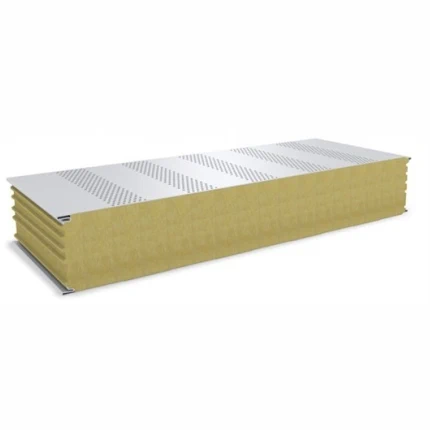
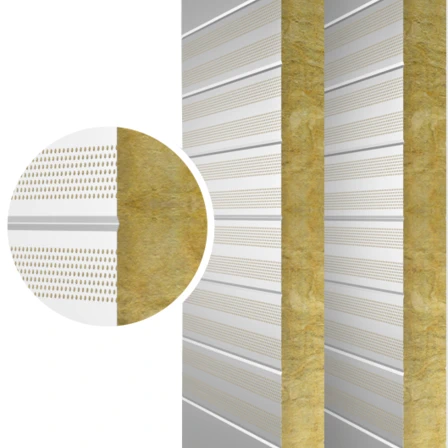
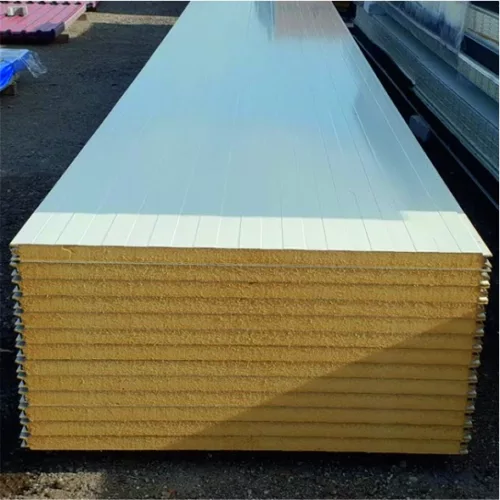
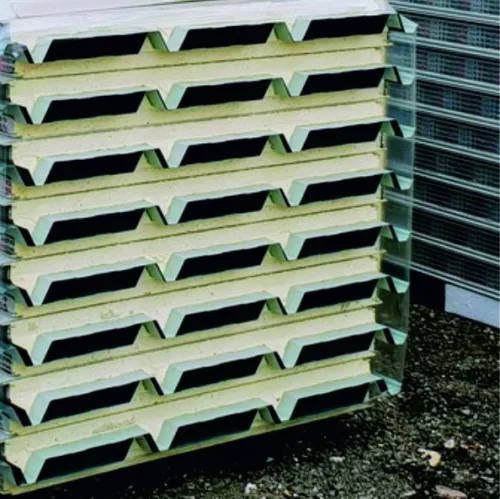
In a spacious workshop or room with many hard surfaces, the task may be different. Sound reflects off surfaces and remains in the room, making conversation difficult. Here, sound-absorbing panels are useful when their construction exposes the absorbing layer to sound waves. Suitable mineral wool versions can combine enclosure with reduced reverberation. Selection depends on the problem the completed surface is intended to solve.
Benefits are best considered in relation to how the space is used. In a workroom, conversations from next door should be less distracting; in commercial premises, communication should be clearer. More pleasant conditions in a meeting room reduce the need to raise one’s voice. Acoustics thus become part of a room’s functional provision, alongside light and temperature. Refurbishment is a useful time to consider them, when new linings are being installed anyway.
The overall result depends on the existing partition, joint sealing and other sound transmission paths. Material must therefore be matched to the wall and the nature of the noise so that the system’s properties are used where they are needed most. This directs expenditure towards practical improvement. Suitable insulation remains hidden within the lining, while its value is experienced during everyday work, rest and conversation.
SteelProfil offers materials for improving acoustics at competitive prices. Our wider range includes promotional offers, first- and second-grade materials and products available from stock. Compare wall boards and sound-absorbing solutions to choose an assembly suited to the needs of your interior.