






Sandwich-panel prices per square metre: what are you buying?
Sandwich panels
A sandwich-panel price per square metre is a billing unit, not a complete product specification. Before comparing amounts, establish the panel model, core, thickness, facings, coating, grade and how its chargeable area is calculated. Length and cover width determine how much useful surface each panel provides, while cuts, laps, transport and accessories affect the final order cost. A cheaper square metre can therefore produce a more expensive usable roof or wall. This guide explains area calculations, net and gross illustrative prices, outlet stock checks and the information needed for a quotation that clearly identifies both the material and the scope supplied.
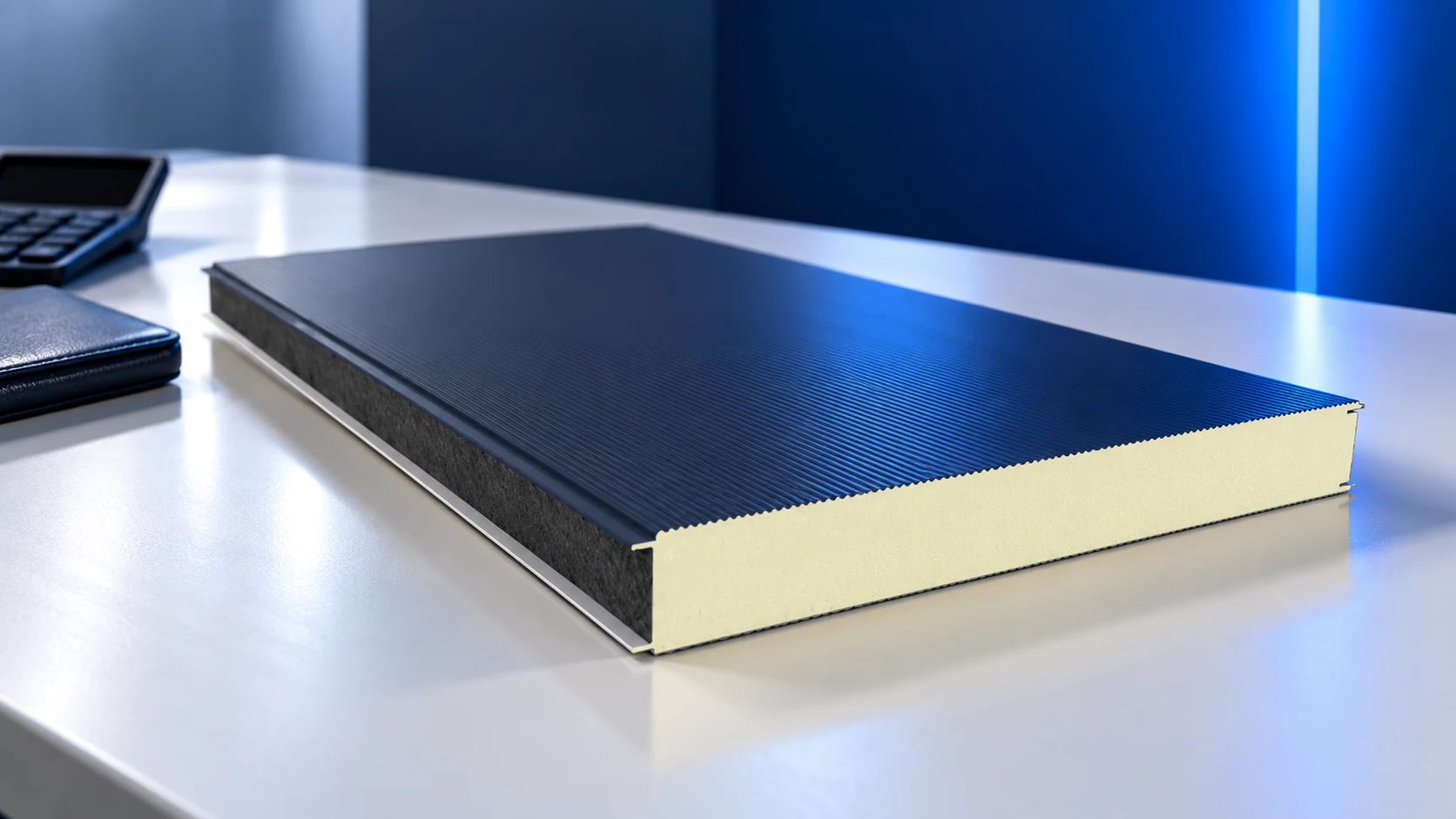
What information must accompany a price per m²?
The quotation should identify manufacturer and model, then core type, thickness, facings, coatings and colour. Fixing method and grade are also needed. Without them, two similar prices may concern different products.
PIR-core panels can have different facings and profiles. “PIR 100 mm” is therefore incomplete. Establish the design’s application conditions too. A price does not show whether a panel meets wall, roof or cold-store requirements. Compare properties first, then prices for matching configurations.
How do you calculate the area of one panel?
Useful area is calculated from length and cover width. A 4 m panel with 1 m cover provides 4 m²; with 1.1 m cover it provides 4.4 m². These are examples of two used modules. Not every four-metre panel represents four square metres. Check the purchased variant’s actual cover width before multiplying by the price.
Nevertheless, check the billing rules in the particular offer. They must be clear and consistent with the schedule. Roof cutbacks and laps also matter. Purchased dimensions and finished roof coverage do not always coincide exactly. Resolve uncertainty before placing the order.
Reading net and gross prices through an example
For an illustrative PLN calculation, assume PLN 200 net/m² for a selected 60 mm panel and PLN 270 net/m² for a 120 mm version. With an assumed 23% VAT rate, these become PLN 246 and PLN 332.10 gross. These are example figures, not a current offer or universal wall- and roof-panel prices. Your quotation must relate to the full material specification.
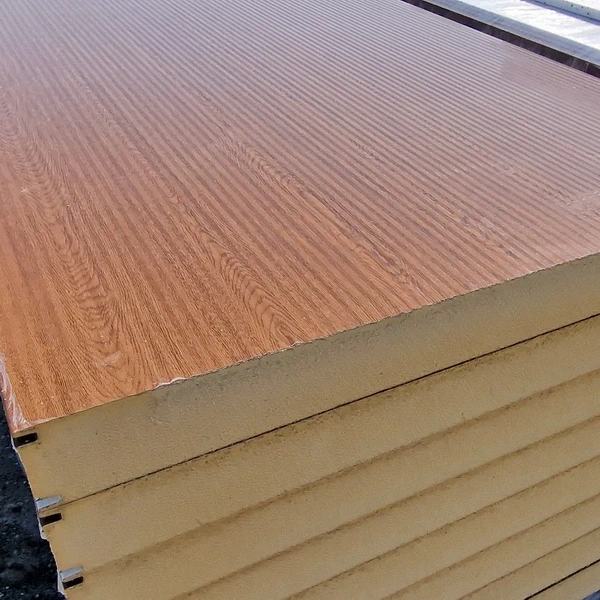
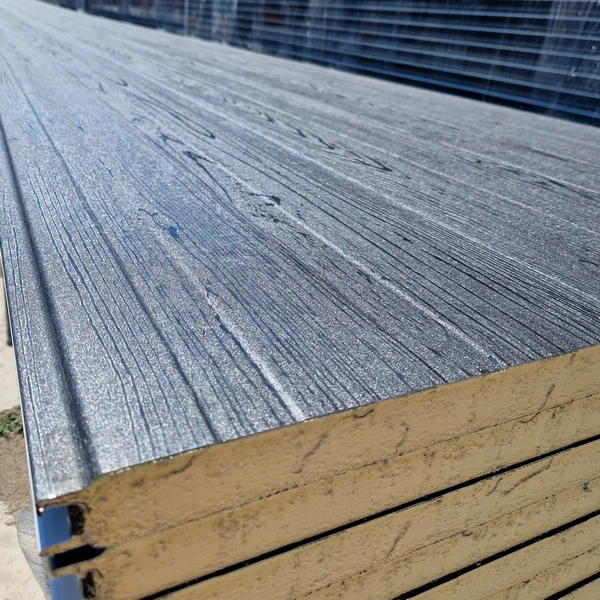
The example concerns a panel with a slate-effect surface, 1000 mm cover width and a required pitch starting at 25°. These parameters belong to that particular variant. Do not use its price to estimate a standard low-pitch roof panel. That solution needs a separate quotation.
Are net and gross prices enough for a comparison?
Quantity and scope still need checking. Our example calculates gross prices using an assumed 23% VAT rate. An actual quotation should state the applicable rate and the billing basis for the full order. Material supply and an installation service including materials need clear descriptions. Do not transfer one pricing basis to another scope without checking.
For a four-metre slate-effect panel, 60 mm thick with 1 m cover, the example material cost is PLN 800 net and PLN 984 gross. This is our arithmetic calculation and excludes delivery and installation. When comparing quotations, record the final total and every charge separately. This avoids comparing material-only prices with complete service prices.
Why can a cheap square metre make an expensive order?
Waste can be the reason. If a wall needs 3 m panels but the cheaper batch contains 4 m lengths, you buy extra length. For ten panels with 1 m cover, that is 10 m² surplus. The offcuts may be useful, but this must be checked in the cutting plan.
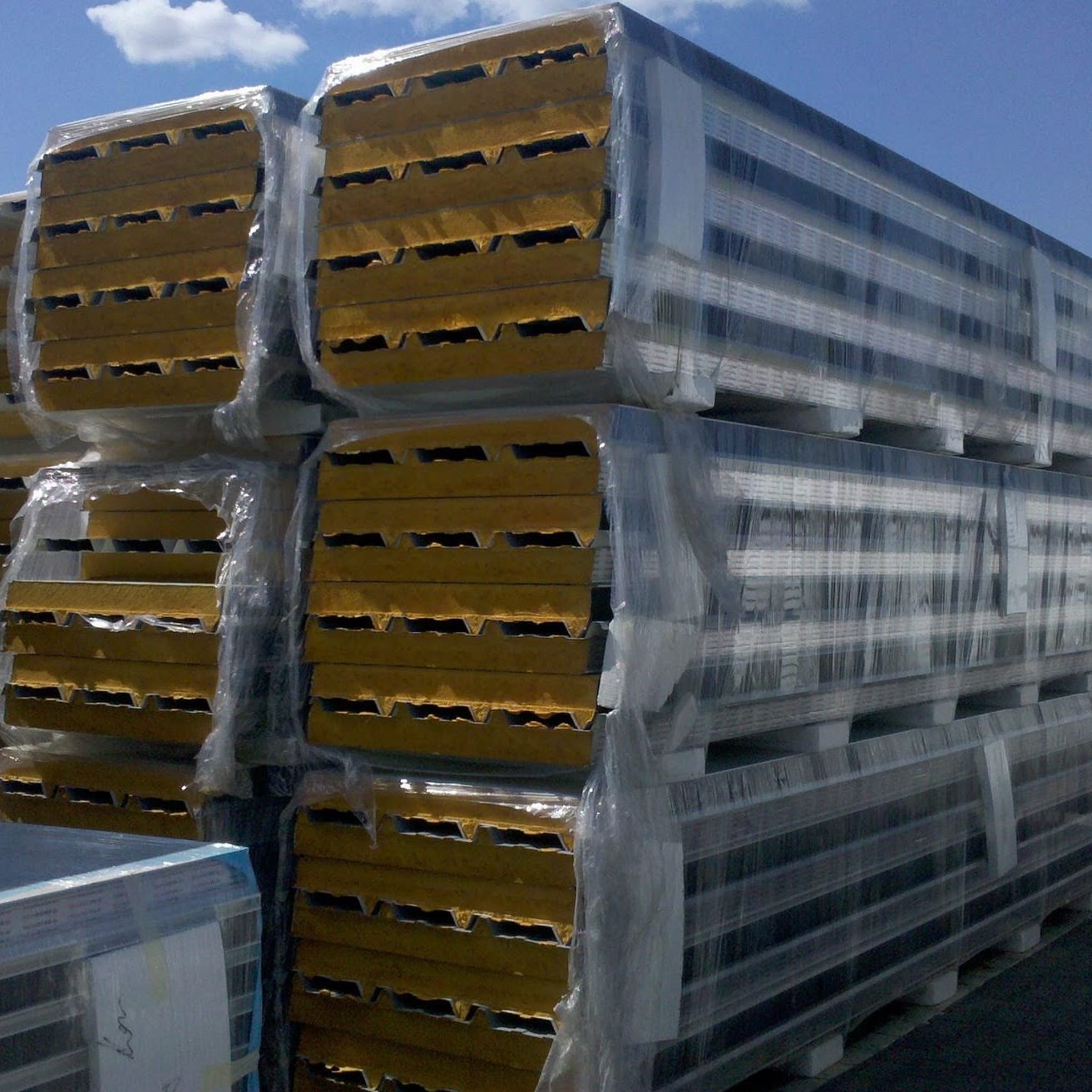
Transport adds another factor. Component length affects the vehicle and lifting method. Agree pack weight, handling equipment and unloading location. Compare the material discount with the full delivery cost. The lowest price per m² does not guarantee the lowest cost for an envelope ready to install. Check the cost of a small supplementary order too, in case a few components are missing.
How should outlet prices be assessed?
Establish the reason for the reduction first. Production surplus may be fully serviceable; a batch with damaged joints or delamination presents different issues. Ask for documents, defect descriptions and photographs. Do not assign a new panel’s properties to unidentified material merely because it looks similar. Assess the actual batch being purchased.
Facings work together with the core, so appearance alone does not confirm every property. Outlet stock can be compared with first-grade panels only after the differences are known. Assess price alongside limitations, permitted repair costs and possible use. If some panels cannot be used, include that in the calculation.
How to write a short price enquiry
State the building’s use, location and required performance. Attach panel lengths and quantities. Identify a model or the requirements for selecting one. Include colour, facings, coating and fixing type. Ask about the complete accessory package.
Ask for a dated price and validity period. Agree transport, unloading and the planned fulfilment date. Record stock reservation terms and extra charges if quantities change. This produces a checkable response. A single number without a product description is only an initial indication, not enough to order a complete envelope.
Frequently asked questions
Is one square metre of panel the same as one linear metre?
At 1 m cover width, one linear metre equals 1 m². For other widths, the area must be calculated accordingly.
Is an indicative price always the purchase price?
No. The final quotation may account for quantity, configuration, delivery and timing. It must clearly define what is included.

Free quote
What to include in your enquiry
Tell us how you plan to use the material, the dimensions and the quantity you need. Include the thickness, grade or variant name, along with the delivery town or your preferred collection branch. For a specific product, add its name or a link to the product page. We will reply to the email address you provide to discuss availability and the terms of your order.
More from the building guide
Mineral-wool panel weight depends on the model, thickness and both facings; there is no single figure for the whole product group. Planning…
Roof sandwich panels can be used in an extension where the existing structure and new design permit them. Their relatively low weight…
A good contractor can explain how they will build to your design, define exactly what their quote covers and show how each…
Renovating an old industrial building need not mean replacing it. Sandwich panels can provide a new outer skin and insulate the walls…
Sandwich-panel installation cost depends on the agreed scope and working conditions, not simply the area to be covered. A price per m²…
Sandwich panels can form the walls and roof of a home, but the panels alone do not make a complete building system.…
A sandwich panel combines external facings with a bonded core. Their joint action can form a lightweight building enclosure and limit heat…
A hall budget should separate foundations, the supporting frame and the enclosure because each is measured and priced differently. Multiplying a panel…