How much does a mineral-wool sandwich panel weigh? Calculating a whole panel’s mass
Sandwich panels
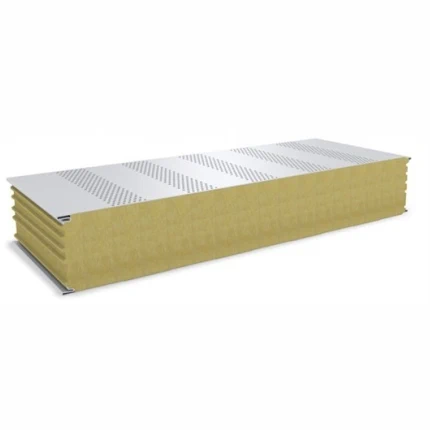
Mineral-wool panel weight depends on the model, thickness and both facings; there is no single figure for the whole product group. Planning transport and installation also requires the panel’s length and width. A catalogue mass in kg/m² is the starting point: calculate the area of each element, apply the correct unit mass and total the delivery by variant. This guide demonstrates that calculation, compares two panel families and explains allowances for packaging and handling. Confirm actual delivery weights with the supplier. Similar weight alone does not identify an unknown panel or establish its structural, fire or quality classification.
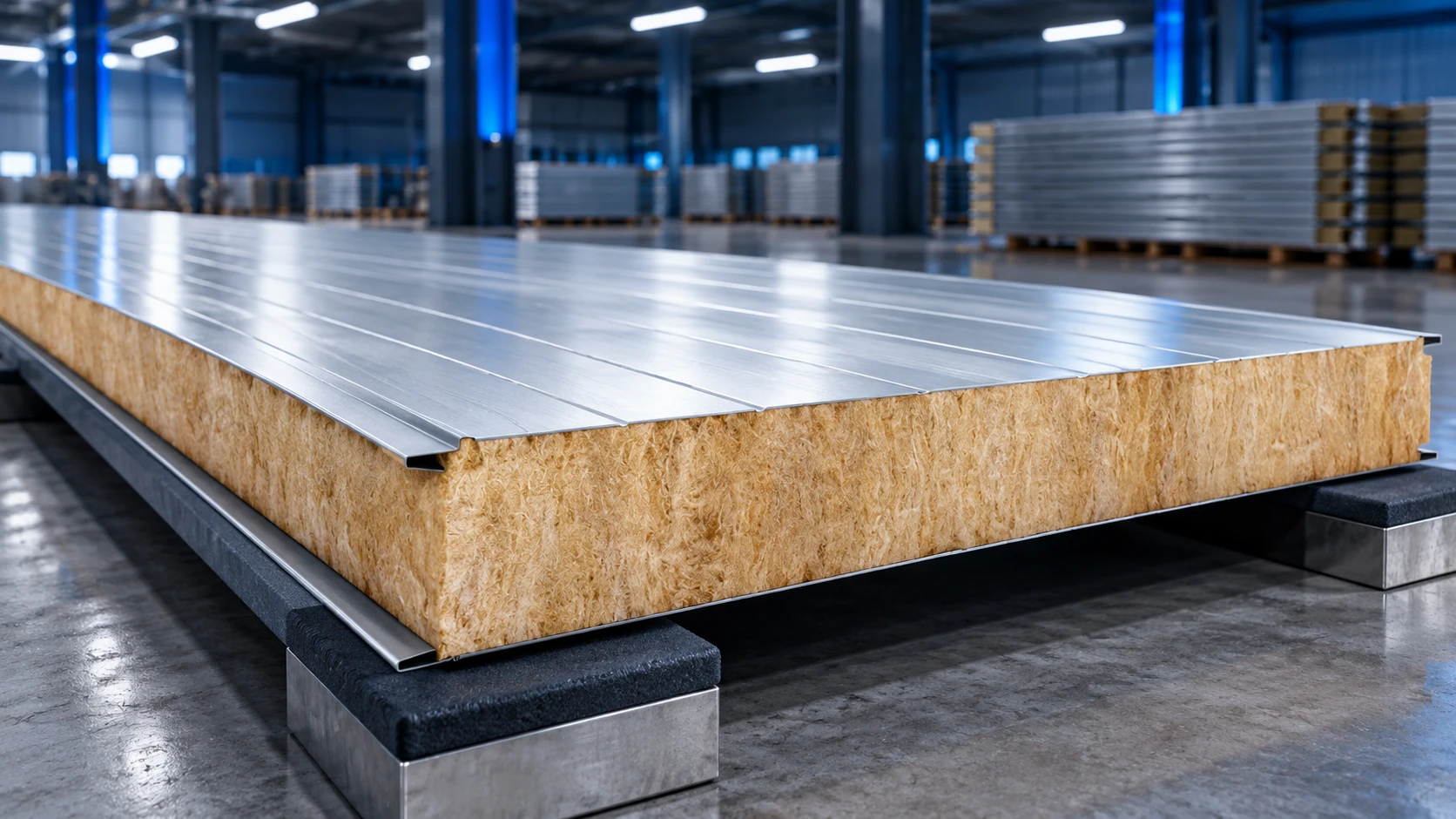
What the product sheet tells you
Consider PWW-S mineral-wool panels with 0.5/0.5 mm facings. Their mass is 14.1 kg/m² at 60 mm, 18.1 kg/m² at 100 mm, 23.1 kg/m² at 150 mm and 28.1 kg/m² at 200 mm. These are selected variants, not a universal table. Check tolerances and how the mass is specified when ordering.
IzoWall MWF, with a variable-density mineral-wool core, weighs 17.0 kg/m² at 100 mm, 21.3 kg/m² at 150 mm and 25.6 kg/m² at 200 mm, again with 0.5/0.5 mm facings. The difference reflects the particular construction. “Mineral wool” alone therefore does not determine panel weight.
A simple calculation for one panel
Take a 100 mm panel weighing 18.1 kg/m², with a 1000 mm module width and 6000 mm length. Its area is 1.00 × 6.00 = 6.00 m², giving approximately 108.6 kg. This is an estimate from specified data, not a measurement of every panel of that size. Confirm actual delivery mass in the order.
At the same unit mass, a 1130 mm module and 6000 mm length give 6.78 m² and approximately 122.7 kg. Panels of equal length and thickness can therefore require different transport assessments. Before lifting, establish the actual width variant and the supplier’s area convention.
Catalogue figures support estimates, but transport planning needs the actual delivery schedule. Sum each variant separately rather than multiplying the entire area by the lightest panel’s mass. Include changes such as a 0.6 mm inner facing instead of 0.5 mm. Small differences per square metre add up across many panels. Finish by checking that every order item is included.
Thicker facings also change the result
For one example 100 mm mineral-wool panel, mass is 17.0 kg/m² with 0.5/0.5 mm facings, 17.9 kg/m² with 0.5/0.6 mm and 18.7 kg/m² with 0.6/0.6 mm. These figures belong to that variant, not every 100 mm panel. Specify both facings in the order.
Check both sides: “half-millimetre sheet” is insufficient if the relevant facing is unspecified. Complete notation in the quotation and specification keeps the design weight consistent with the order and avoids understating transport costs.
Panel mass is not the mass of the whole wall
The structure carries panels, flashings and other envelope components; services may add separate loads. Transport calculations also include packaging and handling components. Lifting requires consideration of the equipment and how the panel is gripped.
Do not select lifting equipment solely by total kilograms. A long panel may need a lifting beam and carefully spaced lifting points. Protect edges and facings from local pressure during unloading. Choose slings and methods for the delivery, even where nominal lifting capacity seems adequate.
Handling unidentified products
For used panels or mixed outlet stock, identify the manufacturer and model first. An unrelated catalogue offers only rough guidance. Weight differences may reflect facings, core or condition; weighing alone does not establish quality grade.
Where properties cannot be confirmed, a cautious technical assessment is necessary. Weighing may help logistics but cannot replace structural and fire documents. A wet or damaged panel is not identified merely because its weight resembles a table. Inspect edges, core and the bond between metal and insulation too.
Prepare the information before delivery
The order should list quantities, lengths and widths by variant. Request a package schedule, establish unloading sequence and plan storage close to the wall being installed. This reduces additional handling of heavy components.
Storage matters as much as unloading. Protect panels from water and surface damage, and do not slide them over one another like ordinary sheets. Follow manufacturer guidance to preserve shape and facings. Good logistics reduce waste and support safe work.
Frequently asked questions
What does an example 1 × 6 m panel weigh at 18.1 kg/m²?
Approximately 108.6 kg in this example. Confirm the unit mass and area convention for the actual panel.
Do all mineral-wool panels of equal thickness weigh the same?
No. Cores, facings and construction differ. Use the exact model’s data.

Free quote
What to include in your enquiry
Tell us how you plan to use the material, the dimensions and the quantity you need. Include the thickness, grade or variant name, along with the delivery town or your preferred collection branch. For a specific product, add its name or a link to the product page. We will reply to the email address you provide to discuss availability and the terms of your order.
More from the building guide
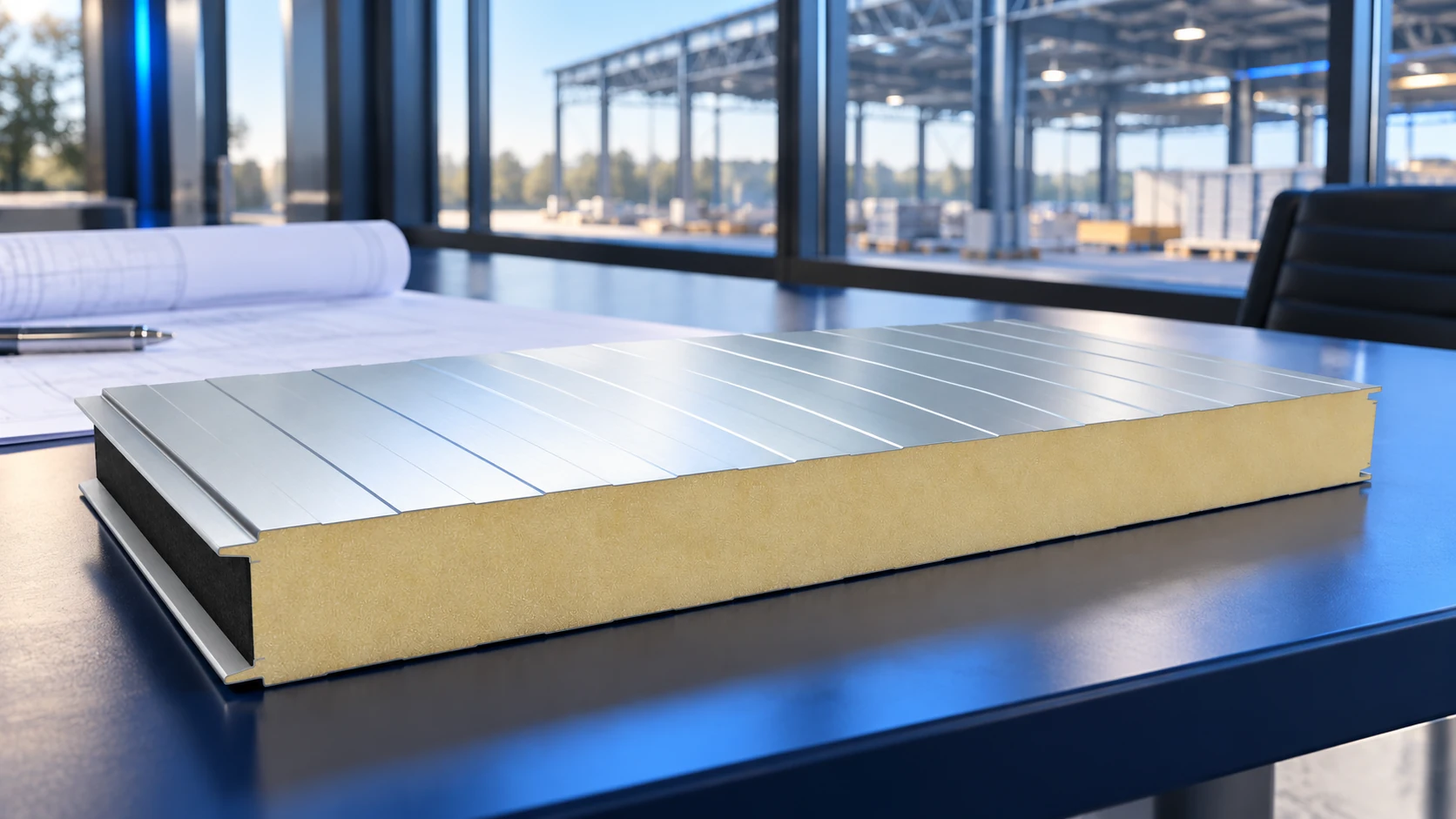
A hall budget should separate foundations, the supporting frame and the enclosure because each is measured and priced differently. Multiplying a panel…
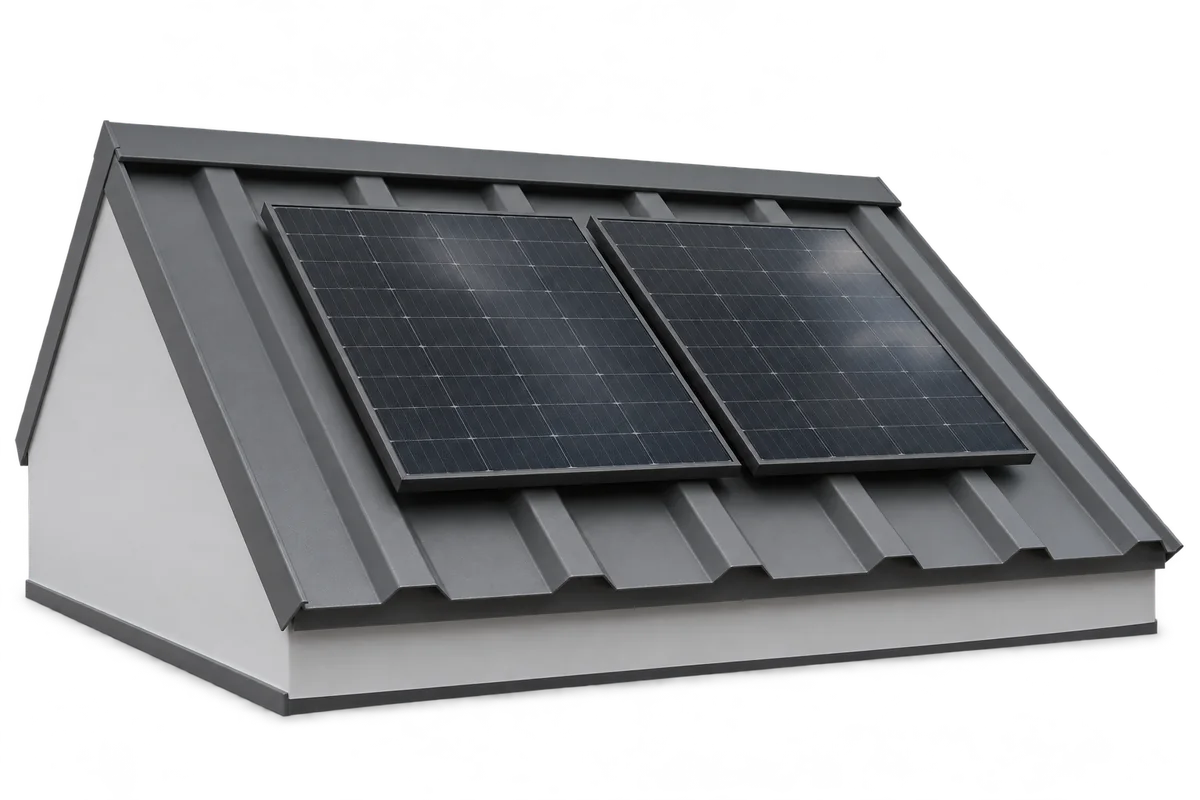
The fixings for a photovoltaic array must suit the specific roof and the loads it will carry. Metal tile roofing, trapezoidal sheets…
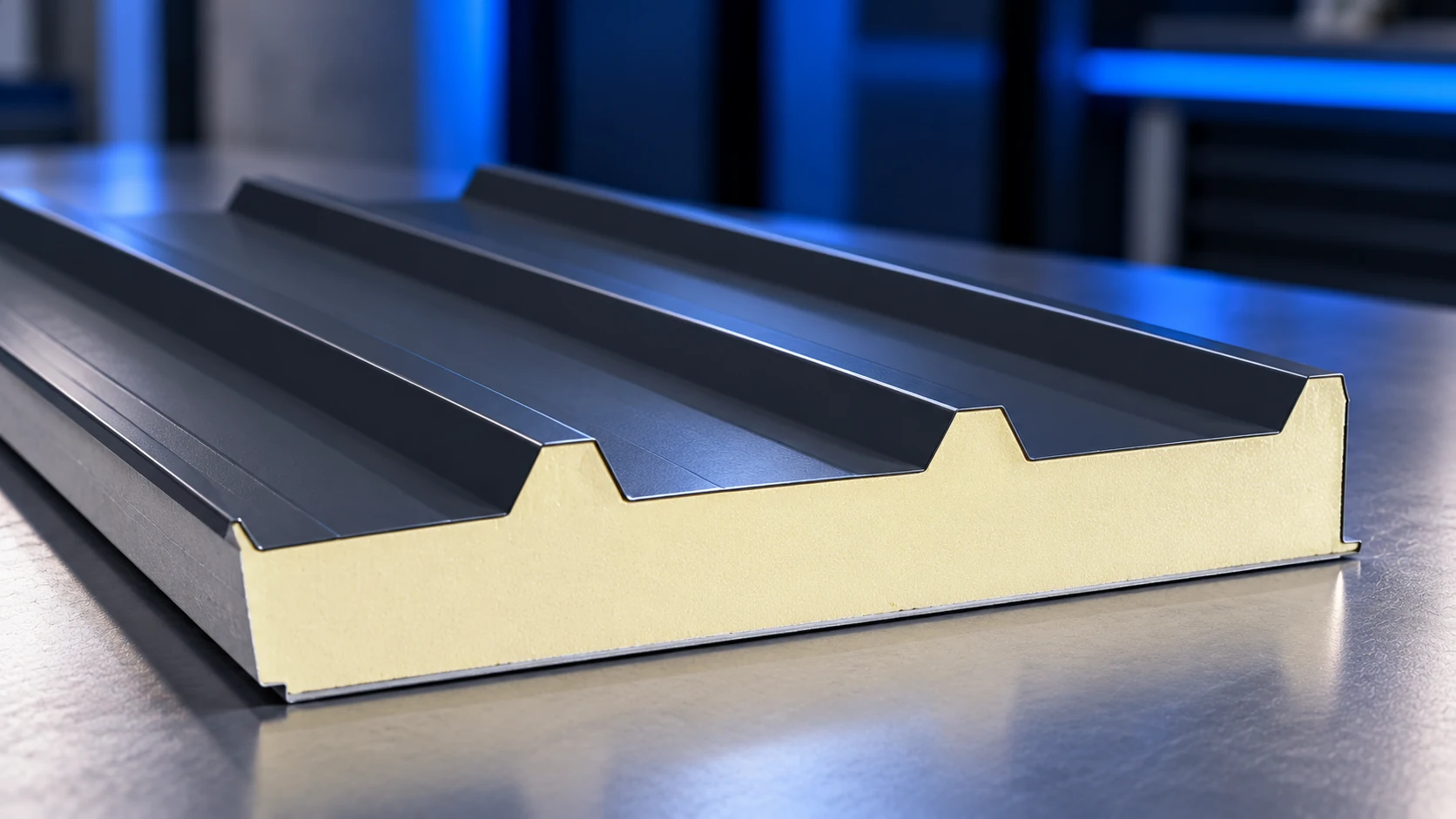
A correctly specified roof sandwich panel can provide the required thermal insulation without an extra layer, provided the complete roof meets the…
Choosing a sandwich panel starts with the building's intended use. A cold store, heated workshop and simple warehouse enclosure need different combinations…
The cost of a sandwich-panel hall depends on the scope of the project. A frame with cladding is a different purchase from…
There is no universal screw count per square metre of sandwich panel. First establish the fixings required at every panel-to-support connection, taking…
The cheapest advertised sandwich panel does not necessarily produce the cheapest enclosure. Panel lengths, cutting waste, transport and missing accessories can outweigh…
A roof sandwich panel can suit a low or steeper pitch when the manufacturer's conditions cover the proposed assembly. A “flat roof”…