






Cutting XPS boards for close joints and less waste
XPS insulation
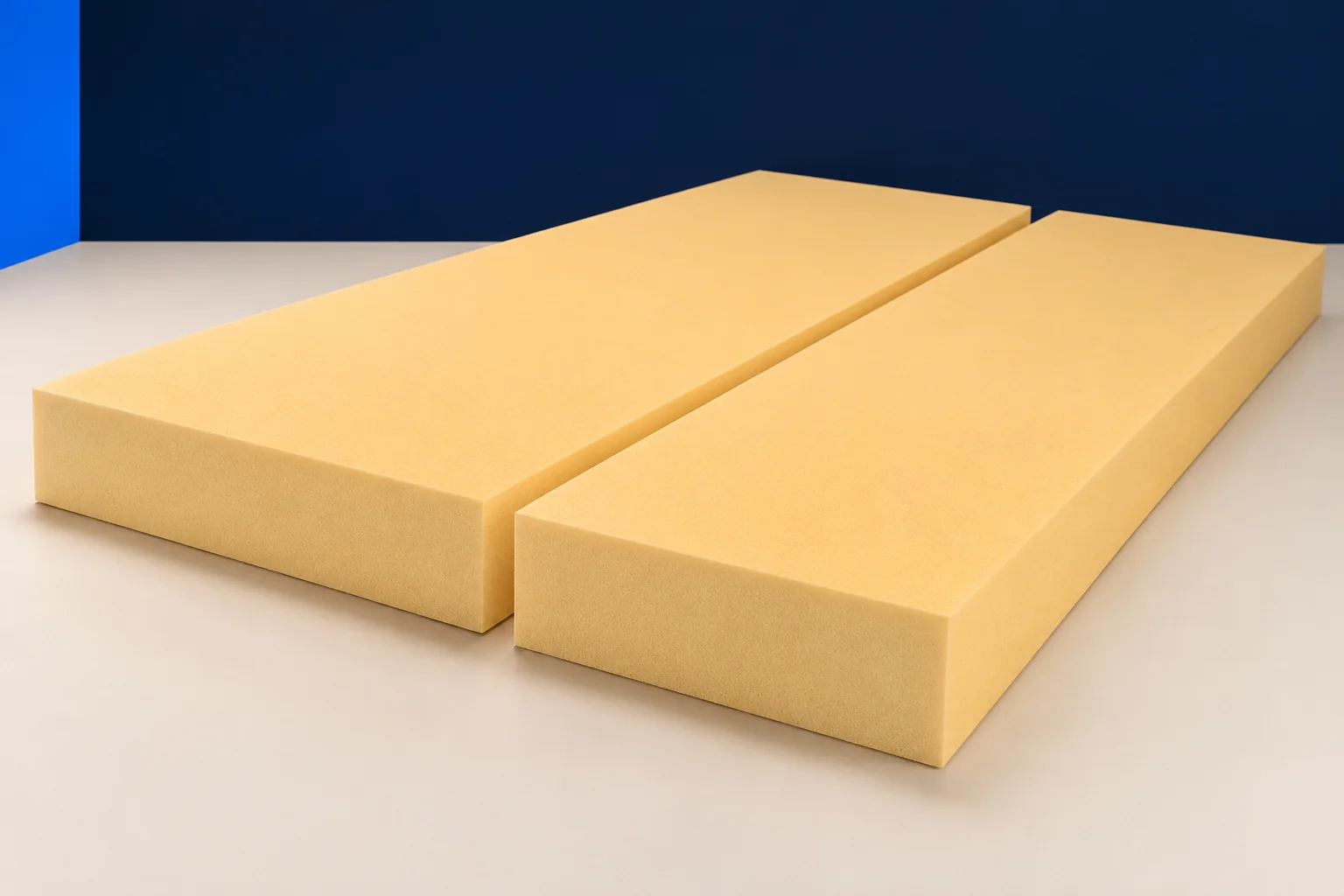
Most waste can be avoided before the first saw cut. Draw the row using cover dimensions, mark the side to keep and decide which edge needs its factory rebate. Choose a tool for the board thickness and test it on a small piece from the same pack. Use a template at irregular walls and pipes. The dry fit tells you whether the cut worked: the piece should sit flat, with sound edges, without having to be forced into position.
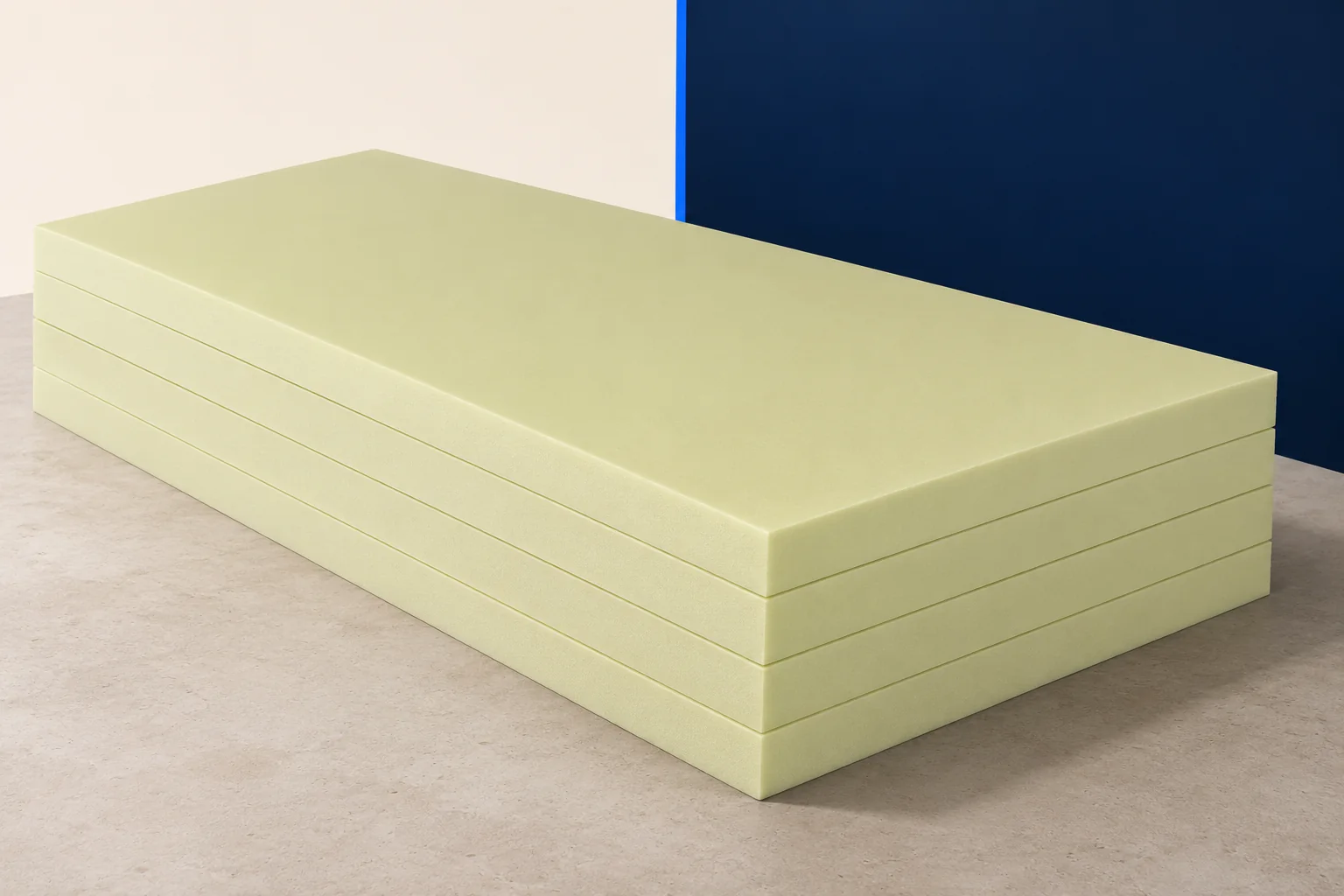
Lay out the rows first
Start adjacent rows with different lengths where the layout calls for staggered joints. Check on paper whether the first row’s offcut fits the next row with the rebate facing the right way.
Measure the piece you will keep
Measure two points from the same retained edge and join them with a straight line. Mark the waste with a cross so similar strips are not cut on the wrong side of the line.
If the wall veers or is out of plumb, measure at both ends of the piece. For an irregular outline, make and trial-fit a template before marking the board.
Select a knife or hand saw
A suitable knife may suffice for a short cut in a thin board. For thicker stock, try a hand saw on a sample and check that the cut is straight on the underside too.
Support the board near the line while leaving clearance for the tool. If the last section breaks off rather than cutting cleanly, improve support under the waste.
Hot-wire cutting is a separate method
Use a thermal cutter only if its manufacturer specifies it for XPS. Check the tool instructions before setting up the workstation.
Provide the ventilation required for the method and clear loose packaging from the station. Do not shape polystyrene edges with an open flame.
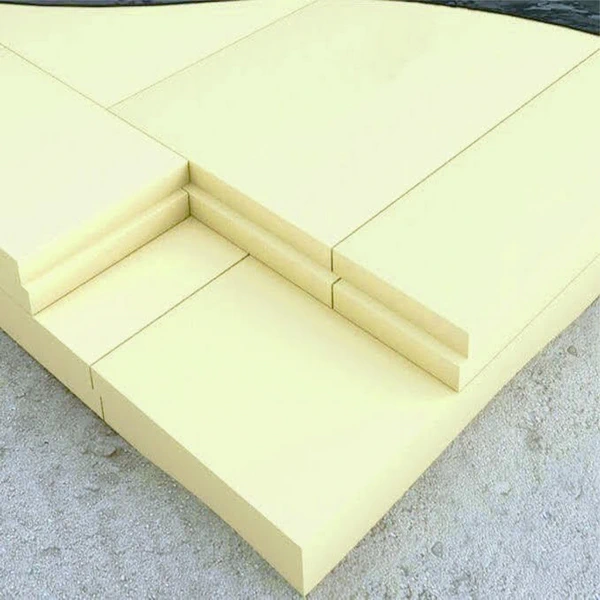
Keep the rebate on the joining side
At a rebated joint, identify whether the dimension starts at the adjoining board face or at the end of its lip. Confusing the two changes the finished strip width.
If cutting leaves a square edge, place it where that termination is specified. A joint cannot retain a factory rebate that has been cut away.
Transfer pipe positions accurately
Locate the pipe centre from two fixed edges. Transfer the position to a template and allow for the specified penetration seal.
Trial-fit both pieces behind the pipe. If they meet only at the front, correct the outline before the rear of the penetration becomes hidden.
Inspect the cut face
Use a square to check whether the cut slopes through the thickness. Two aligned top edges can conceal a gap at the substrate.
Brush debris from the joint and lay the piece in place. If a corner needs to be pushed down, check both the cut angle and the bearing surface.
Sort reusable pieces by size
Mark usable remnants with thickness and rebate direction. Store them apart from broken scraps to avoid remeasuring every piece.
Before cutting into the next full board, compare the required size with the saved pieces. Use a matching offcut if it retains the required edge and bearing.

Free quote
What to include in your enquiry
Tell us how you plan to use the material, the dimensions and the quantity you need. Include the thickness, grade or variant name, along with the delivery town or your preferred collection branch. For a specific product, add its name or a link to the product page. We will reply to the email address you provide to discuss availability and the terms of your order.
More from the building guide
The XPS pack label identifies the boards delivered to site. The declaration of performance lets you check whether that exact product meets…

To calculate an XPS order, separate the area to insulate, the number of layers and the coverage of one pack. Two layers…
Choose an XPS adhesive for the specific joint. The same board may need a different product or application pattern on concrete than…
The combination of PIR with mineral wool, EPS or XPS should be assessed on the basis of the entire cross-section of the…
PIR and XPS can both be used in suitable flat-roof constructions, but they do not necessarily occupy the same position. Establish where…
XPS beneath a raft foundation provides insulation and forms part of the load path from the house into the ground. To specify…
Two insulation quotations may cover the same part of a house while including different quantities and delivery arrangements. When comparing PIR, EPS,…
When damp repeatedly appears at home, gather organised observations before choosing a repair. A mark beside a window, a wet corner and…