






How to protect foundation EPS before backfilling
EPS and thermal insulation
Before backfilling a foundation, check the continuity of the waterproofing, the bond of the EPS boards and their protection against mechanical damage separately. Inspect corners, footing and plinth junctions, and every wall penetration. Photograph them with a scale and mark service routes. A dimpled sheet does not replace waterproofing, and a cavity behind a protective layer does not itself drain water. Match filling and compaction to the design, soil and wall capacity. Even a small repair may require excavation once the ground is levelled.
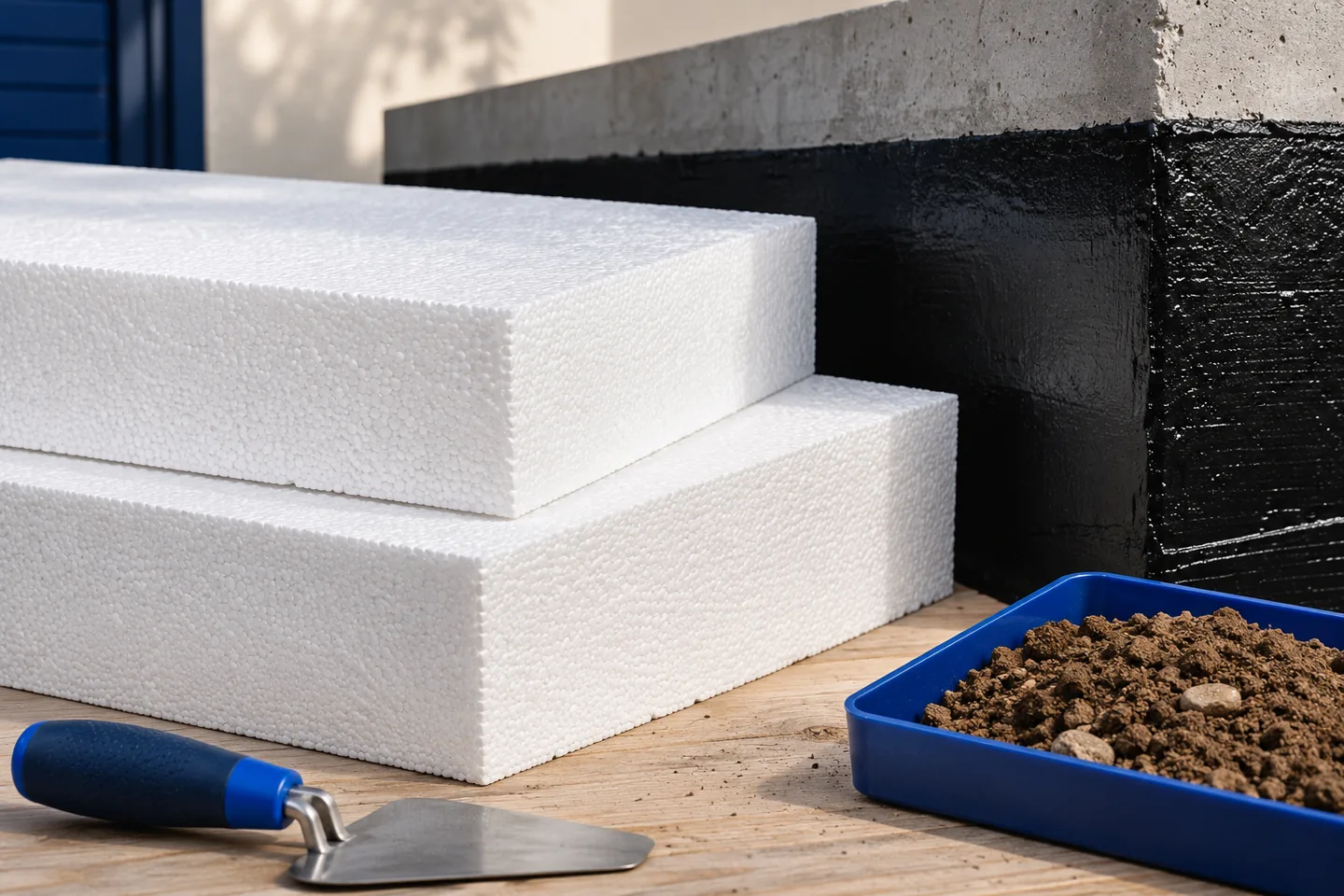
What needs checking before the excavator arrives?
Having boards in place does not mean the wall is ready. Let adhesive and waterproofing reach the condition specified in their instructions. Soil pressure applied too soon can shift boards or damage an uncured coating. Establish the finished ground level for the insulation termination and facade transition.
Is the chosen EPS suitable below ground?
Check the product’s declared applications, water absorption, mechanical properties and exposure limits. Low conductivity does not make a facade board suitable for ground contact. A description such as “rigid EPS” does not specify all the properties required either.
The documentation may restrict depth or water exposure. Occasional dampness, permanent immersion and hydrostatic pressure are distinct conditions. Do not extend a single product’s approvals to all EPS. With high groundwater the design must cover both thermal insulation and effective waterproofing.
How do you protect waterproofing while fitting the boards?
Use an adhesive compatible with EPS and the waterproofing. Follow its application method and curing time; incompatible solvents can attack polystyrene. Inspect the coating before bonding. A defect covered by a board remains a possible path for water.
Do not puncture below-ground waterproofing with unplanned anchors. Where a designed detail includes mechanical fixing, it must also seal the penetration. A fixing plate against EPS does not seal the hole in the wall. Avoid unnecessary penetrations to keep the coating continuous.
What does the protective layer do?
A protective layer reduces damage during backfilling and subsequent ground movement. It may also help drain water where the assembly is designed to do so. Dimpled sheets, drainage mats and geotextiles have different functions; do not substitute one for another on the basis of appearance or availability.
Follow the product detail for orientation, direction of dimples and the top termination. There is no universal rule for every dimpled sheet. Provide the intended outlet at the bottom. An air gap is not a working drain: drainage requires a clear flow path, a discharge point and suitable site conditions.
How should the excavation be backfilled?
Use the fill material and compaction method specified. Keep rubble, sharp stones and large clods from falling against the wall or imposing point loads on boards. Keep excavator buckets and equipment clear. Damage can happen in an instant and disappear from view after grading.
Control placement and compaction to achieve soil stability without endangering the wall, shifting boards or damaging protection. Lift thickness depends on the soil, structure and equipment. Give the contractor the project requirements rather than a single thickness for every job.
What belongs in the inspection record?
Record the EPS, waterproofing, adhesive and protective layer, plus junction photographs and finished ground level. Mark the drain outlet if one was installed. This helps diagnose future damp without having to reconstruct concealed layers from several crews’ recollections.
Termo Organika, Austrotherm, Styropmin and Yetico supply EPS boards for foundation applications. Check the permitted use of the exact product.
After filling, check ground falls and rainwater discharge. Even good insulation faces harsher conditions if a downpipe discharges at the foot of the wall. Keep the designed plinth terminations clear of extra soil. Protection is not complete until the ground around the building is finished.

Free quote
What to include in your enquiry
Tell us how you plan to use the material, the dimensions and the quantity you need. Include the thickness, grade or variant name, along with the delivery town or your preferred collection branch. For a specific product, add its name or a link to the product page. We will reply to the email address you provide to discuss availability and the terms of your order.

More from the building guide
Three details work together at a window corner: an EPS board cut around the opening, diagonal mesh in the base coat and…
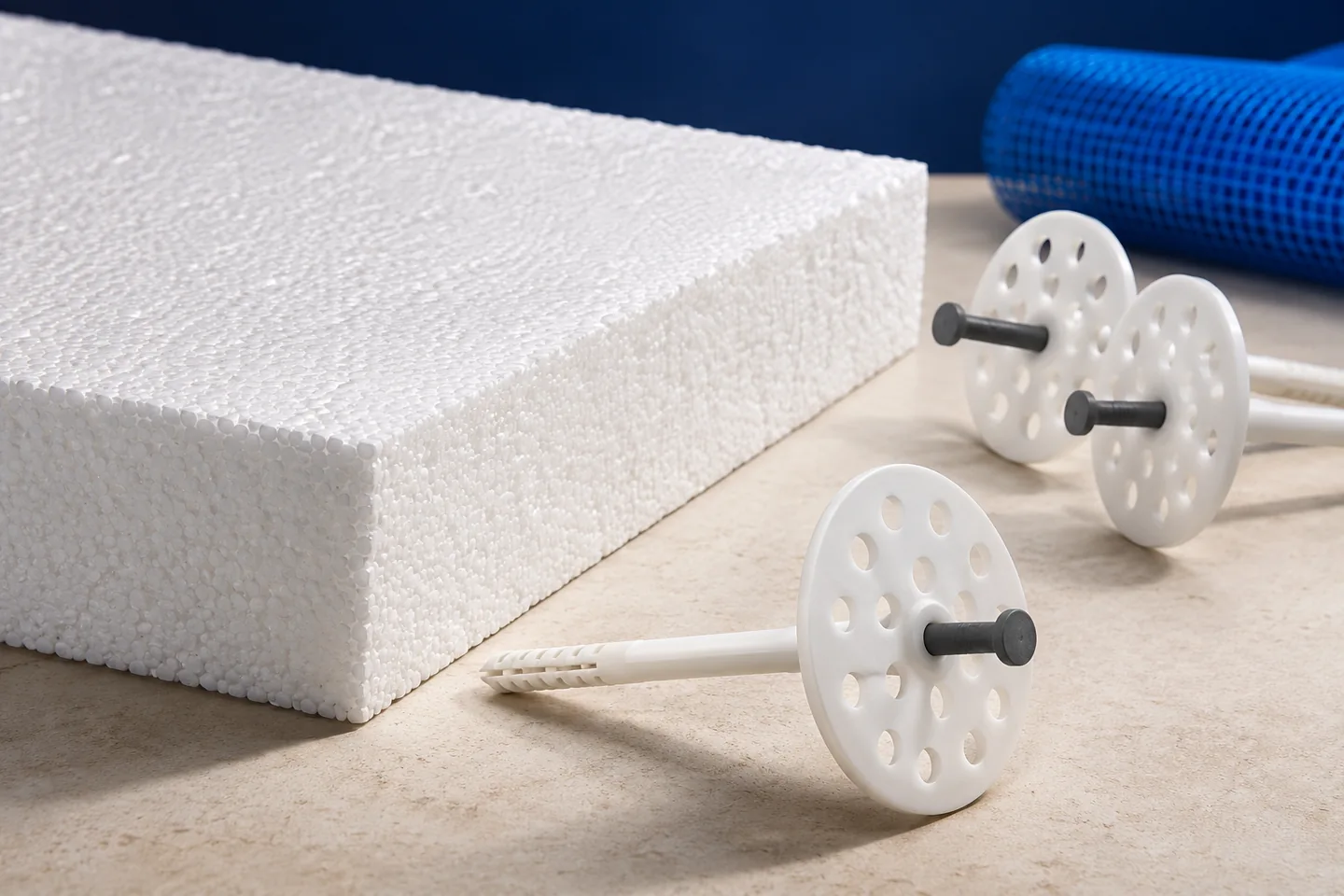
The insulation design and ETICS documentation determine whether EPS facade boards need mechanical fixings. The wall material and its condition, wind exposure,…
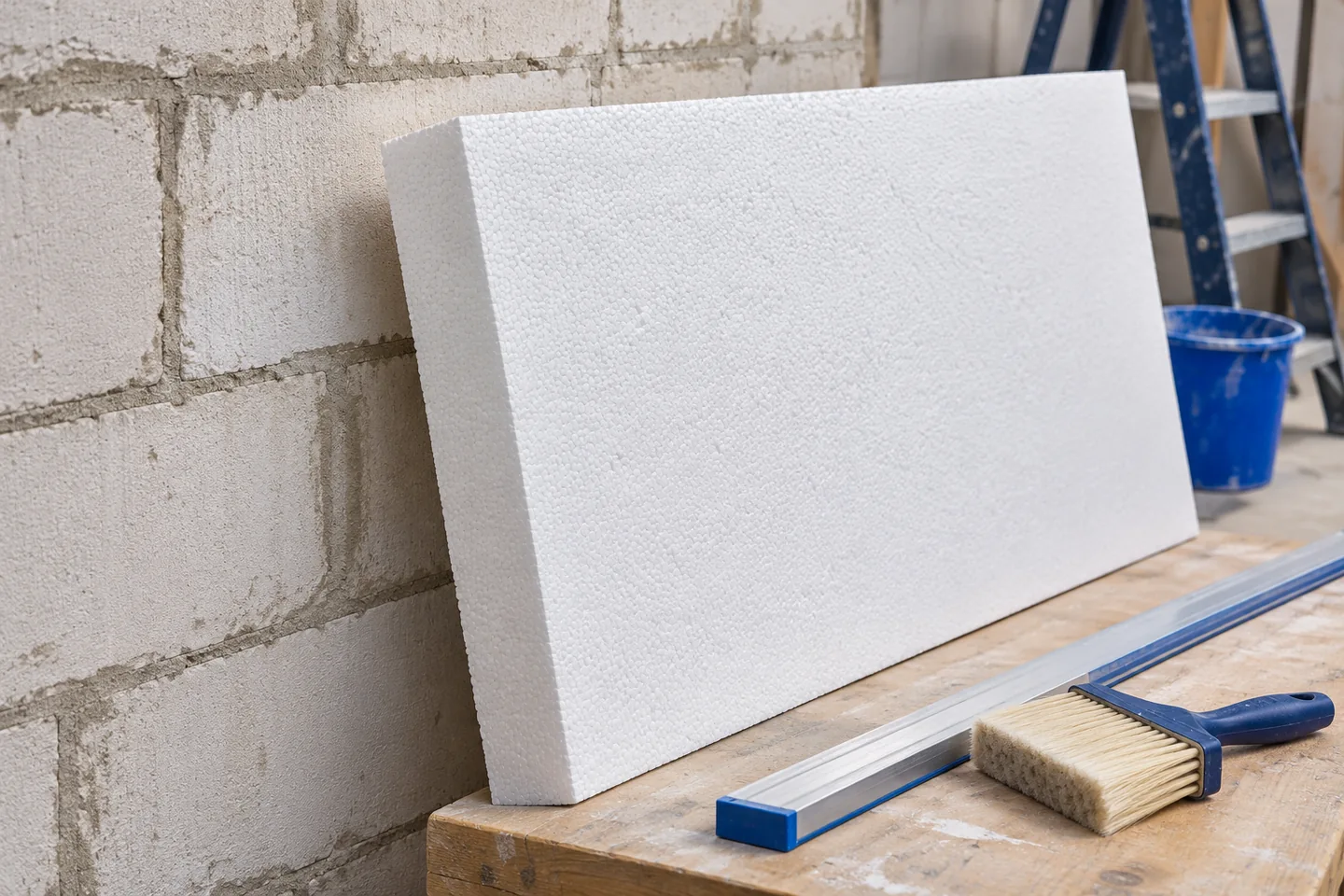
Before bonding expanded polystyrene (EPS) insulation, check that the wall is sound, dry, clean and flat enough for the specified adhesive. Inspect…
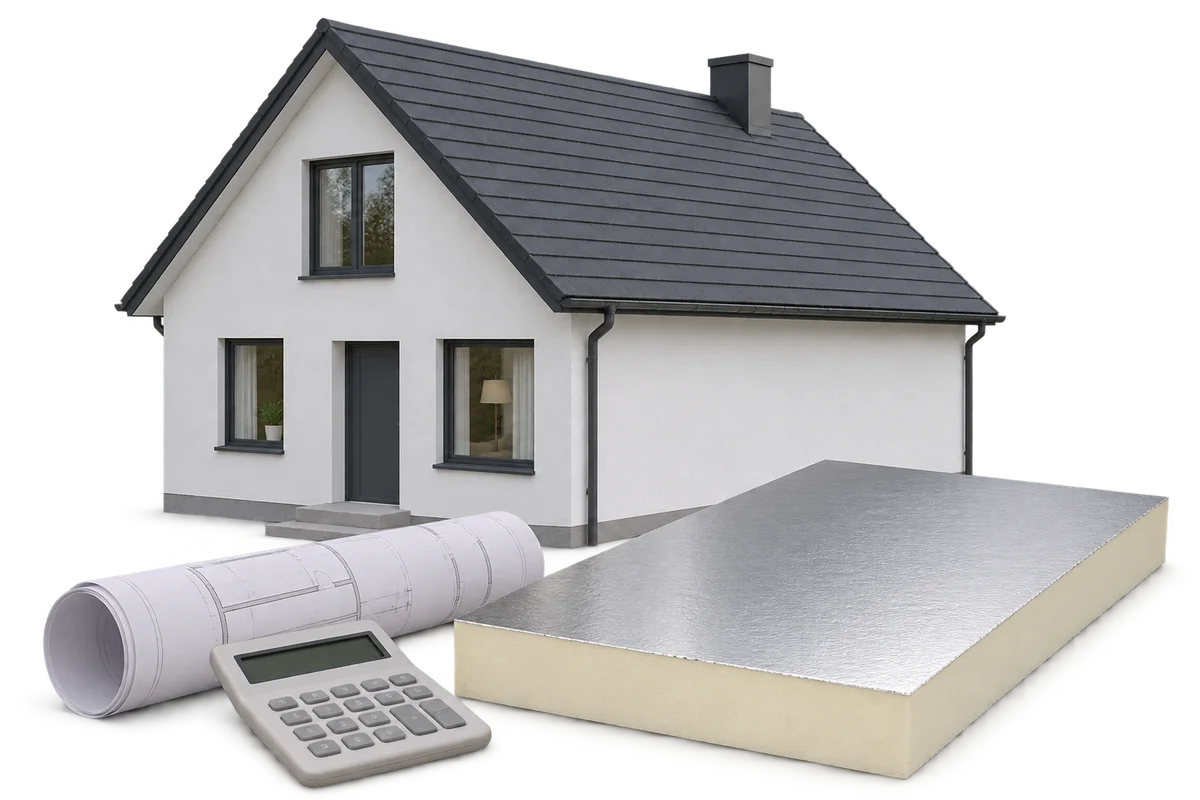
After insulating a home, check both energy consumption and the cost of purchasing it. A lower bill alone does not prove that…
Insulation selection starts with its position in the building. A rendered wall, a roof and a continuously loaded floor impose different requirements.…
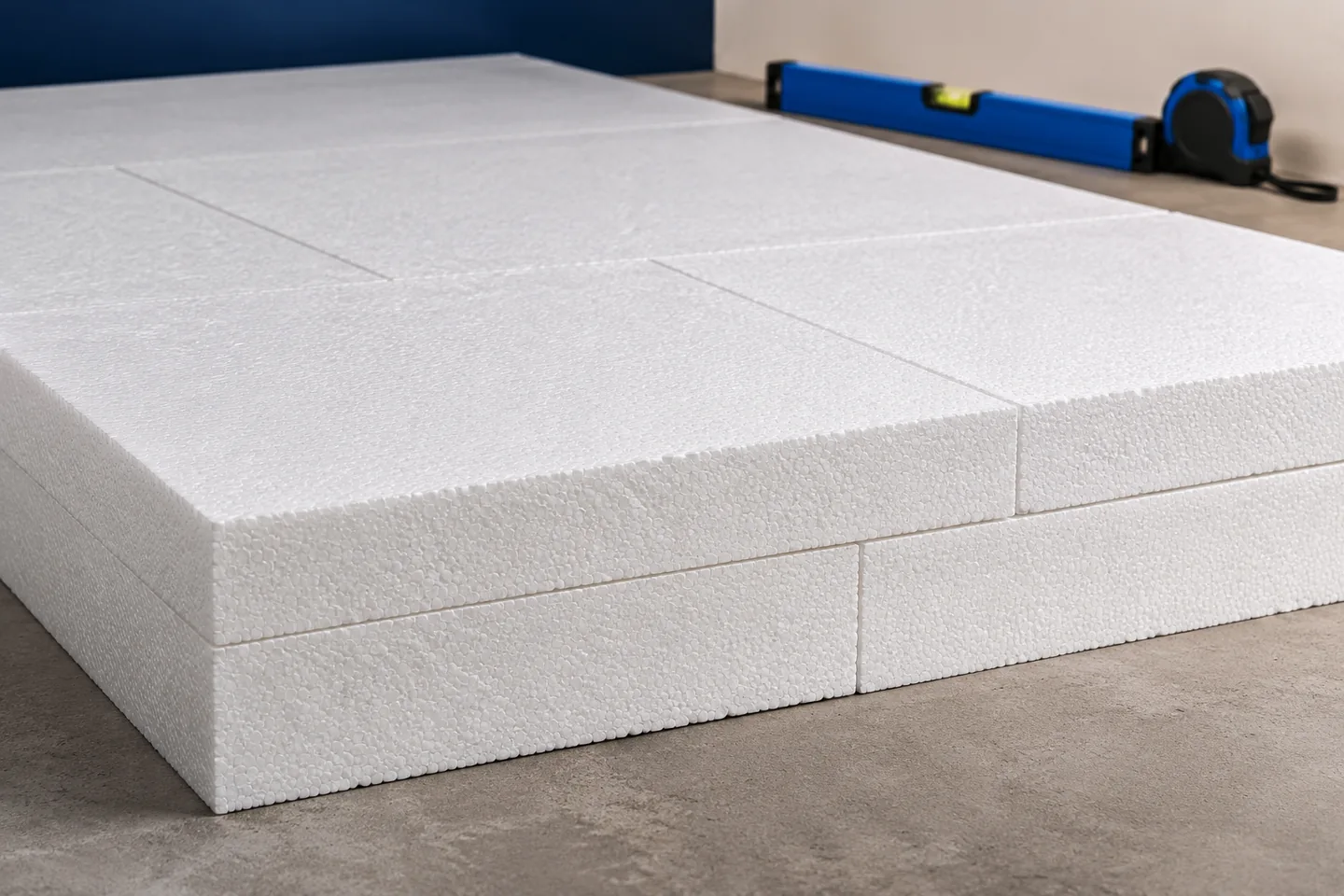
Two layers of floor-grade EPS let you offset joints, accommodate some services and fit the available floor depth. At the same conductivity…
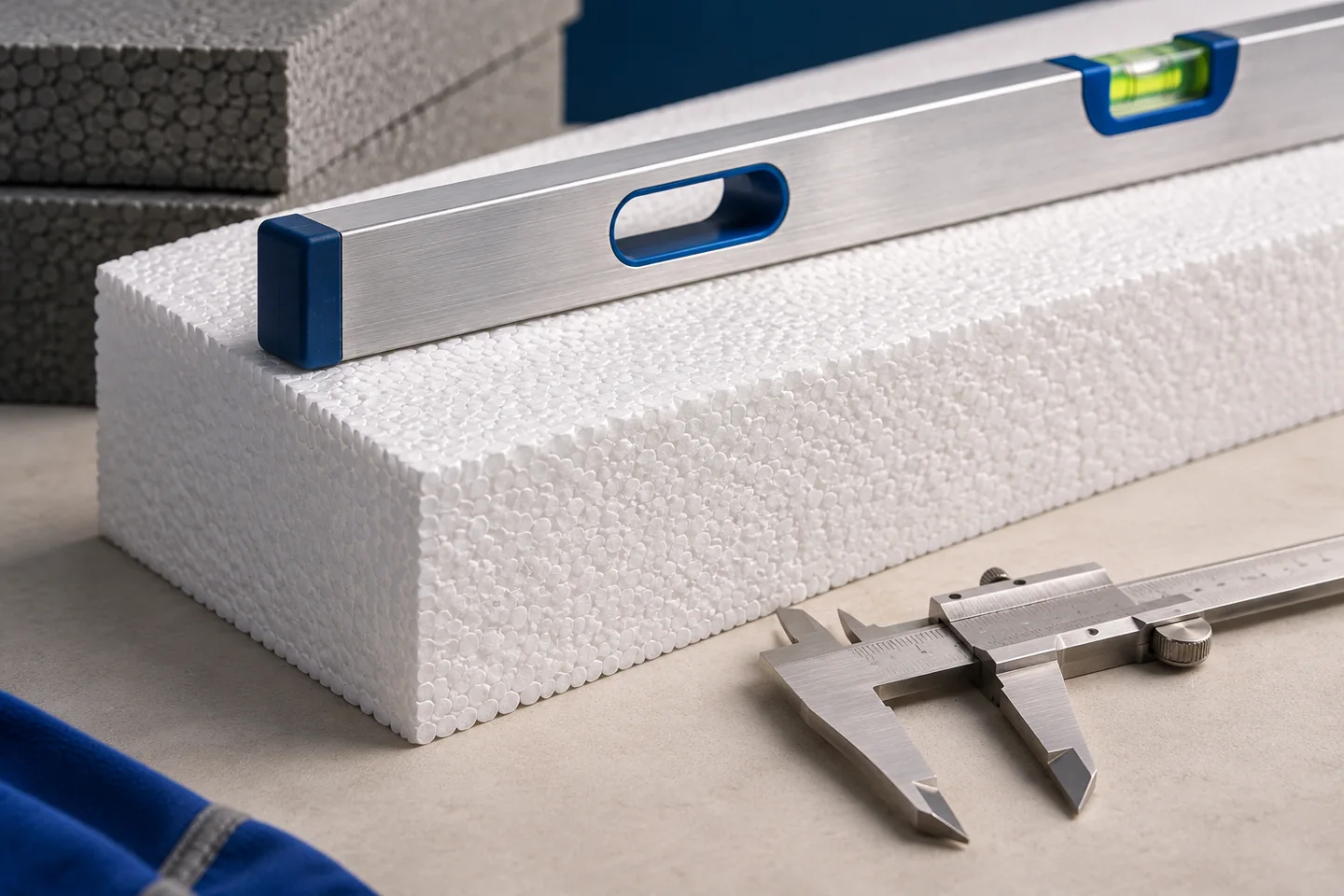
Inspect EPS insulation before each layer is covered. Compare the design and order with the board labels, checking application, thickness and properties…
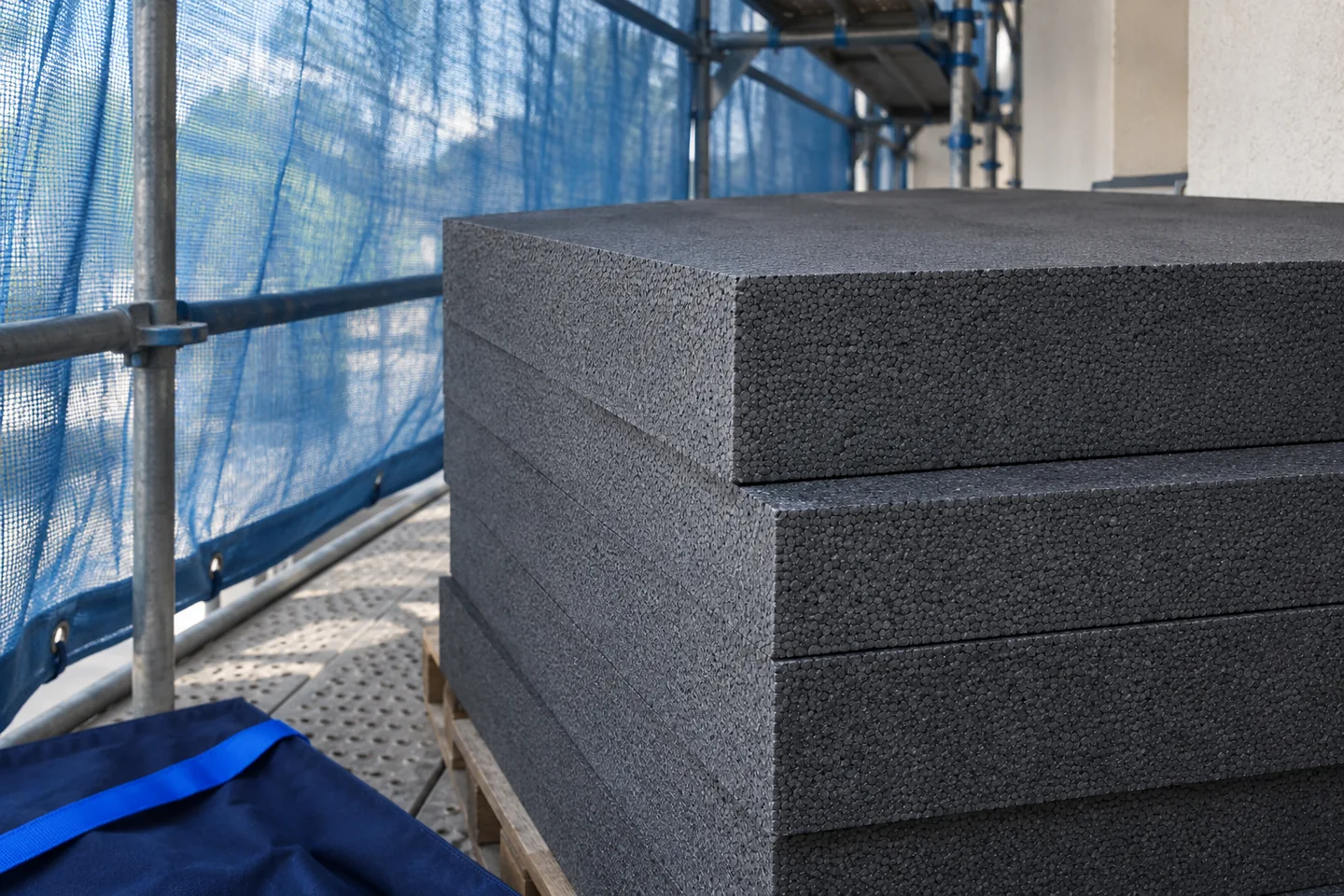
Protect graphite EPS from direct sunlight in storage, during bonding and while the adhesive sets. The dark surface absorbs more solar radiation…