






How to lay EPS roof boards without damaging the insulation
EPS and thermal insulation
Before laying EPS on a roof, check the specified layer sequence, positions of vapour control and waterproofing, and direction of drainage. A board labelled for roofs and floors must still suit the support, fixing method, loads and moisture exposure of this roof. Plan deliveries, access routes and storage to avoid overloading the deck or damaging EPS under point loads. Before covering it, inspect cut pieces, wall insulation junctions and falls at outlets. Inspection of the insulation and testing the completed waterproofing are separate stages.
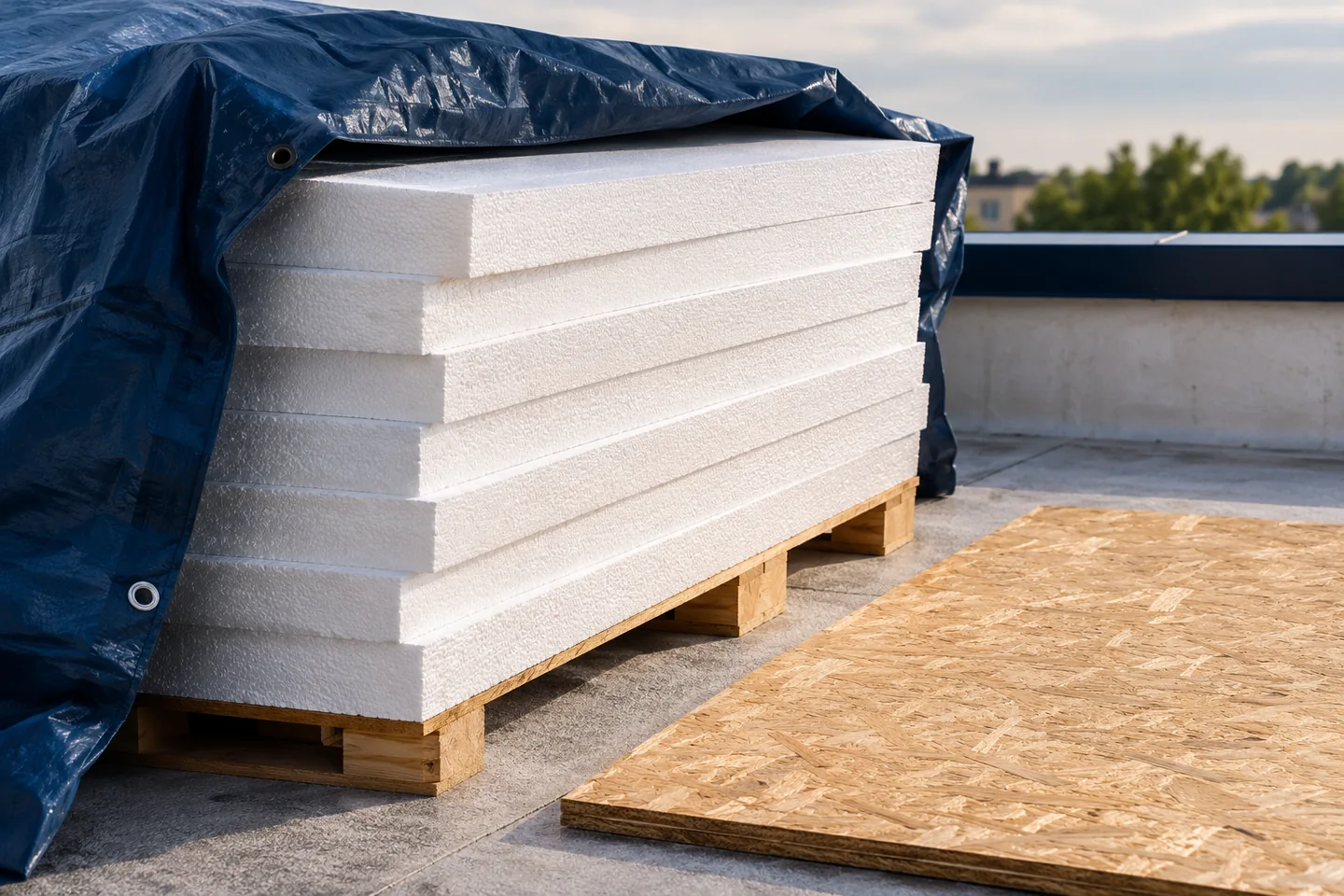
Establish the position of EPS in the roof build-up
Many roofs have EPS beneath the waterproofing, but the order varies with the design. Check parapets, outlets and service penetrations. Maintain continuity with the wall insulation. A well-laid central roof area does not compensate for an unintended strip of poorer insulation at the perimeter.
How do you prepare the deck and move materials?
Use a stable deck suitable for the design. Remove sharp debris, standing water and dirt that could damage layers or impair bonding. On profiled metal decking, check the bearing conditions and specified spans. Where boards bridge gaps between supports, thermal resistance alone does not determine thickness.
Designate storage and transport areas. A roof is not an unlimited stockyard: account for pallets, equipment and the crew. Secure loose boards against wind. Boards blown off the roof are dangerous; improvised heavy weights can also damage insulation or decking locally.
How are boards and tapered pieces laid?
Follow the layout drawing and fit joints closely. Offset joints in multiple layers as specified. Avoid wide gaps at parapets and around outlets. Support cut pieces securely and use only the infill specified for this roof.
Set tapered boards to the markings and the manufacturer’s or designer’s layout. Thickness changes in a particular direction. A reversed piece can create a hollow instead of a fall to the outlet. Check as you lay; no one slope applies to all roofs and membranes.
What matters when fixing or bonding EPS?
Restraint depends on the roof assembly and loads, including wind. Mechanical fixing, bonding and ballast are not freely interchangeable. Edge zones can differ from the central field. Specify the number, layout and anchorage of fixings in the appropriate substrate as part of the design.
Use adhesive compatible with EPS and adjacent layers. Certain solvents attack polystyrene. Check whether the membrane requires a separating layer. Chemical compatibility is distinct from adhesion: being able to unroll a membrane on EPS does not prove long-term suitability for direct contact.
How do you protect the boards during follow-on work?
Mark walkways and working areas around equipment. Supports, tools and stockpiled materials can damage EPS under concentrated loads. CS(10) is not a permissible service pressure. Rooftop equipment and maintenance routes need a designed load path and protection for the waterproofing.
Keep EPS away from naked flames and excessive heat. Torch-applied work requires a method that protects the insulation and other layers; never direct flame at exposed boards. Keep moisture out during breaks. Wet or damaged layers sealed beneath the membrane are difficult to dry and diagnose later.
What should be inspected before waterproofing?
Check board type, thickness and falls against the drawings. Inspect joints, outlets, edges and penetrations. Record fixing positions before they disappear. Assess damaged areas before proceeding; repair afterwards may require cutting open and resealing the membrane.
Swisspor, Styropmin, Knauf Therm and Arbet are among the suppliers of roof EPS. Select the grade for the roof assembly and expected loads.
Signing off the insulation does not verify the watertightness of the roof covering. Inspect that separately, then clear waste and confirm drainage remains unobstructed. The subsequent layers must preserve the continuity and water protection of the specified insulation build-up.

Free quote
What to include in your enquiry
Tell us how you plan to use the material, the dimensions and the quantity you need. Include the thickness, grade or variant name, along with the delivery town or your preferred collection branch. For a specific product, add its name or a link to the product page. We will reply to the email address you provide to discuss availability and the terms of your order.
More from the building guide
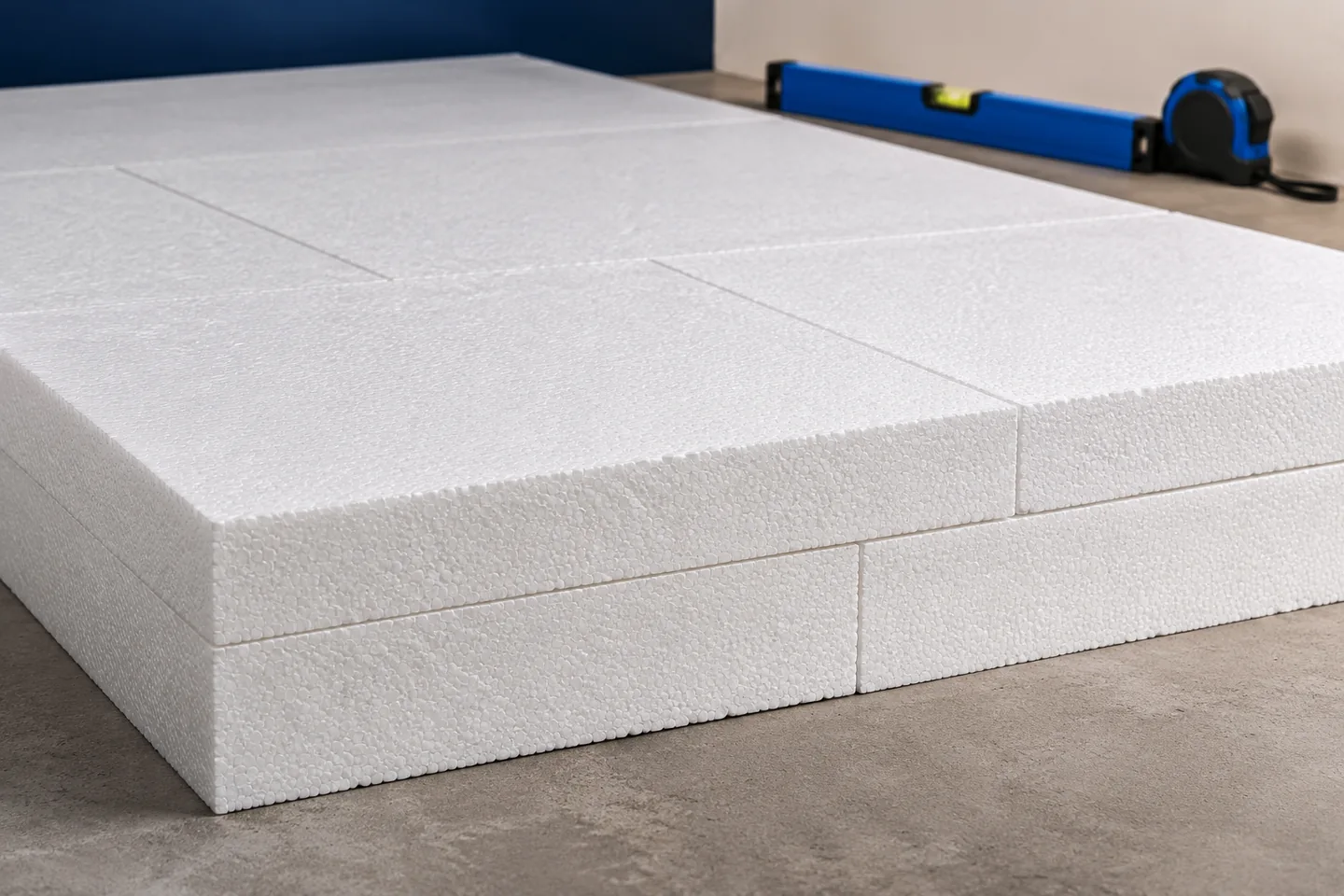
Two layers of floor-grade EPS let you offset joints, accommodate some services and fit the available floor depth. At the same conductivity…
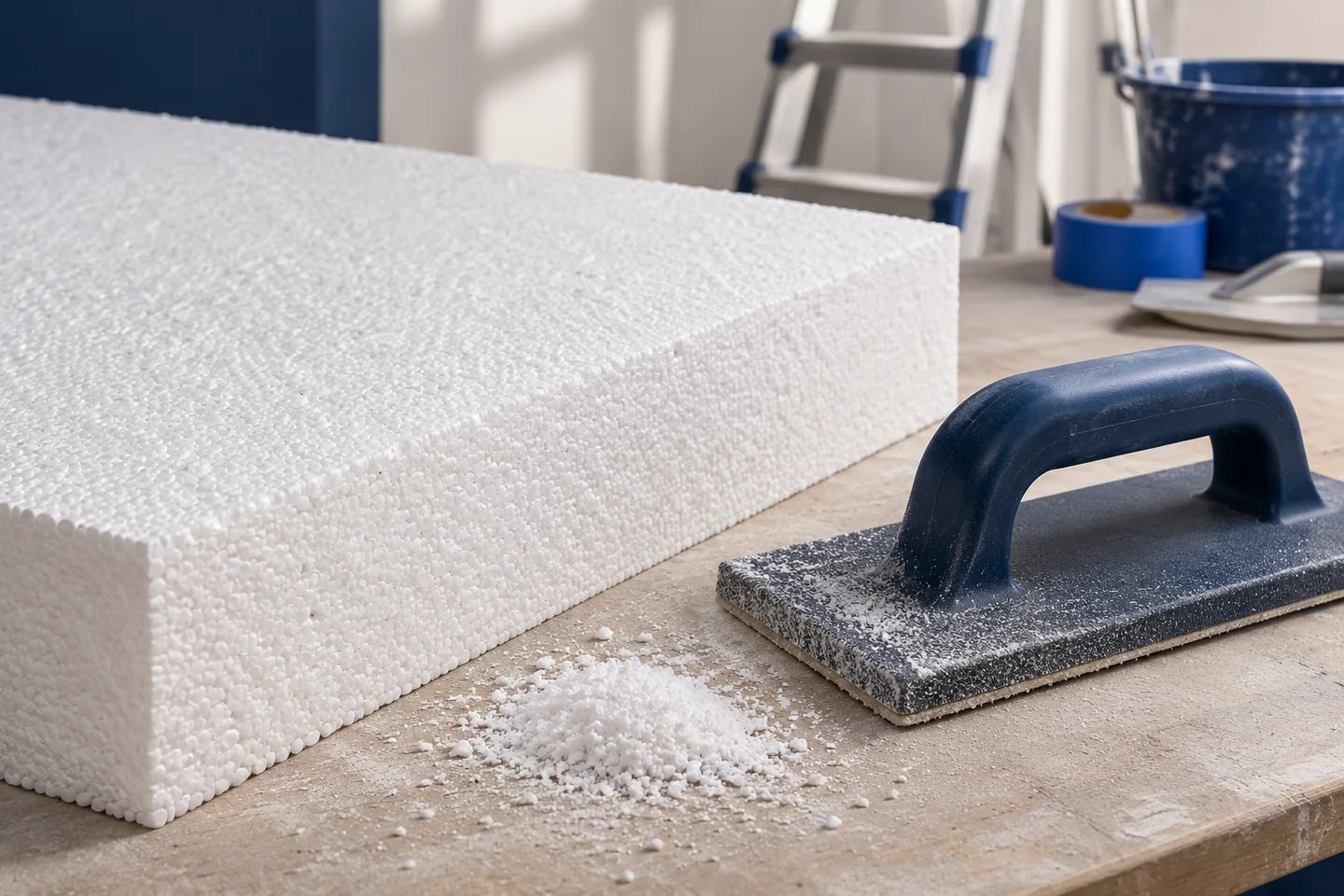
Sand facade EPS once the adhesive has cured under the conditions and for the time specified for the system, and the boards…
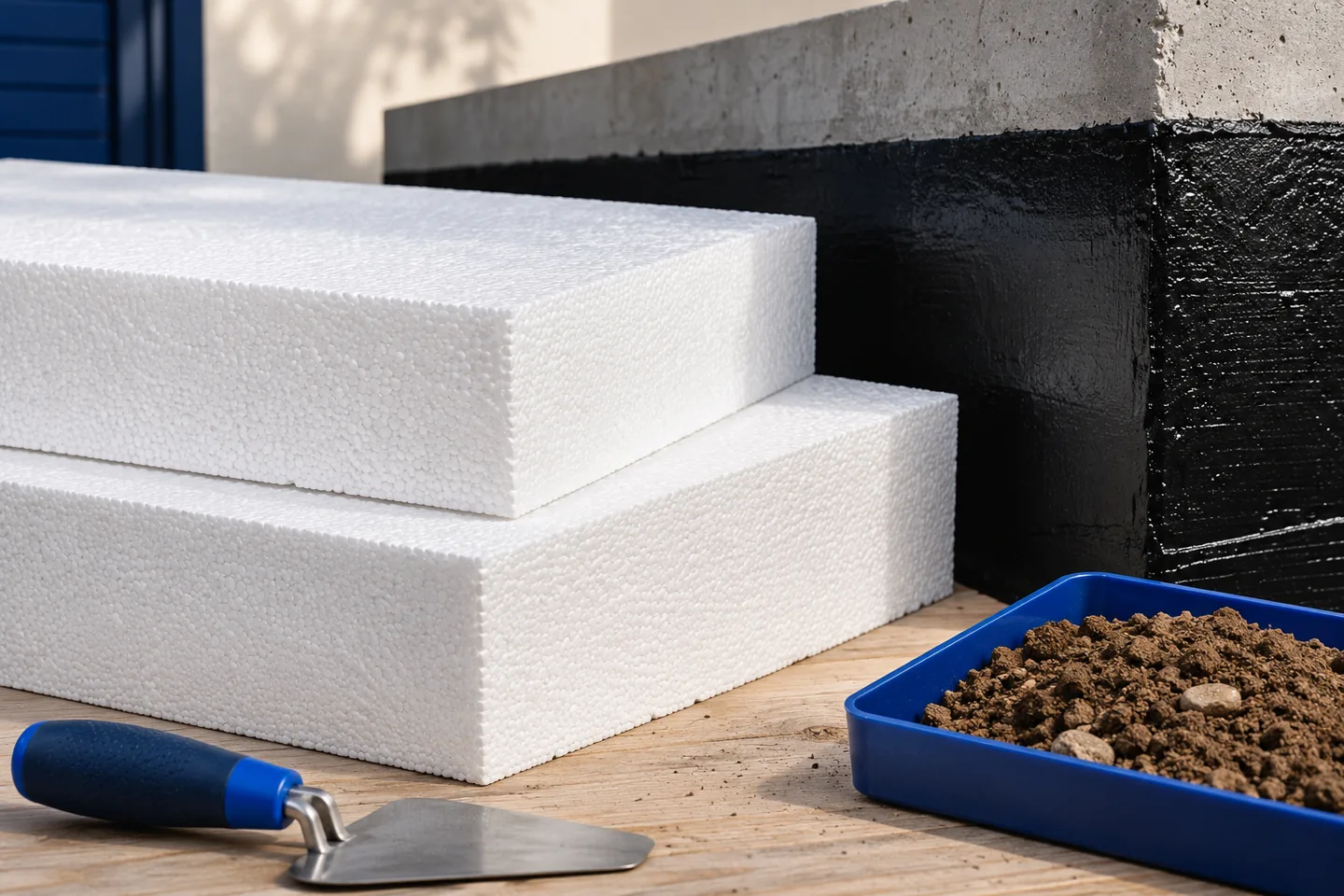
Before backfilling a foundation, check the continuity of the waterproofing, the bond of the EPS boards and their protection against mechanical damage…
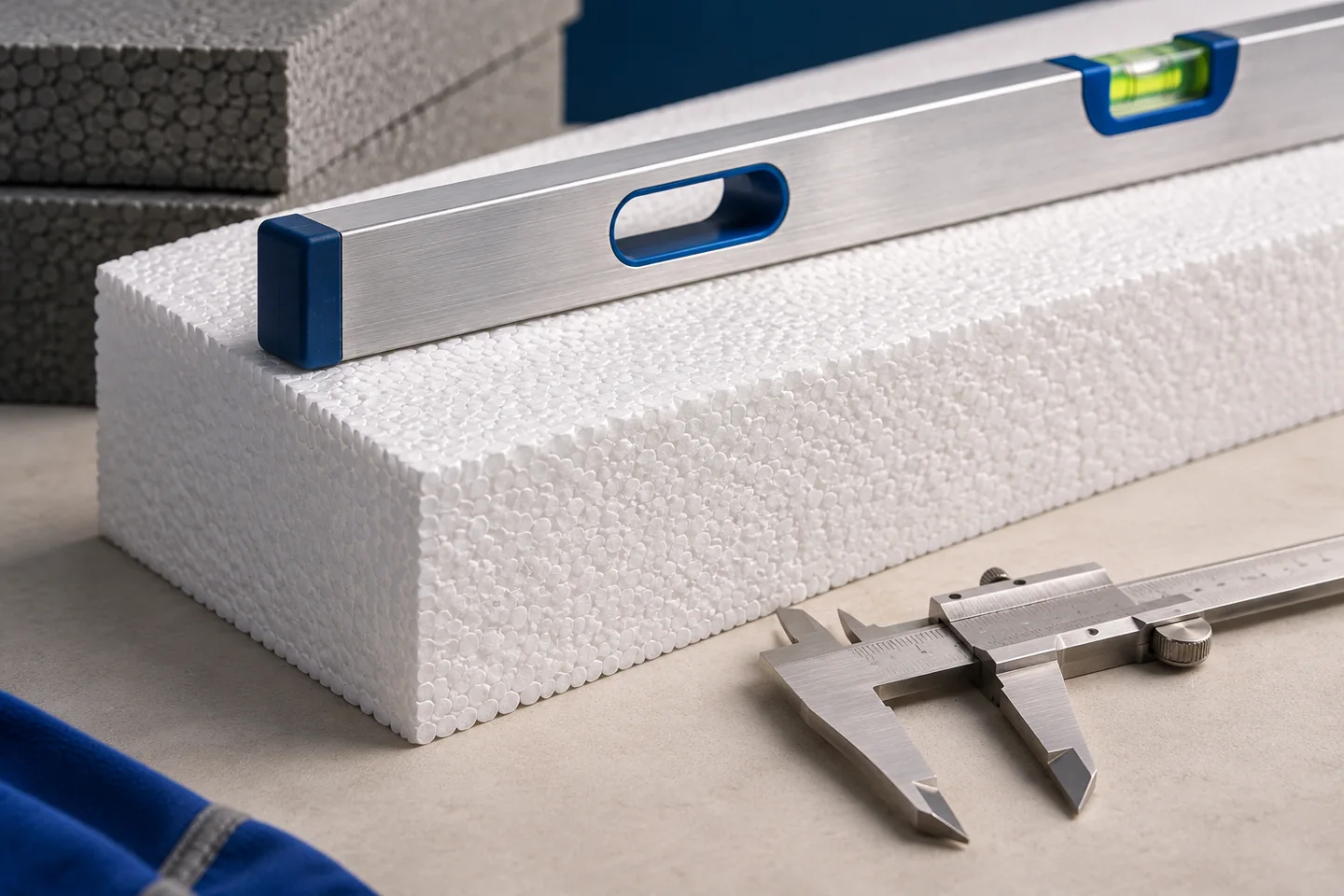
Inspect EPS insulation before each layer is covered. Compare the design and order with the board labels, checking application, thickness and properties…
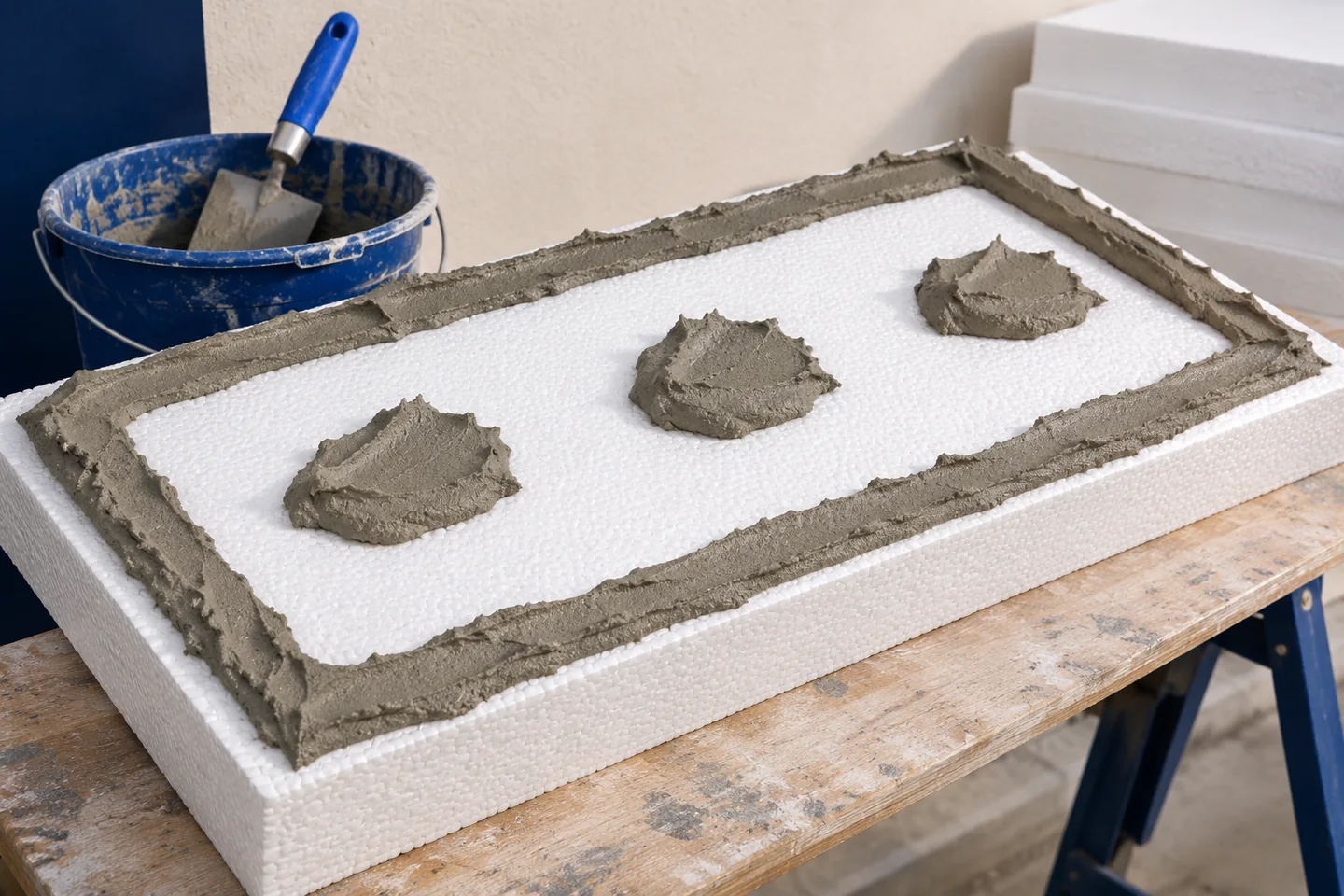
Use the bonding method specified for the substrate, EPS board and adhesive in your external thermal insulation composite system (ETICS). On a…
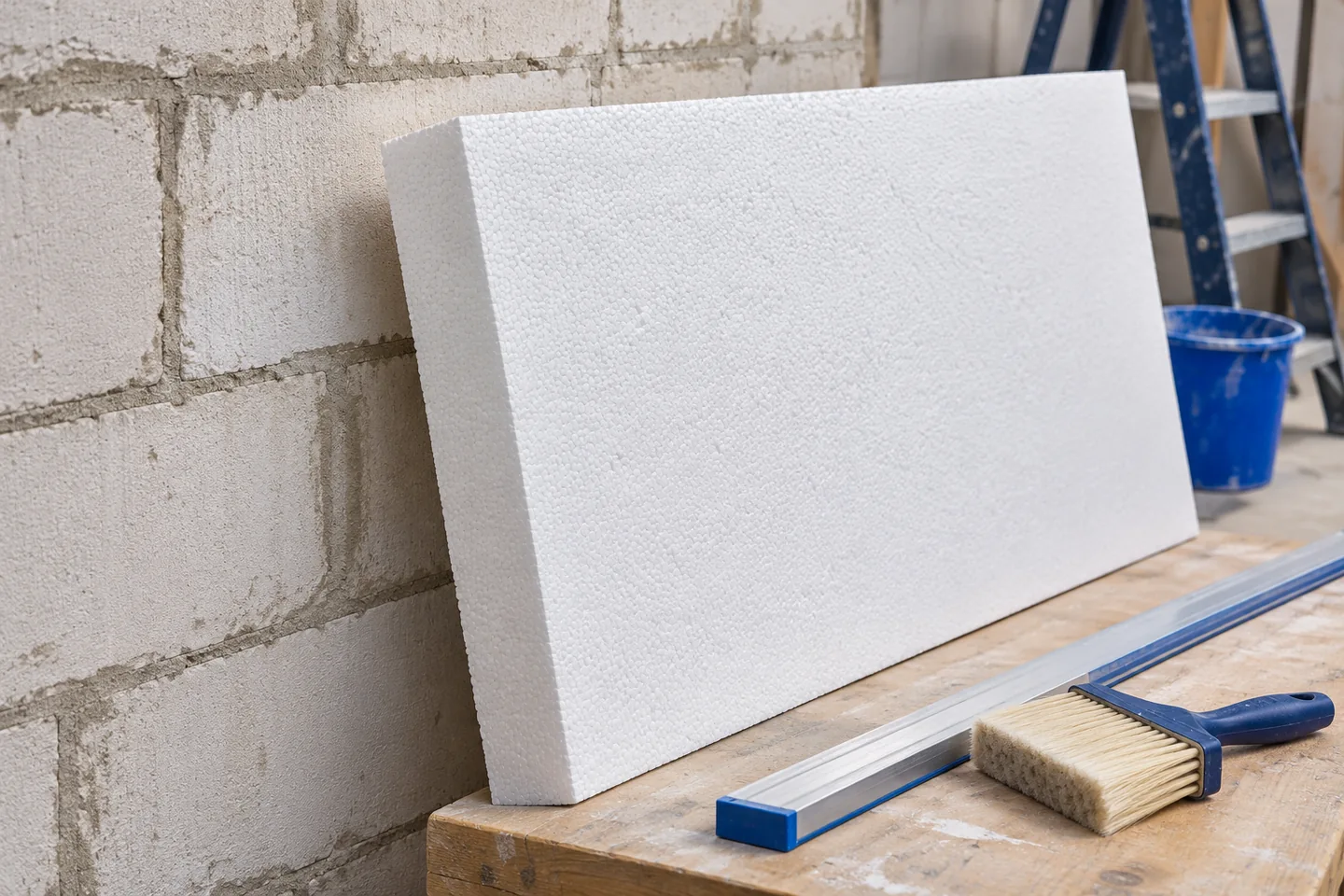
Before bonding expanded polystyrene (EPS) insulation, check that the wall is sound, dry, clean and flat enough for the specified adhesive. Inspect…
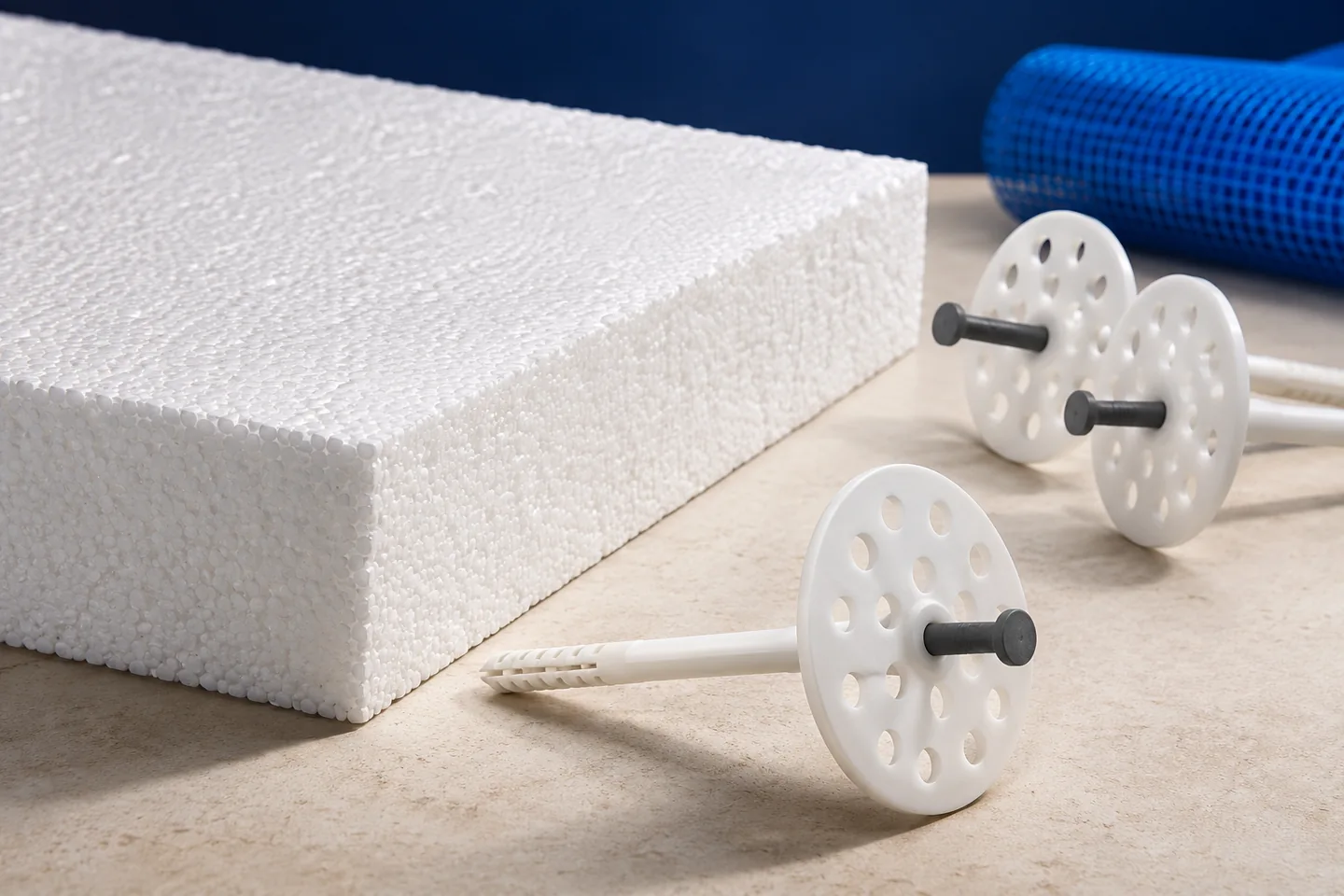
The insulation design and ETICS documentation determine whether EPS facade boards need mechanical fixings. The wall material and its condition, wind exposure,…
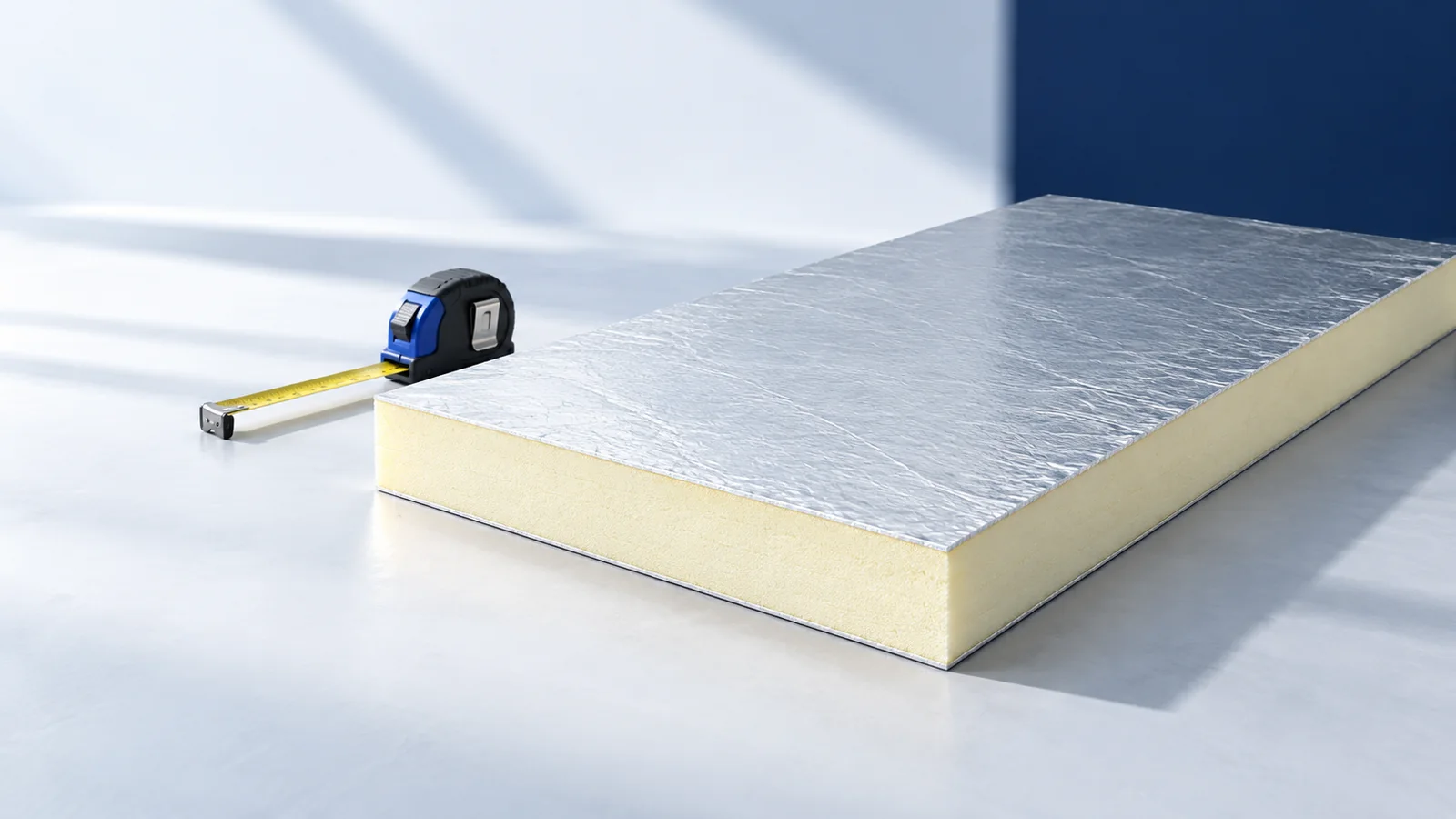
Mark the insulation position on the roof section before choosing PIR, EPS, XPS or mineral wool. Irregular rafter bays need insulation that…