






Trapezoidal sheets with anti-condensation fleece: what problem do they solve?
Metal roofing
Anti-condensation fleece can reduce dripping from the underside of cold metal roofing. It temporarily absorbs some condensate and must then release the moisture back into the air as conditions allow drying. It does not stop condensation itself, provide complete thermal insulation or replace a properly designed roof. Its effectiveness depends on moisture sources, ventilation and correct edge preparation. This guide explains those limits, the treatment of overlaps and the difference between fleece and other roof layers. A separate PLN calculation illustrates a possible surcharge; it is explicitly a worked example, not a current quotation or a standard rate for every profile.
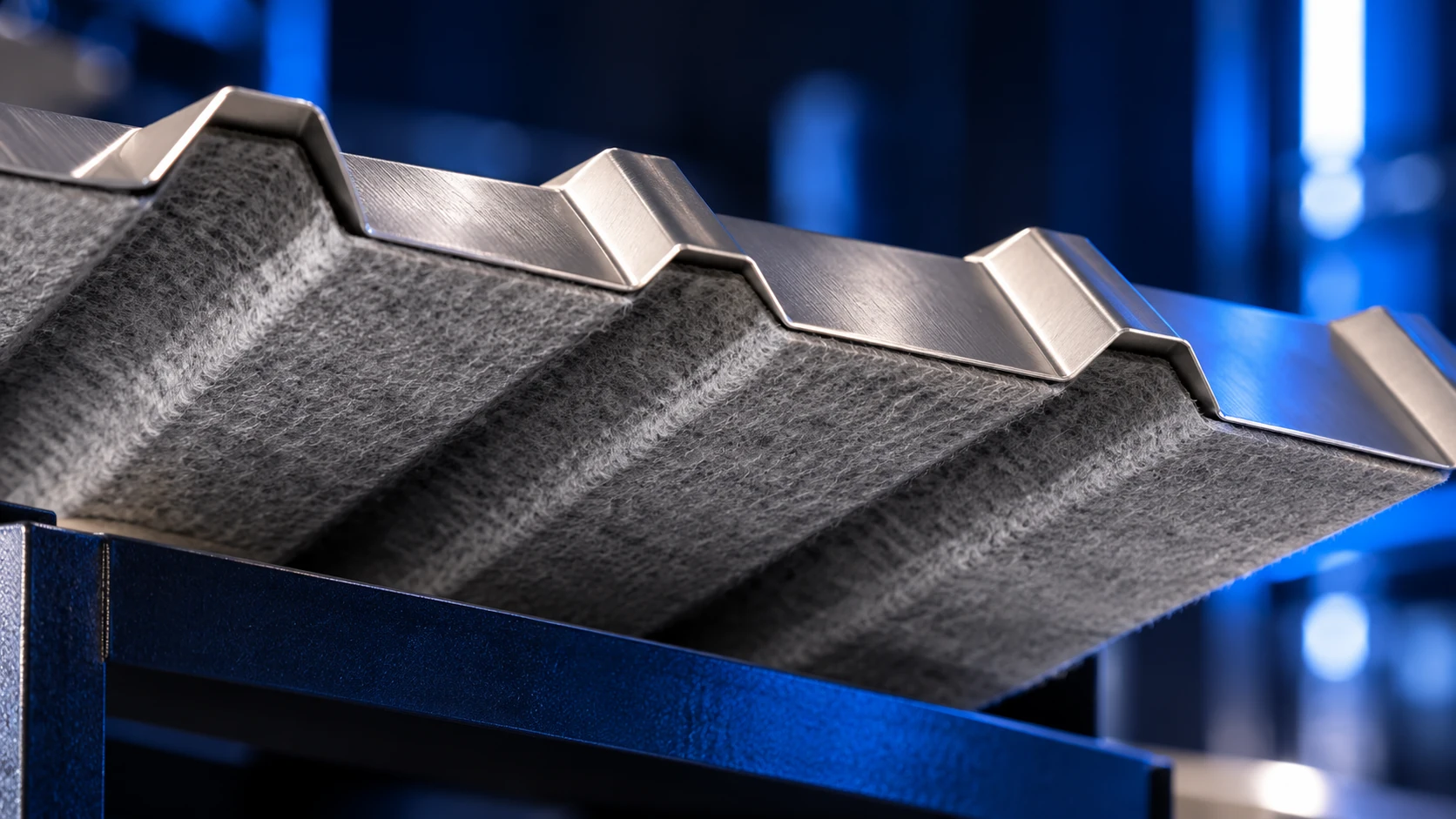
What does the layer beneath the sheet actually do?
Water vapour can condense when the sheet surface becomes sufficiently cold. Without an additional layer, droplets run off or fall. Fleece retains some water within its structure and should dry when conditions change. It acts as a temporary moisture buffer, not as a means of permanently removing moisture from the building.
Some fleece products declare absorption of approximately 1000 g/m². That does not promise indefinite water storage. The result depends on the material and test conditions; it cannot be assumed for every fleece. Check the purchased product’s properties and conditions of use.
Without ventilation, fleece can remain wet
Airflow through the intended space is essential. It needs an inlet and outlet, for example at appropriately designed eaves and ridge zones. A few incidental gaps do not establish effective ventilation. Air must have a continuous path through the assembly to carry moisture away.
New concrete and wet plaster can introduce particularly high moisture levels. The fleece may not dry between successive condensation periods. Manufacturers therefore emphasise additional ventilation while construction moisture dries out. Assuming that fleece allows a damp building to be sealed shut is incorrect.
Check edges and overlaps
Fleece can draw water from areas exposed to rain. Eaves, sheet ends and end laps therefore matter. Appropriate gaps or treatments that limit absorption are used in these zones. Follow the method specified for the material; do not improvise with arbitrary solvents or a flame.
At ordering, establish which preparation is done at the factory and which remains for the installers. The fleece should be dry before fitting. Damaged or contaminated areas need assessment. An edge constantly exposed to water does not experience the same conditions as a sheltered roof underside.
Do not cover sheet ends in a way that traps water against the fleece. At overlaps, retain the preparation zone specified by the manufacturer. Check this before fastening the final row; access may be harder once the detail is closed.
Fleece does not replace every other roof layer
Roof underlay, vapour-control layers and insulation perform different functions. Their necessity is determined by the roof design. In a heated house, they cannot simply be removed from the specification because the sheet has a soft underside. Ventilation also remains necessary wherever the designed assembly requires it.
Fleece can be useful in uninsulated buildings, but conditions vary. An open shelter has different airflow from a tightly enclosed garage containing a wet car. Do not judge effectiveness solely by the building’s name. Moisture sources, temperature and air exchange are what matter.
How can the surcharge be calculated?
For an illustrative comparison, take T18 in 0.50 mm steel with a 25 µm polyester coating. Assume PLN 36.34 excluding VAT per m² of cover without fleece and PLN 43.60 with fleece. The difference is PLN 7.26 excluding VAT/m². These hypothetical inputs demonstrate the calculation; they are neither a current selling offer nor a common rate for all profiles.
For an example quantity of 100 m², the difference is PLN 726 excluding VAT. This covers material only, without delivery or installation. Another quote may state the surcharge per linear metre of sheet. Convert both offers to the same basis before comparing, using the profile’s cover width.
When is fleece useful, and when should the cause be investigated?
Consider fleece when the design specifies uninsulated metal roofing and drying can be ensured. For persistent dampness in an existing roof, first investigate leakage and ventilation. New fleece cannot repair an incorrectly formed chimney flashing.
Obtain the service conditions and edge-preparation instructions, and agree access for inspecting the roof underside. The material should serve its intended assembly, rather than hide an unexplained symptom. In the final quote, the fleece specification matters as much as the main coating colour.
On an existing roof, observations across several weather periods can help. Record whether dripping follows rain or a cold night. If it occurs at one spot, start with that detail. If it affects the whole slope, also check humidity and the ventilation path.
Frequently asked questions
Will fleece stop every leak?
No. It is intended to reduce condensate dripping. Rainwater requires watertight covering and correctly executed flashings.
Is fleece-backed sheet metal insulated?
Not in the sense of complete building insulation. A heated building needs a designed thermal-insulation layer in its roof.

Free quote
What to include in your enquiry
Tell us how you plan to use the material, the dimensions and the quantity you need. Include the thickness, grade or variant name, along with the delivery town or your preferred collection branch. For a specific product, add its name or a link to the product page. We will reply to the email address you provide to discuss availability and the terms of your order.
More from the building guide
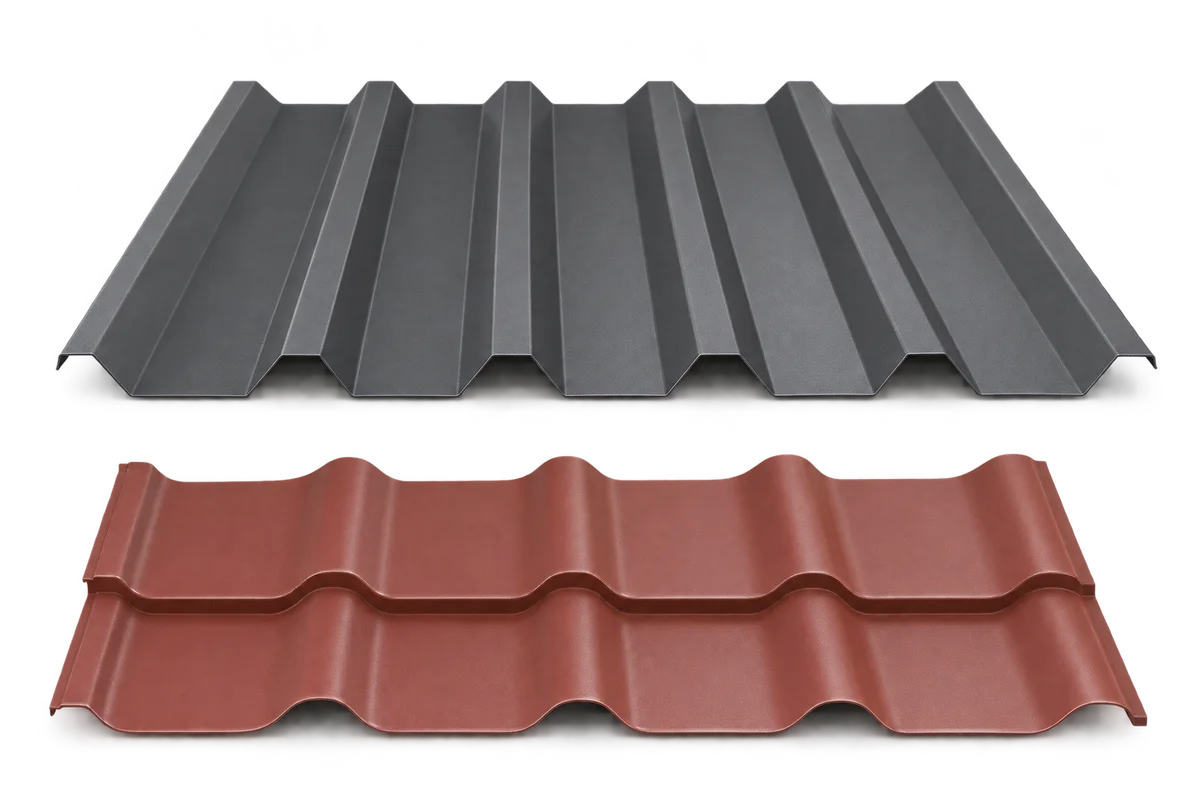
Choosing metal roofing for a house with a narrow access route means checking the delivery journey as well as the roof covering.…
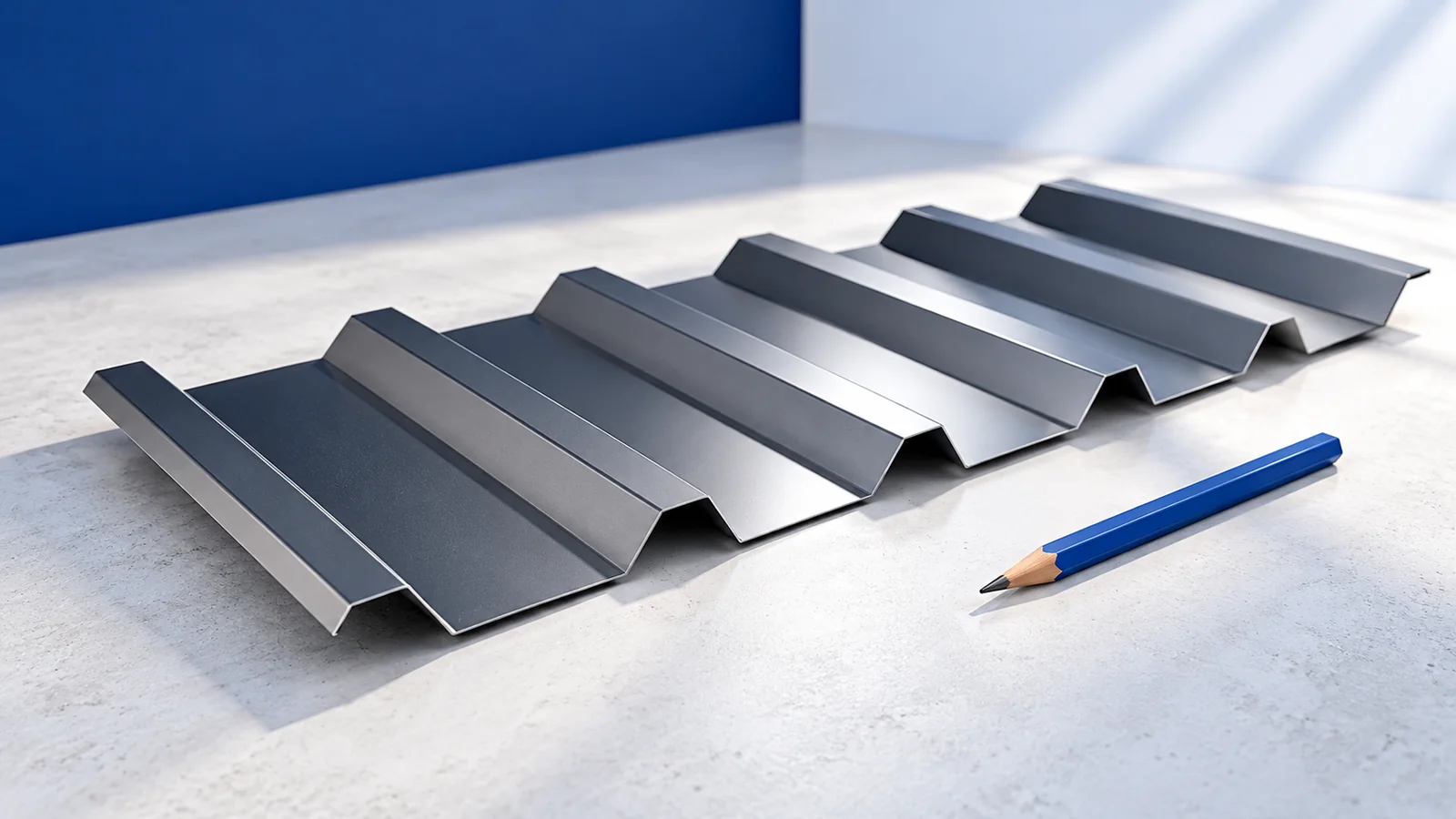
Start a T18–T35 price comparison by checking that thickness, coating and pricing unit match. A price per square metre of overall sheet…
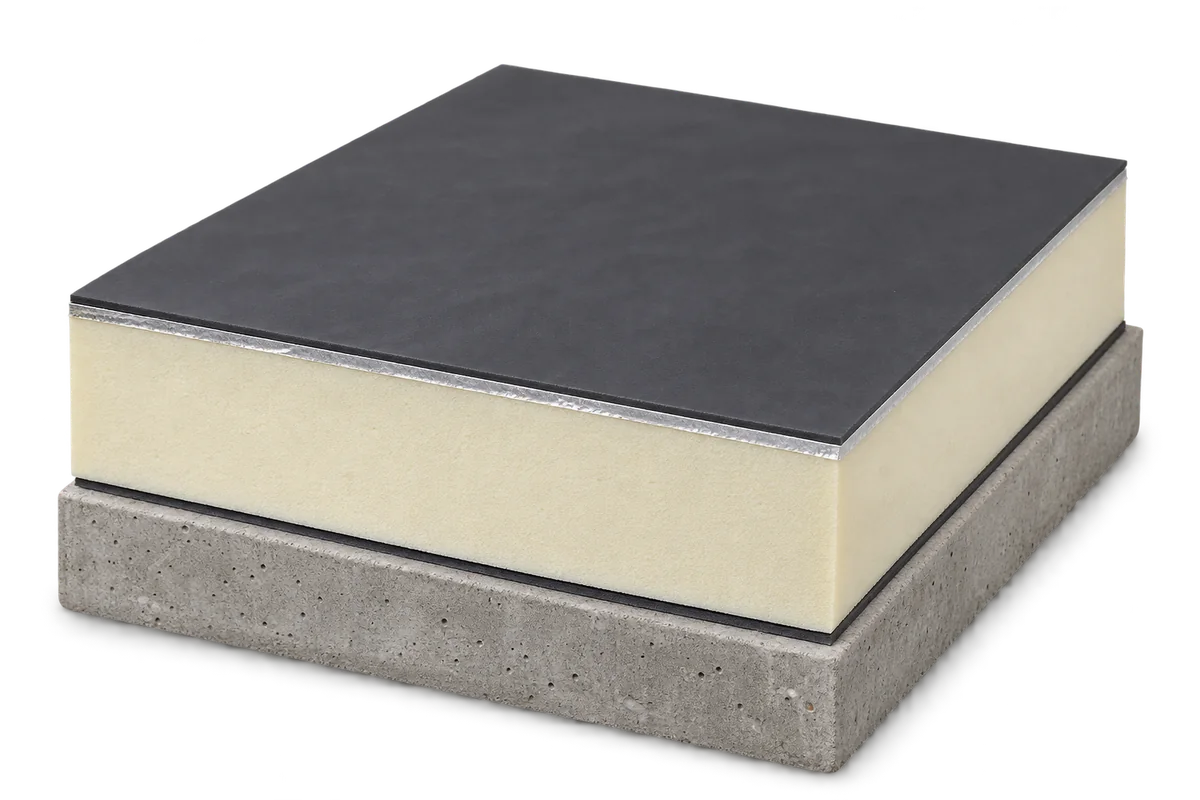
A flat roof consists of several layers that work together. The structure carries the loads, insulation reduces heat loss and waterproofing keeps…
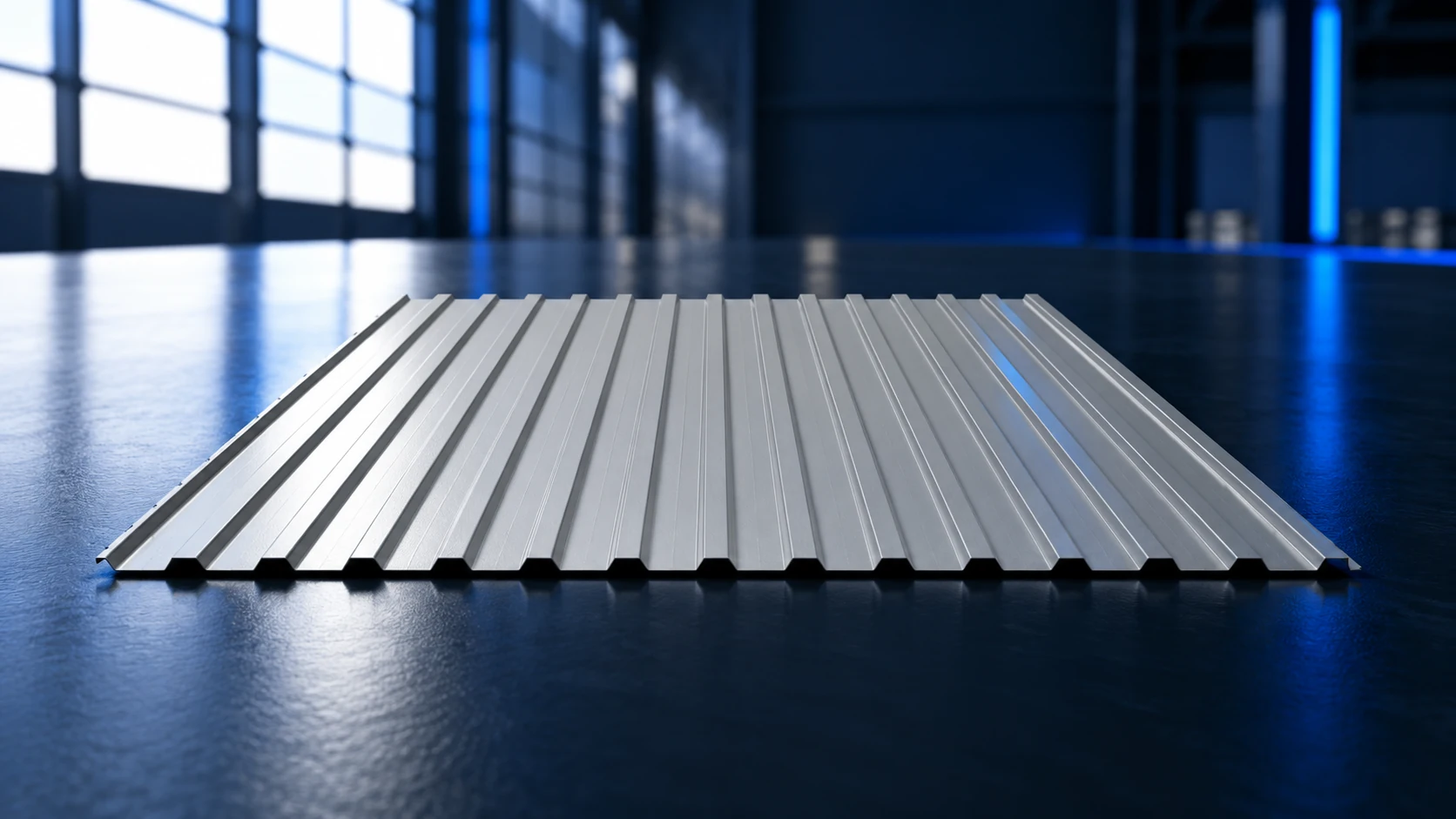
T12 is a shallow trapezoidal profile whose exact dimensions depend on the manufacturer and version. The example TRB 12/1120 has an effective…
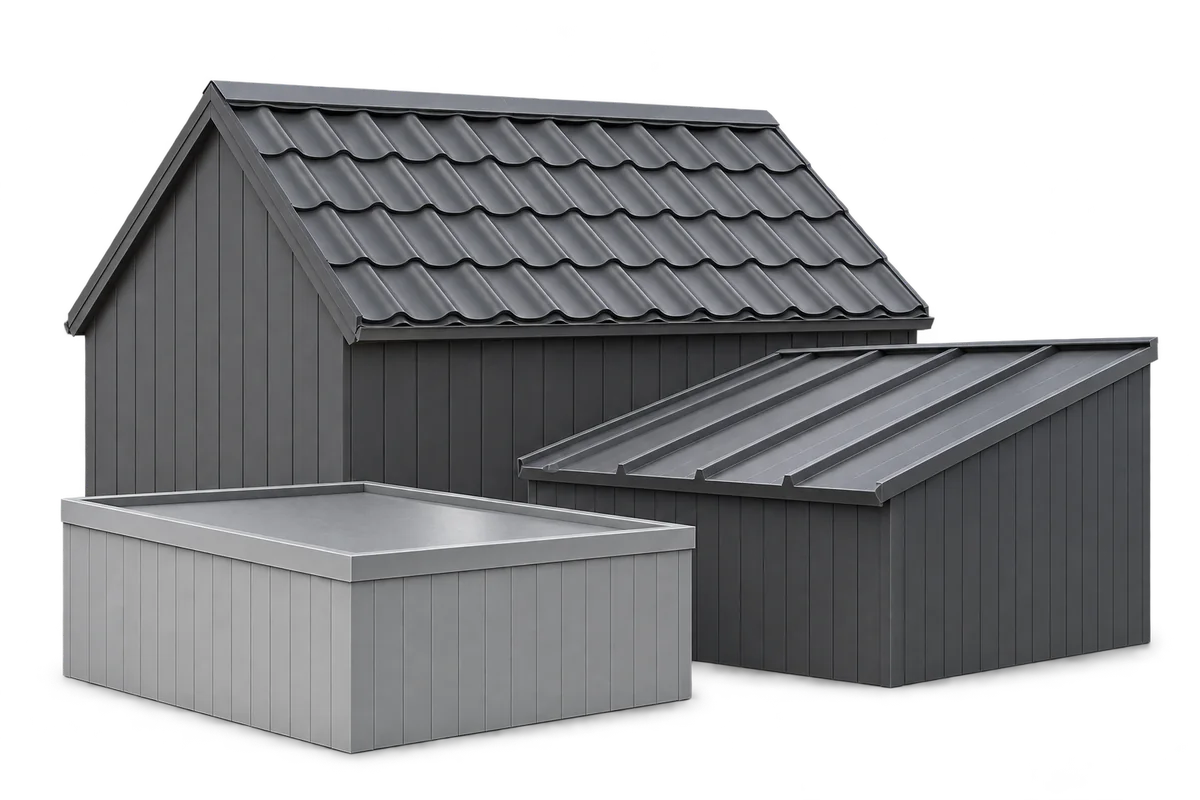
The proportions of a roof, the rhythm of its joints and the finish at its edges shape its appearance. Modular metal roof…
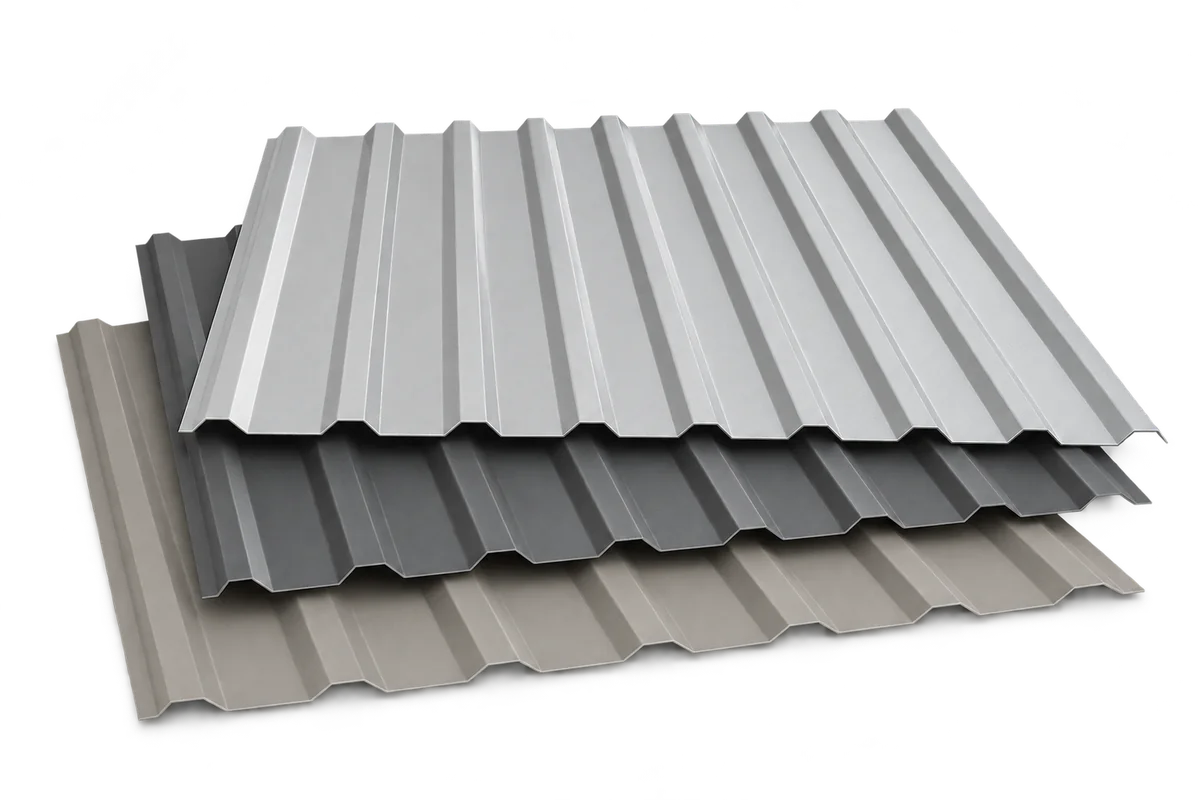
Trapezoidal steel sheets can quickly enclose a roof or facade once the supporting structure is ready. The sheets are lightweight, come in…
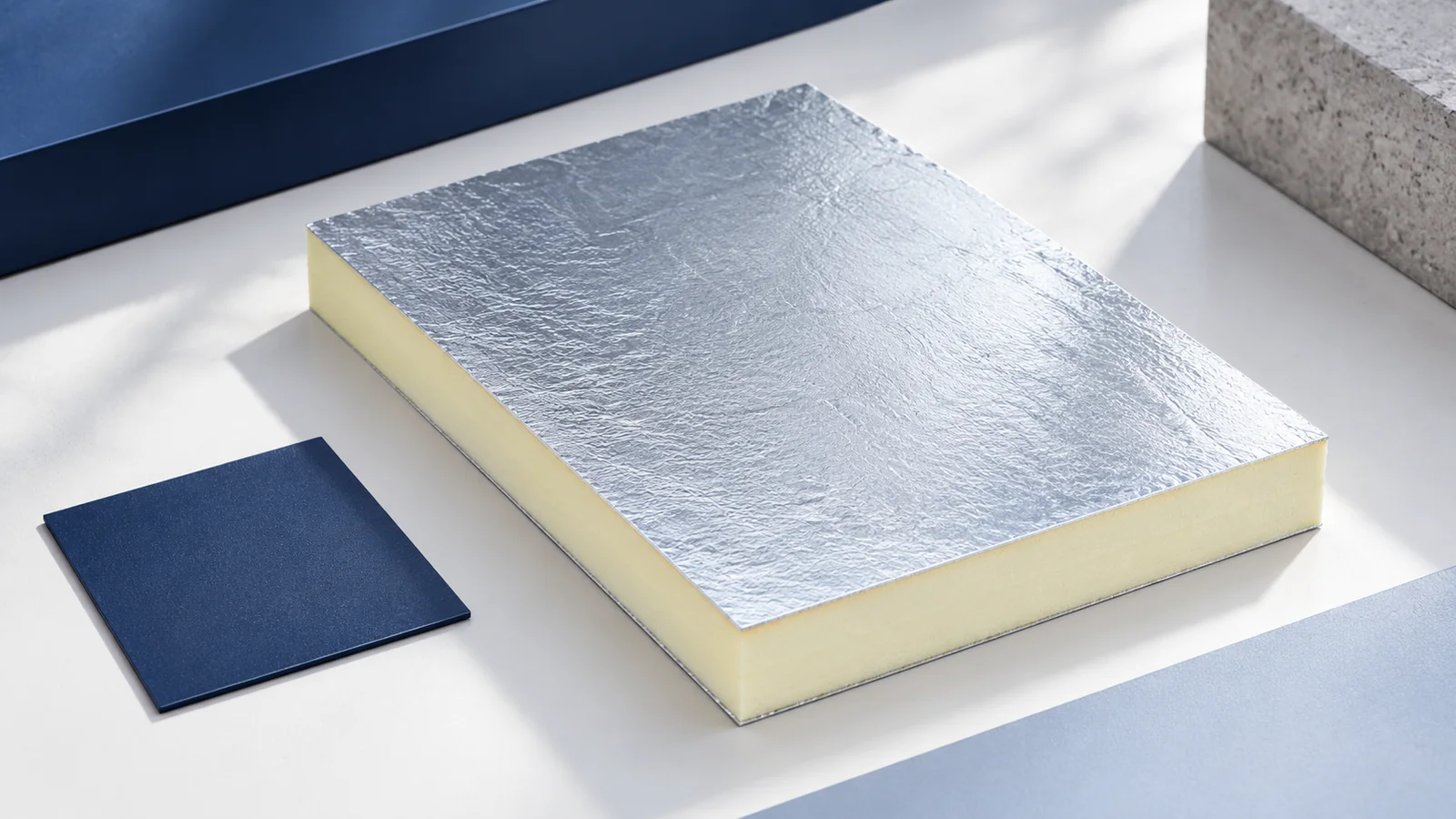
A flat roof covering should be selected around the roof's use, drainage and complete build-up. Structural trapezoidal decking, PIR insulation and waterproofing…
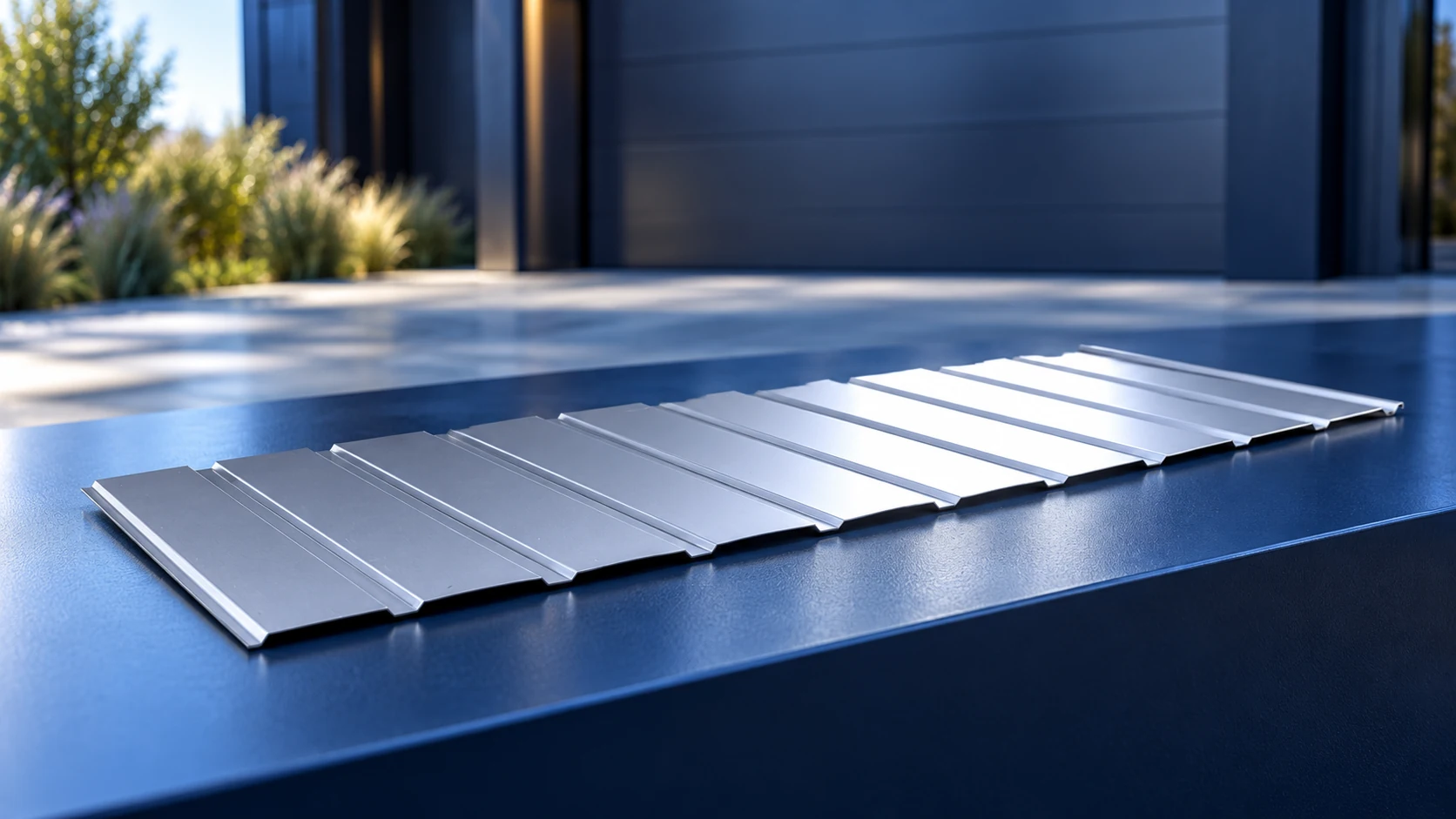
T7 is a very shallow trapezoidal sheet profile. One wall-cladding version is 7 mm high, covers 1175 mm and measures 1197 mm…