






Who inspects building work in Poland, and what do they check on site?
Roofs and roofing
In Poland, the term “building inspector” can refer to two distinct roles. The inspector appointed by the client (inspektor nadzoru inwestorskiego) represents the client on site. The public building supervision authority, by contrast, enforces building law within its remit, including irregularities during construction and the condition of buildings in use. It is not the homeowner’s adviser. Nor does it normally issue building permits: those are the responsibility of the architectural and building administration authorities. Knowing the difference helps you decide where to report a problem and who should inspect completed work. This guide also covers what to check before insulation, roofing and walls are concealed.
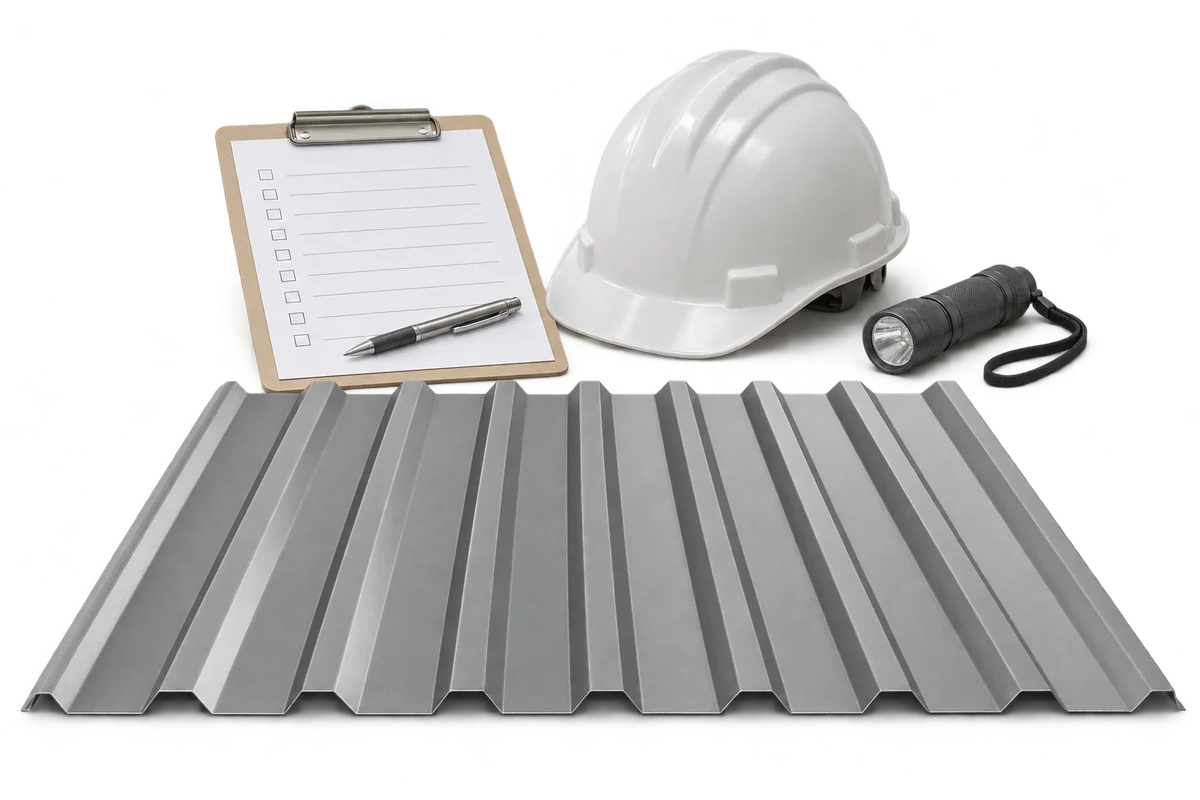
Public building supervision and the client’s site inspector serve different purposes
The client appoints the inspector to check the work on the client’s behalf. Under Polish law the inspector is a participant in the construction process, but does not take over the duties of the site manager or designer. If the contractor proposes changing a board thickness, fixing type or structural section, a verbal agreement with the inspector does not replace the required change procedure.
What is the client’s inspector responsible for?
The inspector checks that the work complies with the design, permit, applicable rules and accepted technical practice. This includes workmanship and the proper use of construction products. When buying roofing or insulation, a matching product name is not sufficient: compare its performance with the requirements in the project documents.
The inspector also takes part in the inspections and tests specified by law and confirms completion of work and correction of defects. At the client’s request, the inspector checks the accounting for the works. Tracking every delivery or managing the entire budget is not automatically included. Specify any additional duties and reporting arrangements in the contract.
Inspect the work before it is covered
Once tile-effect steel roofing has been laid, it is difficult to examine every lap in the underlay. Once a loft is lined, insulation joints and seals at the wall plate disappear from view. Arrange inspections of work that will be concealed, and time them to the contractor’s sequence so the next layer is not installed before the check.
On a roof with PIR boards, check the thickness, board variant, insulation continuity, fixings and junctions. On a sandwich panel wall, examine supports, fasteners, seals and flashings. Photographs help document the sequence but do not replace an inspection. Include a view that locates the detail in the building as well as a close-up.
When must the client appoint an inspector?
In Poland the duty to appoint an inspector can arise from the rules for particular buildings or from conditions in the building permit. Project complexity is one relevant factor. Do not assume that every detached house requires the same level of supervision. The client may also appoint an inspector voluntarily, for example for a difficult roof conversion.
The inspector must hold the appropriate Polish construction qualifications and meet the conditions for performing an independent technical function. Their authorisation must cover the work to be supervised. Polish law does not allow one person to act as both the client’s inspector and the site manager. Separate appointments allow independent scrutiny of the work.
What can the inspector do about defective work?
The inspector may instruct the site manager to correct irregularities, carry out tests or produce product documentation. These instructions must be confirmed by an entry in the construction log. A test may require an already covered element to be exposed. Completion of the roof does not resolve the lack of evidence that a concealed layer was installed correctly.
The inspector can also require defective work to be corrected or redone. Where continuing the work could create a hazard or an impermissible departure from the design or permit, the inspector can require work to stop under the conditions set by Polish law. That may affect the schedule, but correcting defects before handover is usually simpler than opening up a structure already in use.
How should you organise inspections?
Before work starts, list the stages at which the inspector needs to attend. Define how to give notice that work is ready and agree a response time. Provide the current design and agreed materials specification. Where several disciplines are involved, arrange appropriate supervision for each. No inspector should assess installations or structures outside the scope of their qualifications.
Keep declarations of performance, delivery labels, inspection records and photographs. Do not leave all inspections until the final invoice is due. Checks are most useful when errors can still be corrected without dismantling finished work. At handover, it should be clear which defects were resolved, which tests were completed and which records were given to the owner.

Free quote
What to include in your enquiry
Tell us how you plan to use the material, the dimensions and the quantity you need. Include the thickness, grade or variant name, along with the delivery town or your preferred collection branch. For a specific product, add its name or a link to the product page. We will reply to the email address you provide to discuss availability and the terms of your order.
More from the building guide

Clear gutters carry rainwater from the roof to the intended outlet. Leaves, twigs and silt can slow the flow even in a…
Whether insulation work qualifies for a grant depends on the scheme, the building, the work proposed and the thermal performance required of…
Start by deciding what the gazebo is for, how large it needs to be and where it will stand. Then choose the…
In Poland, the procedure for work on a roof depends on what will actually change. Are you restoring the roof, altering its…
In Poland the construction site manager (kierownik budowy) organises and directs the work in accordance with the design, applicable rules and safety…
Slight ripples in the flat part of a metal roof panel may only show up in strong sunlight. Residual stress in the…
Before comparing roof repair quotations, gather information about the building and the proposed task. The contractor needs a defined scope, available records…

The financial return on rooftop solar depends on how much electricity you use on site, when you use it and how your…