






Cleaning gutters before winter: when is a gutter vacuum enough?
Repairs and maintenance
Assess the gutter and its discharge route together. A gutter vacuum can collect dry leaves from the channel, but you still need to check whether water passes freely through the outlet, bends and downpipe to its destination. In autumn, compacted debris often remains where it is difficult to see from the ground. Note overflow points during rain, then check accessible silt traps and the pipe outlet in dry weather. If the problem returns after cleaning, have a roofer assess the gutter fall, joints and capacity. Use an equipped team for work requiring access at height.
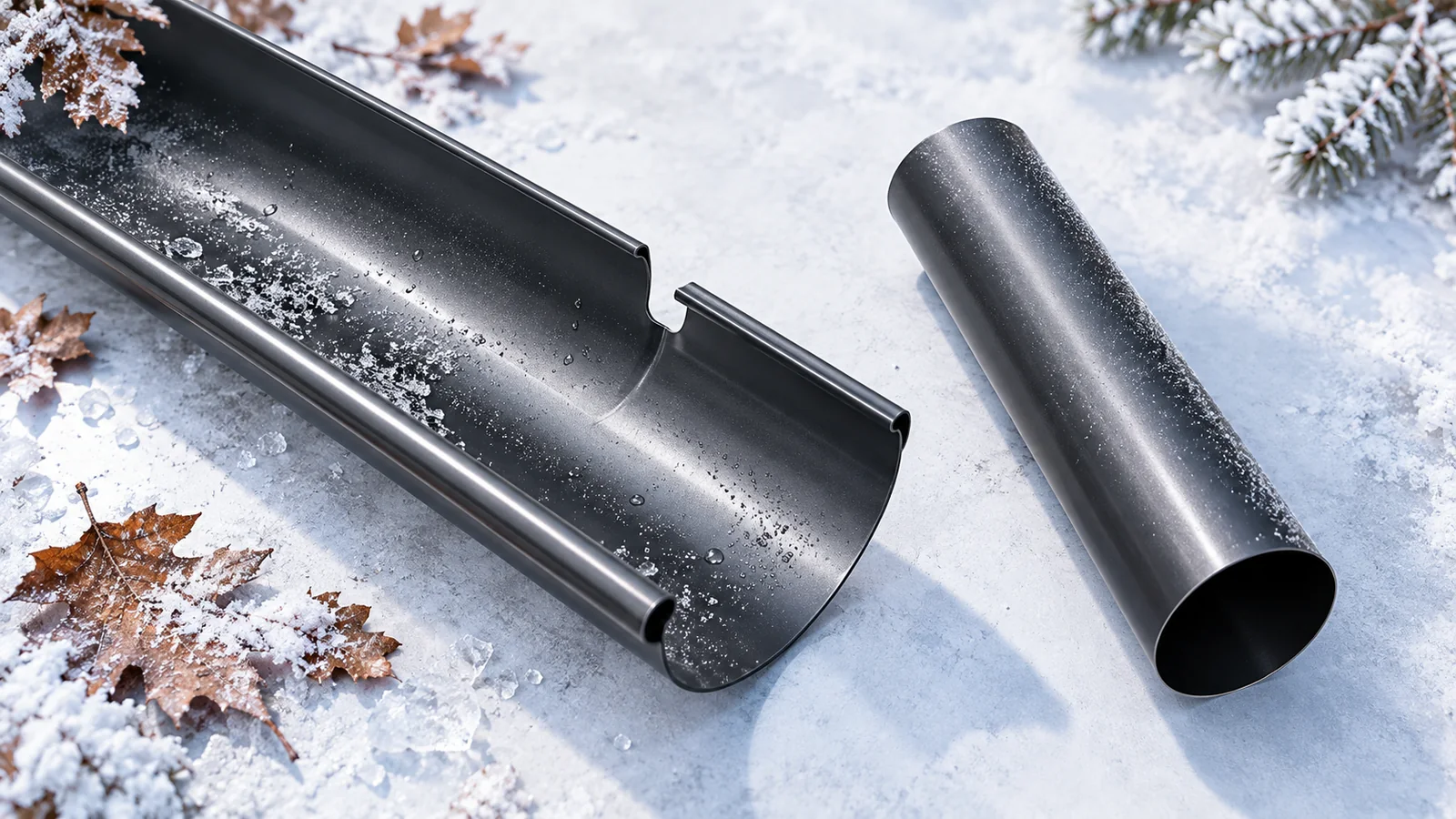
How do you recognise a drainage problem?
Plants in the gutter or a damp streak on the wall show where to inspect. Pay attention below roof valleys receiving flow from two slopes and beneath overhanging trees. Fine silt may collect in the channel before any mark appears on the wall.
During rain, observe from a safe distance where the overflow starts and ends. Repeat after the channel is cleaned. Water pooling in the same spot may indicate a sag. Recurring overflow with a clear outlet calls for a check of the system’s capacity.
When does vacuum cleaning work well?
A purpose-made gutter vacuum needs to reach the channel bed, including the area around the outlet. Check its reach against the actual height and eaves shape. Suitable equipment can pick up loose leaves from ground level. Check the result where silt has stuck to the channel.
After vacuuming, inspect accessible joints, brackets and seals. If the outlet is clear but water stands in it, investigate downstream. Match tools to the gutter surface. A metal scraper can damage a protective coating or the wall of a plastic component.
Which parts downstream need attention?
Inspect the pipe inlet, changes of direction and connections to the silt trap. Locate the discharge point and check that water can flow onward. A full receiver or blocked trap at ground level can restrict drainage even when the pipe looks clear at the eaves.
If the pipe feeds a tank or infiltration system, identify its filter and maintenance points. Collect leaves in a container before they enter the pipe. A forceful jet can move debris into a buried section that is harder to reach.
How can flow and joints be checked safely?
From ground level you can watch the discharge and operate suitable equipment within its stated reach. Where access to a high gutter is required, an equipped crew should determine the access method and protection. Ladder pressure can deform a gutter. Leaning out of a window creates a fall hazard.
After clearing the silt, assess flow under conditions suitable for the system. Look for pooling and drips at connectors. Before repairing a leak, identify its cause and how the joint accommodates temperature changes. Use the parts and fitting method specified for that system.
Do leaf guards change the maintenance routine?
Whole leaves can collect on a mesh while fine particles pass through into the gutter. Inspect both surfaces. Before buying a guard, check how it comes off for cleaning, whether it fits the gutter profile and whether runoff will still reach the channel.
Set inspection intervals according to how quickly debris builds up and the manufacturer’s guidance. Near trees, check after leaf fall and strong winds. Records from several inspections will show which section clogs first and when it needs cleaning again.
What if you find damage before winter?
Mark loose brackets, cracked connectors, dents or corrosion on a photograph. If similar damage follows sliding snow, ask a roofer to assess the eaves geometry and the proposed snow retention. Replacing a broken part alone may leave the cause of repeat damage in place.
Finish by checking the discharge and recording repair locations. If an unusual icicle or overflow appears in winter, observe from a safe distance and give its location to the maintenance team. Removing ice at height requires planned access and suitable equipment.

Free quote
What to include in your enquiry
Tell us how you plan to use the material, the dimensions and the quantity you need. Include the thickness, grade or variant name, along with the delivery town or your preferred collection branch. For a specific product, add its name or a link to the product page. We will reply to the email address you provide to discuss availability and the terms of your order.
More from the building guide
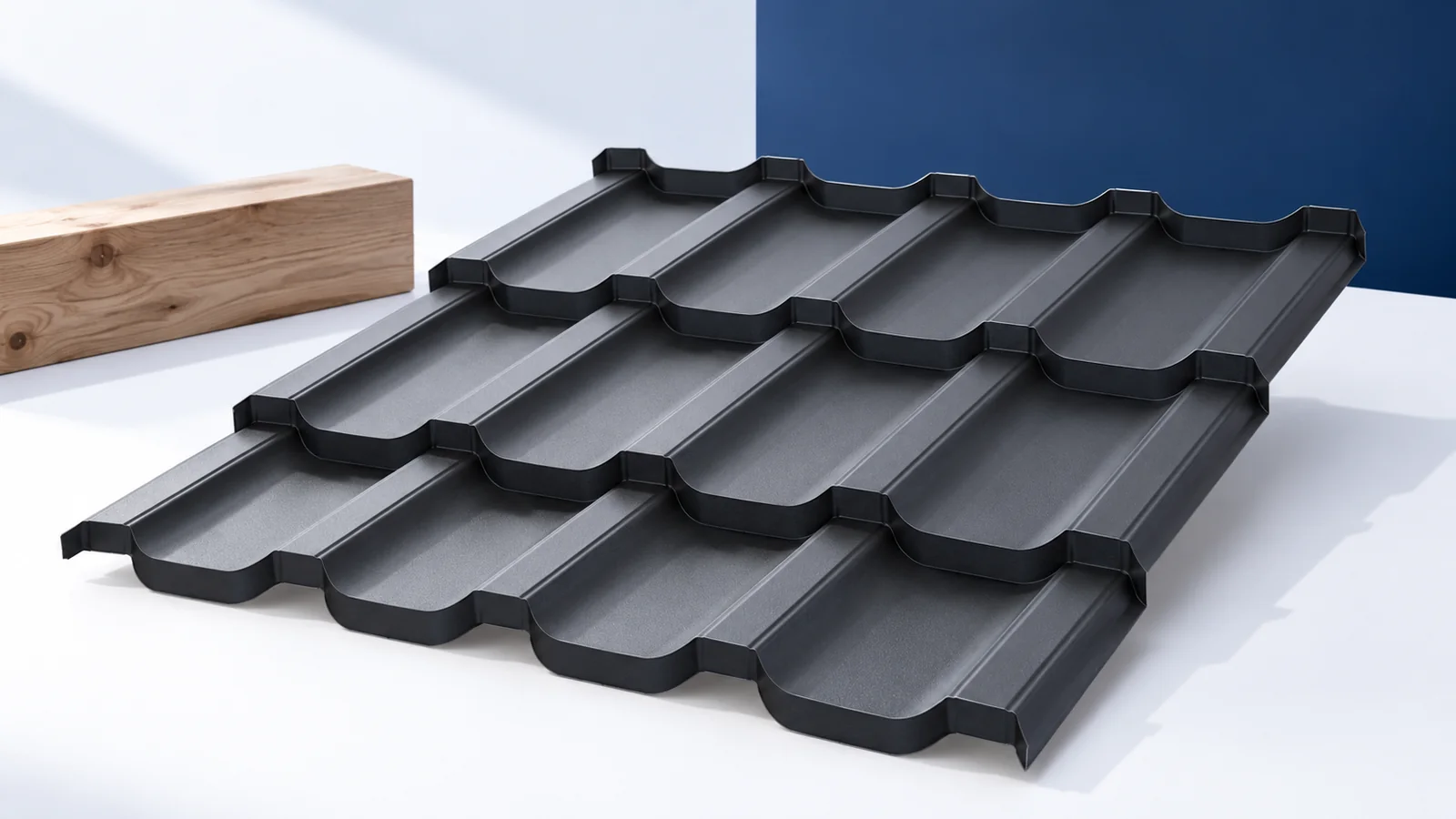
Compare a sample of the roofing with parts of the house whose colours are already fixed. On a brick façade these may…

Eaves flashing helps deliver runoff into the gutter and limits water tracking beneath the roof edge. Its effectiveness depends on the complete…
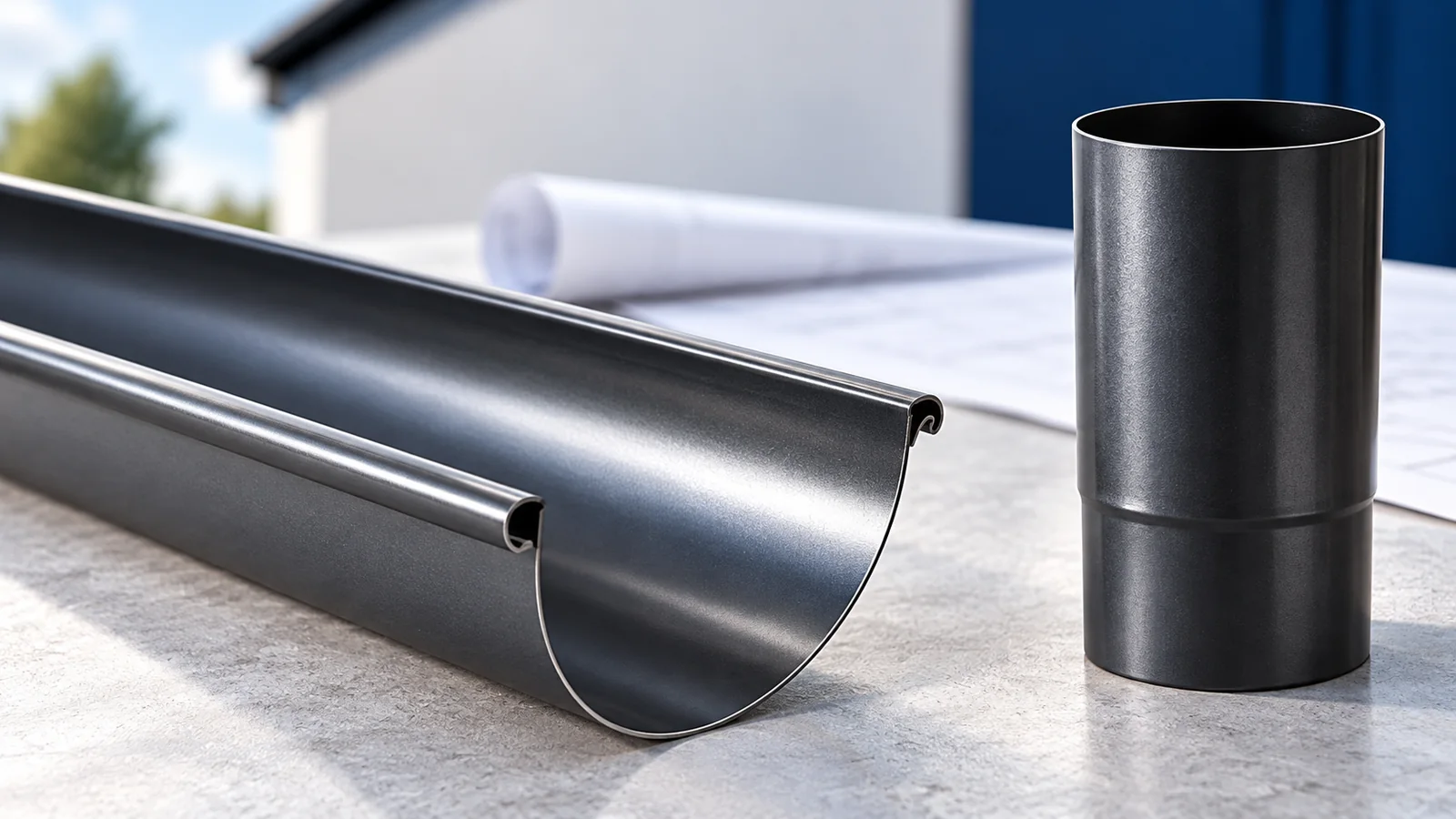
Gutters work effectively when their size, outlets and eaves position match both the roof and the downstream drainage. Before installation, establish the…
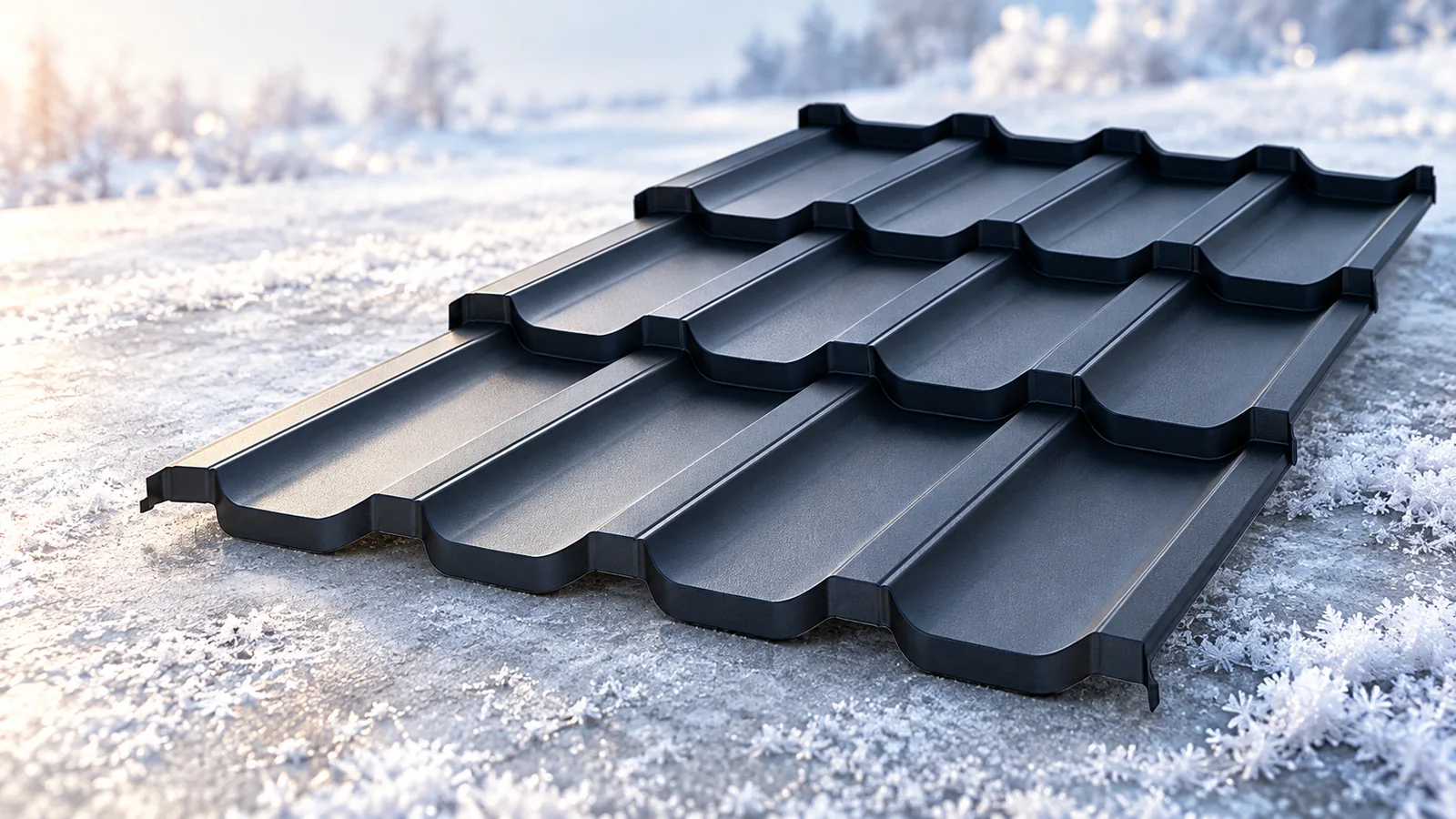
Before winter, trace the water path from the ridge to the downpipe discharge. From a safe position, note any damp marks after…

Square and rectangular gutters give eaves a defined outline, but appearance should not complete the selection process. You need the capacity of…

A concealed gutter changes the eaves appearance but must still collect roof runoff and discharge it safely away from the building. Its…

Start an autumn roof inspection from a safe place beside the building during rain. Watch whether water reaches the gutter, where it…

Use the same roof plan to compare square and half-round gutters. Divide the roof into the areas draining to each outlet. Mark…