Choosing PIR insulation for hollow clay block walls
PIR boards and insulation
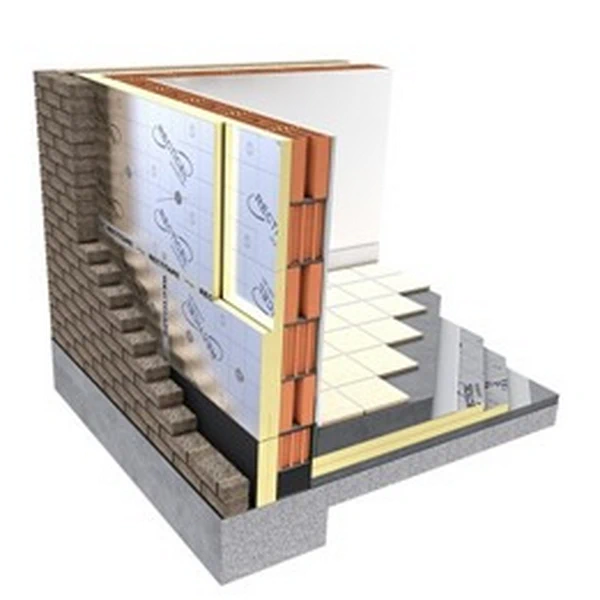
A clay block’s family name is not enough to select insulation thickness. You need the precise block, masonry thickness and mortar-joint arrangement, together with the other wall layers. PIR used beneath render differs from a board installed internally; the facing and compatible system matter as much as lambda. This guide compares options using an explicitly assumed wall resistance rather than a design for a particular house. It also covers ring beams, windows, substrate preparation and fixings. Use the worked example to understand the calculation, then replace its assumptions with verified building and product data before placing an order.
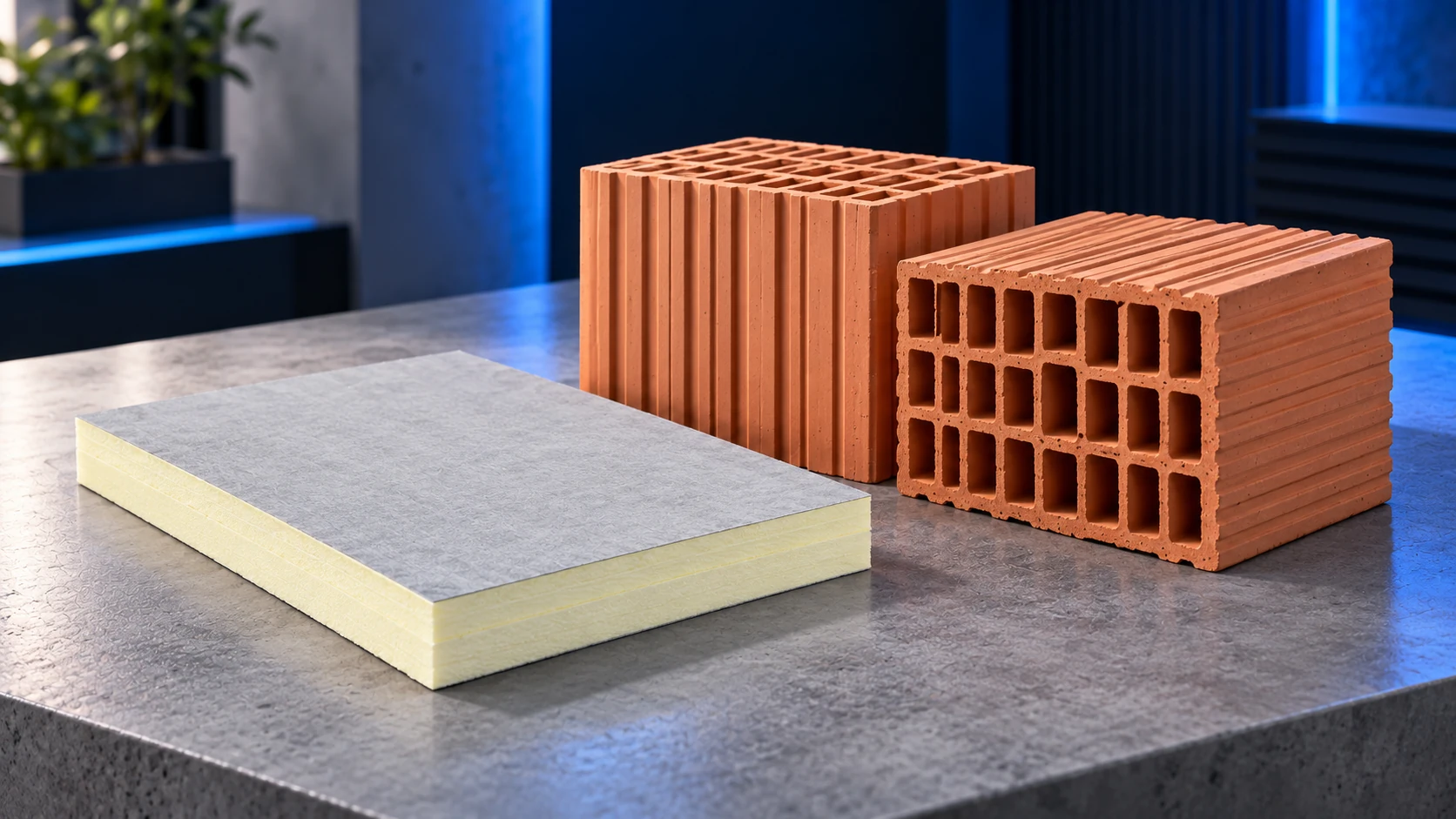
Establish what the wall is actually made from
“A Porotherm house” can mean different products and masonry methods. One block’s value cannot be assigned to the whole family. Obtain the specific model’s documentation and mortar details. In an older building, this may require opening up the construction.
Record plaster and any existing insulation, and check ring beams, lintels and reinforced-concrete columns. These differ from the clay blocks. A masonry resistance may be used for the flat wall calculation, but state how it was obtained. An assumed example value must not appear to be a verified property of the existing wall.
Use a board intended for the rendered system
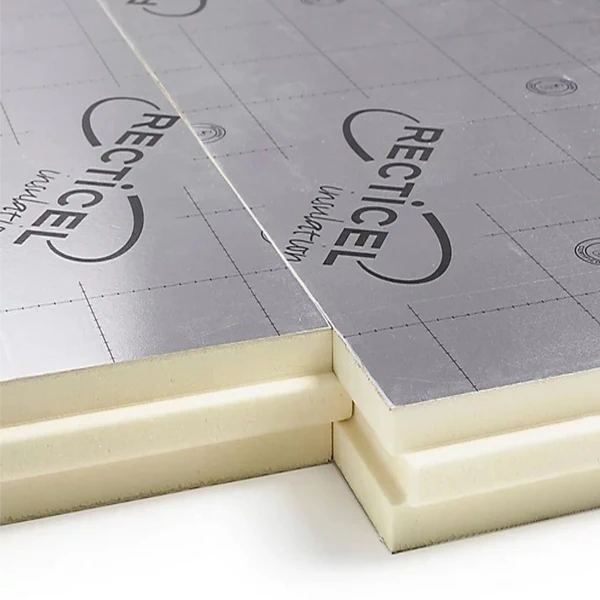
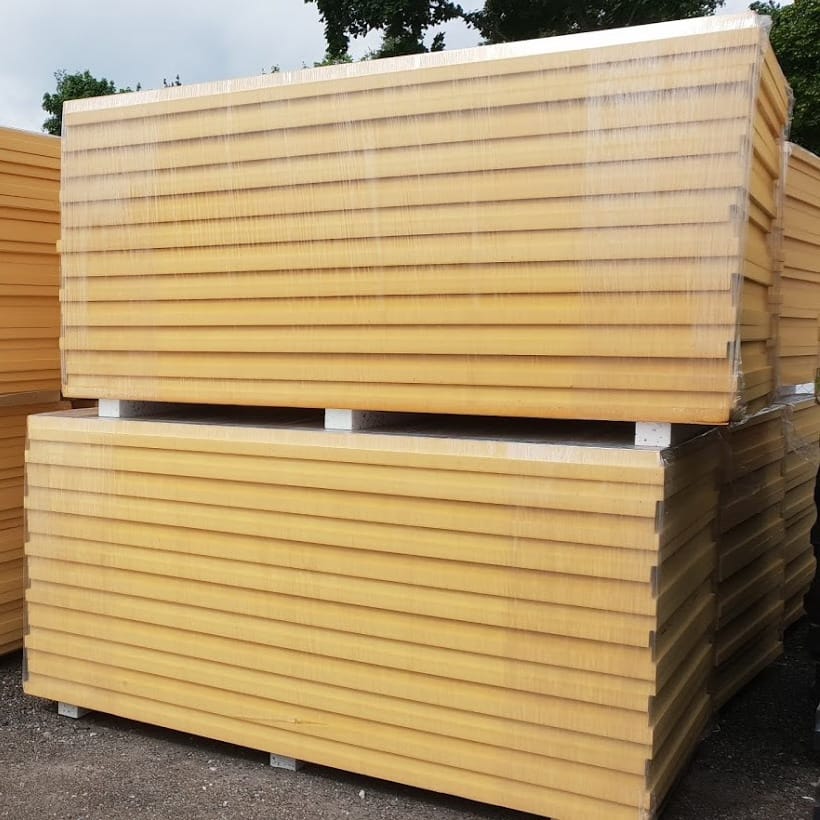
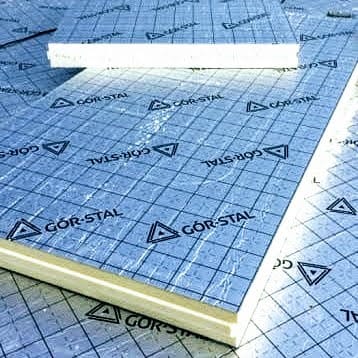
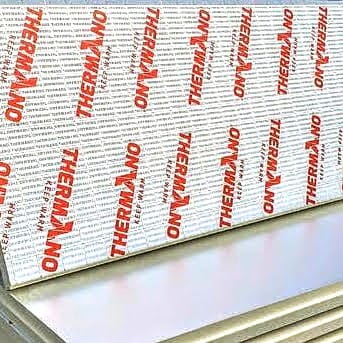
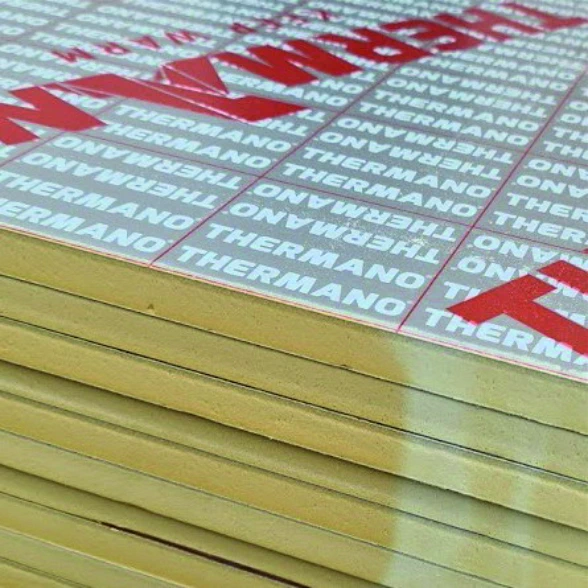
Aluminium-faced PIR and façade boards intended for rendering are not interchangeable at will. Appropriately approved glass-fleece-faced boards are one option within rendered systems. Their lambda can depend on thickness: for this example use 0.026 W/(m·K) at 100 mm and 0.025 at 120 mm. These are two assumed variants, not universal values.
Do not enter lambda = 0.022 merely because another PIR board has that value. The difference can affect a thickness close to the target. Adhesive, mesh and render must also belong to a compatible complete system. Combining arbitrary materials does not automatically reproduce its properties.
An example with a stated wall resistance
For comparison only, assume masonry plus plaster resistance of 0.80 m²·K/W and surface resistances totalling 0.17 m²·K/W. The example target is U no higher than 0.20 W/(m²·K). These assumptions are not assigned to any particular clay block.
At 100 mm and lambda = 0.026, insulation resistance is about 3.85 and whole-wall U about 0.208. At 120 mm and lambda = 0.025, U falls to about 0.173. This simplified calculation omits corrections and thermal bridges, but shows why comparing neighbouring thicknesses is preferable to ordering “what the neighbour used”.
Ring beams and windows can change the outcome
A good U-value in the middle of the wall does not describe the whole building. Heat flow at ring beams, balconies and windows is more complex. Insulation ending before a reveal leaves a weak point, which thicker boards elsewhere do not fix.
Detail these junctions in drawings and use more detailed heat-flow calculations where necessary. Measure space at sills and beneath eaves before purchase; flashings may need replacement. Allowing for that in the estimate is easier than altering it after the boards are bonded.
Prepare the masonry for bonding and fixing
New masonry must be ready to receive further layers. Old walls need the plaster’s adhesion checked. Do not bond insulation onto peeling paint or dust. ETICS instructions require a dry, sound and load-bearing substrate.
Choose fixings for the substrate; hollow blocks need anchors suited to their construction. Anchor length alone does not prove suitability. Wind suction and edge zones also matter. A generic fastener count from a guide cannot replace selection for the actual house.
Distinguish lambda, resistance and U-value
Lambda describes thermal conductivity in a material. Resistance increases with layer thickness. U applies to the complete assembly and falls as total resistance rises. These values are not interchangeable. Tell the supplier whether you need a board property or a whole-wall result.
Keep the masonry model unchanged when comparing options and vary one factor at a time: insulation type or thickness. That reveals the source of the difference. Comparing new blocks with thin PIR against old masonry with thicker insulation does not demonstrate the insulation material’s advantage alone.
Information to include in an insulation enquiry
Supply the wall section, area and detail photographs, plus the board type, expected finish and installation method. Request all system components. Compare complete façades rather than PIR packs alone.
The designer should confirm the applicable thermal requirement, including current rules and any transitional provisions. The 0.20 target above illustrates the calculation only. Base the order on the project and product documents. A little more information at the start prevents buying good thermal performance with the wrong facing.
Frequently asked questions
Does every hollow clay block need the same PIR insulation?
No. Selection depends on the masonry properties and complete wall assembly.
Can render be applied to aluminium-faced PIR?
Only within a solution intended for that board. A PIR core alone does not establish that its facing is suitable for render.

Free quote
What to include in your enquiry
Tell us how you plan to use the material, the dimensions and the quantity you need. Include the thickness, grade or variant name, along with the delivery town or your preferred collection branch. For a specific product, add its name or a link to the product page. We will reply to the email address you provide to discuss availability and the terms of your order.
More from the building guide
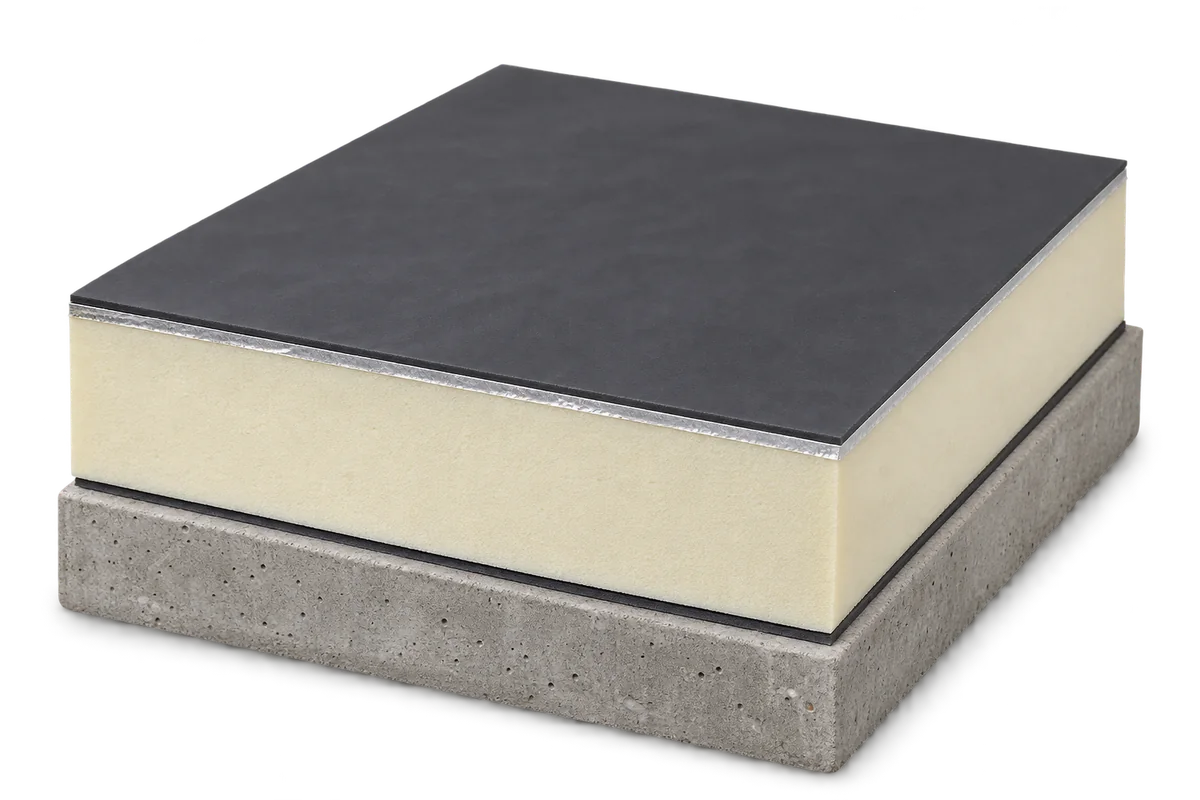
A flat roof consists of several layers that work together. The structure carries the loads, insulation reduces heat loss and waterproofing keeps…
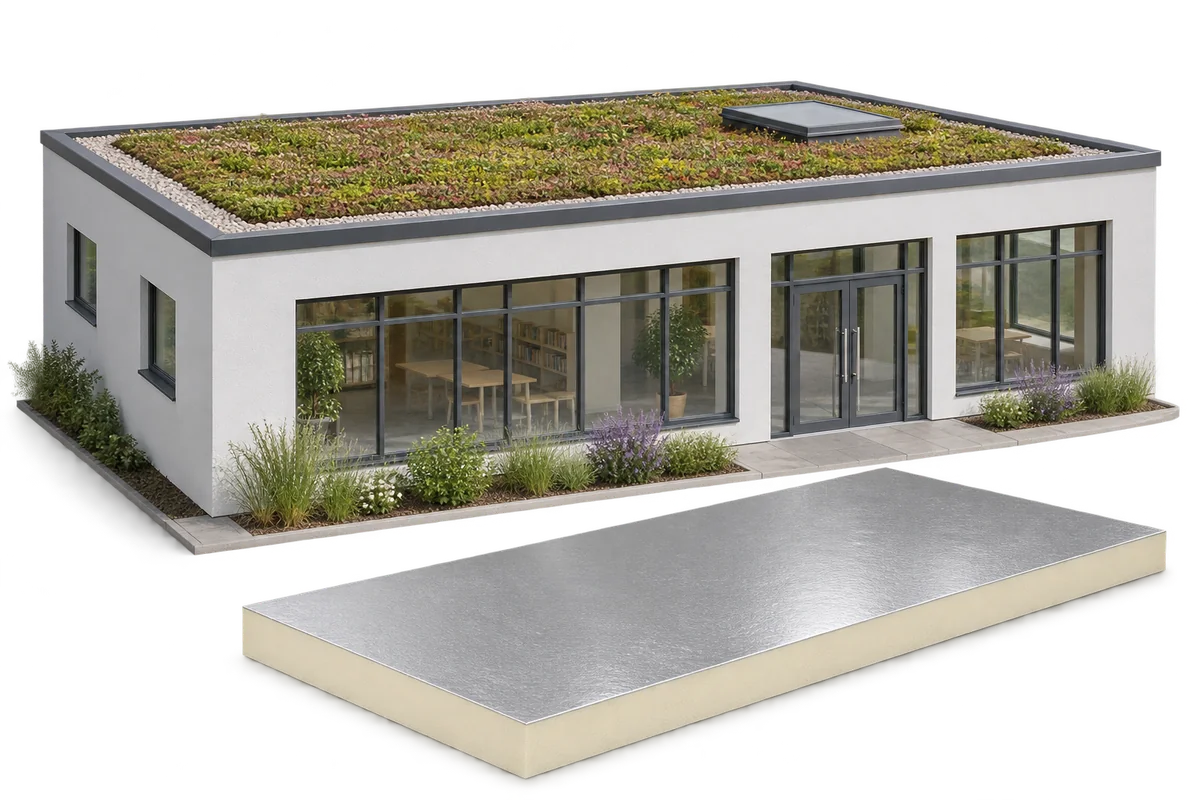
A green roof can form part of a nursery retrofit. The structure must support the full build-up and the insulation must be…
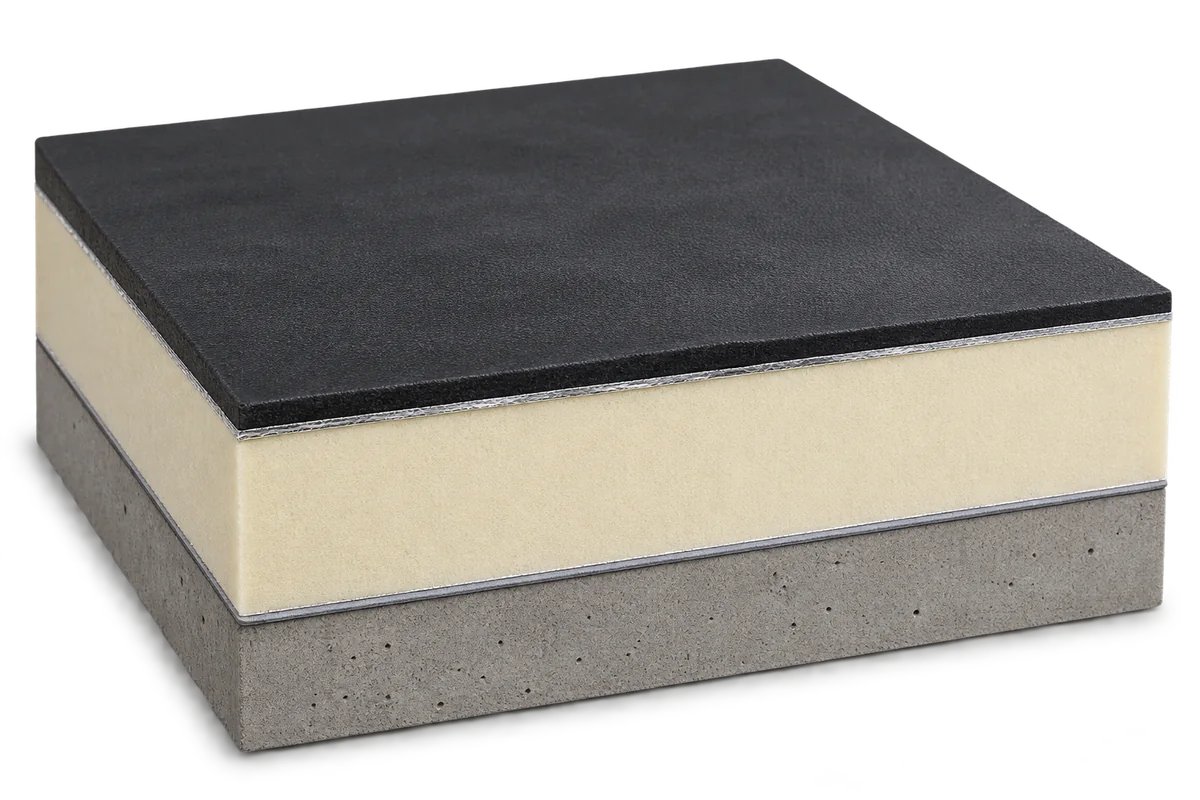
Choose the waterproofing and insulation for a flat roof together. The deck, layer order, fixing method and intended use determine which combinations…
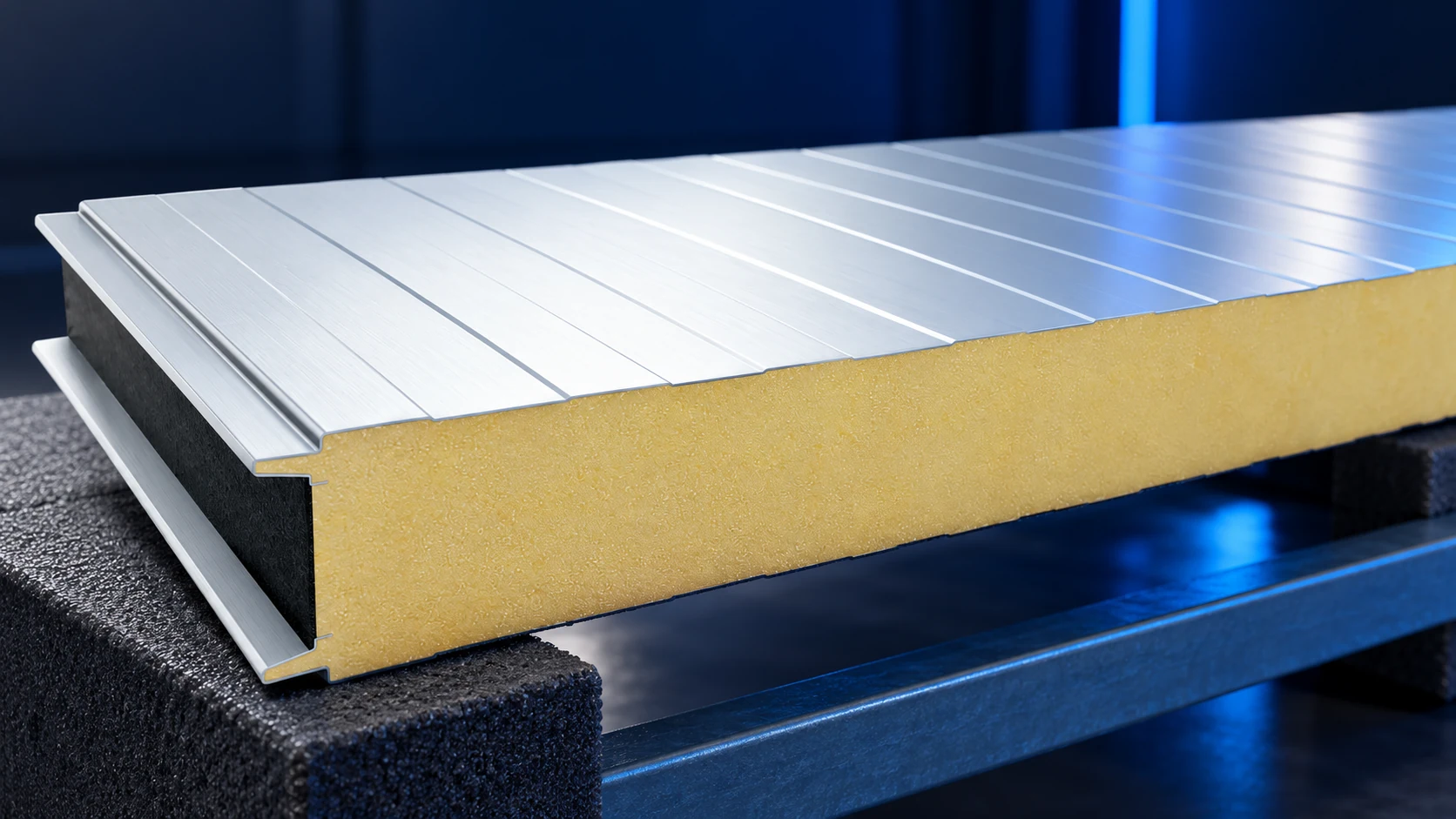
White 100 mm PIR wall panels can suit many projects, but an outlet batch must be assessed individually. Documentation, joint and facing…
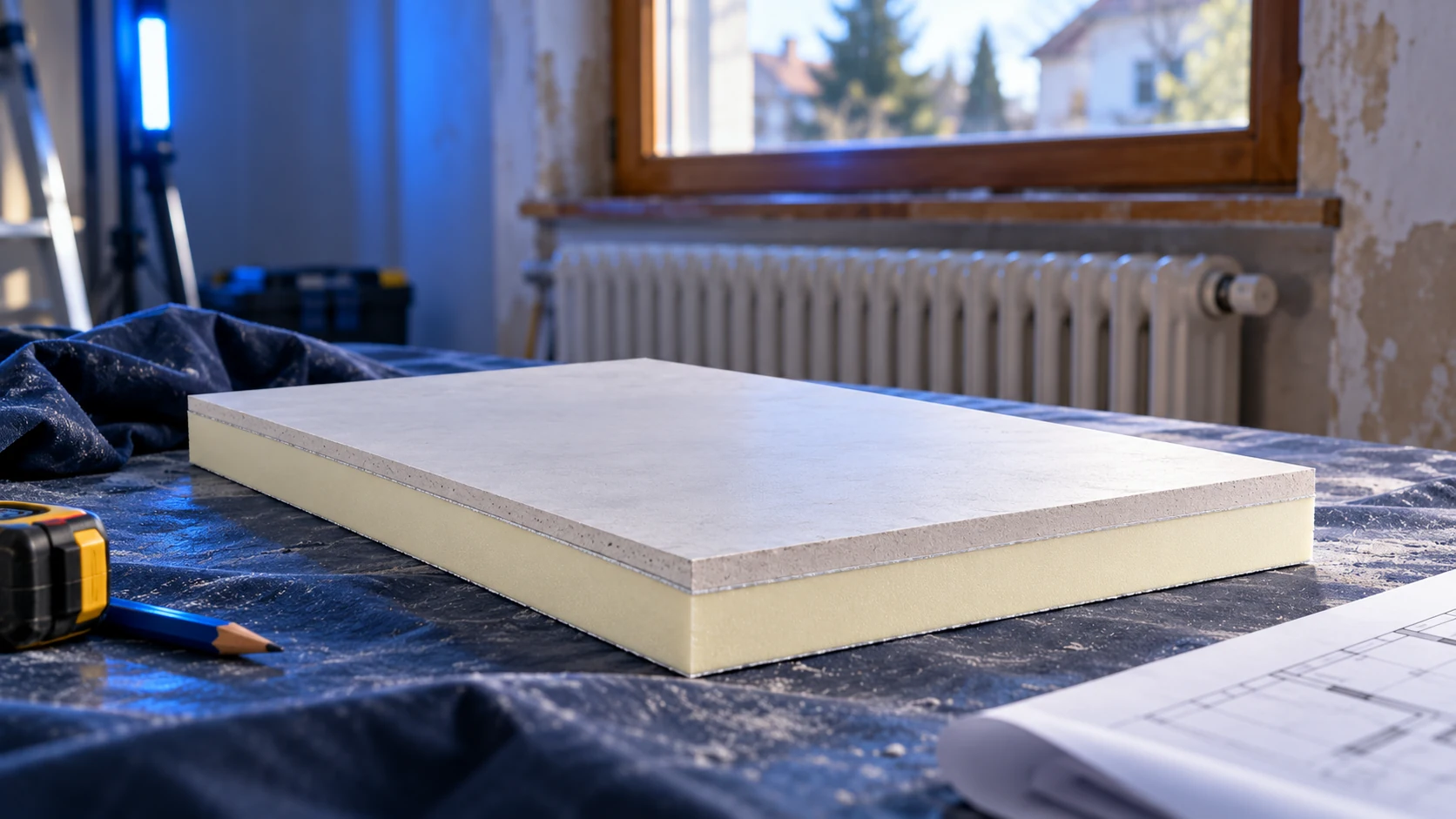
Internal insulation in a 1990s house should start with an assessment of the existing wall, not a board order. The construction date…
A good contractor can explain how they will build to your design, define exactly what their quote covers and show how each…
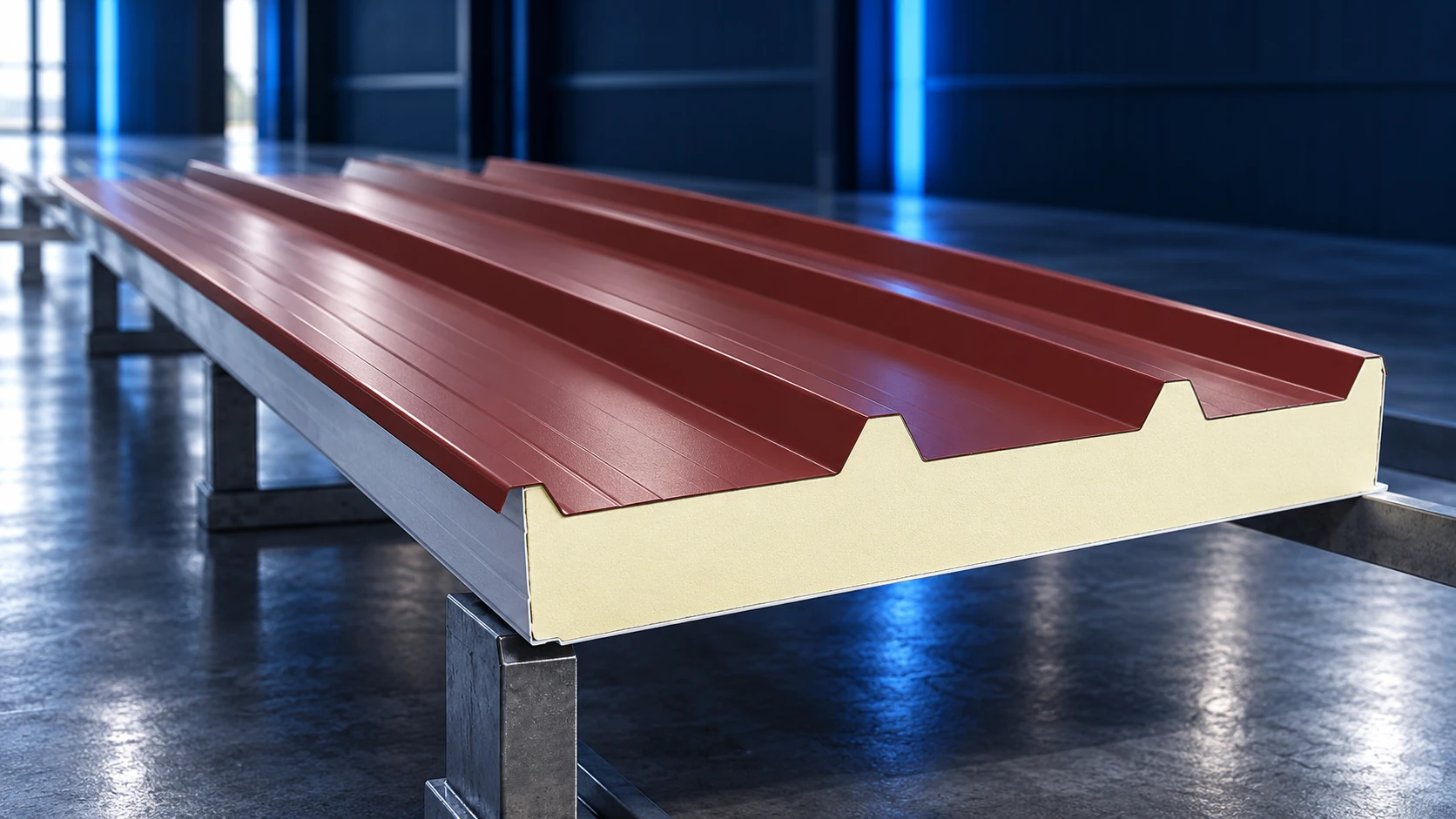
A 13.5 m PIR roof sandwich panel can reduce the number of end laps, but its length also makes delivery, lifting and…
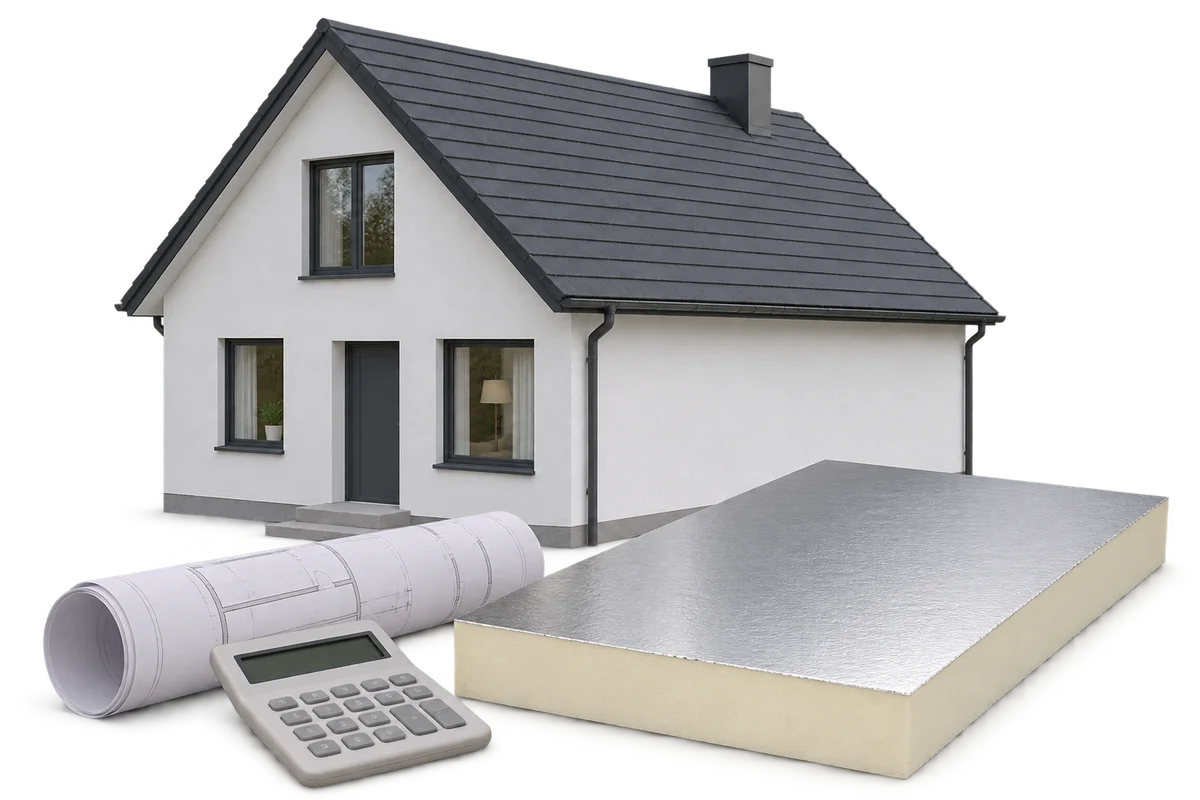
After insulating a home, check both energy consumption and the cost of purchasing it. A lower bill alone does not prove that…