






What should you use to fill gaps between EPS insulation boards?
EPS and thermal insulation
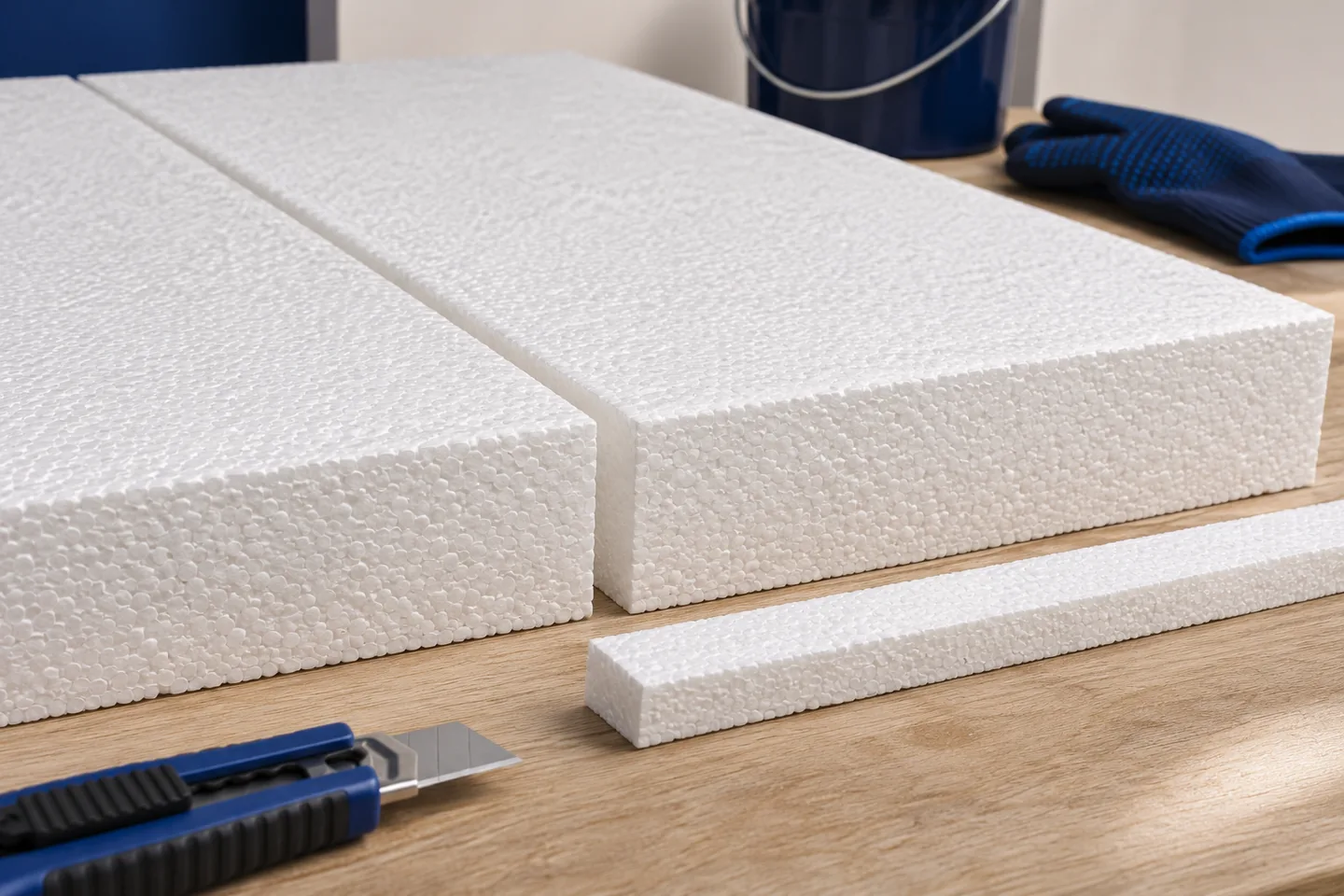
Inspect a gap between EPS boards to its full depth before applying the reinforced base coat. A poor cut, a damaged edge and a board that has warped since installation can look similar but need different repairs. First make sure both boards are firmly bonded to the wall. Then choose a close-fitting EPS strip or a system-approved filler appropriate to the gap width. Cement mortar cannot replace insulation, and closing the visible gap will not reattach a loose board.
Find out why the gap opened
Inspect joints around windows, corners and service penetrations. A narrow opening at the face can widen further back. Look closely rather than judging from a distant scaffold platform. Use raking light and check the edges at several points without disturbing sound boards.
Why keep adhesive mortar out of the joints?
Cement mortar conducts heat differently from EPS. Filling a joint with it interrupts the insulation locally; repeated mortar joints make the thermal layer less uniform. The adhesive belongs between the board and its substrate, not between neighbouring edges.
Remove mortar squeezed onto a board edge during fitting. A hardened lump holds the next board away and leaves a permanent gap. Do not force the boards together. Adjust their position within the adhesive’s working time as directed; this is easier than scraping out a long hardened joint later.
When are strips of EPS appropriate?
Wider gaps may need accurately cut strips of EPS. Follow the system instructions for the actual gap width. Fit the strip to the depth required: a thin sliver at the face does not give the continuity of a properly fitted insert.
Loose beads, crumbly fragments and miscellaneous offcuts do not give a stable, even fill. For an irregular gap or one around a very small piece, replacing that section with a properly cut board may give a better fit. Judge the repair by its quality, not by how much scrap it uses.
When can you use foam?
Some systems allow a specified polyurethane filler for certain joint widths. It must be compatible with EPS and intended for this application. Both controlled expansion and the application method matter. General-purpose foam from the installer’s van is not necessarily suitable.
Observe the specified joint widths and application conditions. Fill the void rather than forming a skin across the opening. After curing, trim the surplus and level the surface as directed. Cutting too early can pull out unstable foam and leave cavities.
Should every visible gap be filled?
No. A structural movement joint or a designed window junction serves a different purpose from an accidental board gap. Do not close it rigidly with EPS and mortar. Use the detail specified for movement and sealing; blocking the joint can cause cracks in the facade layers.
Check what each cable, pipe or bracket penetration needs. Thermal infill does not necessarily keep water out. Wall fixings may need a separate seal and a detail that limits heat loss. Similar-looking holes in EPS do not all call for the same treatment.
How do you inspect repaired joints?
Check that the fill is continuous and flush, with no hollows, projecting lumps or loose fragments. Inspect adjacent boards too. If gaps recur across the wall, identify the installation or storage fault before work moves to the next elevation; patching symptoms alone will not stop them recurring.
Austrotherm, Yetico, Arbet and Styropmin are among the suppliers of facade-grade EPS. Use the joint repair method specified for the insulation system you have chosen.
Record the filler used and the locations of larger repairs. This makes it easier to check the work and plan the next stage. Apply the reinforced base coat only after the boards and repairs have been inspected. Mesh can distribute certain stresses but cannot fill a void or provide missing board support.

Free quote
What to include in your enquiry
Tell us how you plan to use the material, the dimensions and the quantity you need. Include the thickness, grade or variant name, along with the delivery town or your preferred collection branch. For a specific product, add its name or a link to the product page. We will reply to the email address you provide to discuss availability and the terms of your order.
More from the building guide
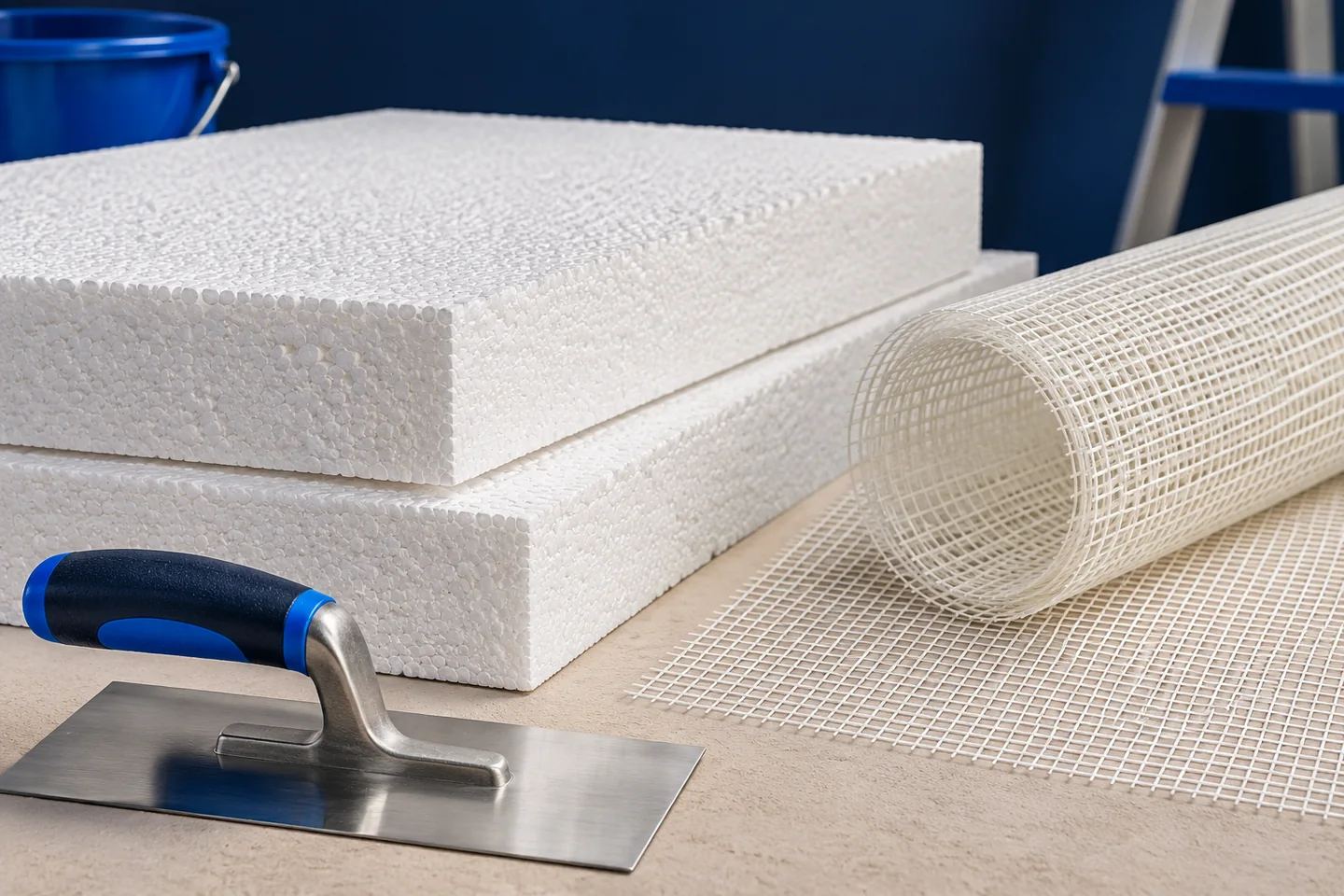
Embed the mesh in fresh base coat on stable, flat, dust-free EPS boards. Mortar must remain beneath the strands; putting mesh against…
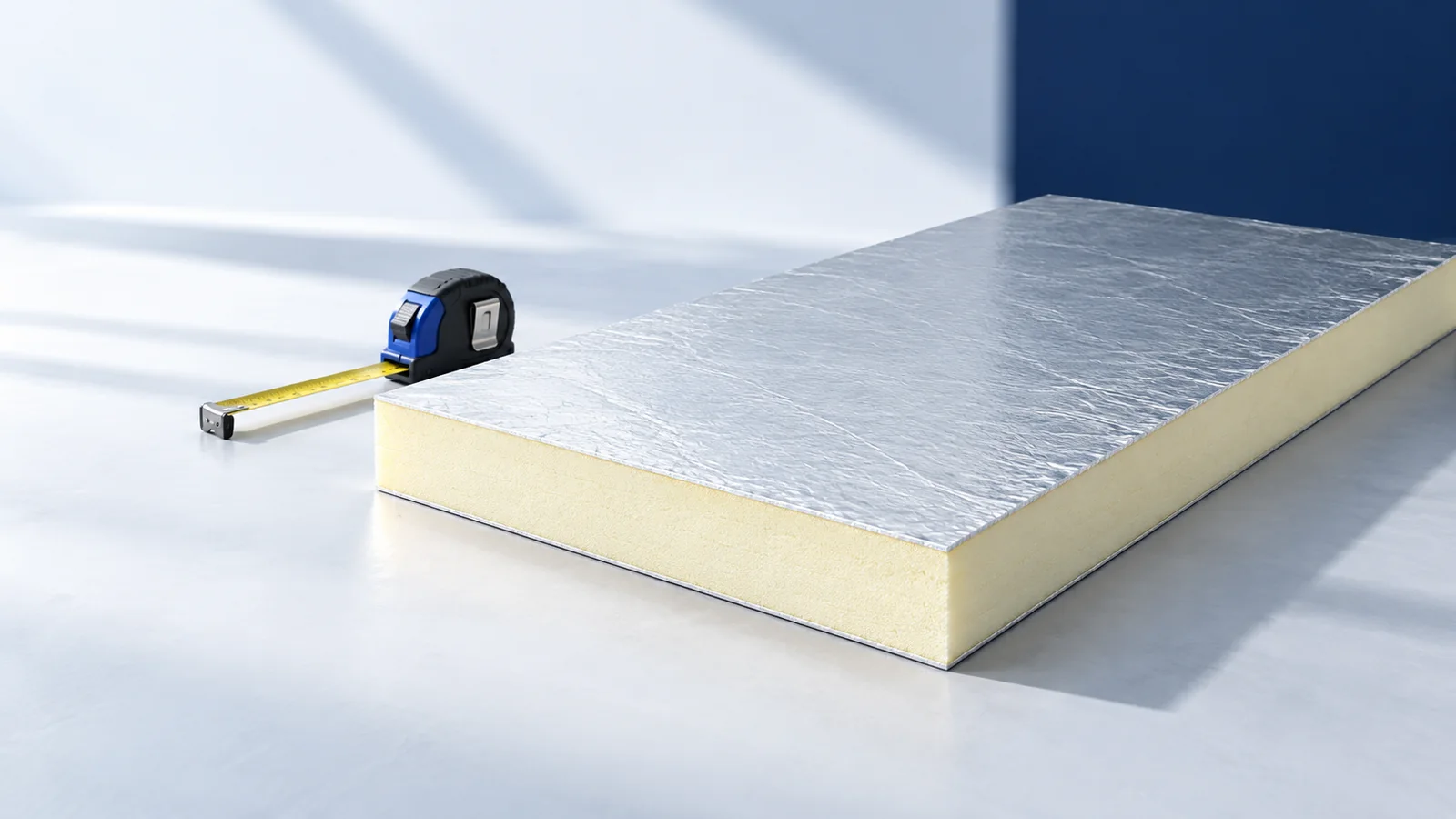
Mark the insulation position on the roof section before choosing PIR, EPS, XPS or mineral wool. Irregular rafter bays need insulation that…
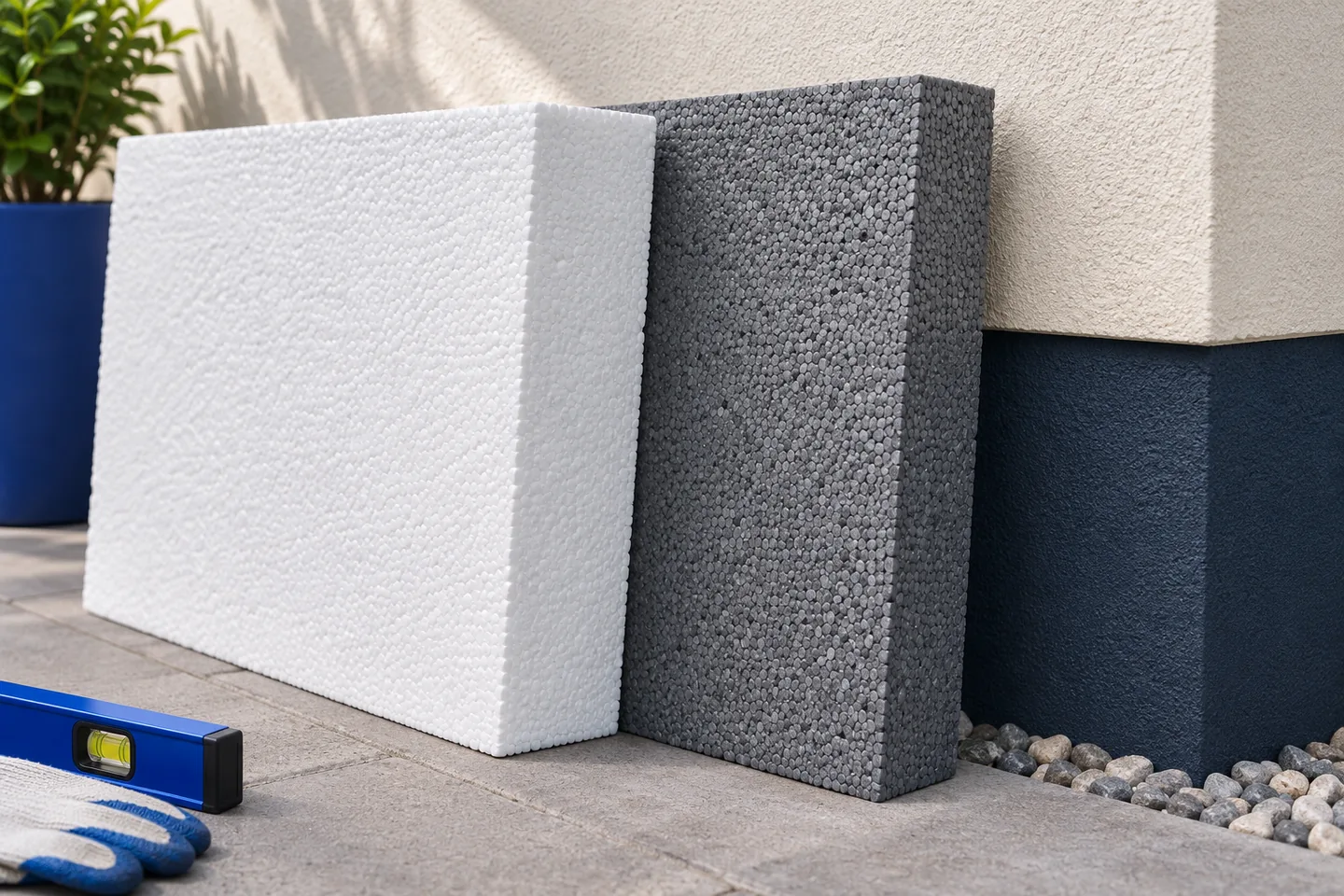
Plan the junction between facade and plinth insulation on a section through the wall, floor and foundation. The thermal layer must remain…
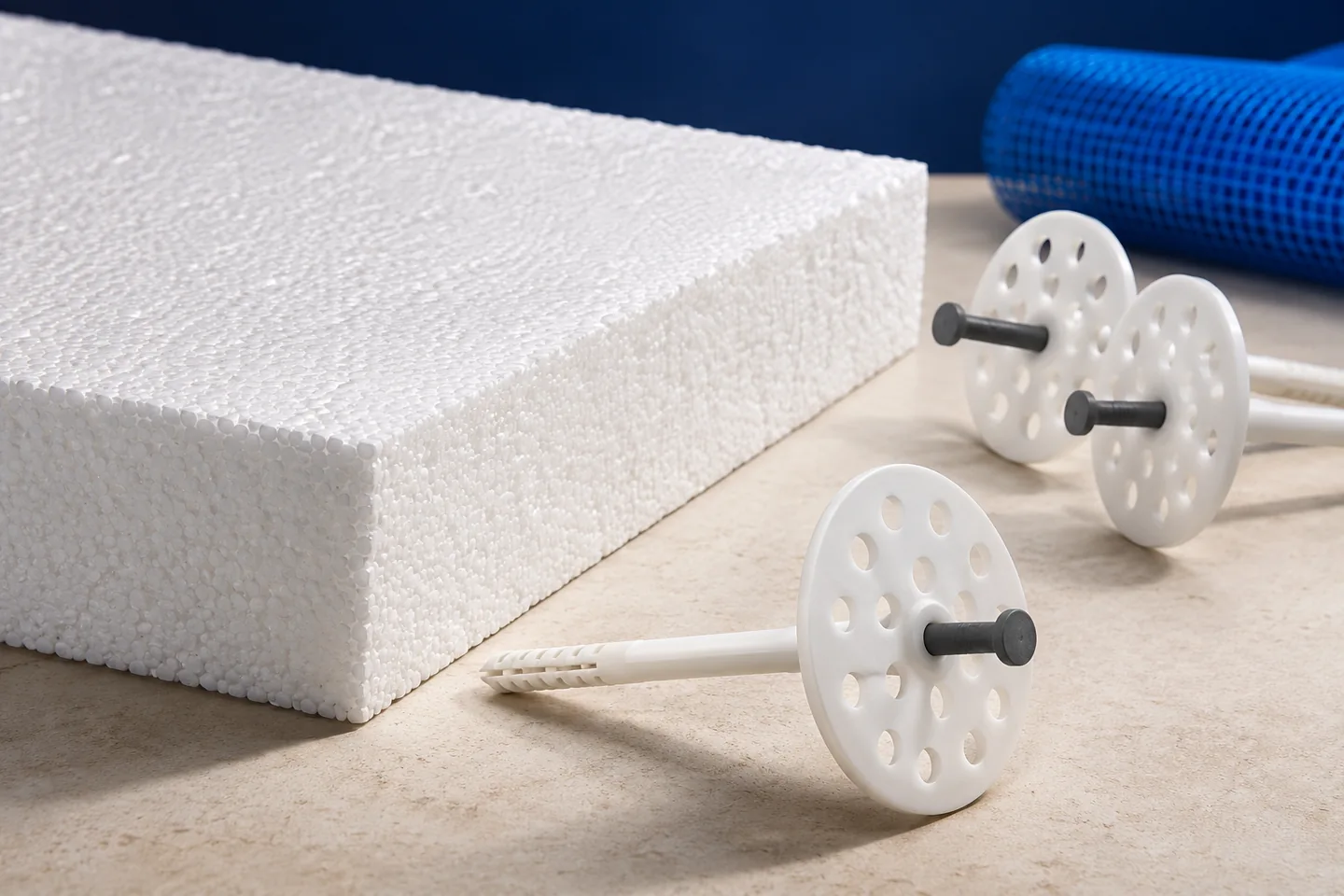
The insulation design and ETICS documentation determine whether EPS facade boards need mechanical fixings. The wall material and its condition, wind exposure,…
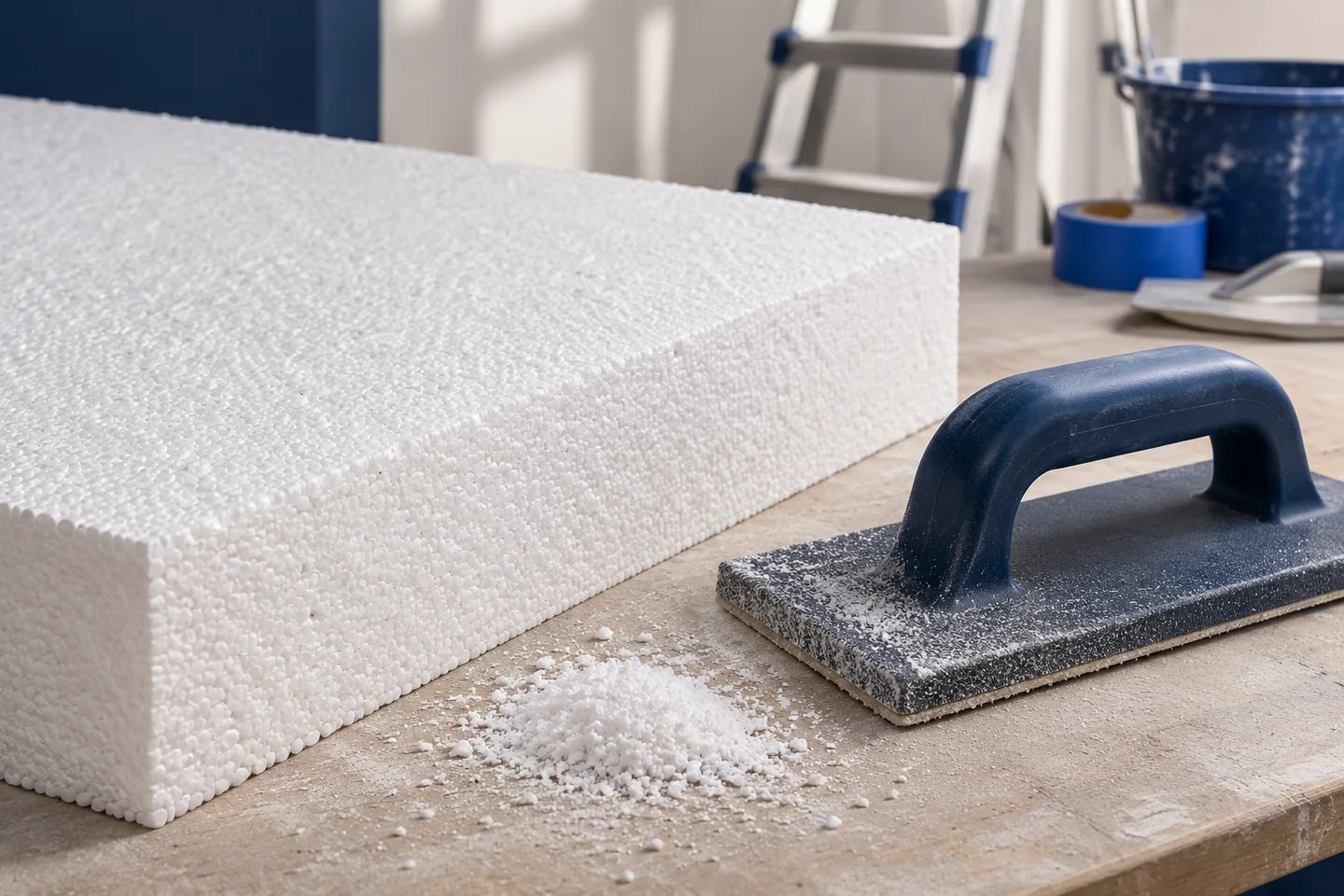
Sand facade EPS once the adhesive has cured under the conditions and for the time specified for the system, and the boards…
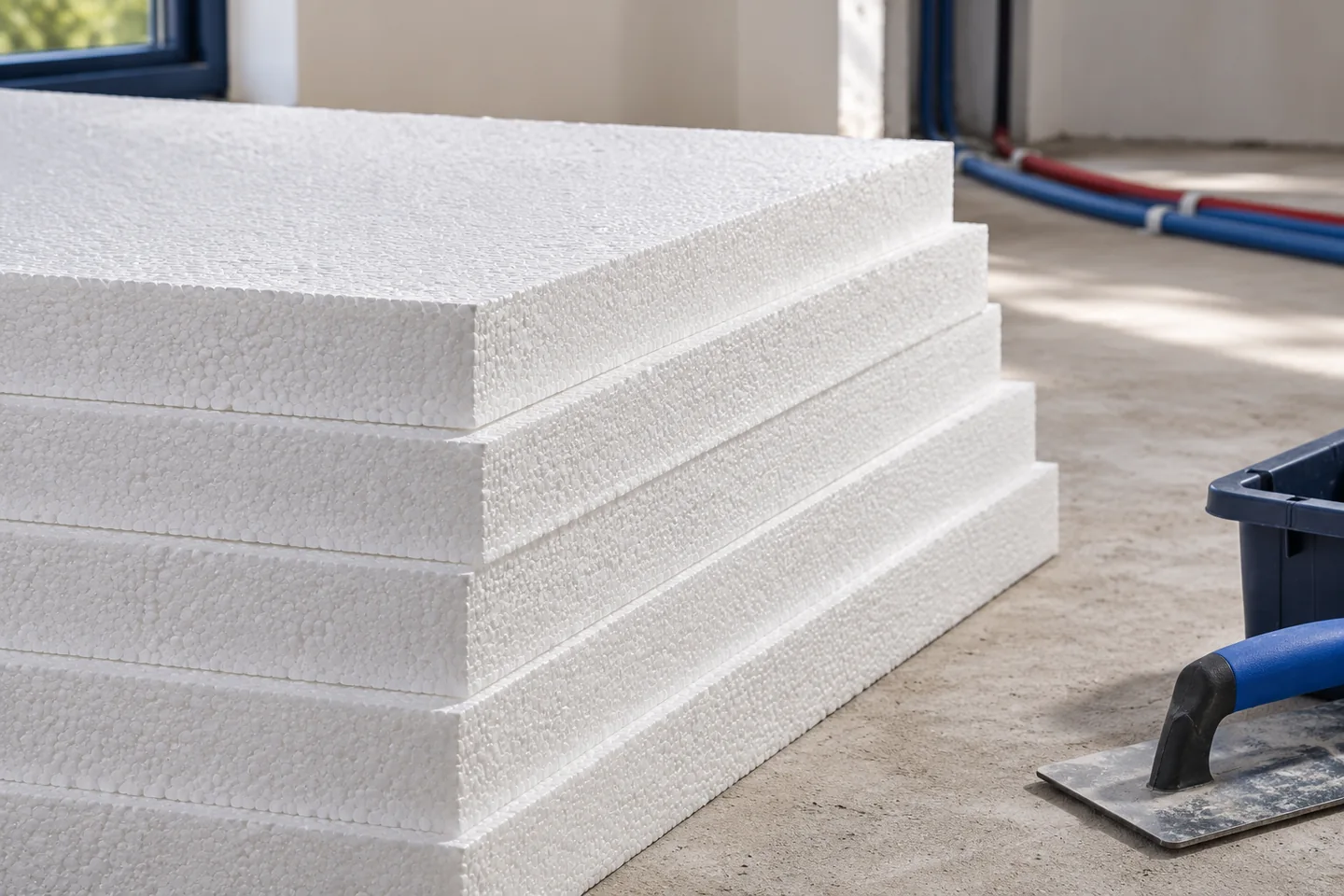
Before ordering EPS for a screeded floor, establish the finished level and mark pipe runs, sleeves and crossings on a plan. Allow…
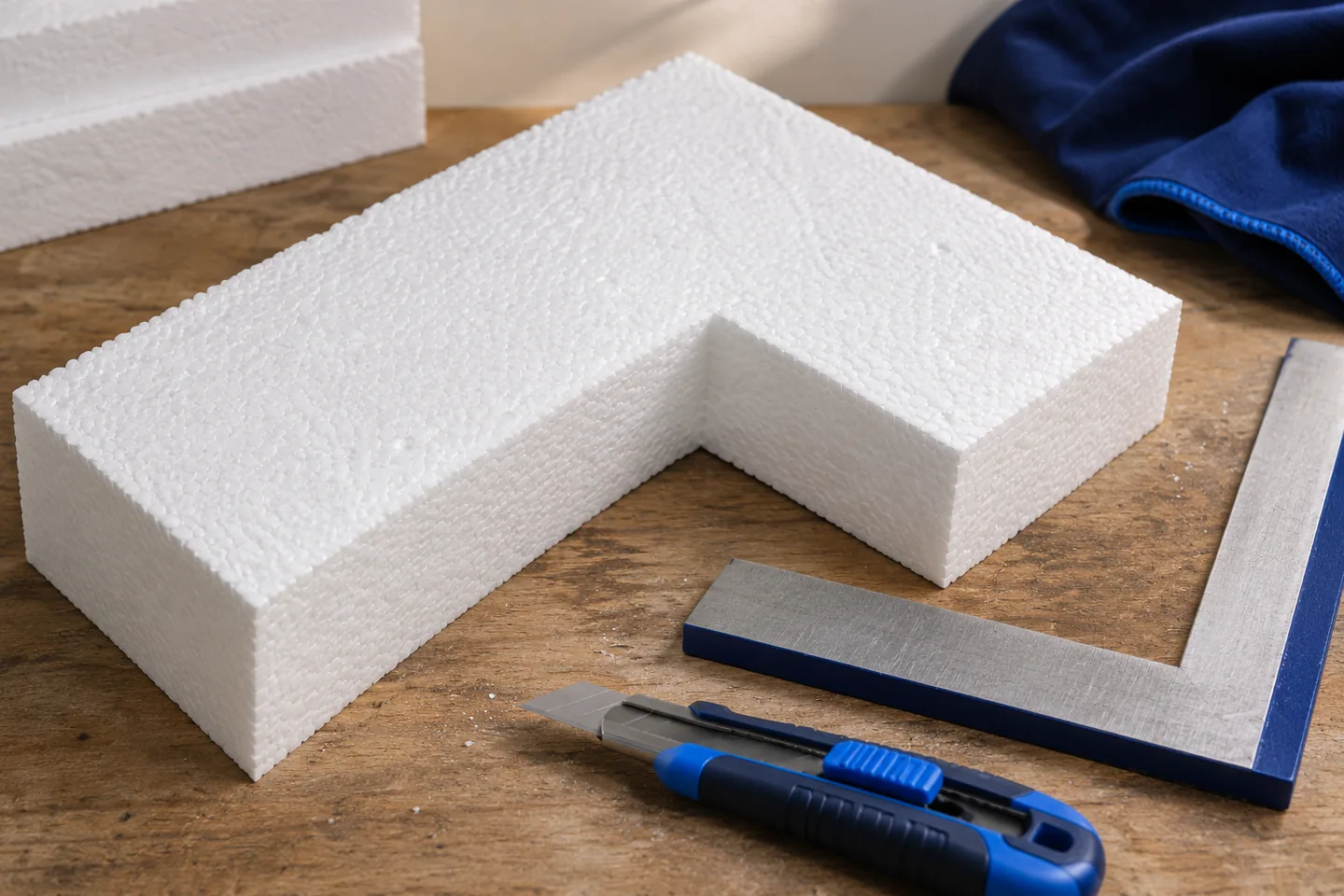
Three details work together at a window corner: an EPS board cut around the opening, diagonal mesh in the base coat and…
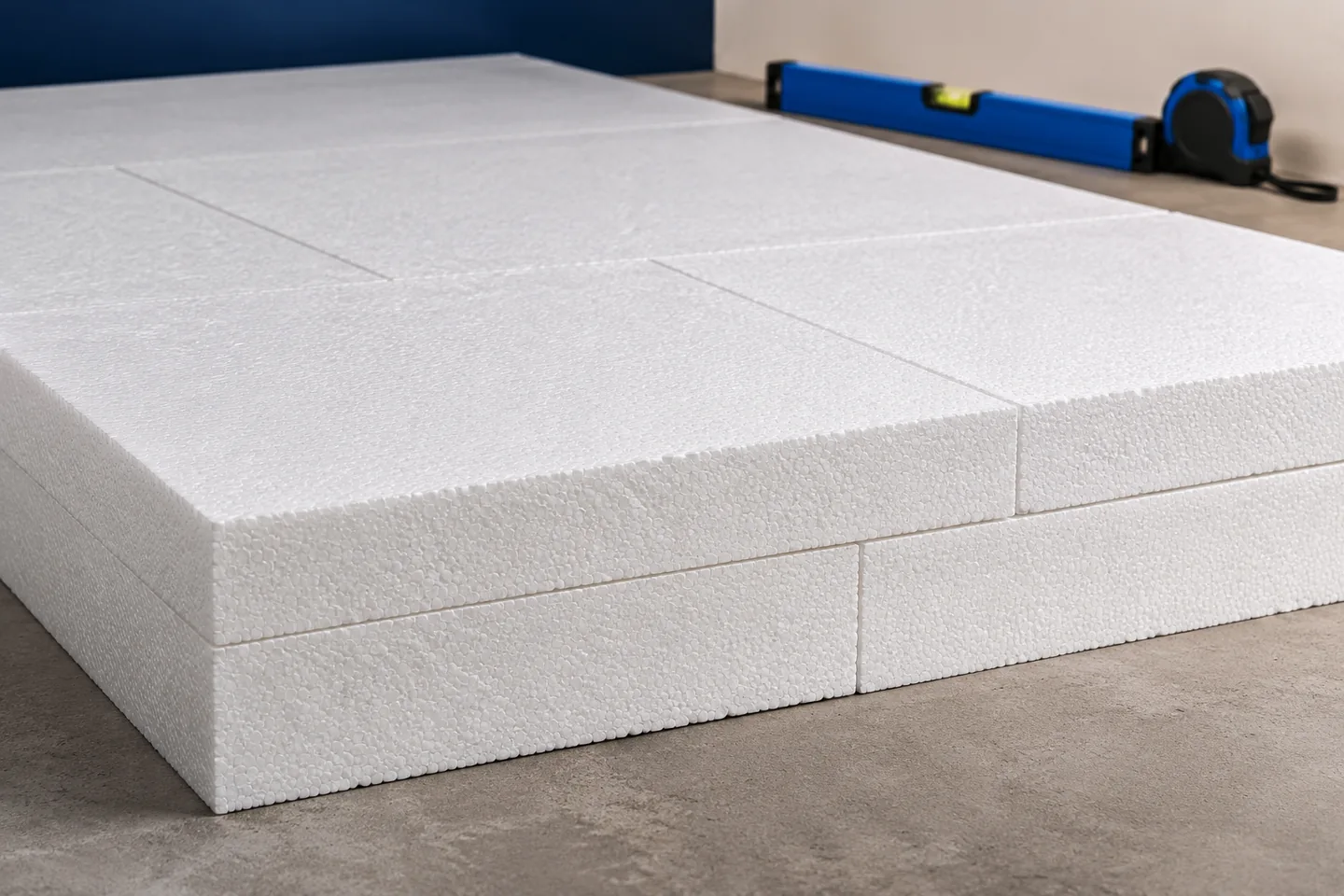
Two layers of floor-grade EPS let you offset joints, accommodate some services and fit the available floor depth. At the same conductivity…