PIR, EPS, XPS or mineral wool: which insulation suits your roof?
Insulation and lofts
Mark the insulation position on the roof section before choosing PIR, EPS, XPS or mineral wool. Irregular rafter bays need insulation that fits closely. A low parapet may limit build-up depth, while insulation under load needs checks for sustained pressure and moisture. In the example below, 10 cm of PIR with λ = 0.022 W/(m·K) provides about the same thermal resistance as 14.1 cm of the selected EPS or 15.9 cm of the selected wool. This compares individual layers, not roof U-values. Fire and acoustic requirements, substrate, seals and the cost of detailing also affect the choice.
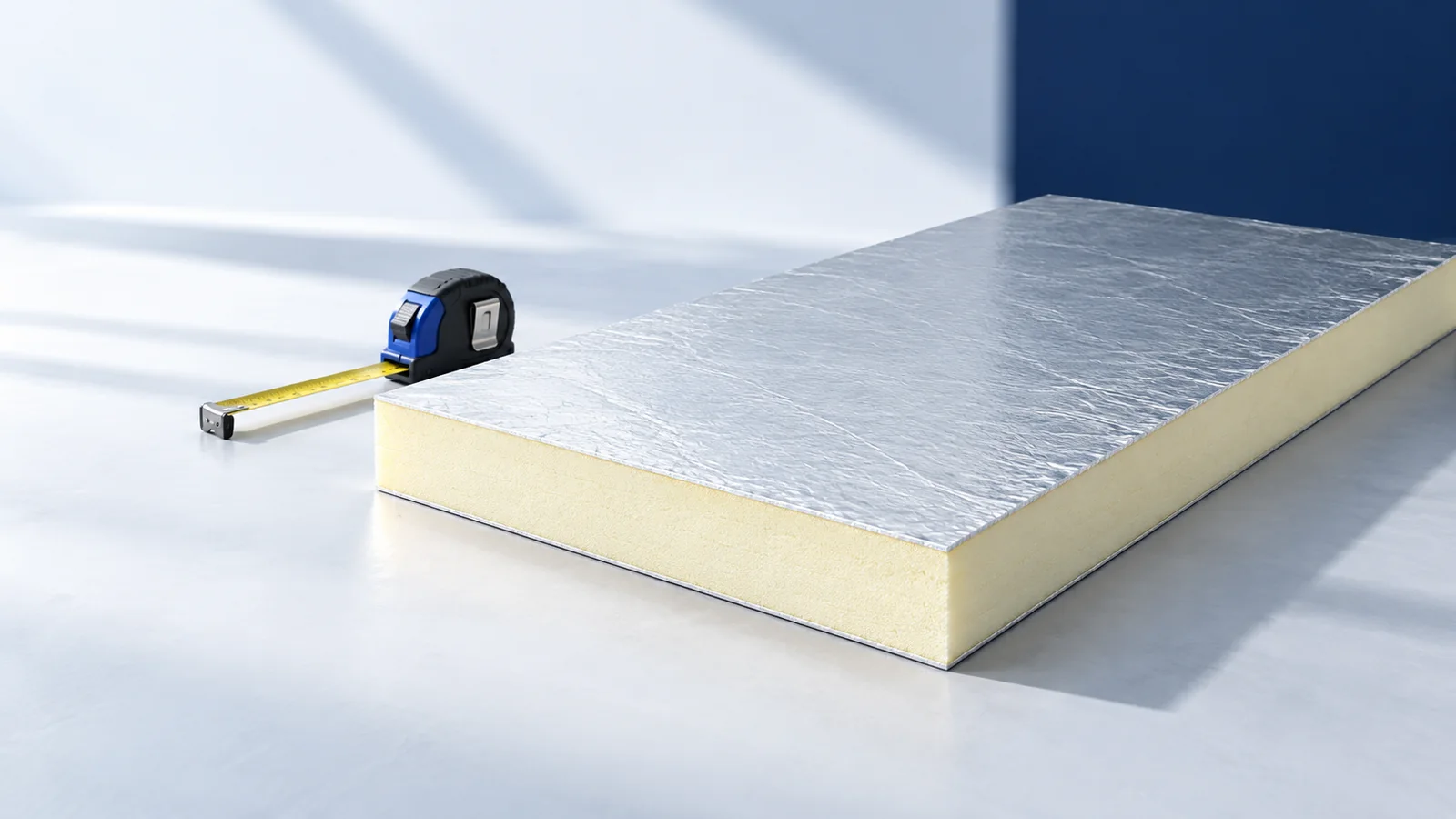
Are you comparing a board or a complete roof?
A rigid board and a fibrous quilt can have similar conductivity yet require different installation. Establish whether the insulation fills a cavity or takes pressure under waterproofing. Do not use a façade product on a roof without confirmation of suitability.
Compare declarations of performance for the precise variants: conductivity, reaction to fire, water absorption and mechanical properties. Then draw the structure, air and weather control layers, covering and lining. Product data do not describe all those junctions.
Why can PIR achieve the same resistance in less depth?
For a homogeneous layer use R = d/λ with d in metres. For 10 cm the numerator is always 0.10 m. The different results below come from each product’s conductivity: a lower value gives greater resistance at the same depth.
For a target R of about 4.55 m²K/W, multiply resistance by the comparison product’s conductivity. EPS at 0.031 needs about 14.1 cm and wool at 0.035 about 15.9 cm. The roof U-value also requires the remaining layers, structural members and relevant corrections.
| Material | λ [W/(m·K)] | R at 10 cm [m²K/W] |
|---|---|---|
| Aluminium-faced PIR | 0.022 | 4.55 |
| Graphite EPS | 0.031 | 3.23 |
| XPS, selected grade | 0.035 | 2.86 |
| Mineral wool for lofts | 0.035 | 2.86 |
Where does a thinner PIR layer help?
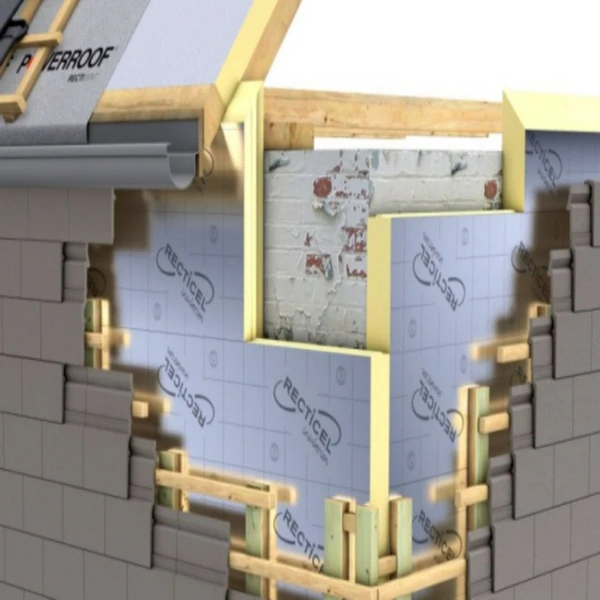
Check height at thresholds and parapets. On pitched roofs, continuous above-rafter insulation reduces heat flow through the framing. Detail windows, wall plates, screws and board edges as these points can interrupt continuity.
At irregular edges compare the labour needed to fit a rigid board or resilient wool. Above the rafters, design the load path through the insulation to the frame separately. High thermal resistance is not a load rating.
How do pressure and moisture change the comparison?
For the PIR example the declared class is CS(10/Y)120 and water absorption under full immersion is up to 2% by volume. An absorption test does not make waterproofing unnecessary. The selected XPS has class CS(10)300 and is specified for demanding moisture conditions, a different use case.
Values at 10% strain describe a test result. Sustained loading also requires long-term pressure data. Compare EPS or wool intended for a similar duty rather than a soft quilt made for rafter bays.
What about fire performance and noise?
The selected wool products are A1; the example EPS and XPS are E. The aluminium-faced PIR datasheet gives F for 20–49 mm and E for 50–250 mm. These are reaction-to-fire classes for specific products; the material or facing name alone does not determine the class.
Fire resistance belongs to the roof assembly. Sound insulation also depends on all layers; fibrous infill may improve damping in a particular build-up. Substituting thinner PIR with equal R does not guarantee the same acoustic result.
Does an aluminium facing replace separate membranes?
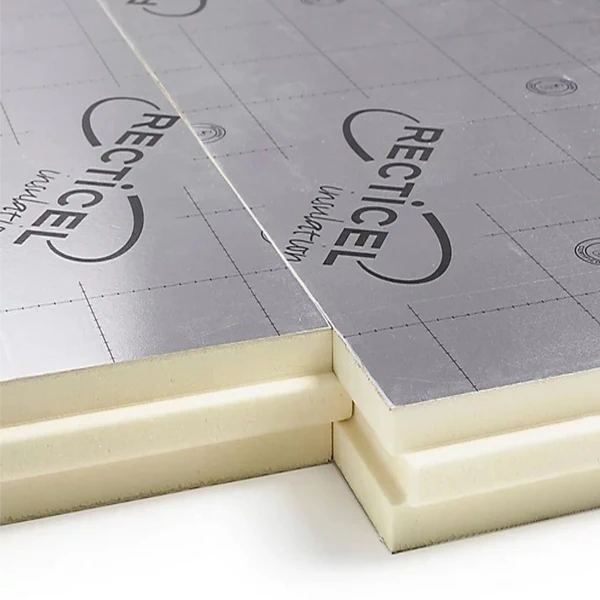
Even with a vapour-resistant facing, moisture can reach the joints. Select the vapour control layer and detail continuity at edges, seams and penetrations. The same core with a different facing may need a different junction.
Before closing the assembly, check substrate moisture and drying potential. Confirm compatibility of adhesive, waterproofing and fixings. Low conductivity cannot compensate for gaps between boards or leakage at a wall junction.
How do you compare installed costs?
Where depth is tight, calculate the PIR option; for pressure and moisture, check a suitable XPS grade. Consider EPS as an economical alternative where the design allows it. Include wool when fit, acoustics or fire requirements are priorities.
Request two quotes for the same roof thermal performance. Include actual thickness, fasteners, membranes, linings and work at junctions. Only this total shows the cost of achieving the target in that building.

Free quote
What to include in your enquiry
Tell us how you plan to use the material, the dimensions and the quantity you need. Include the thickness, grade or variant name, along with the delivery town or your preferred collection branch. For a specific product, add its name or a link to the product page. We will reply to the email address you provide to discuss availability and the terms of your order.

More from the building guide
A potato store log helps distinguish symptoms associated with a particular batch of crop from problems occurring in a specific part of…
On a terrace above a heated room, the door threshold alone does not determine how much PIR insulation will fit. The available…
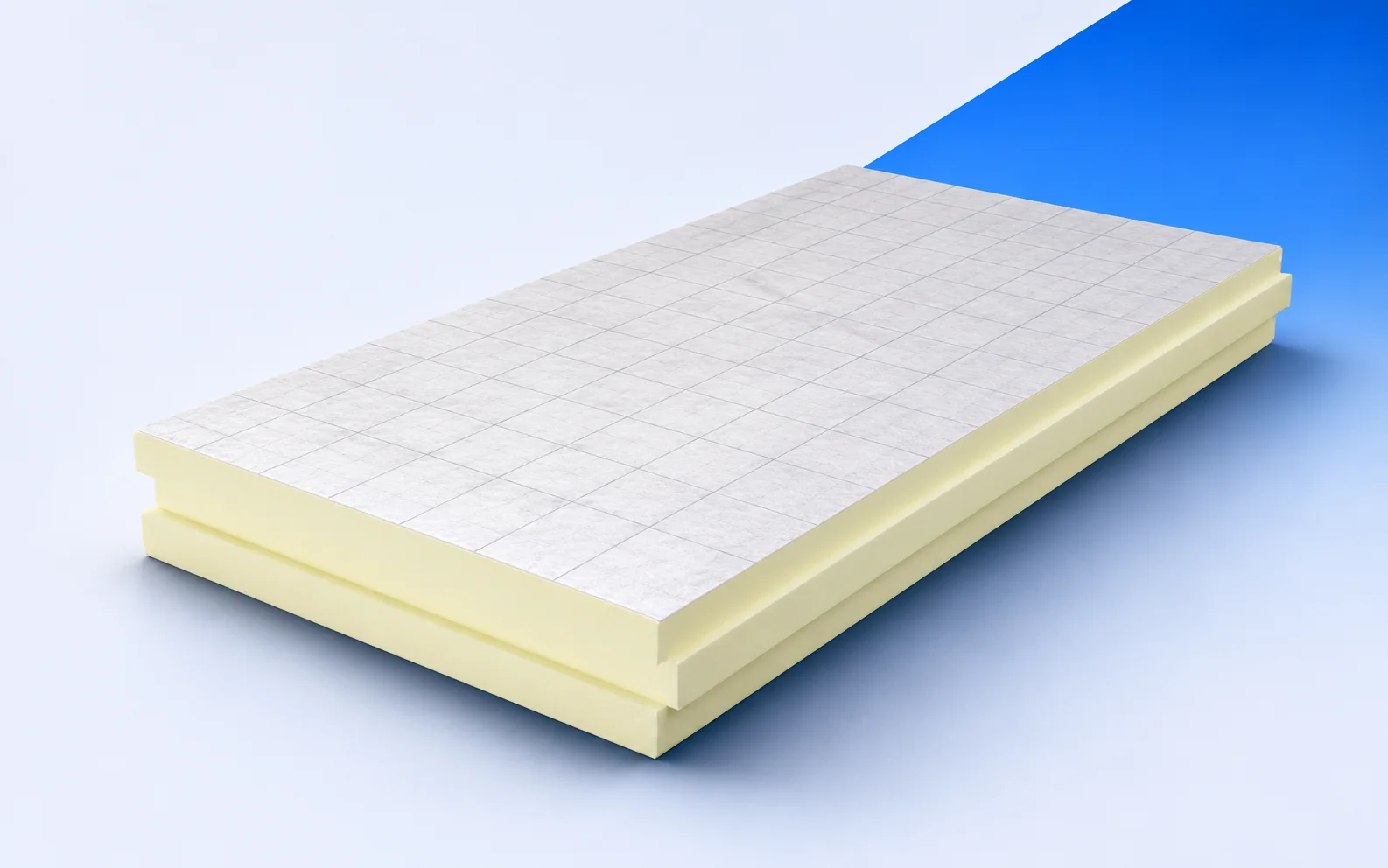
A low threshold or an existing eaves flashing can limit insulation depth. termPIR MAX 19 AL combines a rigid PIR core with…
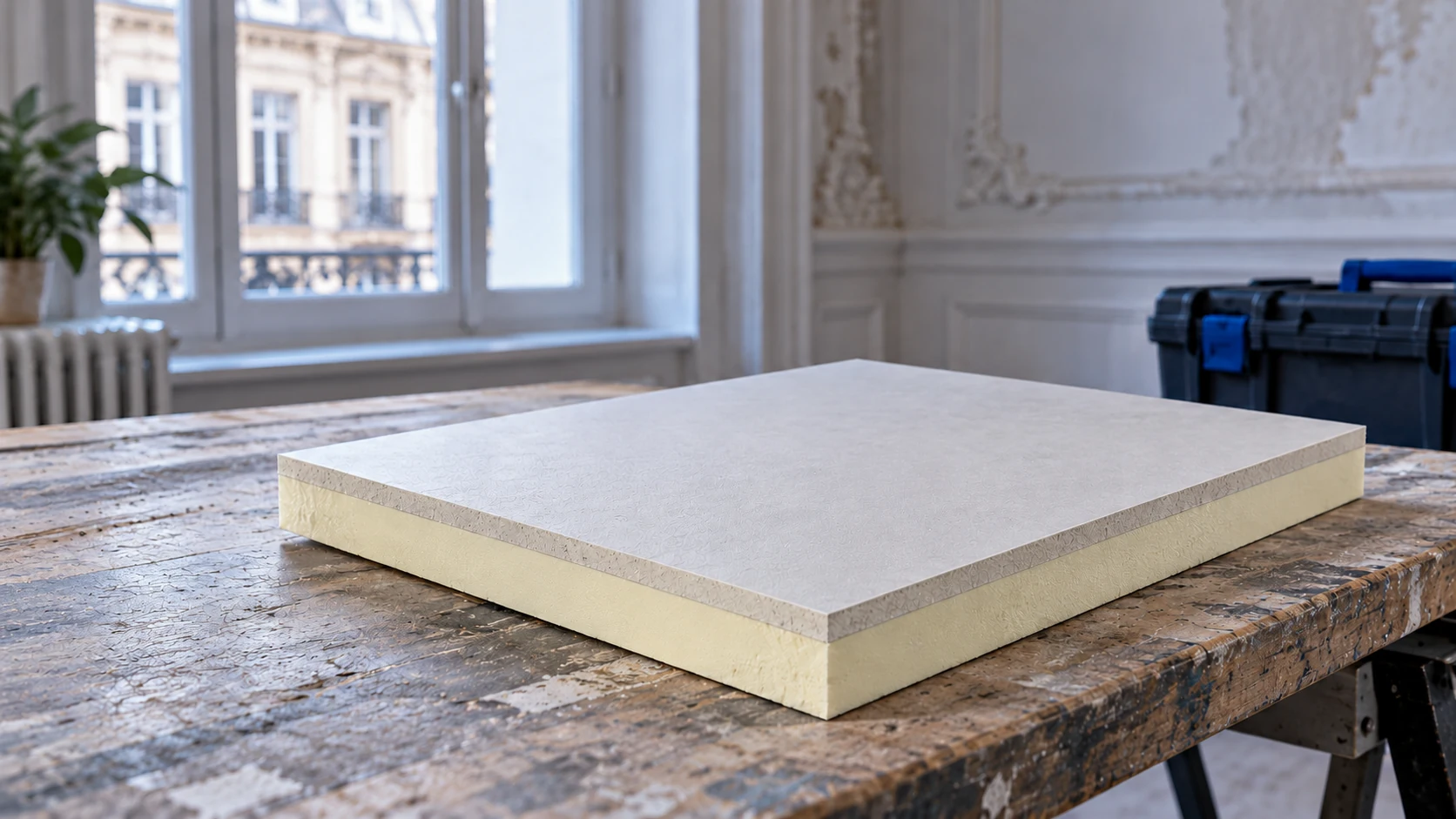
Internal insulation can be considered when an older masonry building's facade must remain unchanged. Its suitability depends on the existing construction: thick…
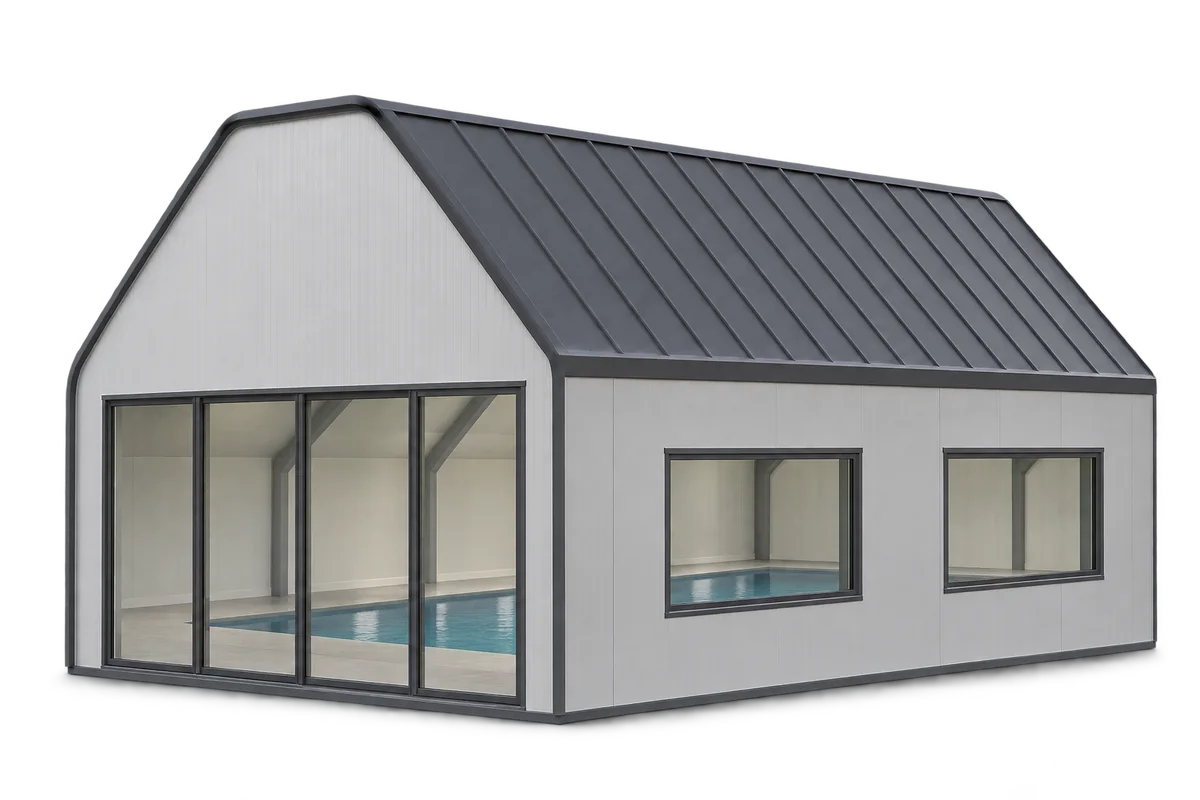
A roof over an enclosed, heated swimming pool must suit the actual moisture and chemical conditions inside. Insulation thickness or the label…
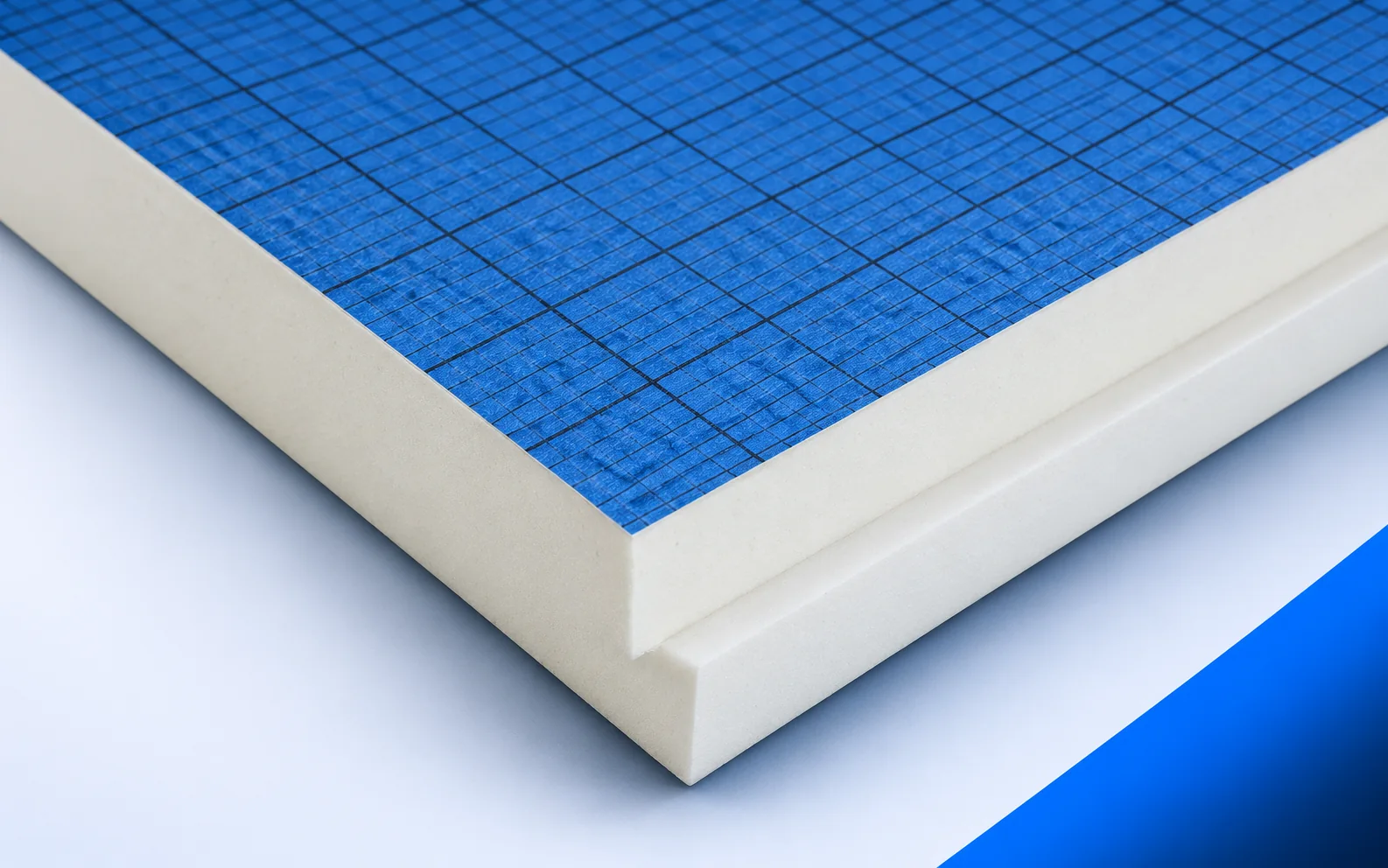
Three layers meet a rooflight kerb. EFYOS BLUE A insulation must reach it as shown on the thermal detail. The vapour control…
An energy-efficient house should allow seals to be repaired, drains to be inspected and installations to be serviced without unnecessarily dismantling large…
Conductivity (lambda), thermal resistance (R) and thermal transmittance (U) answer different questions. The declared conductivity, usually marked λD, describes a particular product.…