






PIR board dimensions: choosing a format that simplifies installation
PIR boards and insulation
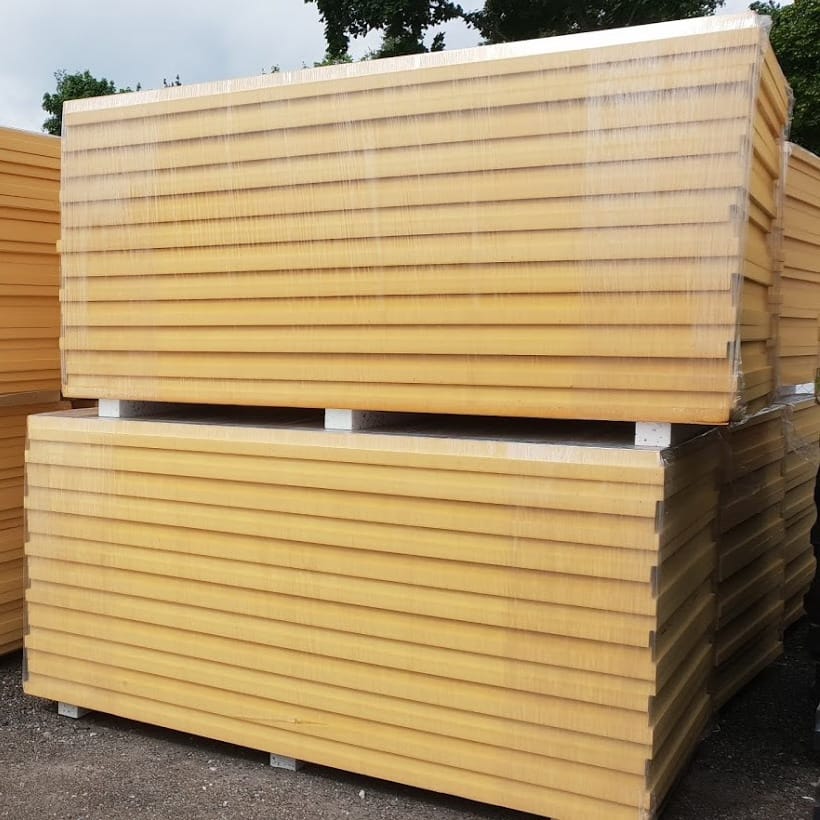
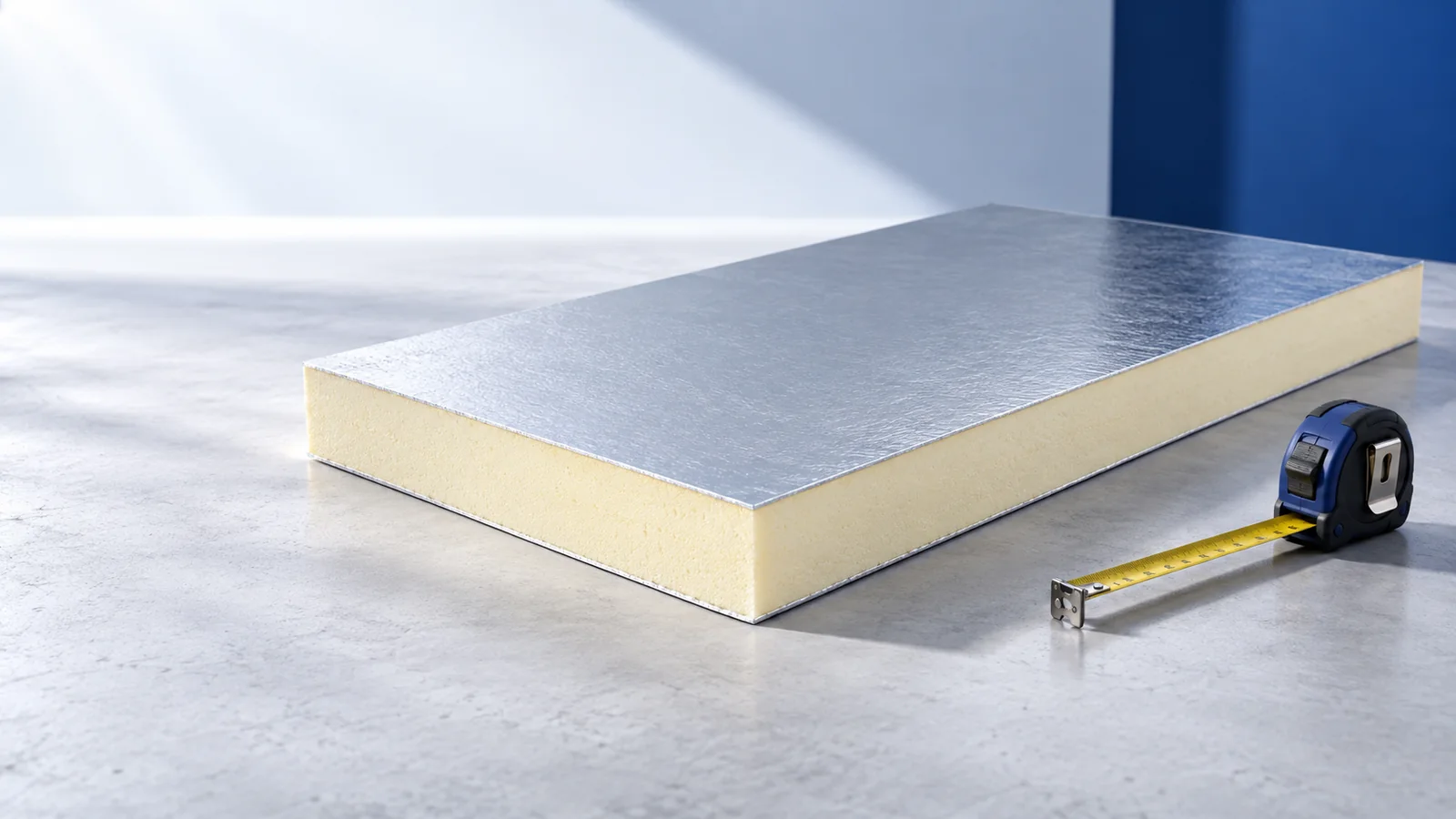
PIR insulation boards are often encountered in 120 × 60 cm and 120 × 240 cm formats, but neither size nor effective coverage is universal. Edge profiles, intended use and sales units affect the quantity needed. This guide distinguishes overall dimensions from coverage, compares handling of small and large boards and explains why plasterboard-faced composites have separate size tables. Drawing the board layout before ordering helps identify offcuts, narrow strips and factory-edge requirements. Confirm the exact product, pack contents and installation instructions: multiplying the outside dimensions alone can underestimate the number of boards required for a roof or wall.
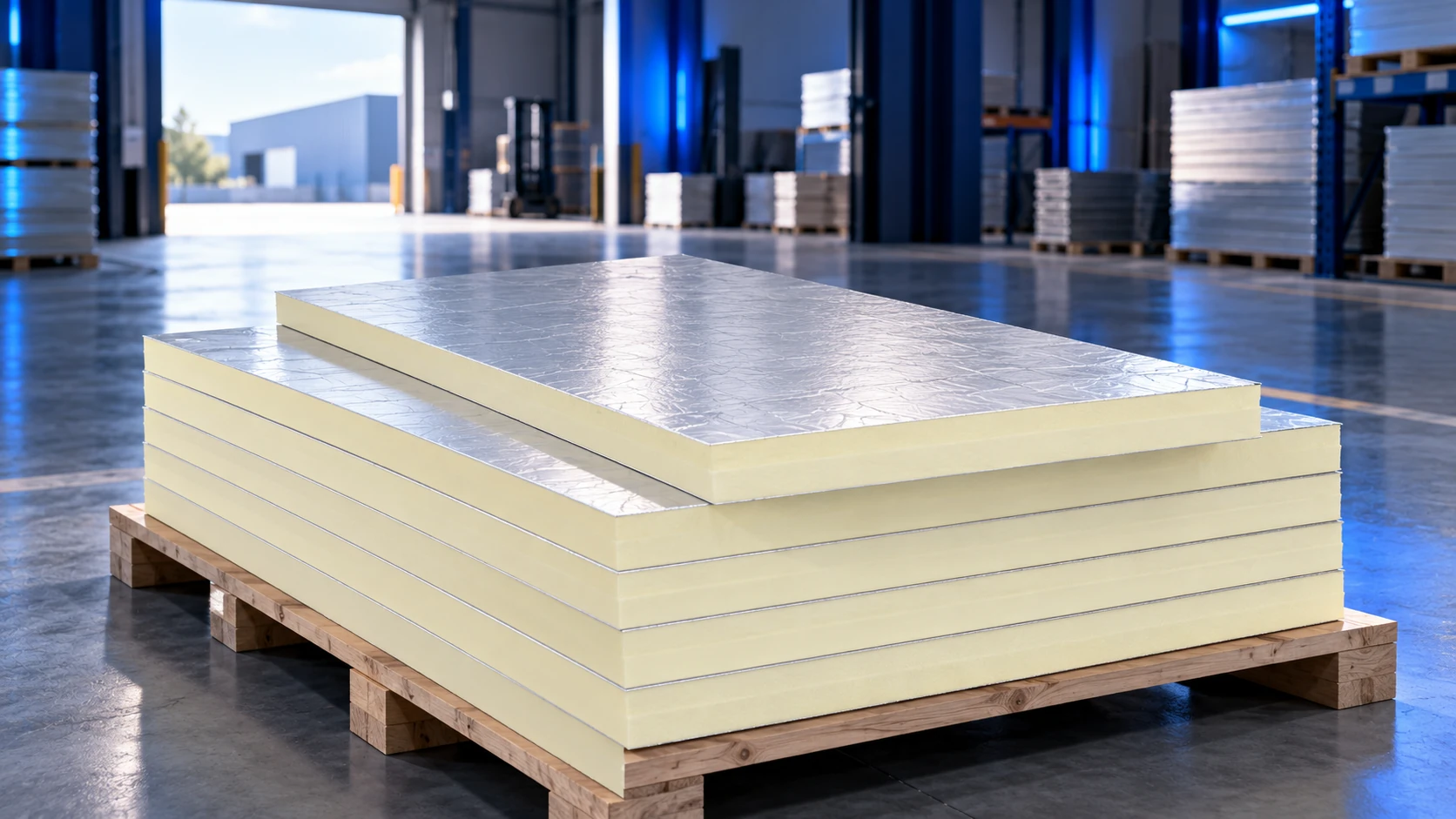
Nominal dimensions are only the starting point
Example insulation-board sizes are 600 × 1200 mm and 1200 × 2400 mm. Profiled-edge versions may cover a smaller effective area. Confirm dimensions for the version ordered: the package size or outside outline does not necessarily equal the area covered once adjoining boards are joined.
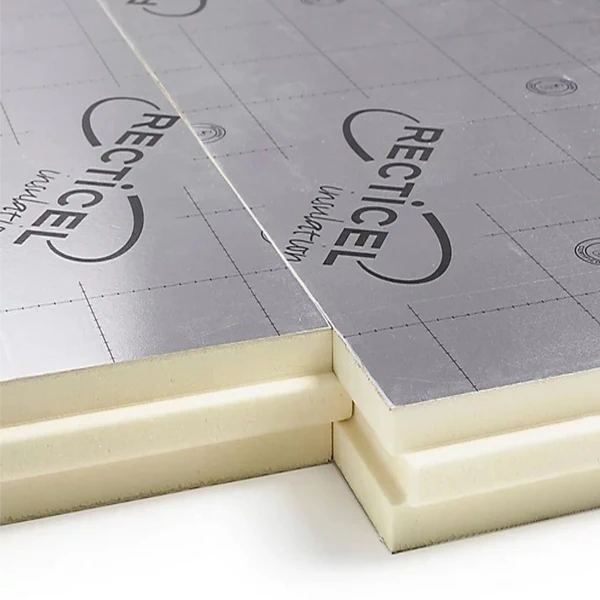
Square-edge, rebated and tongue-and-groove boards join differently. Do not calculate them interchangeably without checking the table. If a quotation merely says “120 × 240”, confirm the edge profile and billing unit to compare supplies on an equal basis.
How much area does one board represent?
A 1200 × 600 mm rectangle has a geometric area of 0.72 m²; 1200 × 2400 mm gives 2.88 m². These are the side lengths multiplied in metres. Overlapping edges can reduce the actual area covered.
Suppose a board measuring 1200 × 2400 mm overall covers 1185 × 2385 mm once joined. Its coverage is approximately 2.826 m² rather than 2.88 m². This illustrates one edge-profile effect; other versions may differ. Using overall area for a large roof can lead to ordering too few boards.
Smaller boards help where access is restricted
A 120 × 60 cm board is easier to handle around numerous penetrations, in small rooms and with restricted access. It passes through doorways and onto scaffolding more easily and may reduce waste in irregular layouts.
Smaller boards create more joints over the same area, however, and those joints take time. Include the system’s fixing and sealing requirements. Carrying convenience should not decide everything: larger boards can speed up repetitive layouts. Compare both formats on a simple plan.
Large boards need a handling plan
The 120 × 240 cm format reduces joints across an open area but is harder to manoeuvre in wind or confined interiors. Organise storage and movement to the installation point. Avoid leaving boards in routes where their edges can be damaged.
A roof assembly may restrict large formats or edge types. Do not assume every board is installed identically. Follow the intended use and current instructions. A dimension table alone does not explain fixing positions, layer joints or how to move the board into place.
Plasterboard-faced PIR has its own size table
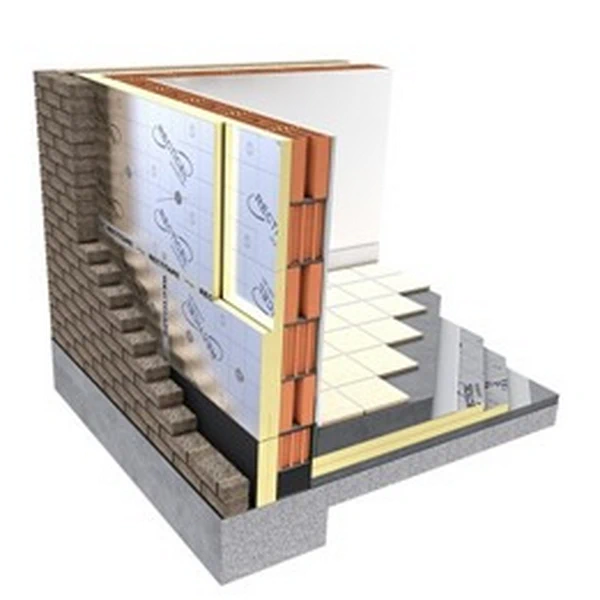
An interior composite need not use a standard roof-board format. One example is PIR bonded to plasterboard at 1200 × 2600 mm. Confirm the dimensions and full thickness in the order. Do not transfer ordinary insulation-board data to a composite; the additional facing also changes weight and handling.
Check room height, carrying access, weight and safe positioning for this board. Do not plan a purchase from the table for a similarly named product. A standard roof dimension is not automatically a standard wall-lining dimension.
Draw the cuts and laying direction
Start with openings, boundaries and obstructions, then locate narrow strips. Shifting the first row may be better than leaving a small piece at the far end. Follow the required staggered layout and manufacturer limits.
Offcuts cannot always be reused elsewhere; a piece missing the required edge may need a different detail. Do not assume zero waste. A fixed percentage allowance can also be misleading. On a small roof, an exact board schedule is more useful than adding the same percentage to every project.
Use different symbols for full boards and cuts, and count locations needing a factory edge. The schedule helps order packs and track consumption. It also shows whether another format actually saves material or merely moves the waste elsewhere.
Specify more than two dimensions when ordering
State the product name, thickness, format, edge profile and number of packs. Confirm the area per sales unit and how it is charged. Agree unloading access too; a price list may include a logistical minimum unrelated to the exact area needed on site.
Inspect labels and edges on delivery. Store boards as instructed, protected from water and damage. For a later batch, compare the same identifiers. Matching external dimensions do not guarantee that two products can be joined correctly.
Frequently asked questions
Does 120 × 240 cm always mean 2.88 m² coverage?
No. Profiled edges can reduce effective coverage.
Do all PIR boards share the same format?
No. Dimensions depend on manufacturer, model and application, particularly for plasterboard-faced products.

Free quote
What to include in your enquiry
Tell us how you plan to use the material, the dimensions and the quantity you need. Include the thickness, grade or variant name, along with the delivery town or your preferred collection branch. For a specific product, add its name or a link to the product page. We will reply to the email address you provide to discuss availability and the terms of your order.
More from the building guide
Effective roof insulation forms a continuous boundary around heated rooms, rather than merely a thick layer across the middle of a slope.…
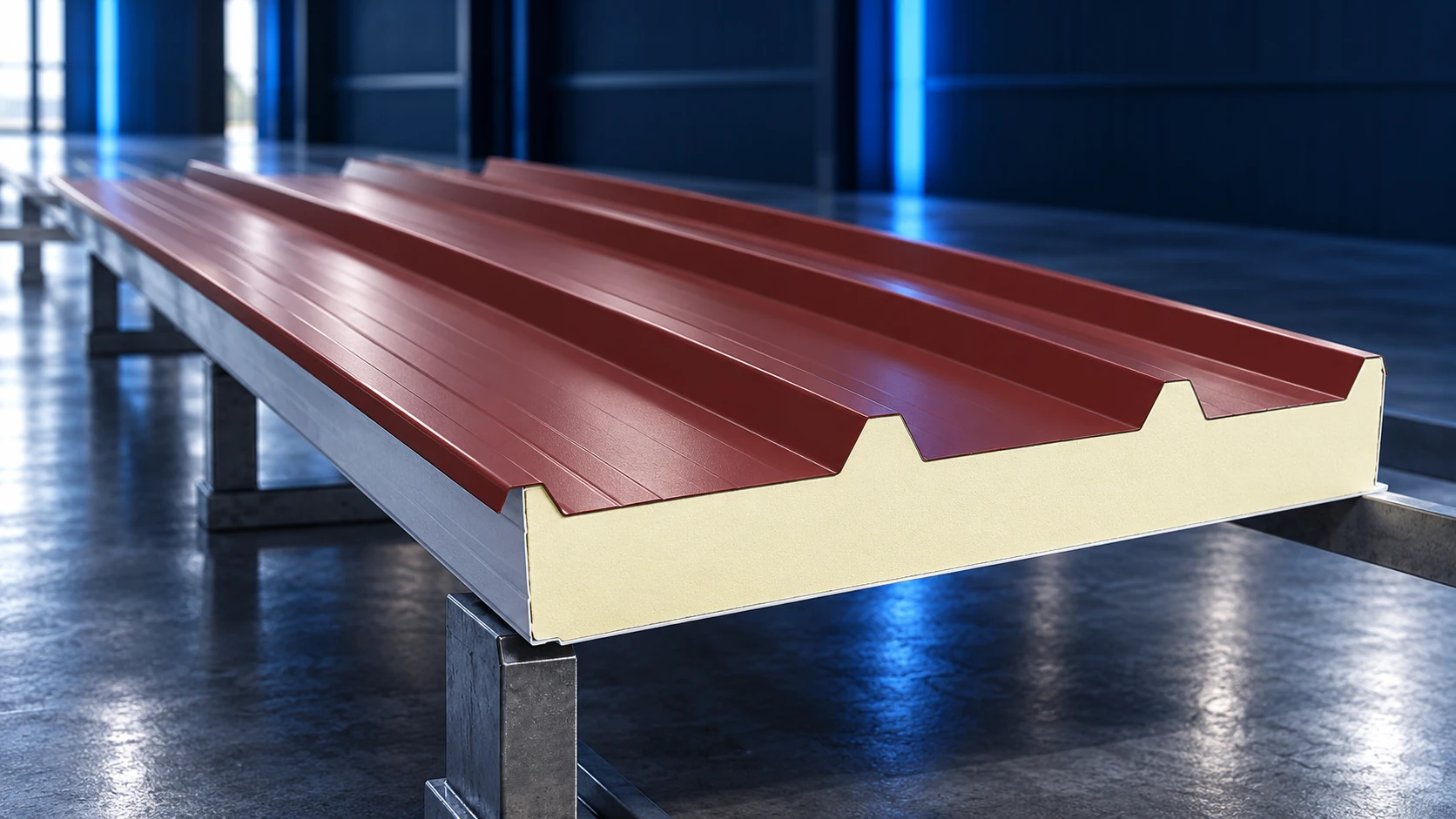
A 13.5 m PIR roof sandwich panel can reduce the number of end laps, but its length also makes delivery, lifting and…
Insulation selection starts with its position in the building. A rendered wall, a roof and a continuously loaded floor impose different requirements.…
A retrofit can reduce energy use and retain parts of the existing building if their condition is assessed first. PIR is useful…
A canopy shelters the people on a terrace from rain and sun. If there is a heated room below, the terrace floor…
A home can use little energy in operation and still have significant environmental impacts from its materials, maintenance or replacement work. Reducing…
Every centimetre counts when insulating from the inside, particularly in a hallway or under a sloping roof. PIR boards can reduce the…
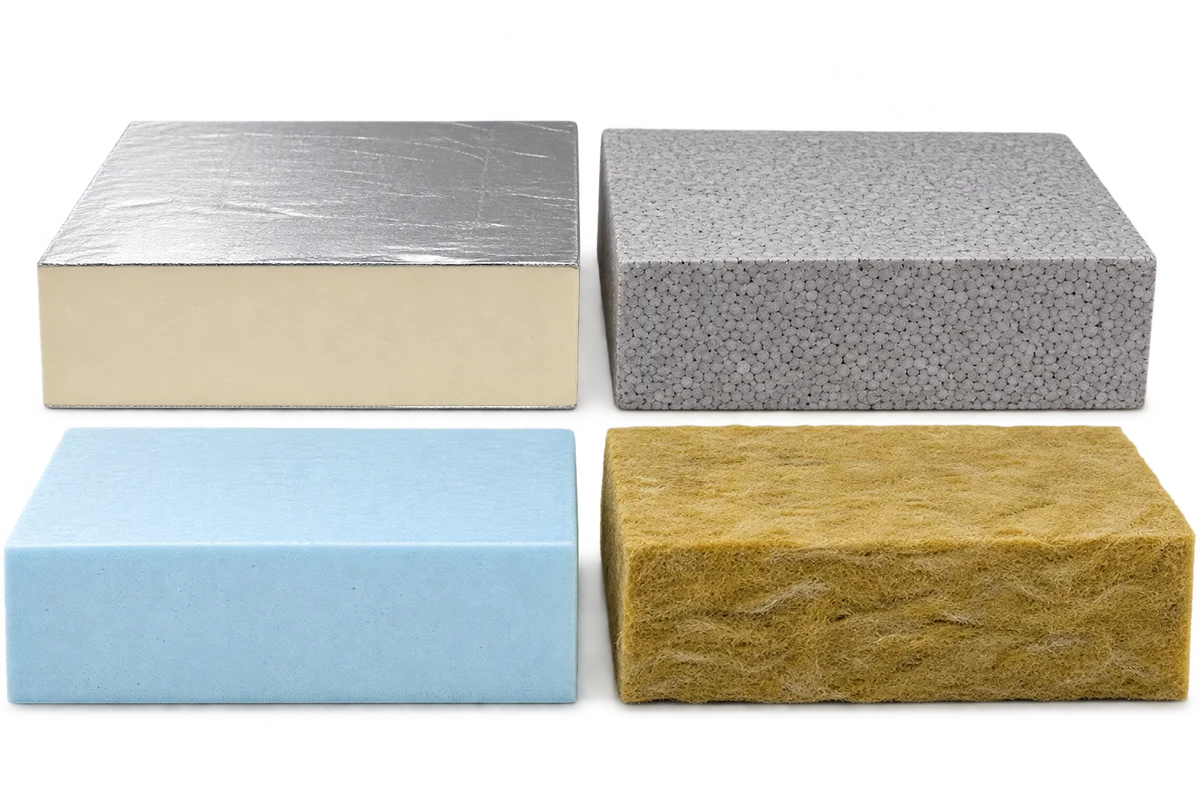
Two insulation quotations may cover the same part of a house while including different quantities and delivery arrangements. When comparing PIR, EPS,…