






Green deposits on metal roof tiles: clean without sacrificing the coating
Renovation and maintenance
Identify green deposits on metal roof tiles before removing them. The cleaning method must suit the coating, roof condition and cleaning-product instructions. Harder scrubbing or stronger chemicals are not automatically more effective. This guide moves from inspecting shaded areas to arranging safe access, protecting the surroundings and checking outlets. It explains why the cleaned substrate should be inspected and the work recorded afterwards. The goal is a clean surface with its protection intact. If growth repeatedly returns in one spot, correcting drainage may help more than washing the whole roof again. Work at height requires suitable equipment and proper organisation.
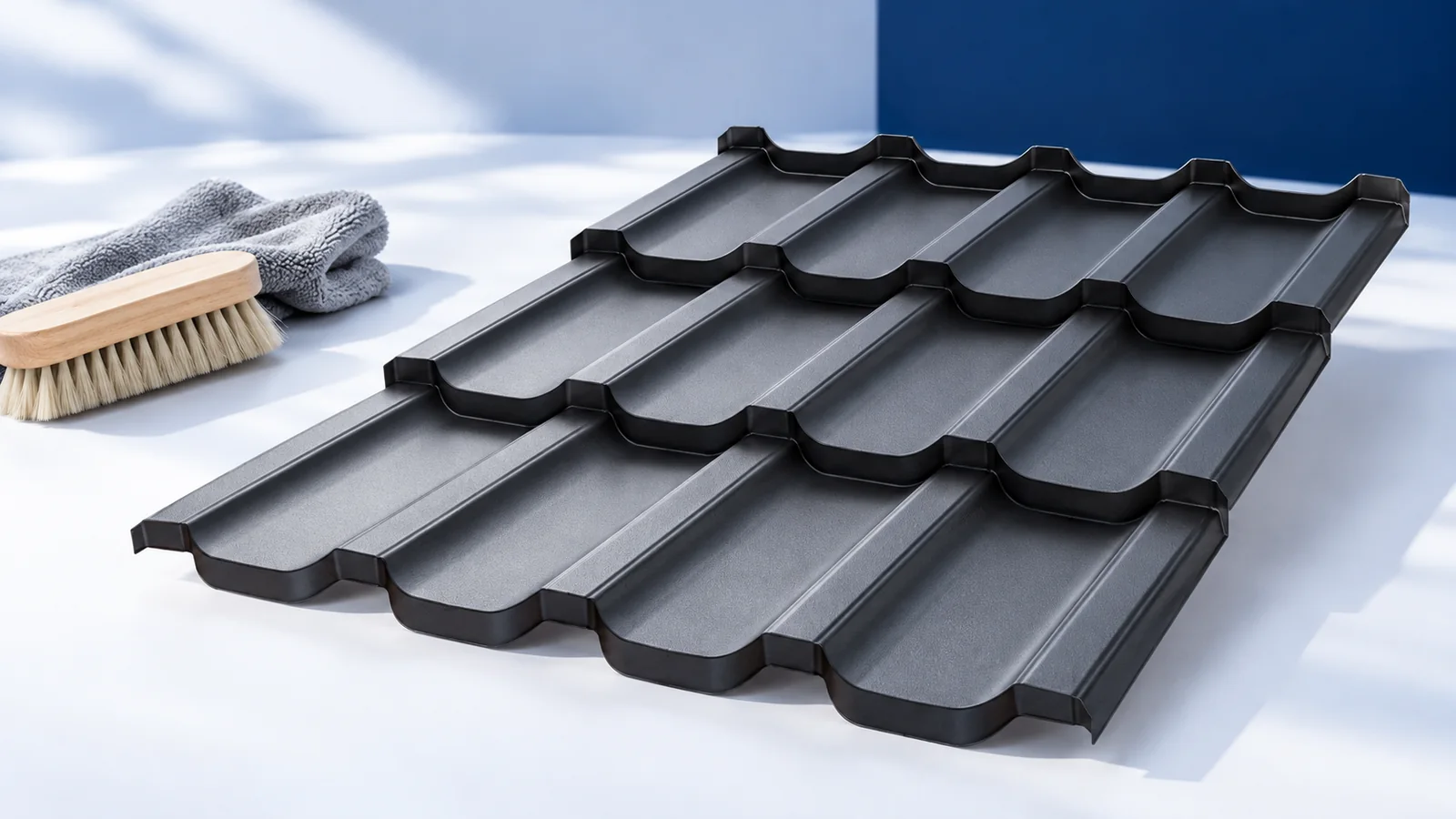
Why does growth concentrate in particular areas?
Compare damp, shaded areas with sections that dry quickly. Trees, deposits and leaves alter roof conditions. A green layer is not always moss; identifying it helps avoid unnecessarily aggressive treatment.
Photograph valleys, flashings and areas beneath equipment before cleaning. Persistent moisture can explain local recurrence. Do not classify the entire covering as worn out before examining the finish below the deposit.
Which tools protect the existing finish?
Wire brushes, hard scrapers and abrasive pads can damage the finish. Remove loose material with soft tools approved for that coating. Cleaning should expose the protective layer, not grind it away with the growth.
If the deposit is firmly attached, stop rather than applying more force. Establish a suitable method or obtain specialist assessment. A controlled test in an inconspicuous area reveals the substrate response before wider application.
How should a cleaning product be selected?
Check suitability for coated steel and the specific finish. Read dilution, contact-time and rinsing instructions. Guidance for mineral tiles is not automatically appropriate for metal roof tiles.
Do not mix products or invent household formulations. Use organism-control treatments according to the label, including protection of surroundings and runoff handling. Higher concentration can reduce safety without improving results.
When is pressure washing appropriate?
Pressure-washer suitability depends on the product and its condition; no setting suits every roof. Pressure, distance and direction all matter. Excessive force can damage the coating or drive water beneath joints.
Treat windows, chimneys, ventilation and flashings with particular care. Do not aim water against natural drainage, beneath seals or into laps. Assess the detail first so cleaning does not create a new leak.
How should access and the surroundings be prepared?
A wet roof with deposits is a difficult working surface. Cleaning the whole roof from an unsecured ladder is not a suitable plan. Safe access, fall protection and knowledge of the covering’s access rules are needed.
Clear gutters and protect plants and facades before rinsing. Detached growth can block outlets. Observe weather requirements for both the product and height work; wind can carry treatment beyond the cleaning area.
How can recurrence be reduced?
Remove water-retaining leaves regularly and check drainage. Branches touching the roof need appropriate attention for the tree and site. One cleaning cannot permanently change shade or surrounding humidity.
Repeated growth at one point calls for checking flashing geometry and surface condition. Do not add arbitrary metal strips as a treatment. Material compatibility and runoff from those metals need assessment.
What should be recorded after cleaning?
Afterwards inspect exposed joints, outlets and the facade. Remove residues as instructed. Record the product name, date and coating condition so the next inspection has a reference point.
Match repairs for scratches, corrosion or peeling to the actual defect. Washing does not automatically require repainting. If the finish remains sound, ongoing maintenance and observation of previously hidden areas may be enough.

Free quote
What to include in your enquiry
Tell us how you plan to use the material, the dimensions and the quantity you need. Include the thickness, grade or variant name, along with the delivery town or your preferred collection branch. For a specific product, add its name or a link to the product page. We will reply to the email address you provide to discuss availability and the terms of your order.
More from the building guide
There is no single sheet thickness suitable for every roof. Trapezoidal roofing must be selected together with its profile, support spacing, loads…
Choose trapezoidal sheets for a canopy by starting with roof conditions, not sheet colour. Establish pitch, support spacing, how enclosed the sides…
Ordering made-to-length steel roof tiles requires a schedule of sheet lengths and quantities, not just the roof area. The exact model, coating,…
A hipped roof suits a compact house and allows the eaves to run around the building. Compared with a simple gable roof,…
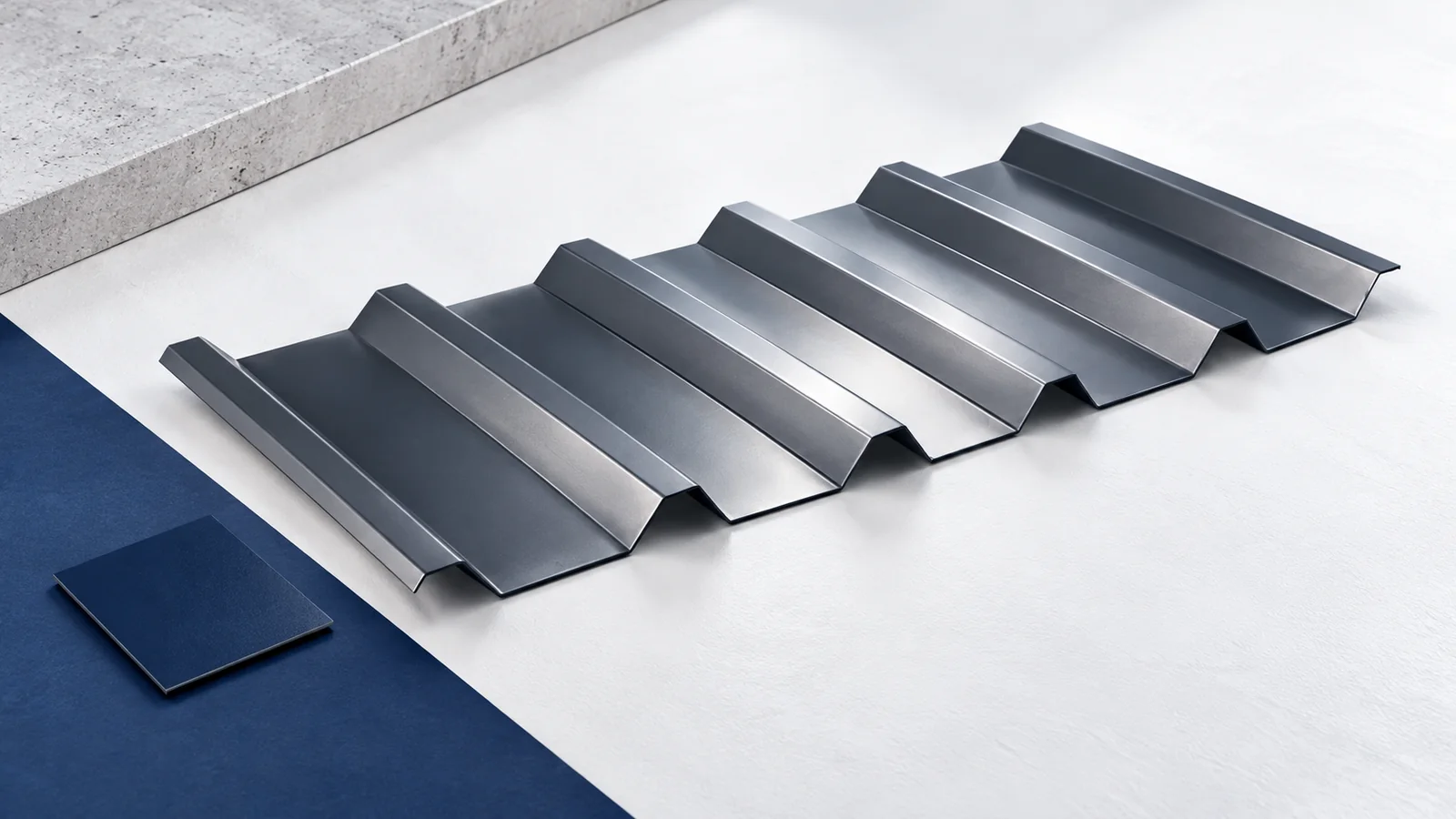
T35 trapezoidal steel sheet has a nominal profile height of about 35 mm, but that designation alone is insufficient for ordering a…
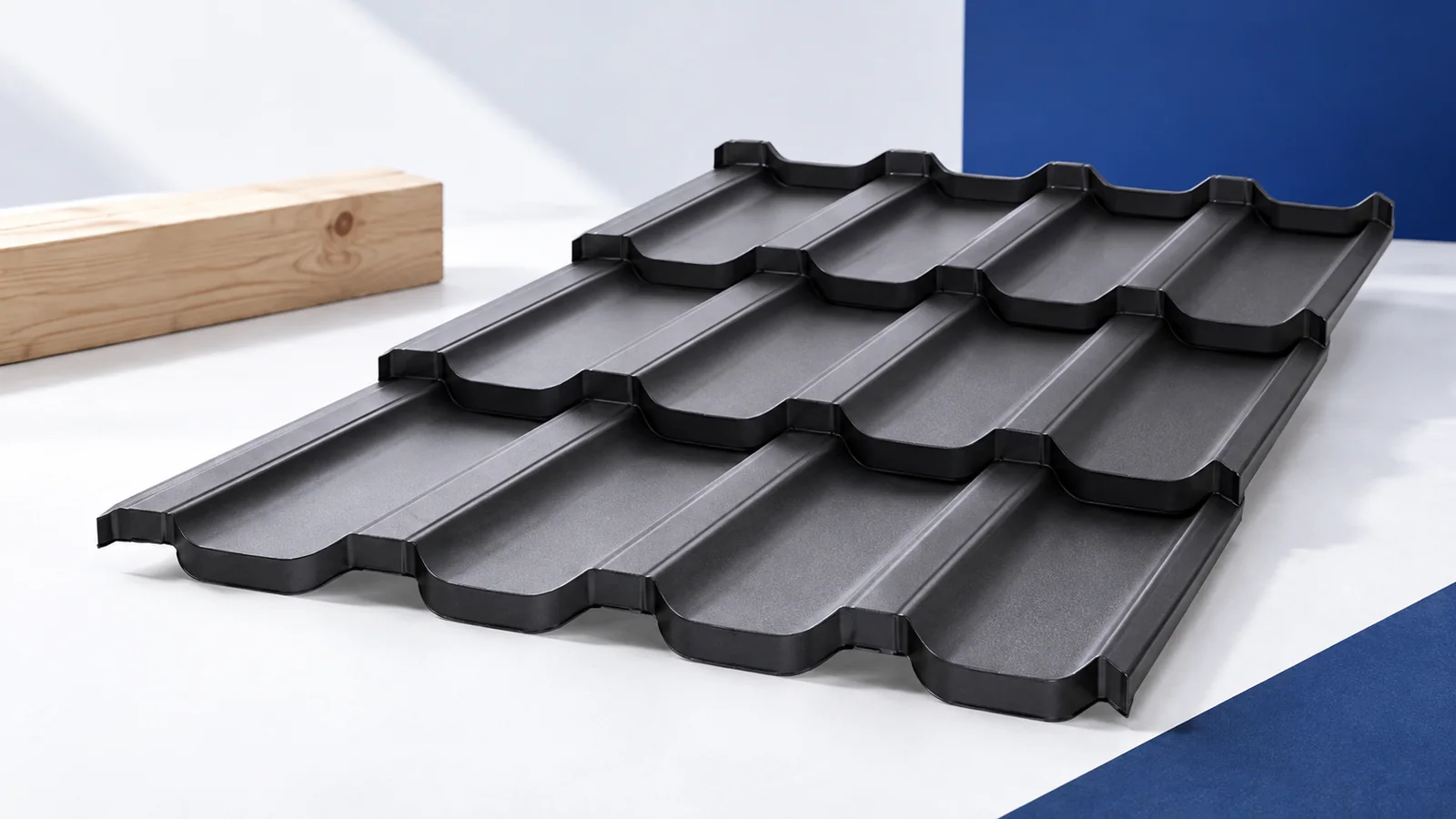
Plan a roof-covering replacement as a sequence: assess the existing structure, define the work, protect the interior, remove old materials and then…
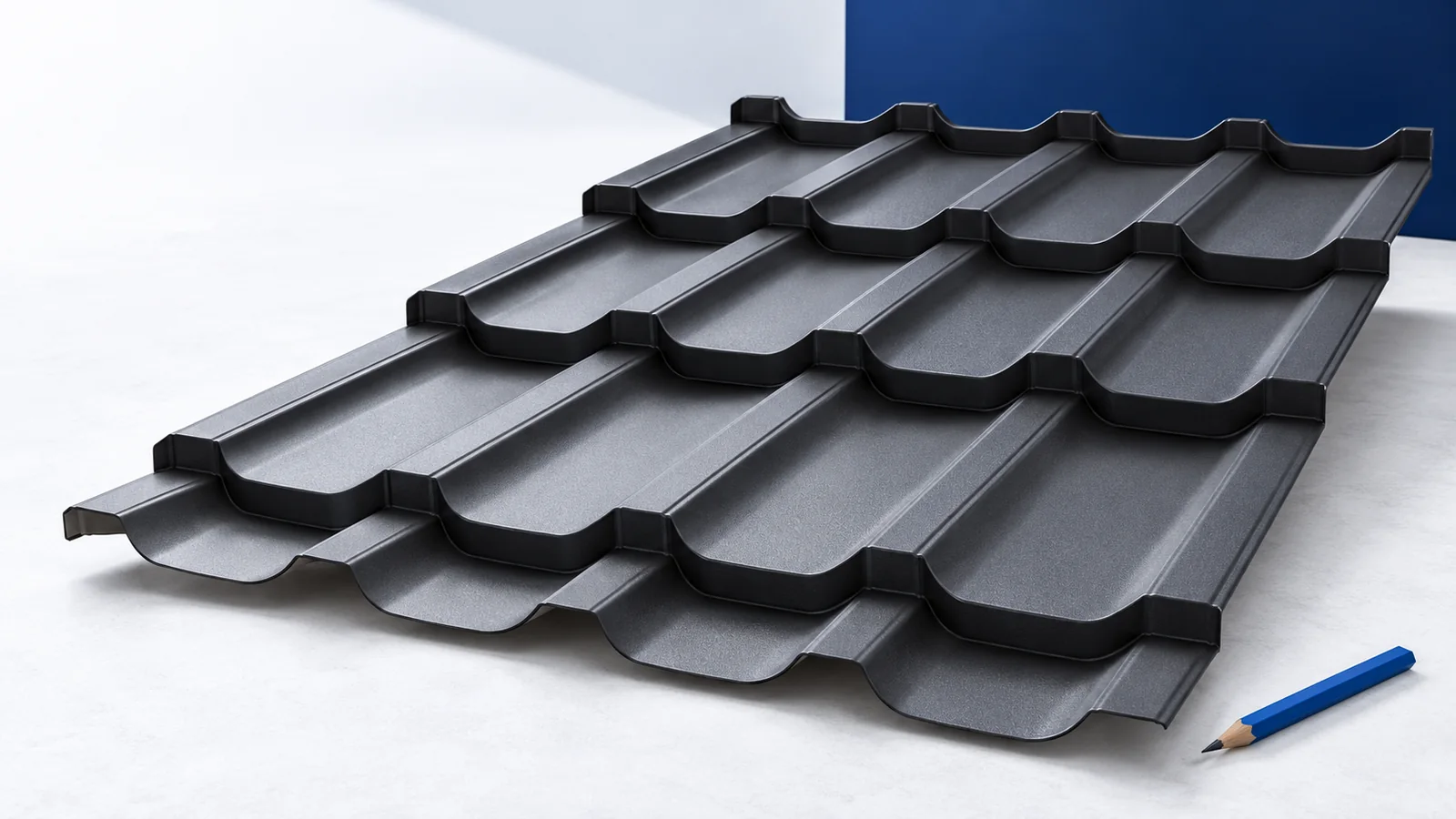
Made-to-length tile-effect steel sheets combine a traditional roof pattern with relatively low weight. Assess them through the cutting plan for the actual…
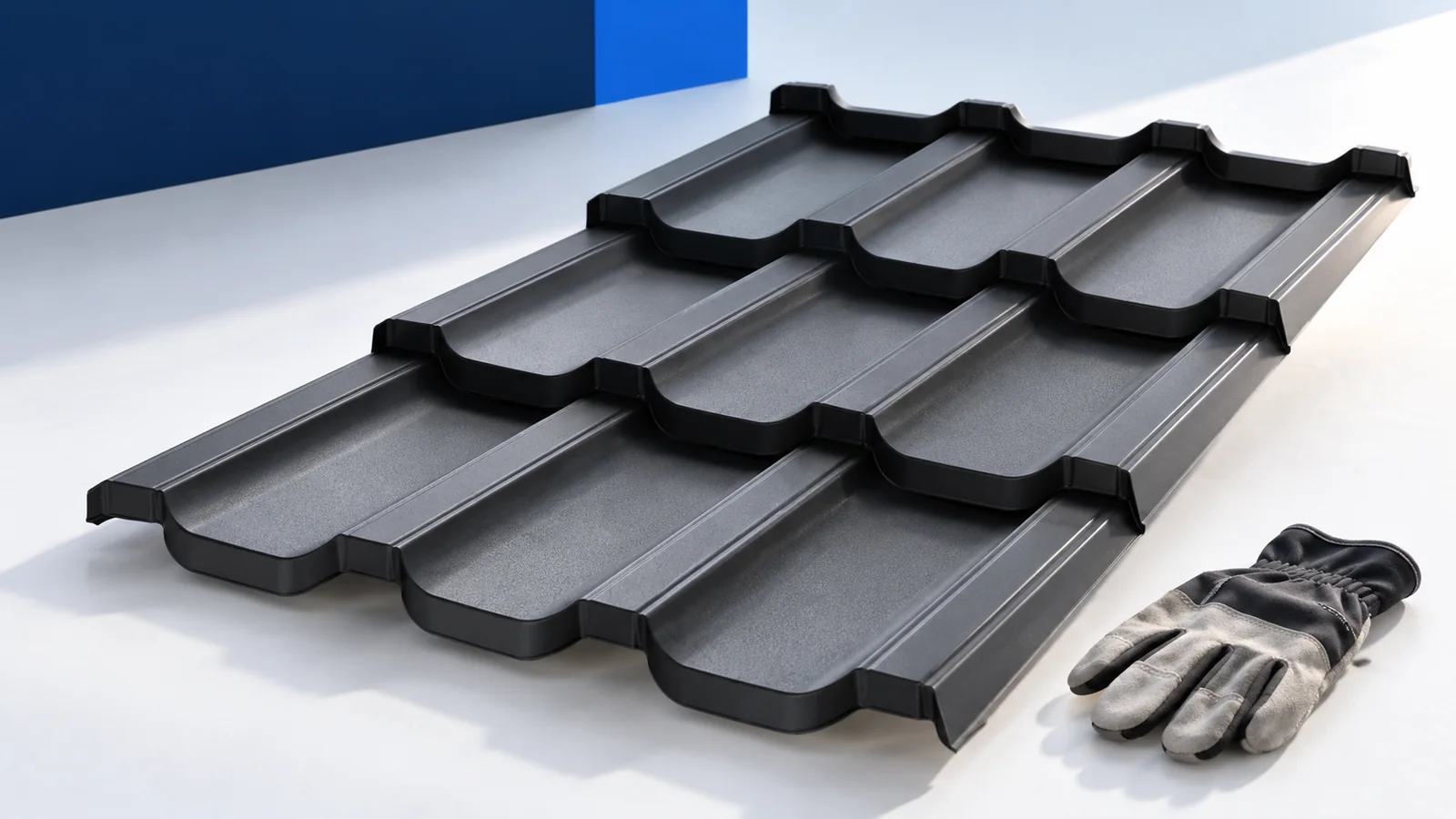
A single-pitch roof has one slope, but its simple outline still needs coordinated supports, drainage and building junctions. Start with the direction…