






Choosing metal roof tiles: four checks before you order
Roof coverings
Before buying metal roof tiles, draw the slopes and check four things: whether the profile suits the actual pitch, how the steel is protected, which sheet format can reach the site and what the installed covering will cost. Two houses with the same floor area may need different numbers of sheets and flashings. A dormer adds junctions and a valley requires cuts across successive sheets. Give each supplier the same dimensioned plan and ask for an itemised take-off. This makes price differences easier to explain and shows which accessories still need ordering.
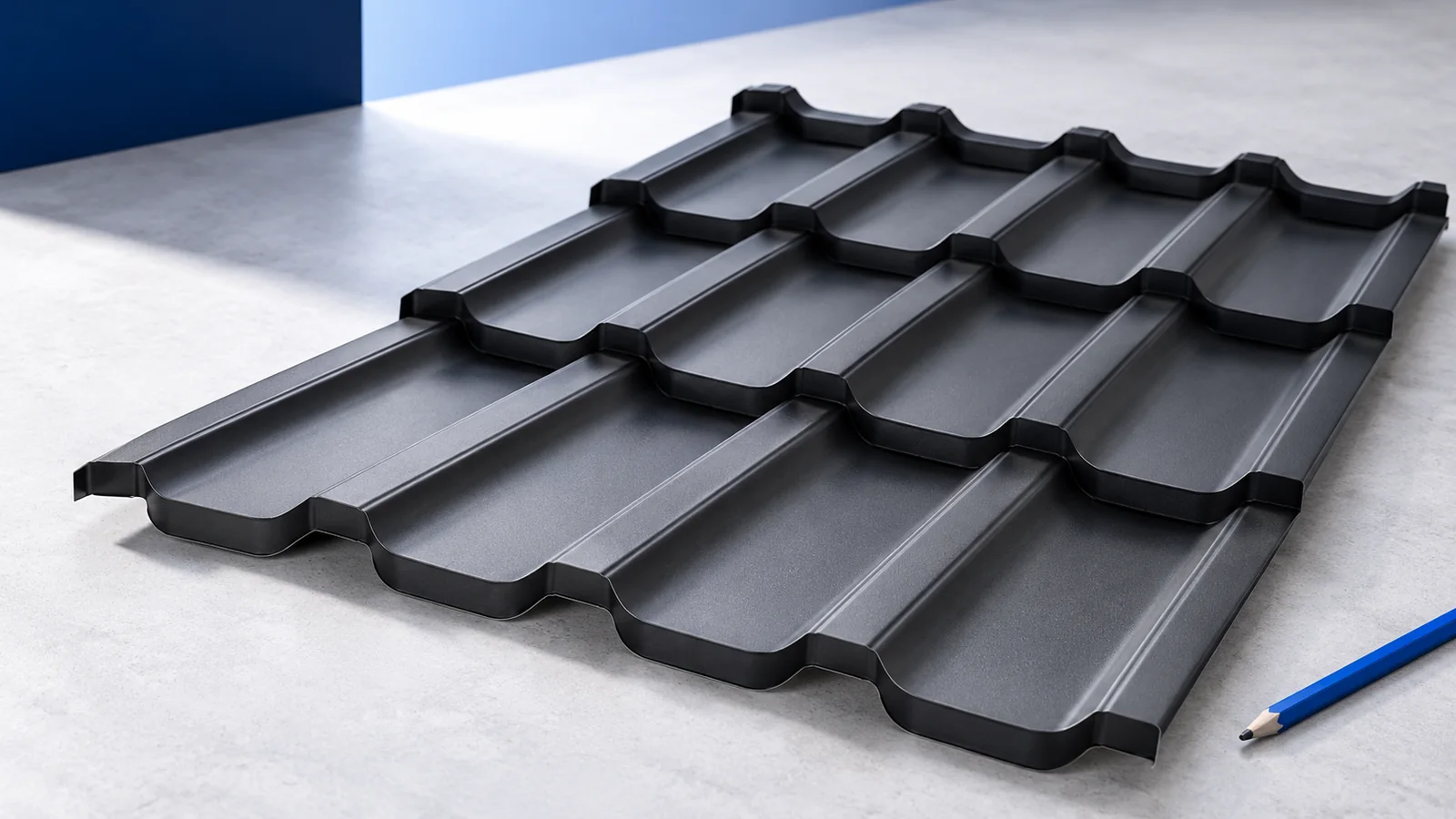
What should you prepare before looking at samples?
Draw each slope with its dimensions and pitch. Mark valley lines, chimneys, roof windows and service penetrations, which interrupt continuous sheet runs. On a reroofing job, have the supports and layers that will stay beneath the new covering assessed as well.
Agree who will measure the completed structure and who will turn those measurements into a sheet list. When comparing two quotations, check that both include the same slopes and extensions. A missing porch roof may explain an apparent saving.
First check: does the profile suit the roof?
Read the minimum pitch and support requirements for the specific model. Budmat gives a minimum of 9° for its Venecja modular tile. For another profile, check its own data sheet and installation manual. Write the unit beside the pitch to distinguish degrees from percentages.
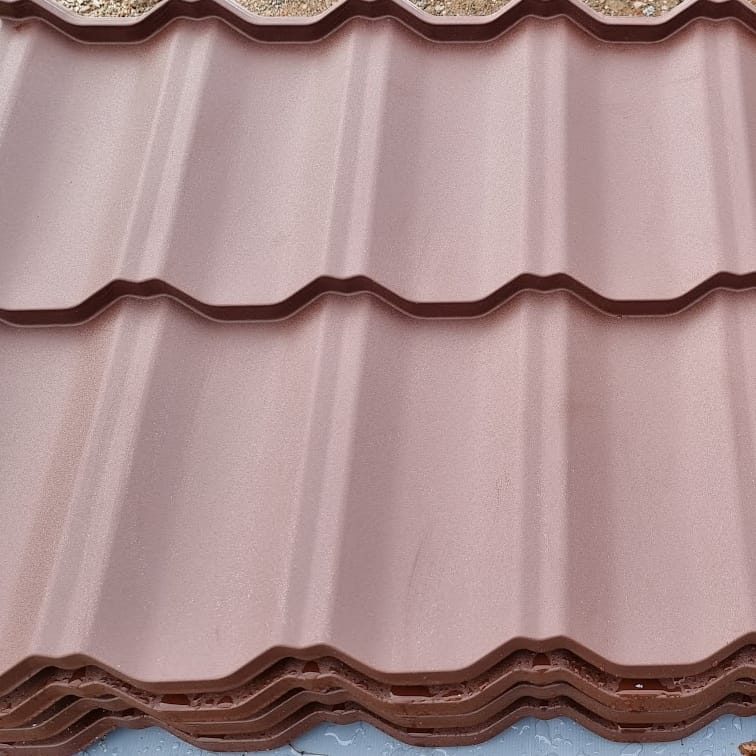
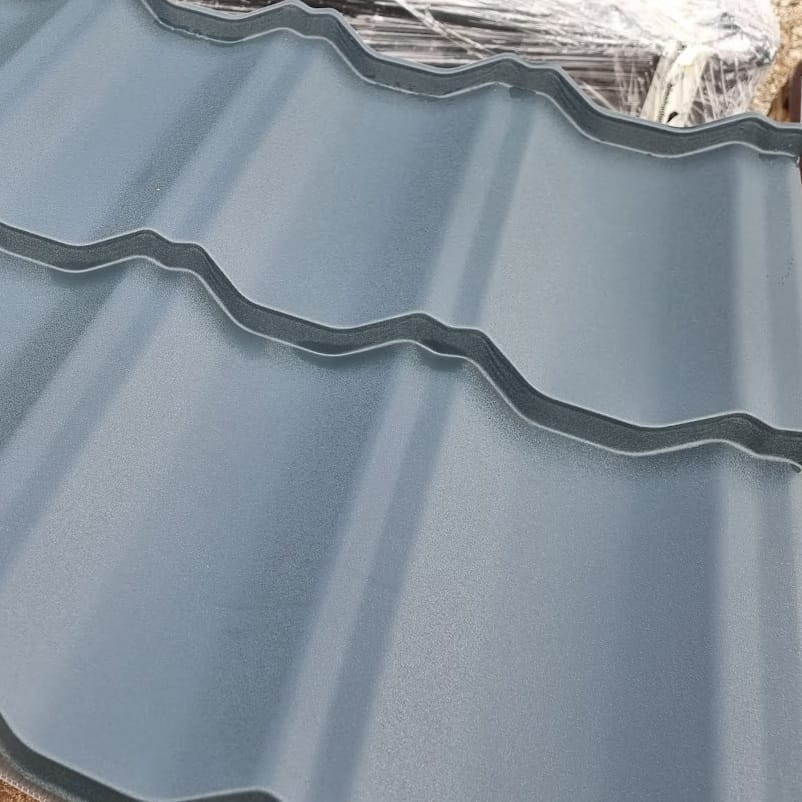
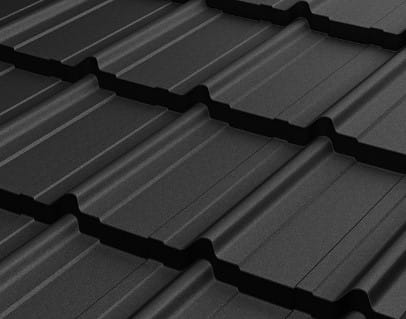
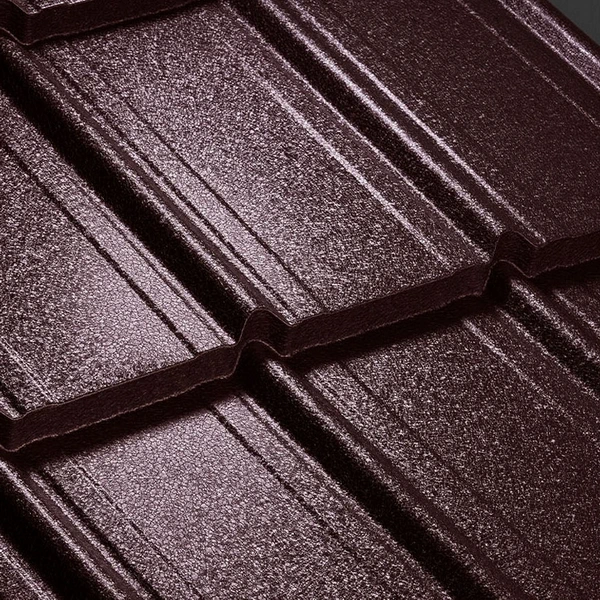
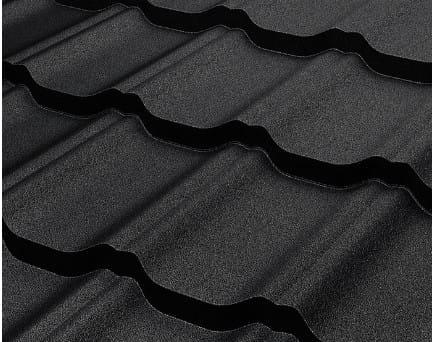
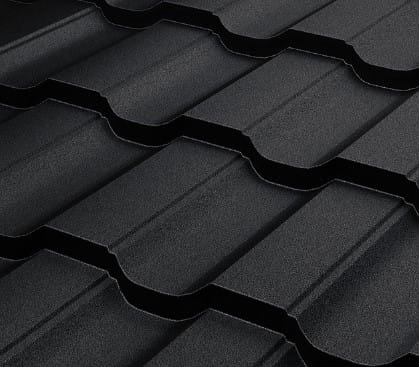
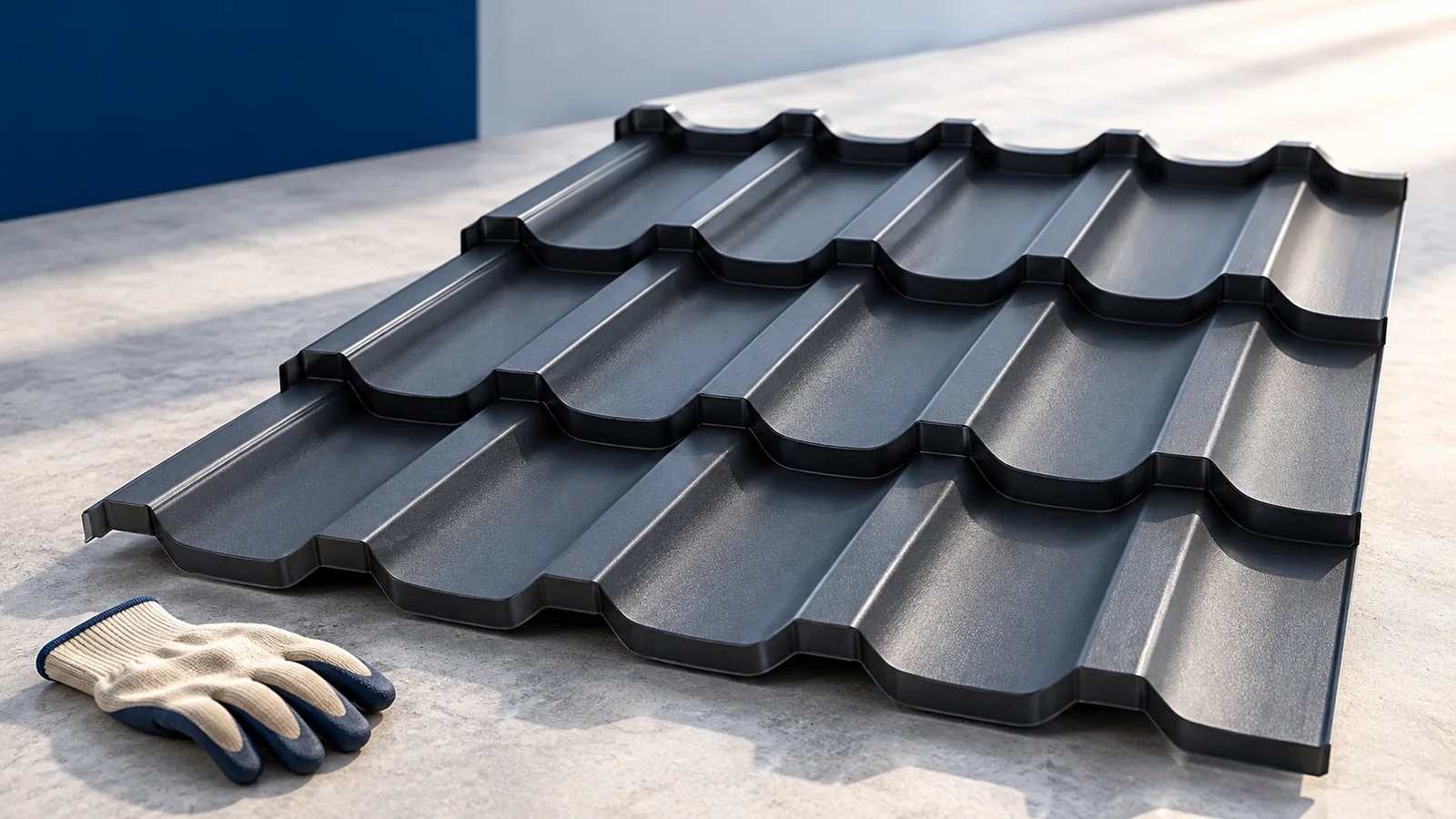
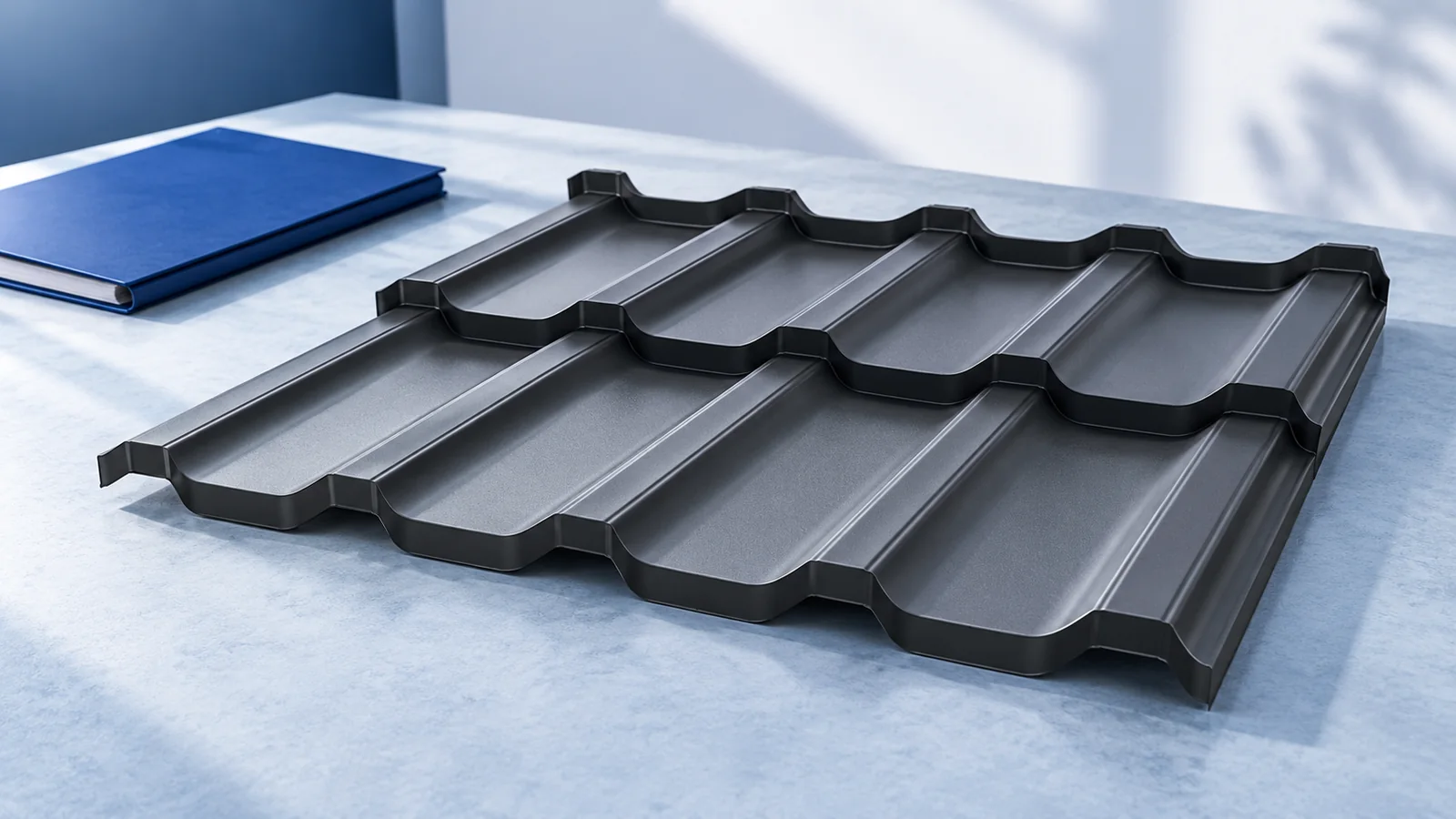
Inspect the pressed shape up close and then look at a completed slope of similar size. The same pattern can appear quite different on a small dormer and across a broad roof. Make this visual choice once the profile’s suitability for the design is established.
Second check: which steel and coating are specified?
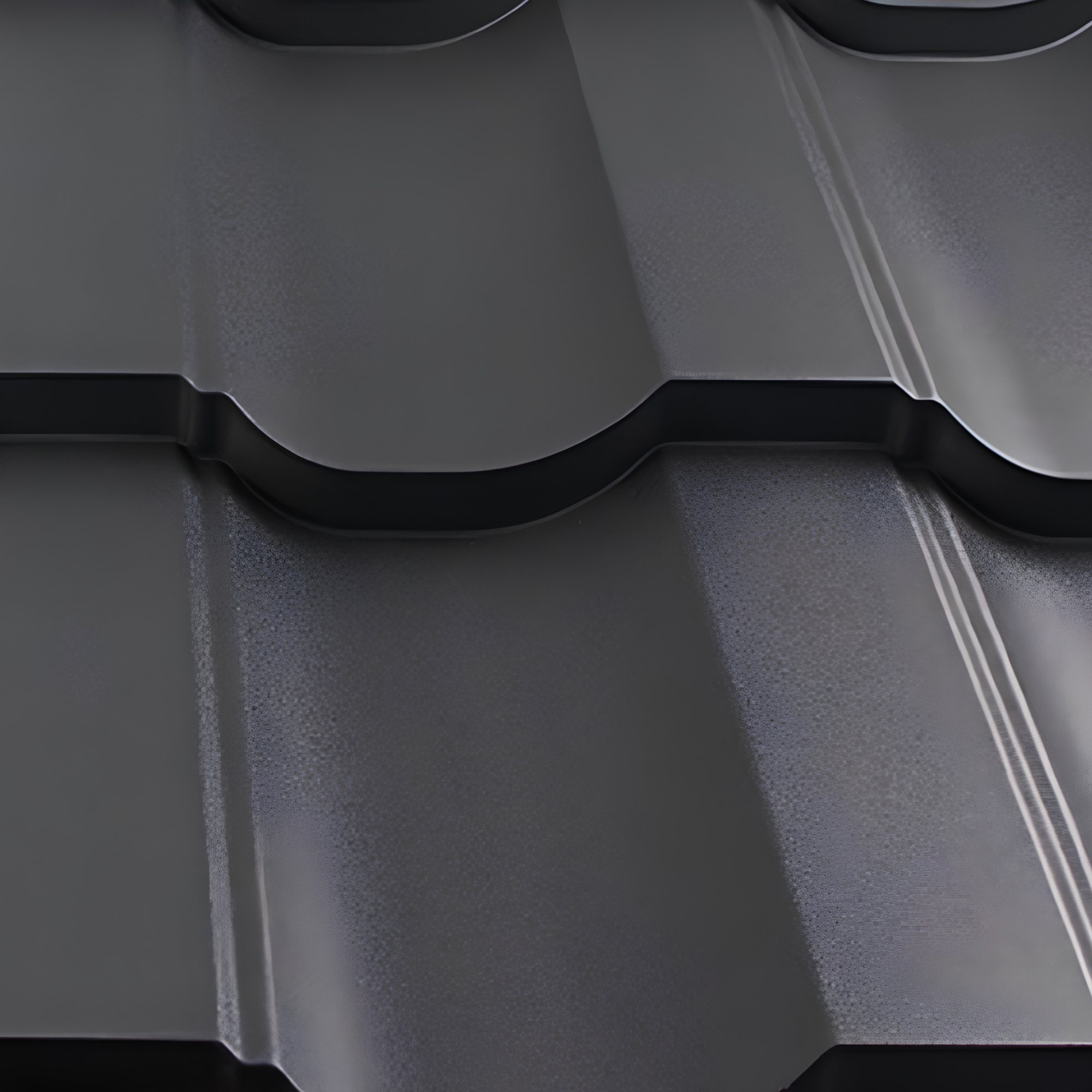
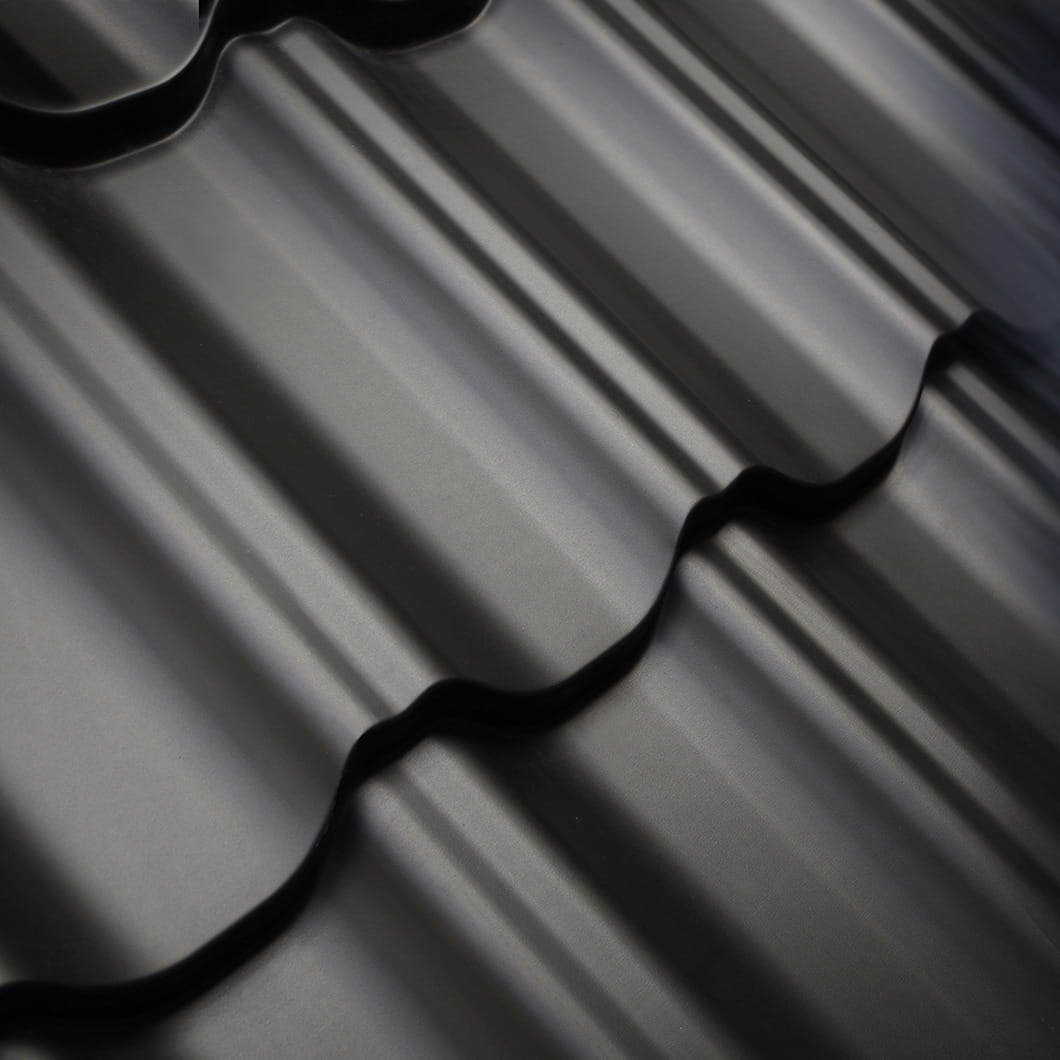
Record steel grade and core thickness, the metallic protection and the name of the organic coating. Matt describes a surface finish shared by different protective systems. Check which system the price actually covers.
Describe the building location and how the roof will be used. Find the separate warranty clauses on discolouration, corrosion and perforation, as well as cleaning requirements. Compare coverage at the actual site before valuing a longer warranty in a higher-priced option.
Third check: modules or cut-to-length sheets?
If one sheet is to run from eaves to ridge on a rectangular slope, check loading, site access and lifting without bending the sheet. Long sheets reduce end laps where roof geometry and site conditions permit their use.
On a roof with many changes of direction, ask for a layout of short modules showing the cuts around obstructions. Allow for reuse of an offcut only when a position has been found where its profile and lap direction fit. Restricted roof access is another reason to assess a shorter format.
Fourth check: what will the finished covering cost?
Compare prices per square metre of effective cover, the area roofed after the laps are formed. Check the unit in each price list. Price the whole sheets in the cutting plan, then add fixings, flashings and details around chimneys, windows and pipes.
Compare delivery, unloading, lifting and installation as well. Locate the ventilation components, snow retention and roof steps or walkways specified in the design. Check availability of matching accessories, particularly when the work is phased.
What needs checking before you pay a deposit?
Check product reference, coating, thickness, colour and quantities on the order. For modules, record effective cover per piece. For cut sheets, list the quantity for each length. Agree a delivery date and how to document damage found during unloading.
Use a single schedule agreed by client and contractor. Name the person ordering each item. A missing custom flashing can delay closing the roof even when every sheet has arrived.
When is the choice ready to confirm?
Have the installer confirm the layout and identify the instructions for the quoted model. If the sheets arrive early, arrange suitable supports and storage in line with the manufacturer’s guidance, including protection against trapped moisture.
For the final colour choice, view samples beside the facade and flashing materials in daylight. Keep the finish reference with the accepted estimate. On delivery, you can check the goods against both the selected sample and the quantities ordered.

Free quote
What to include in your enquiry
Tell us how you plan to use the material, the dimensions and the quantity you need. Include the thickness, grade or variant name, along with the delivery town or your preferred collection branch. For a specific product, add its name or a link to the product page. We will reply to the email address you provide to discuss availability and the terms of your order.
More from the building guide
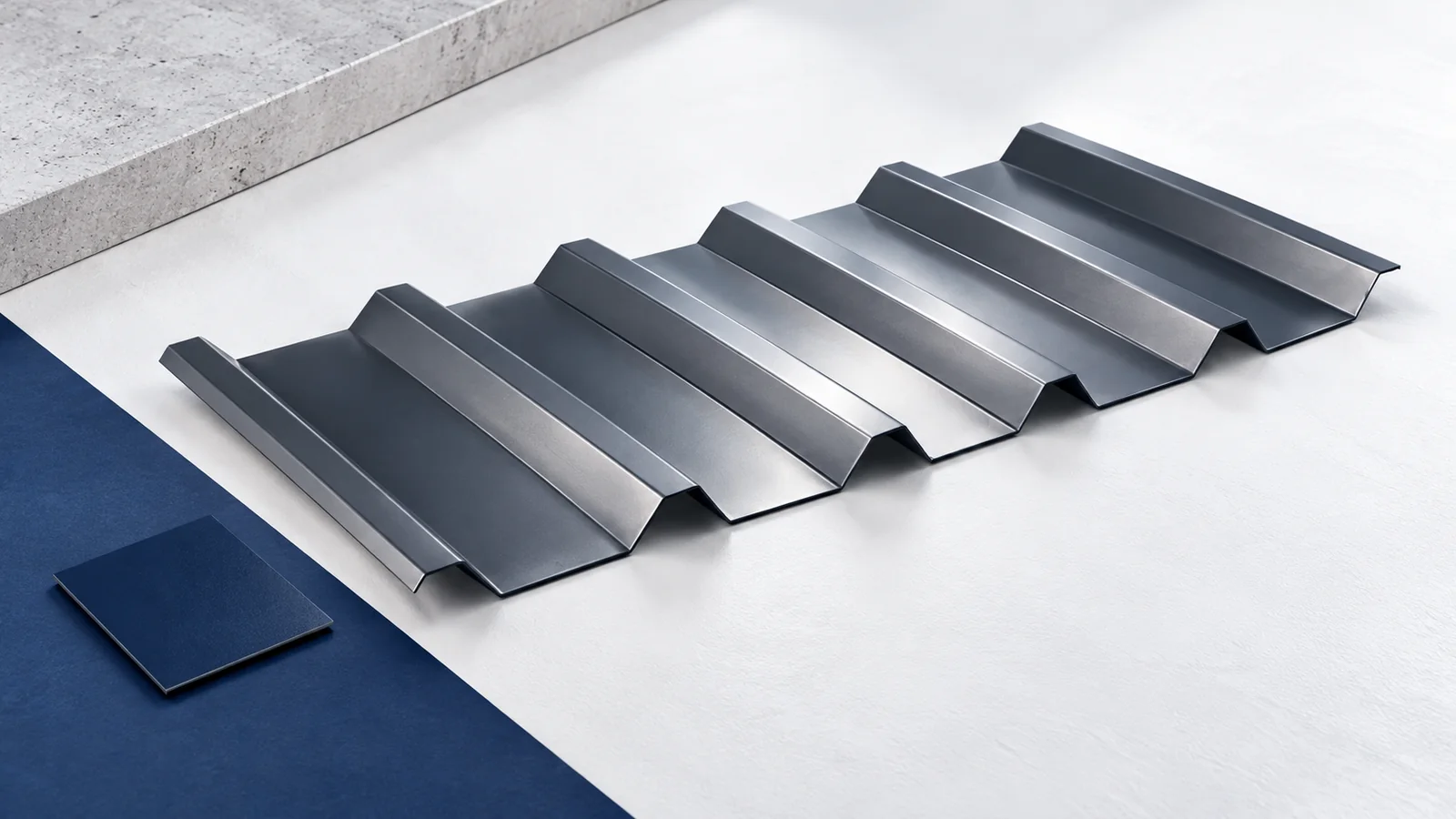
T35 trapezoidal steel sheet has a nominal profile height of about 35 mm, but that designation alone is insufficient for ordering a…
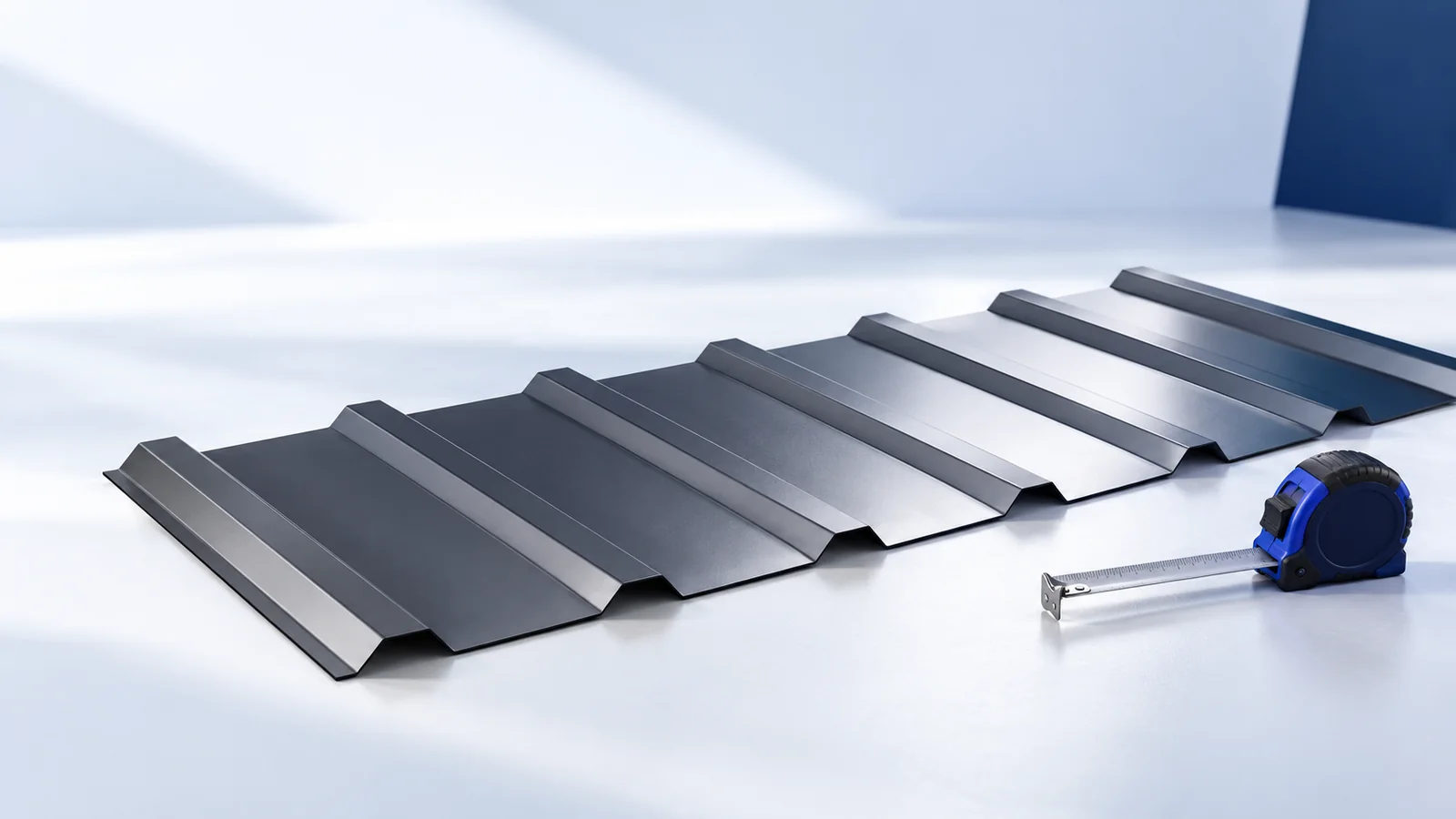
Plan five inspections while faults on a metal roof are still accessible. Measure the supports before lifting the sheets into place. On…
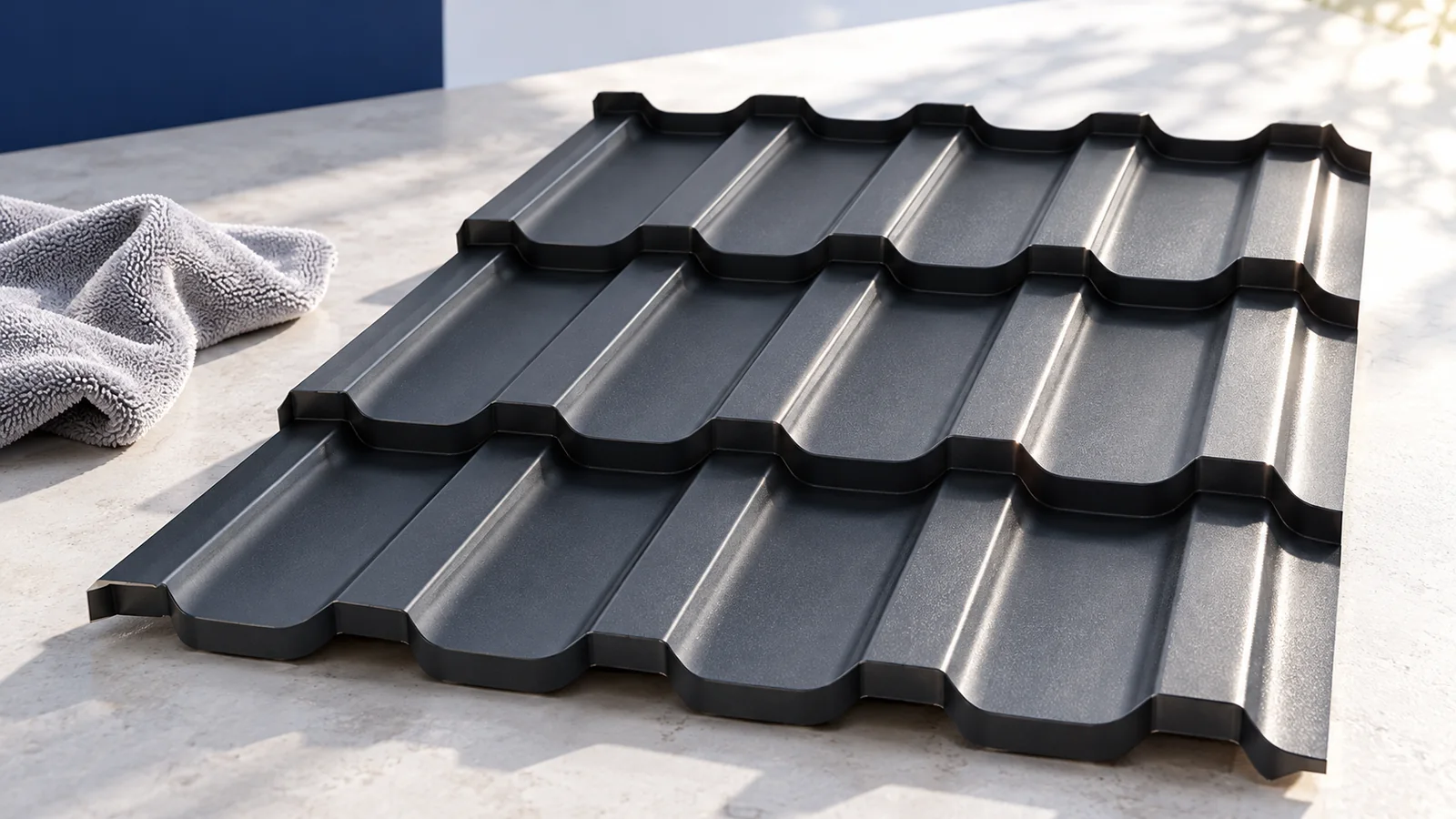
When a roofing sheet shows a scratch, brown staining or signs of a leak, start by recording the location and date. On…
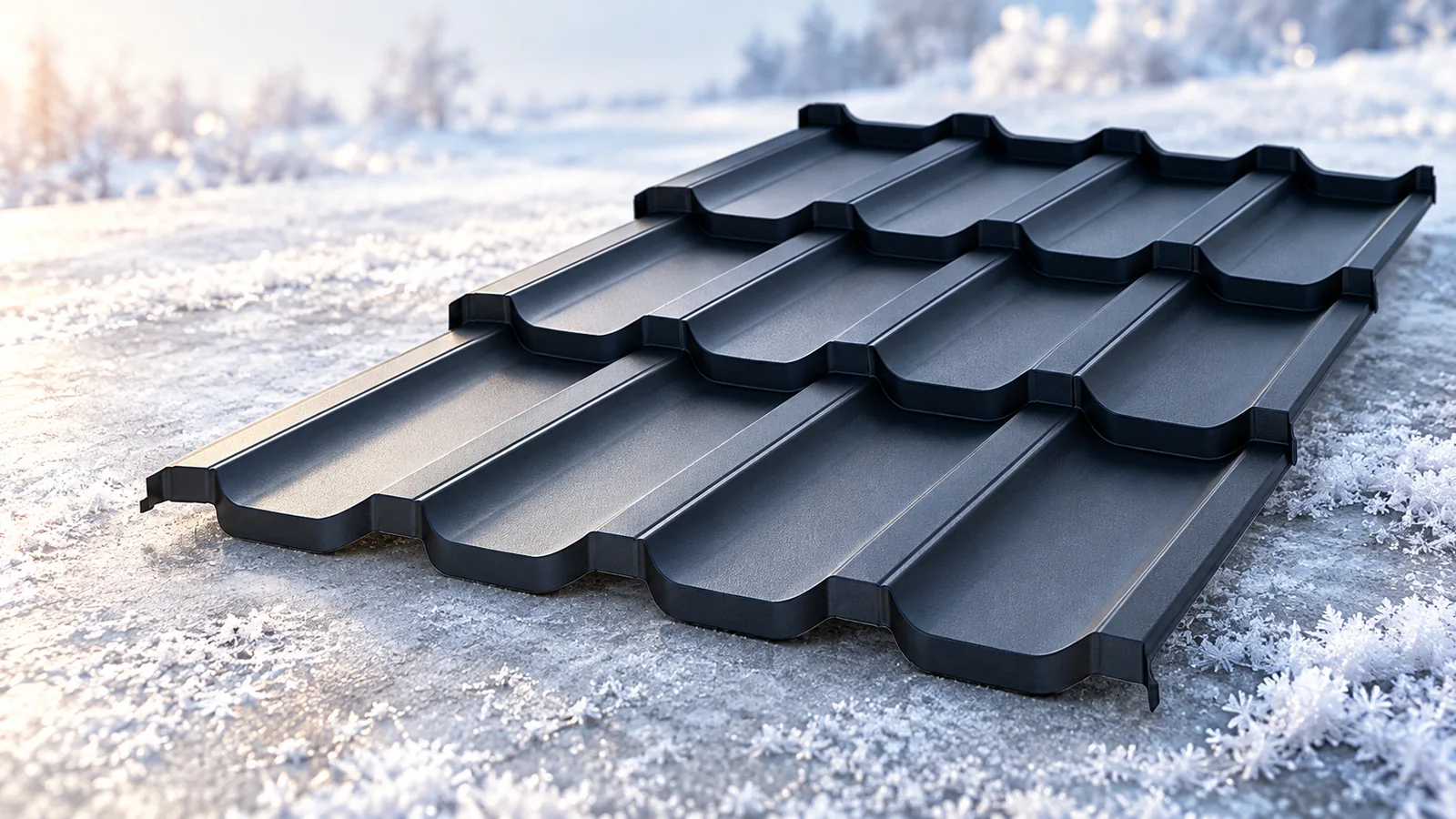
Before winter, trace the water path from the ridge to the downpipe discharge. From a safe position, note any damp marks after…
Compare steel roof tiles and bitumen shingles by starting with the roof build-up. They may need different supports, underlays and junction details,…
Metal roof tiles are easiest to protect when delivery coincides with the crew being ready to install them. Before the truck arrives,…
A damp patch beneath a metal roof does not necessarily mean a hole in the sheet. Water can enter through flashings, laps…
A trapezoidal-sheet designation starts product identification; it is not a complete specification. T18 and T35 usually refer to nominal profile height, but…