






Choosing corrugated roof sheet lengths: common mistakes
Fibre cement roofing
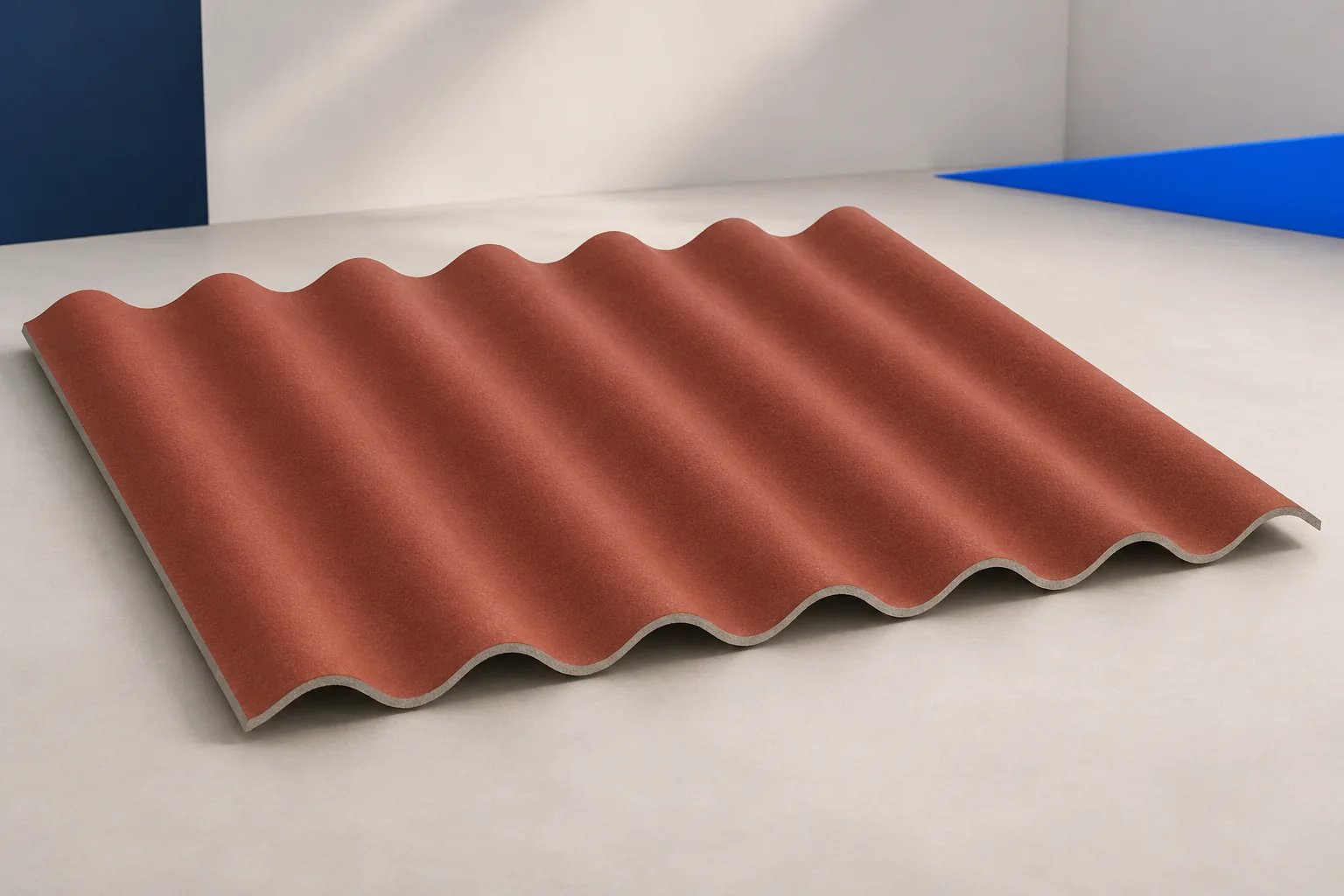
Sheet length affects the number of joints, cutting waste, support positions and how the crew can get material onto the roof. The longest corrugated fibre cement sheet is not necessarily the most economical. Start with a survey and a row layout for the actual slope. Wall length or horizontal plan dimensions do not give the distance from eaves to ridge; measure along the slope and allow for both ends. Sheets overlap, so adding their nominal lengths will not give the finished cover either. Choose a format that fits the system, the supports and the available handling space.
Mistake: measuring only the building
Verify old drawings on site, especially on a refurbishment. Record whether a dimension ends at the support or the outer roof edge. Otherwise a sheet that sits correctly at the eaves may not form the required joint at the top. Mark the future gutter position too, so the length does not follow an edge due to be moved.
Mistake: ignoring support positions
A sheet needs the support arrangement specified for its variant. Being able to fit two screws somewhere is not sufficient. Check length against purlin or batten spacing; formats can have different support requirements. Allow for planned structural alterations before ordering. Do not move a lap away from its designed position just to use delivered material. Another screw will not correct the resulting load or joint problem.
Mistake: assuming long sheets always save material
Fewer rows can mean fewer laps, but on a tapered slope a long sheet can leave a larger unusable offcut. Compare several permitted cutting layouts. An offcut can be reused only if its edges, holes and fixing arrangement suit another position. List full sheets and cuts separately. Fewer pieces on an invoice do not prove better material use.
Mistake: not planning the lift to the roof
Long sheets need more turning space near obstacles. Consider wind, distance from the stack and lifting height. Do not lift sheets by unsupported corners or rest them on sharp edges. If a format cannot be moved safely, change the handling arrangements or consider a different approved layout. Check before delivery, while the space needed for lifting equipment is still clear.
Mistake: disregarding factory preparation
Pre-drilled sheets and sheets with cut corners may have a fixed laying direction. Turning or shortening one may make it unsuitable for its intended position. Order field and edge variants separately and use only cutting methods allowed in the instructions. Mark the variants on the row plan. This helps the supplier pack them and the crew store and lift them in sequence without repeatedly moving the stack.
Mistake: using one length everywhere
A single format simplifies ordering but may not suit the main roof, an extension and a garage equally well. Select lengths for each zone within a compatible system and check availability and jointing rules. Do not mix leftovers from another job simply because they are on hand. A schedule with several clearly assigned lengths can reduce cutting and preserve the required joints.
Mistake: failing to recalculate after design changes
Moving a ridge, widening the eaves or replacing supports can invalidate a previously correct layout. Revisit the cutting plan even if the building dimensions barely change. Give the supplier and installer the same current drawing and confirm the schedule before dispatch. This is quicker than exchanging a load and avoids the temptation to disguise a mismatch with an excessive overhang or insufficient lap.
Choose lengths together with the cutting plan, support layout and installation method. Check the current drawing revision and the preparation of each sheet variant before ordering.

Free quote
What to include in your enquiry
Tell us how you plan to use the material, the dimensions and the quantity you need. Include the thickness, grade or variant name, along with the delivery town or your preferred collection branch. For a specific product, add its name or a link to the product page. We will reply to the email address you provide to discuss availability and the terms of your order.
More from the building guide
Glass-reinforced plastic facings can help maintain livestock buildings that require regular washing and operate in demanding conditions. Their suitability must nevertheless be…
Before replacing an asbestos roof in Poland, ask the municipality who commissions the work and where its funding starts. Collecting waste from…
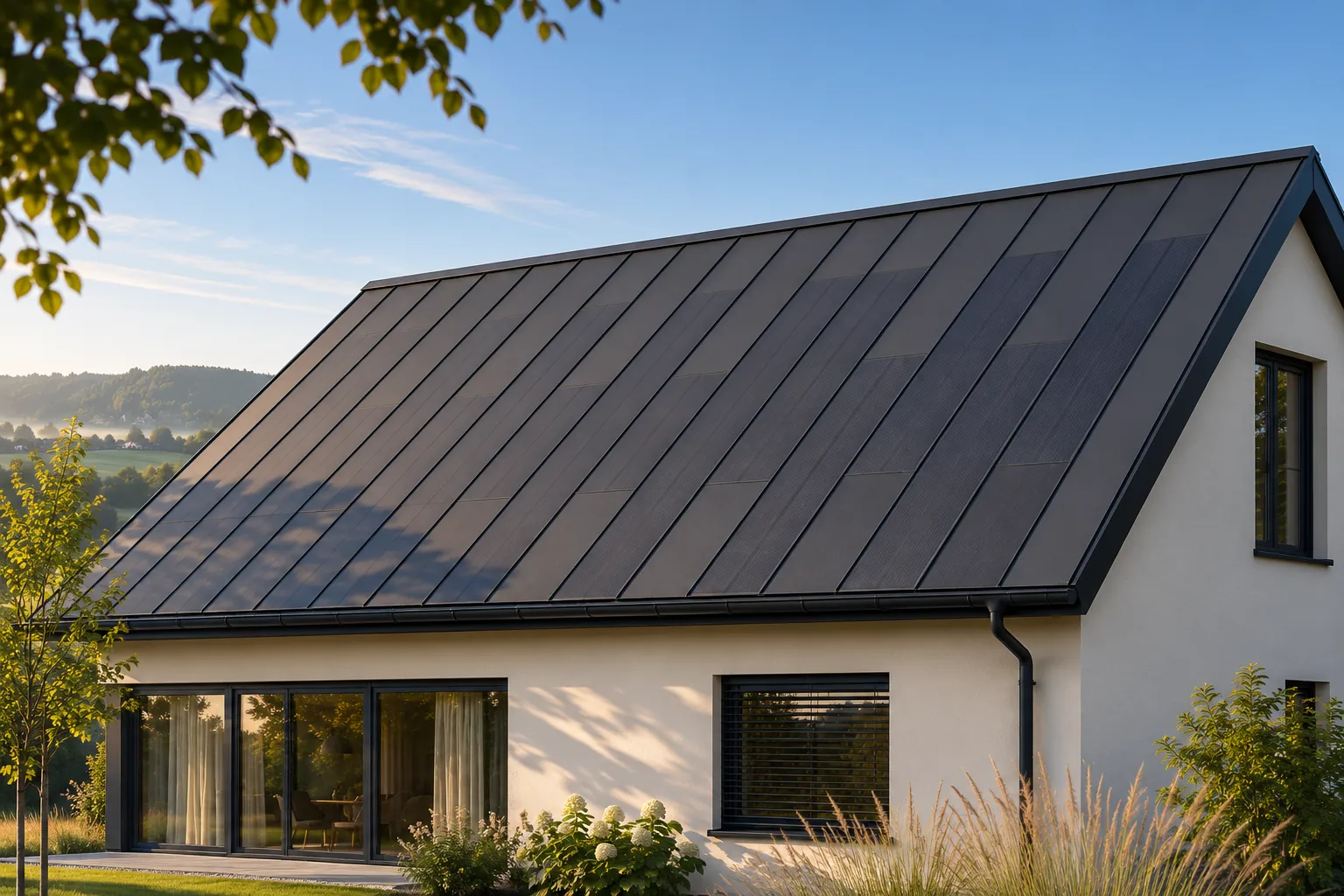
An integrated PV roof design needs the roof geometry, layers, supports, flashings and cable routes alongside the module count. Combine these with…
A calculator can quickly produce a wall's U-value, but it cannot inspect the masonry, check airtight junctions or identify every moisture risk…
Before buying roofing materials in Poland, establish the formal scope of the whole project. Replacing worn sheets, rebuilding the structure and raising…

Choose a building-integrated photovoltaic roof before the structure and roof details are finalised. At that stage the covering, active area and electrical…
PIR and XPS can both be used in suitable flat-roof constructions, but they do not necessarily occupy the same position. Establish where…
Roof sandwich panels can be used in an extension where the existing structure and new design permit them. Their relatively low weight…