






How much PIR replaces EPS? Comparing insulation at equal thermal resistance
PIR boards and insulation
PIR insulation is not invariably half as thick as EPS. The equivalent thickness depends on the thermal conductivity of both chosen products. This guide compares insulation layers at the same thermal resistance, using worked examples for 200 mm EPS and different PIR facings. It also explains why a calculated thickness must be checked against available board sizes, intended use, fixings and the complete wall build-up. Equal resistance does not mean equal moisture, fire or load performance. Use the calculation to compare viable options; it cannot justify substituting an arbitrary board or predict the energy bills of an entire building.
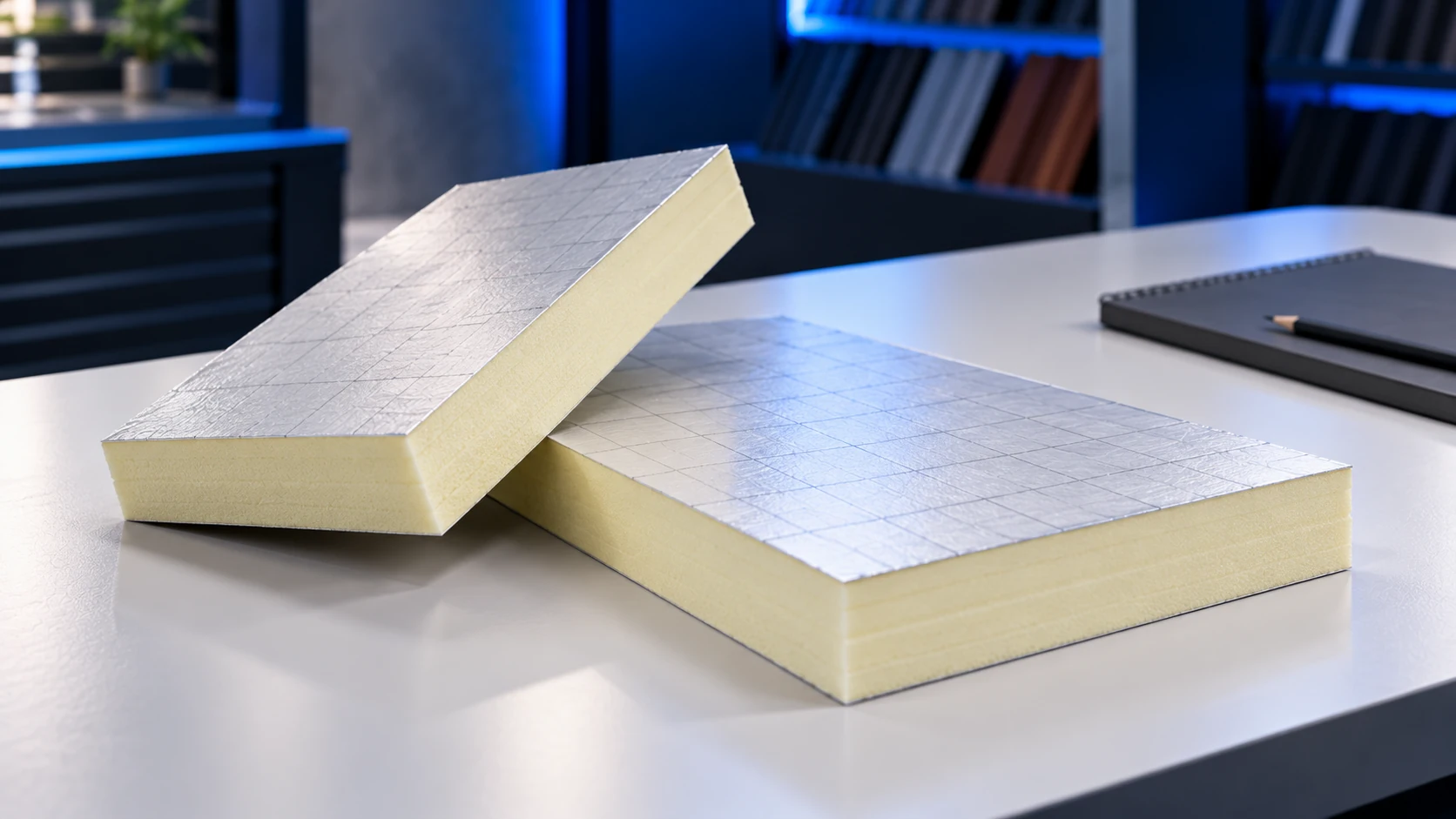
Compare the same quantities first
Express insulation thickness in metres. For a homogeneous layer, thermal resistance is calculated approximately as R = d / lambda. To retain the same resistance, PIR thickness equals EPS thickness × PIR lambda / EPS lambda. This compares the insulation layers alone; it is not yet the U-value of the complete wall.
Take both conductivity values from the selected products’ documentation. Do not compare one family’s best figure with an arbitrary, less favourable value for another. The comparison should reflect materials that can actually be used in the proposed construction.
A worked example for 20 cm EPS
Assume EPS with lambda 0.038 W/(m·K). At 200 mm, its resistance is approximately 5.26 m²·K/W. PIR with lambda 0.022 would need about 116 mm to match it; at lambda 0.019, the calculated thickness is 100 mm. These are mathematical results before selecting an available board thickness.
These conductivities are assumptions for this comparison. They do not mean that any PIR board can be bonded beneath any render. The calculation concerns heat conduction through a homogeneous layer. Use the actual product data when ordering; choosing its facing, fixing method and finishing system remains a separate task.
Better-performing EPS narrows the thickness difference
With EPS at lambda 0.031, the same 200 mm layer has a calculated resistance of approximately 6.45 m²·K/W. PIR at lambda 0.022 would need around 142 mm; at 0.019, approximately 123 mm. The EPS thickness has not changed, but the equivalent PIR thickness has changed substantially.
EPS at 0.031 W/(m·K) is a second calculation scenario here. That value alone does not establish suitability for a facade, roof or floor. Check intended use and mechanical performance independently. Good insulation does not make one product a substitute for every EPS type; permissible deformation also matters under load.
Use the correct conductivity for boards beneath render
For an illustrative glass-fleece-faced PIR board, assume lambda 0.025 W/(m·K). Matching 200 mm EPS at 0.038 requires approximately 132 mm PIR by the simple formula. That is a calculation, not a guarantee that this thickness is available. Select a suitable version and then check the entire insulation system.
Using 0.022 instead of the actual 0.025 would underestimate the required thickness. PIR identifies a core material, not one universal specification. Facings, thickness and the way performance is declared matter. Where a table gives R for the chosen size, cross-check the calculation against that value.
Equal R does not mean identical behaviour
Two layers can provide similar thermal resistance but differ in vapour transmission and reaction to fire. They may require different adhesives, fixings and protection. Floor applications add load requirements; roofs also require compatibility with waterproofing and the specified fixing arrangement.
CS(10) describes compressive stress at a specified deformation during testing. It is not blanket permission to apply an arbitrary load for many years. Substituting a material solely by converting centimetres can therefore be wrong. Return to the requirements of the actual building element.
Check what changes for the complete wall
If the masonry and other layers stay the same, similar insulation resistance produces a similar U-value in a simple section. It does not guarantee the same result for the entire building. Different fixings or window-reveal details can change heat loss at junctions.
Do not add surface resistances again when using a U-value already given for the complete assembly. Put every layer, thickness, parameter and assumption in one table, with the two options side by side. This makes mistakes easier to find and keeps the comparison fair. Do not compare insulation alone with a whole wall.
Compare the cost of achieving the same result
The price per square metre of boards with different thicknesses does not reveal which solution costs less. Calculate the cost of reaching the same thermal target, including fixings, finishing, transport and changes to flashings. Where space is limited, the space retained can also be relevant.
Thinner insulation can be justified at reveals, terraces or floors with limited build-up height. Where space is plentiful, the cost comparison may favour another option. The chosen solution must be buildable in accordance with its documentation. A useful conversion supports the discussion but cannot replace design work.
Frequently asked questions
Does 10 cm PIR always replace 20 cm EPS?
No. In this example, that ratio requires PIR at lambda 0.019 and EPS at 0.038. Other values produce a different ratio.
Does the calculated thickness need rounding?
Yes. Select an available thickness, then recalculate the performance of the complete assembly.

Free quote
What to include in your enquiry
Tell us how you plan to use the material, the dimensions and the quantity you need. Include the thickness, grade or variant name, along with the delivery town or your preferred collection branch. For a specific product, add its name or a link to the product page. We will reply to the email address you provide to discuss availability and the terms of your order.

More from the building guide
Attic insulation works when it forms a continuous layer and the entire roof manages moisture and air leakage. A thicker board cannot…
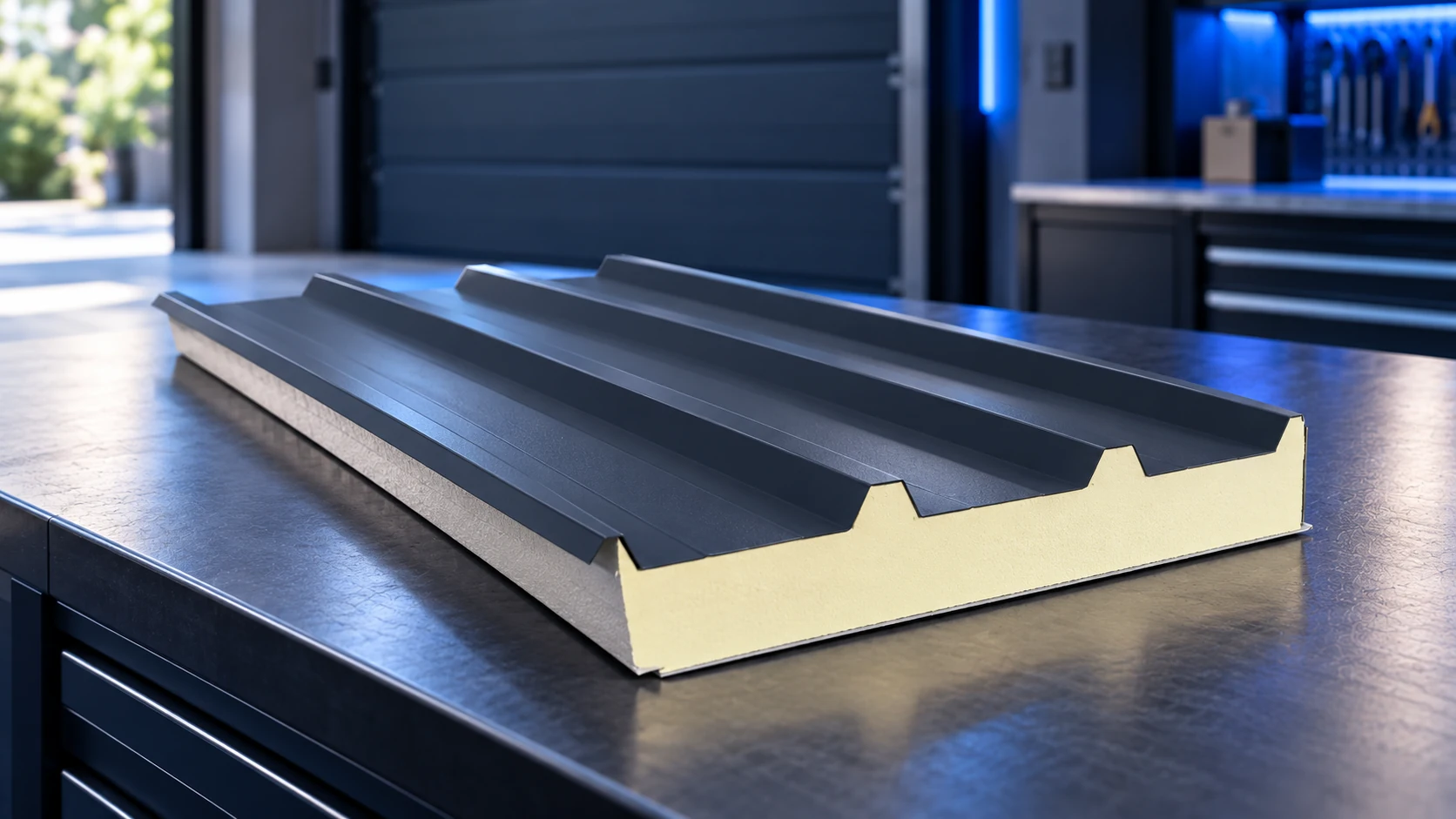
The right PIR sandwich-panel thickness for a garage roof depends first on whether the garage will be heated. Thermal requirements, support spacing…
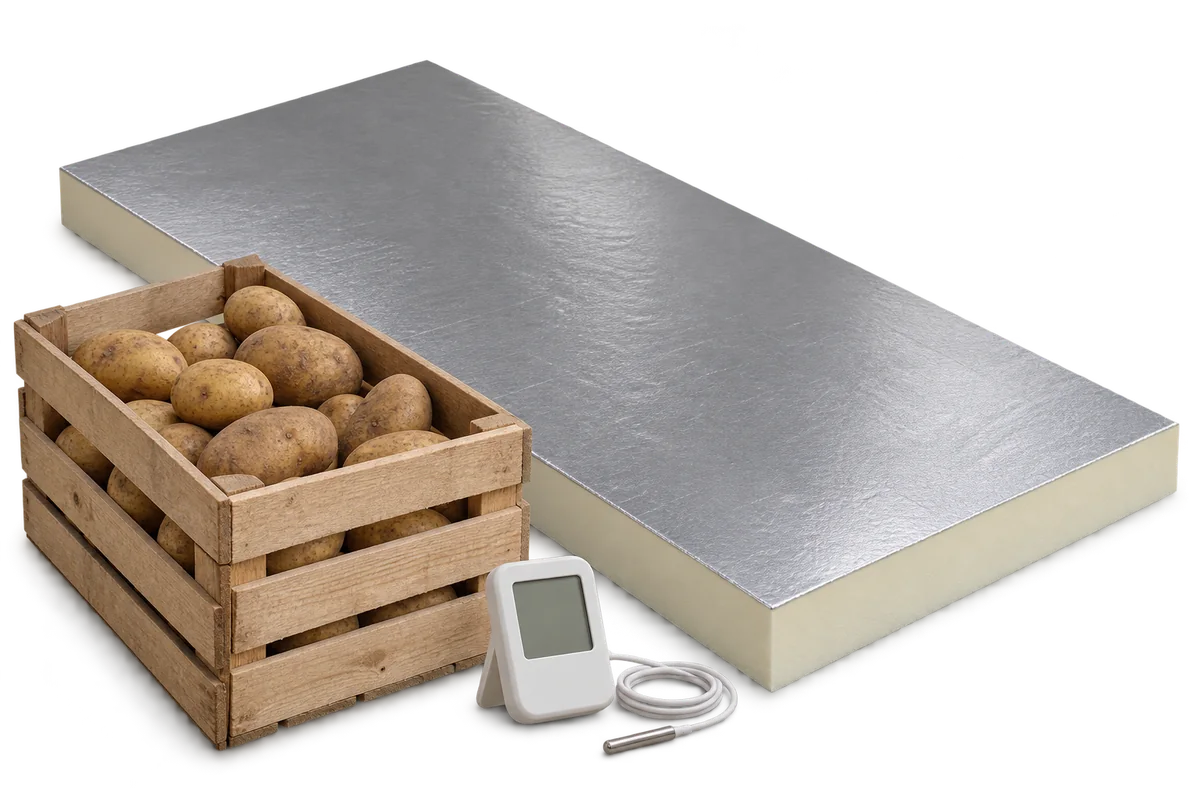
The withdrawal of a sprout suppressant formerly used in potato stores changed storage practices. Residues in older buildings need separate assessment even…
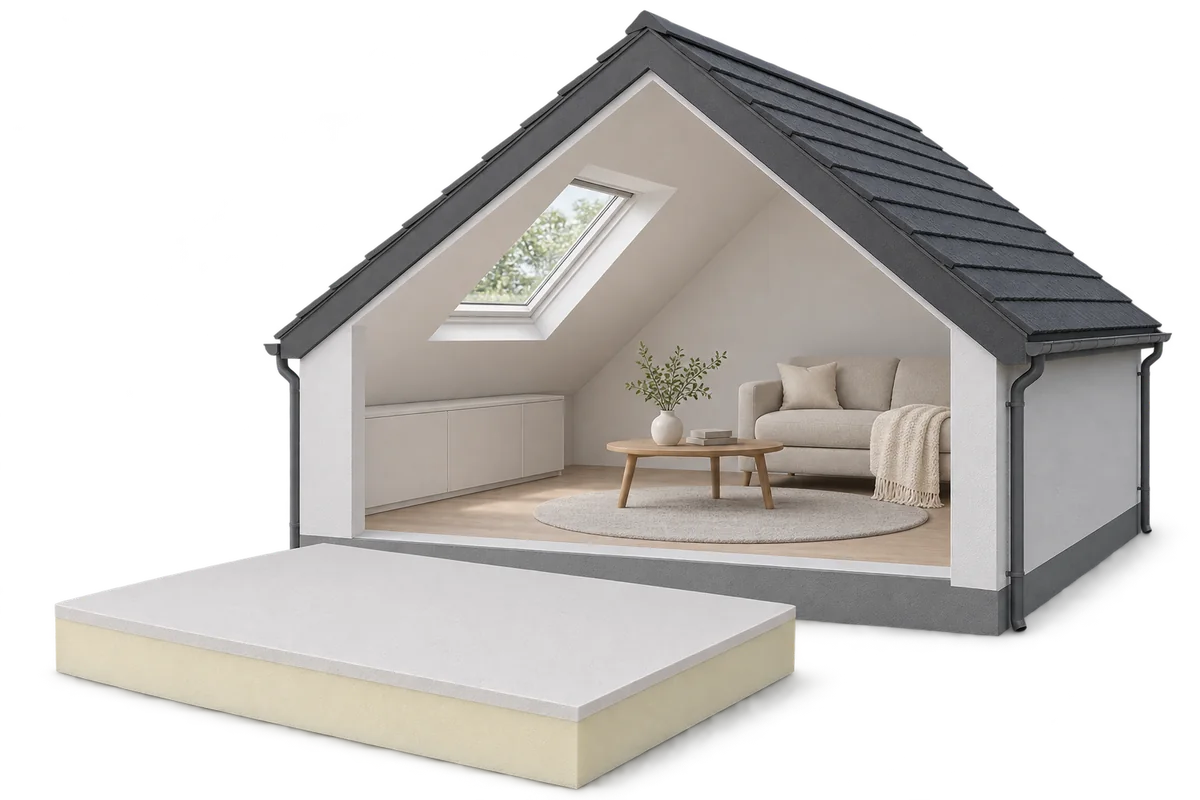
Insulating a loft from the inside can make it more comfortable without taking the roof covering off. PIR bonded to plasterboard provides…
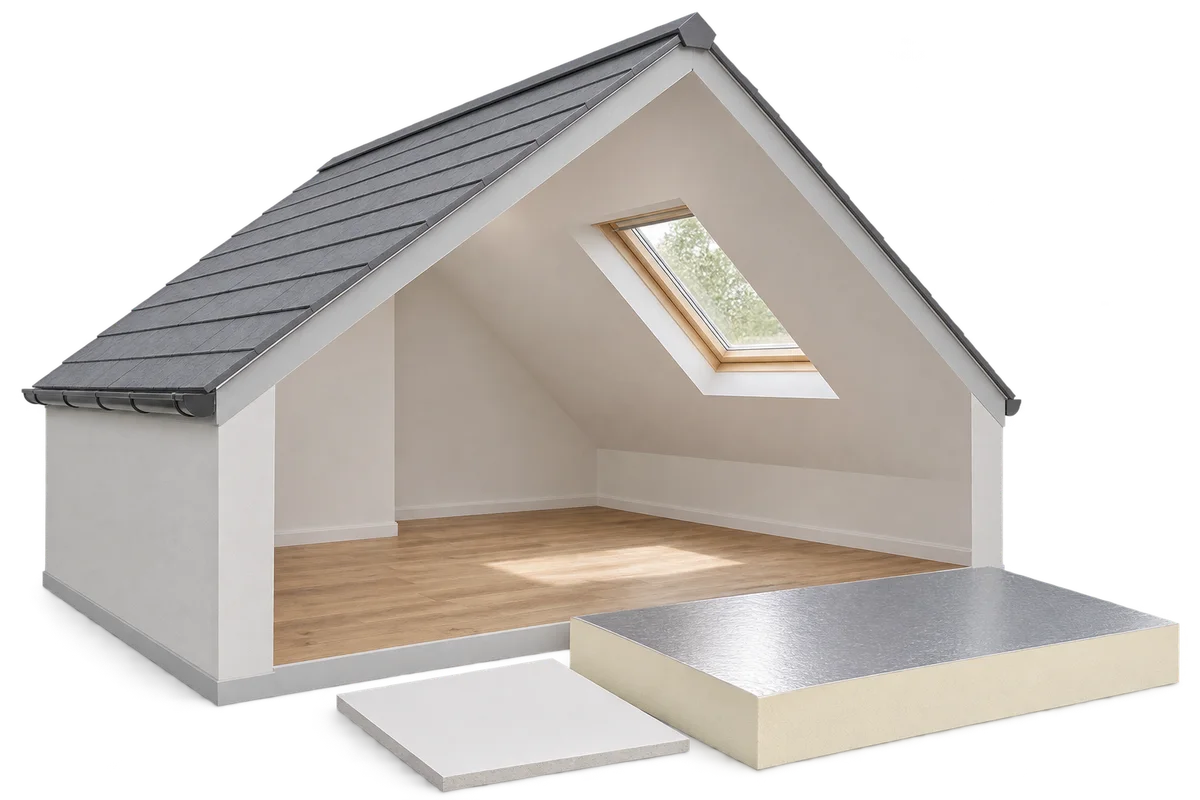
A loft fit-out starts well before the first plasterboard goes up. Inspect the roof, plan the insulation and establish how the layers…
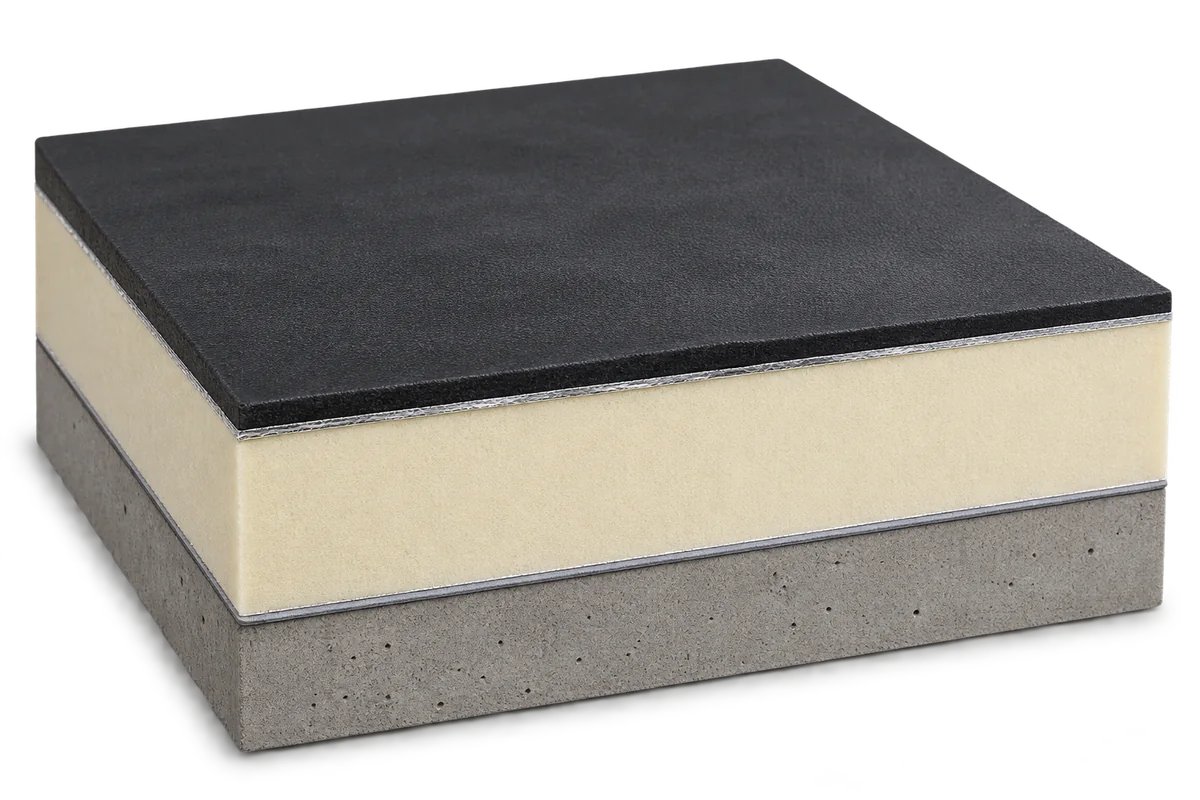
Choose the waterproofing and insulation for a flat roof together. The deck, layer order, fixing method and intended use determine which combinations…
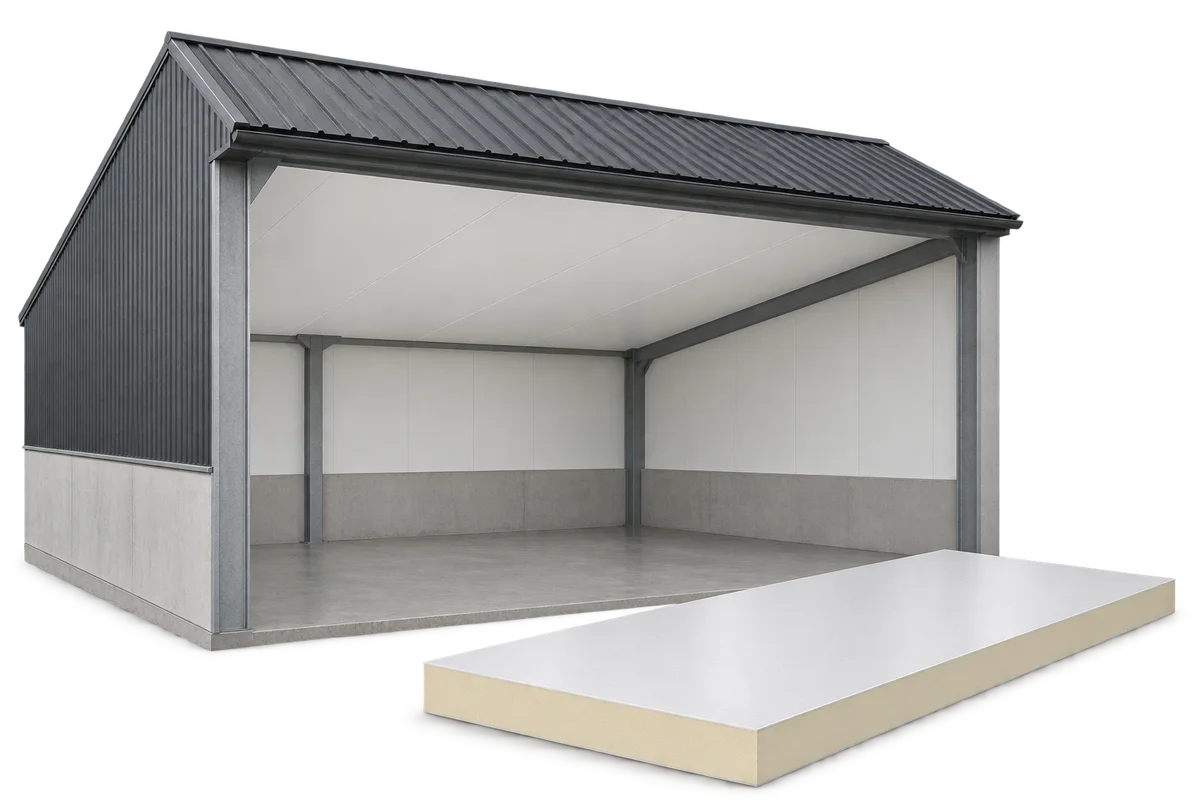
An internal ceiling can separate a heated or climate-controlled room from the roof void. In a cattle shed or warehouse, its appearance…
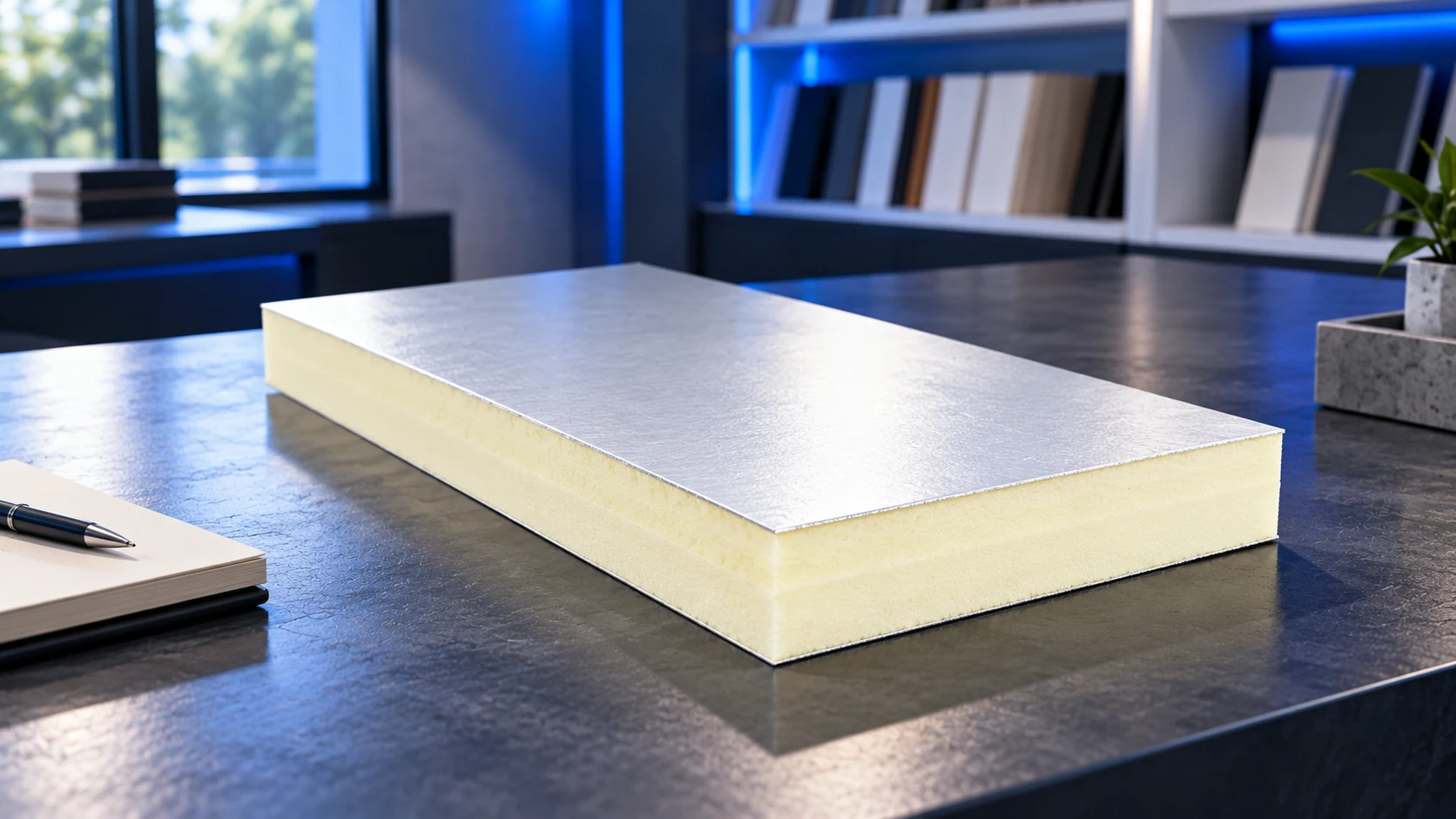
Insulation selection starts with its position in the building. A rendered wall, a roof and a continuously loaded floor impose different requirements.…