






What should you use to cover a house roof, and how do the materials compare?
Roof coverings
Choose a house roof covering in two stages. First rule out materials incompatible with the structure, pitch and layer arrangement; then compare the cost and appearance of the remaining options. Cut-to-length steel roof tiles, modules and trapezoidal sheets differ in installation logistics, supports and cutting waste. Over a heated loft, the outer sheet alone cannot solve insulation or moisture control. This Budowlanka.org guide helps you build a comparison card for complete alternatives: covering, substrate, waste, details and installer. It also considers the limitations of an existing roof frame. Lighter sheets can assist refurbishment but cannot repair weakened rafters. Finish the selection by confirming the exact product and installation details, not just its colour.
What do you need to know before buying?
Start with the design and roof geometry. Check pitch, slope length, valleys and service penetrations. Every covering has installation requirements. A product approved for a steeper roof does not become suitable for a flat roof simply by adding more sealant. The entire specified assembly matters.
During refurbishment, assess the existing roof frame. The new material’s weight is only one load alongside snow, wind and additional equipment. Lightweight roofing can help a renovation but cannot repair weakened rafters. A professional should assess the structure on site; a seller cannot determine its condition from the house area alone.
When do cut-to-length steel roof tiles make sense?
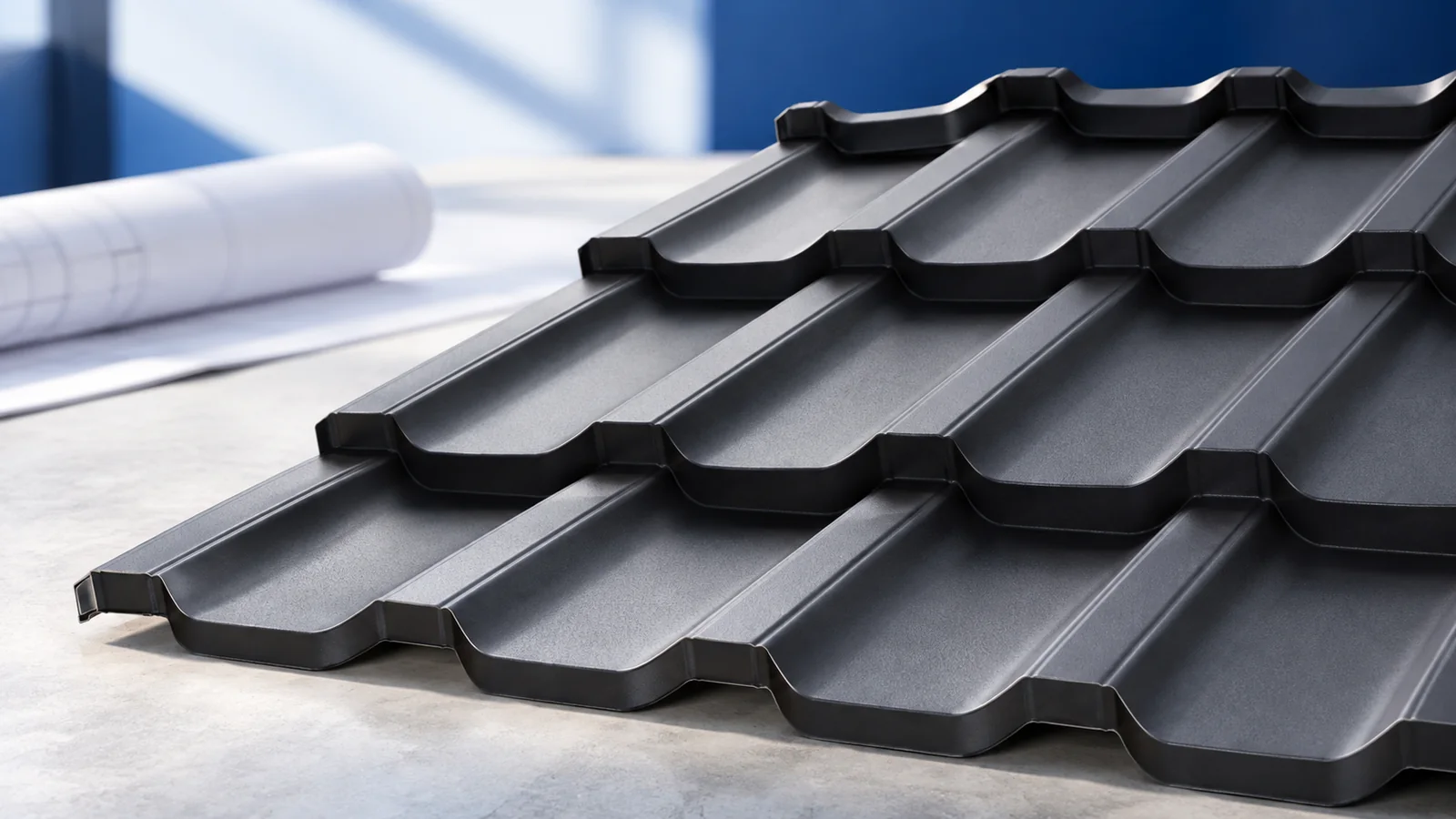
Tile-profile sheets ordered to length suit simple roof slopes. Long sheets reduce joints in the direction of water flow. Careful measurement matches them to the roof and reduces cutting on site. This is a useful starting point for a gable roof if transport and safe unloading are straightforward.
Large sheets need careful handling, however. They deform more easily during lifting, and strong wind complicates moving them onto the roof. Dormers and diagonal edges generate offcuts. The quotation should therefore include a cutting plan. A large format does not automatically produce the lowest roofing cost.
What does a modular format offer?
Small sheets are easier to carry and install on roofs with many changes of direction. A repeated format simplifies logistics and may help replace a locally damaged section, provided a matching profile remains available. Keep the product documentation and a few spare modules from the same colour batch.
Modular sheets still require precise batten spacing according to the specific product instructions. Small errors repeated across rows can make joints drift apart. Assess cover width, lap details and available flashings as well. The word modular does not describe one universal sheet geometry.
Are T18 or T35 sheets suitable for a house?
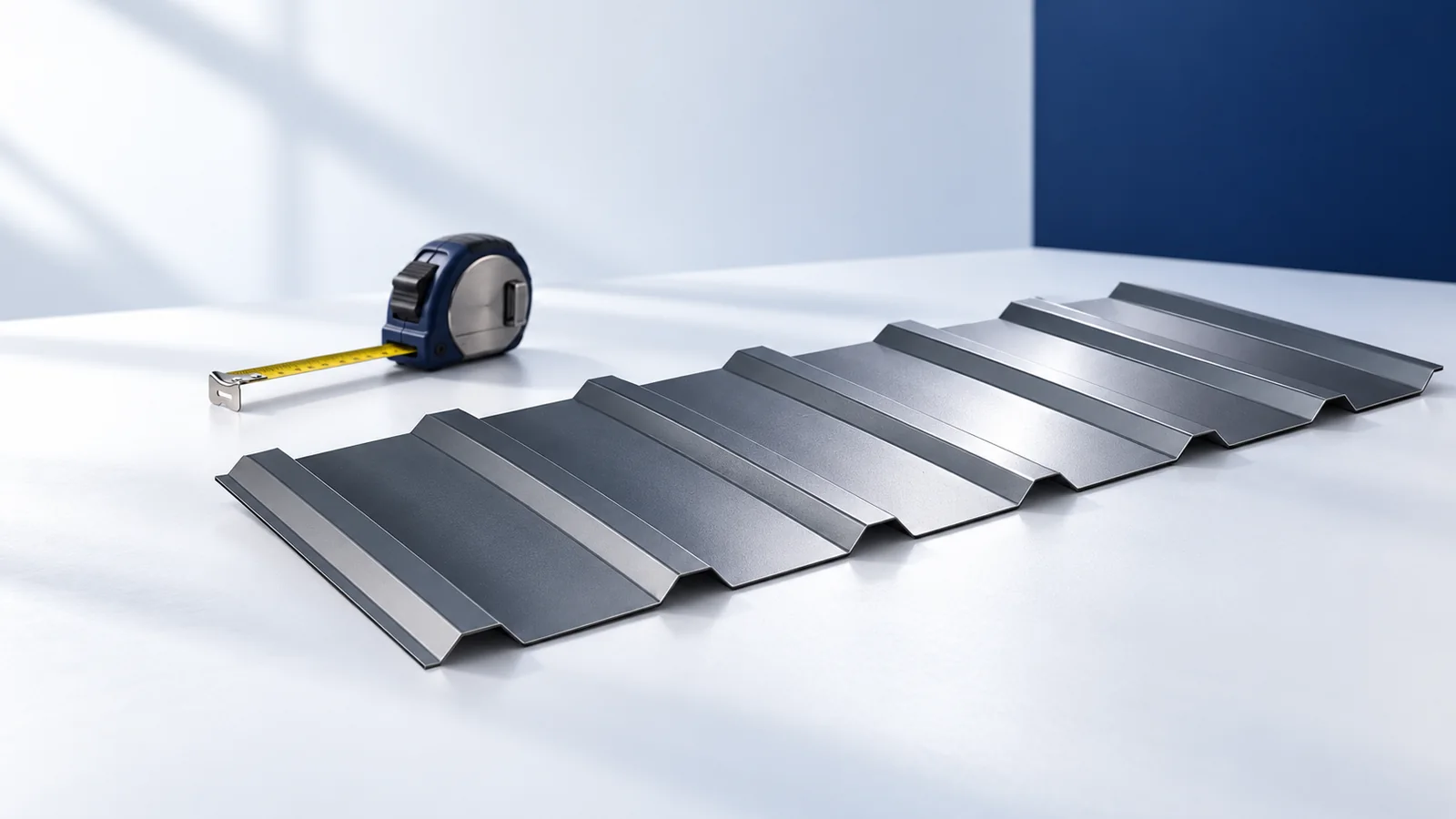
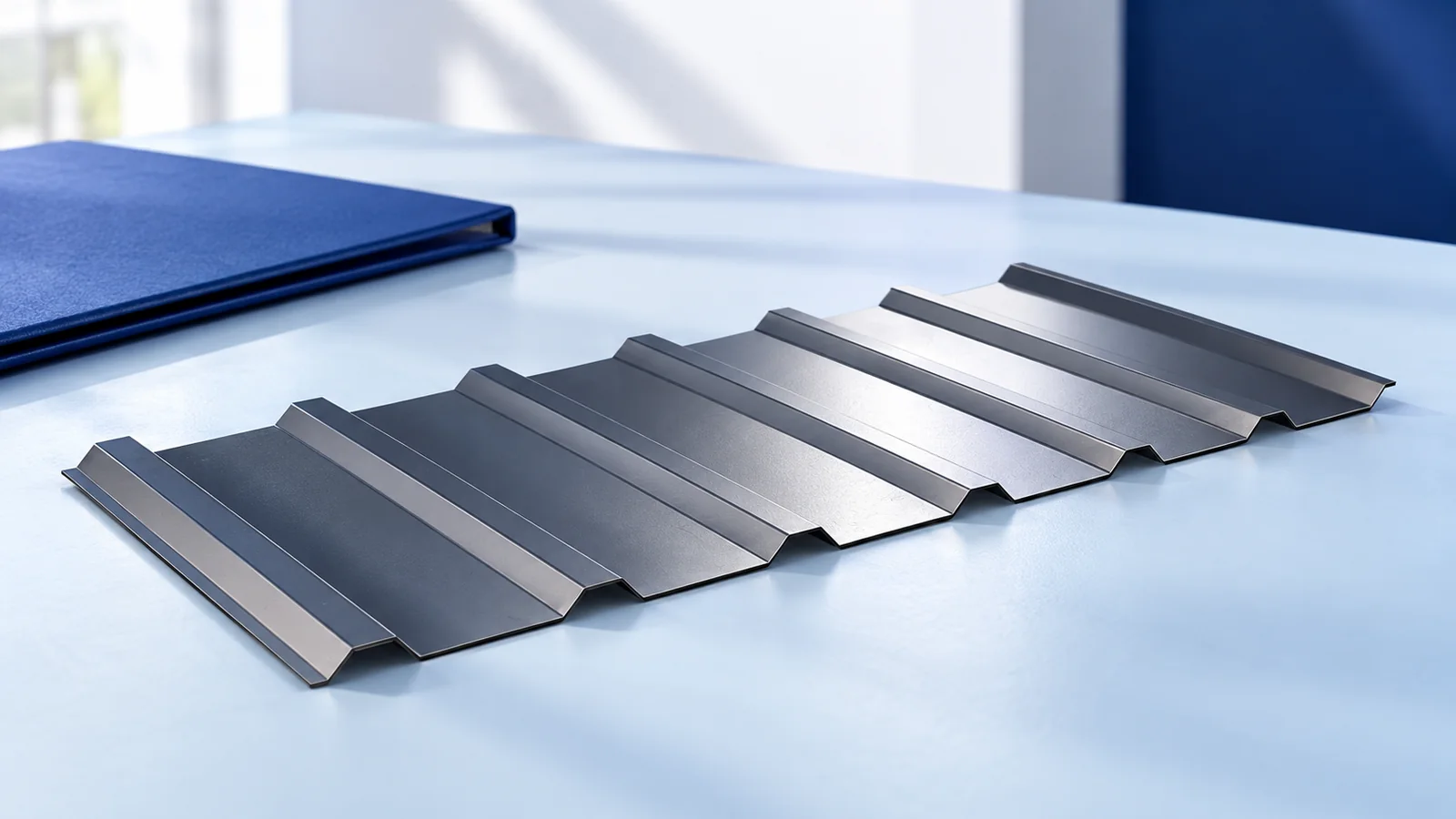
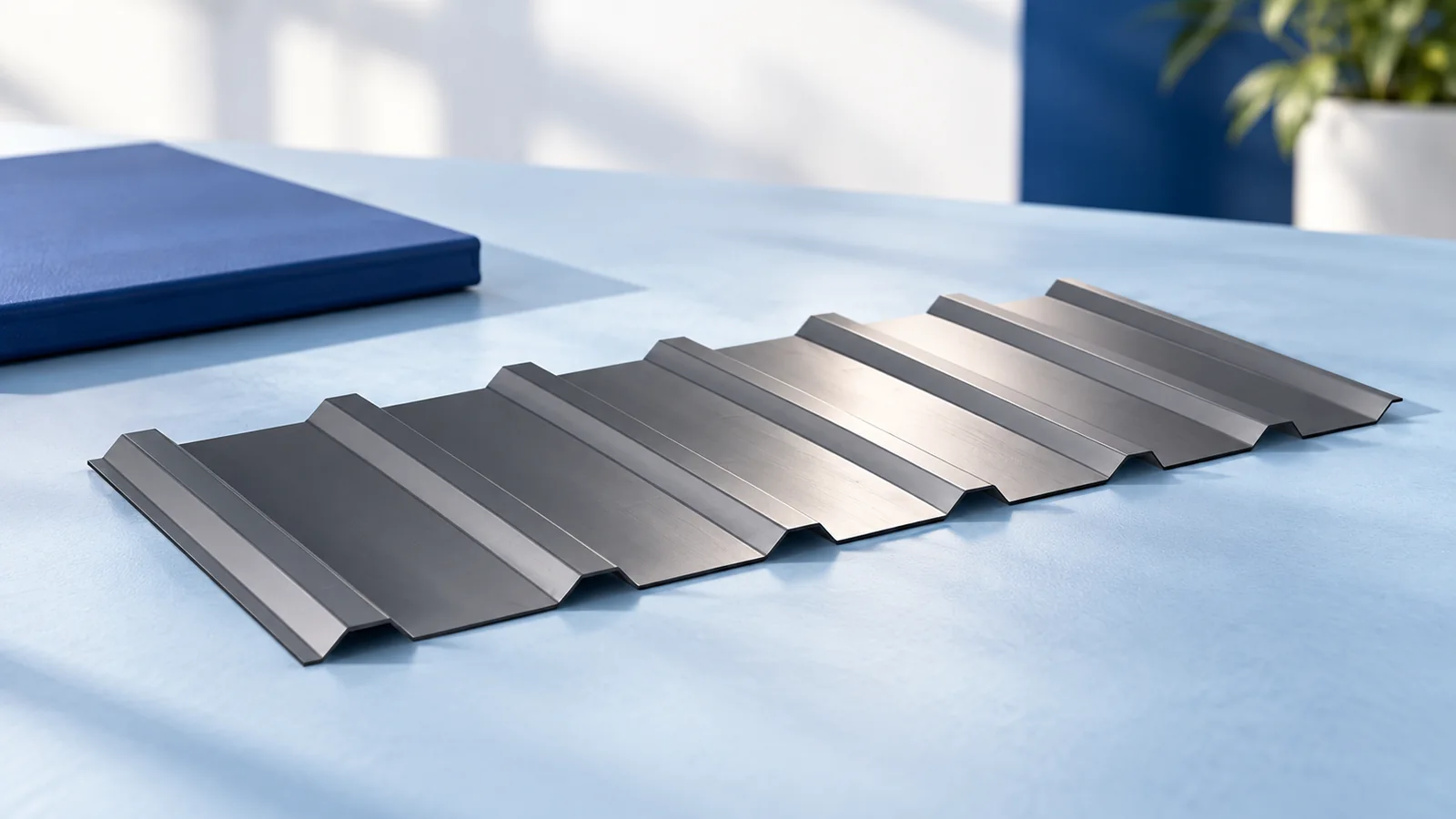
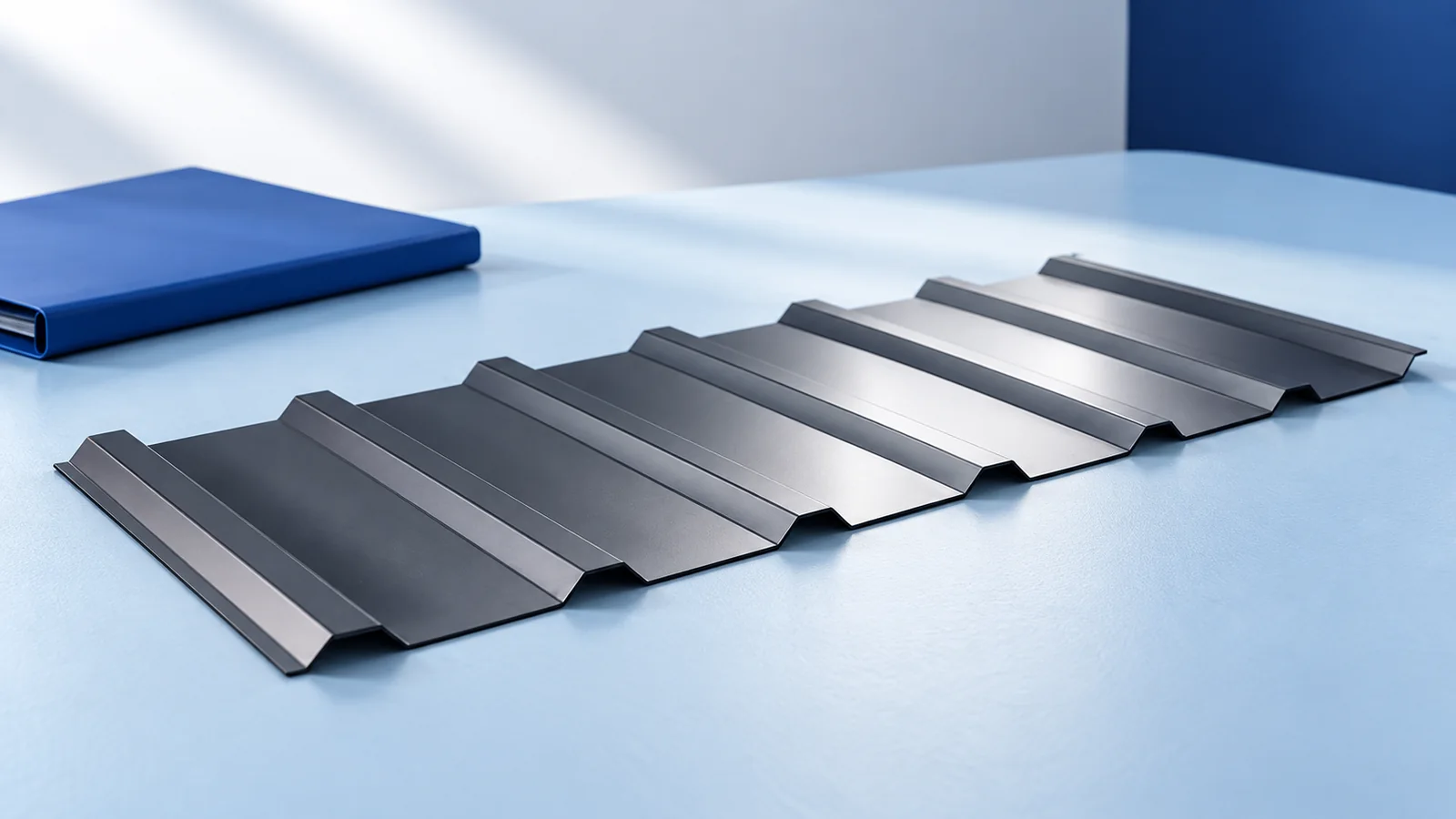
Trapezoidal sheets create a straightforward pattern of parallel ribs. They can suit modern houses, garages and outbuildings. T18 usually has a lower profile, while T35 creates a more pronounced pattern. Selection must nevertheless follow the particular sheet’s properties, support spacing and required pitch. Appearance alone does not establish load capacity.
An insulated trapezoidal-sheet roof needs a carefully designed build-up. The sheet is the outer layer and cannot provide adequate thermal insulation by itself. Fleece underneath can temporarily retain condensation, but must be able to dry. It does not replace a complete thermal and moisture-control solution above living rooms.
What about sandwich panels or other coverings?
A roof sandwich panel combines two facings with an insulating core. It can be practical for industrial buildings, pavilions and heated ancillary buildings. On a house, joints, acoustics, fire protection and appearance all need resolving. A wall panel is not a substitute for a roof panel merely because it has the same thickness.
Clay tiles, concrete tiles and bitumen shingles require different substrates and impose different structural loads. Compare complete systems. A lighter material does not always mean fewer layers, and a solid deck can alter the cost calculation. No single covering is best for every house and roof shape.
How do you make a well-founded choice?
Prepare two or three options compatible with the design. Calculate covering, waste, substrate, flashings and labour for each. View coating samples outdoors: a monitor cannot reproduce colour and texture faithfully. Ask about warranty conditions and subsequent maintenance. These matters remain relevant long after purchase.
The strongest offer clearly specifies the product and work involved, including steel thickness, coating, sales unit and finishing components. If a contractor proposes a different material, ask how this affects the rest of the roof. You can then choose a solution suited to the building rather than an attractive advertised price alone.
Check that the available installer knows the selected system. A last-minute covering change may alter supports, fasteners and flashings. Approve the solution and details before ordering; on a large slope, a trial assembly at the eaves can help. Record technical compatibility, installation logistics and total cost separately on the decision card, so a strength in one column does not hide a shortcoming in another.

Free quote
What to include in your enquiry
Tell us how you plan to use the material, the dimensions and the quantity you need. Include the thickness, grade or variant name, along with the delivery town or your preferred collection branch. For a specific product, add its name or a link to the product page. We will reply to the email address you provide to discuss availability and the terms of your order.
More from the building guide
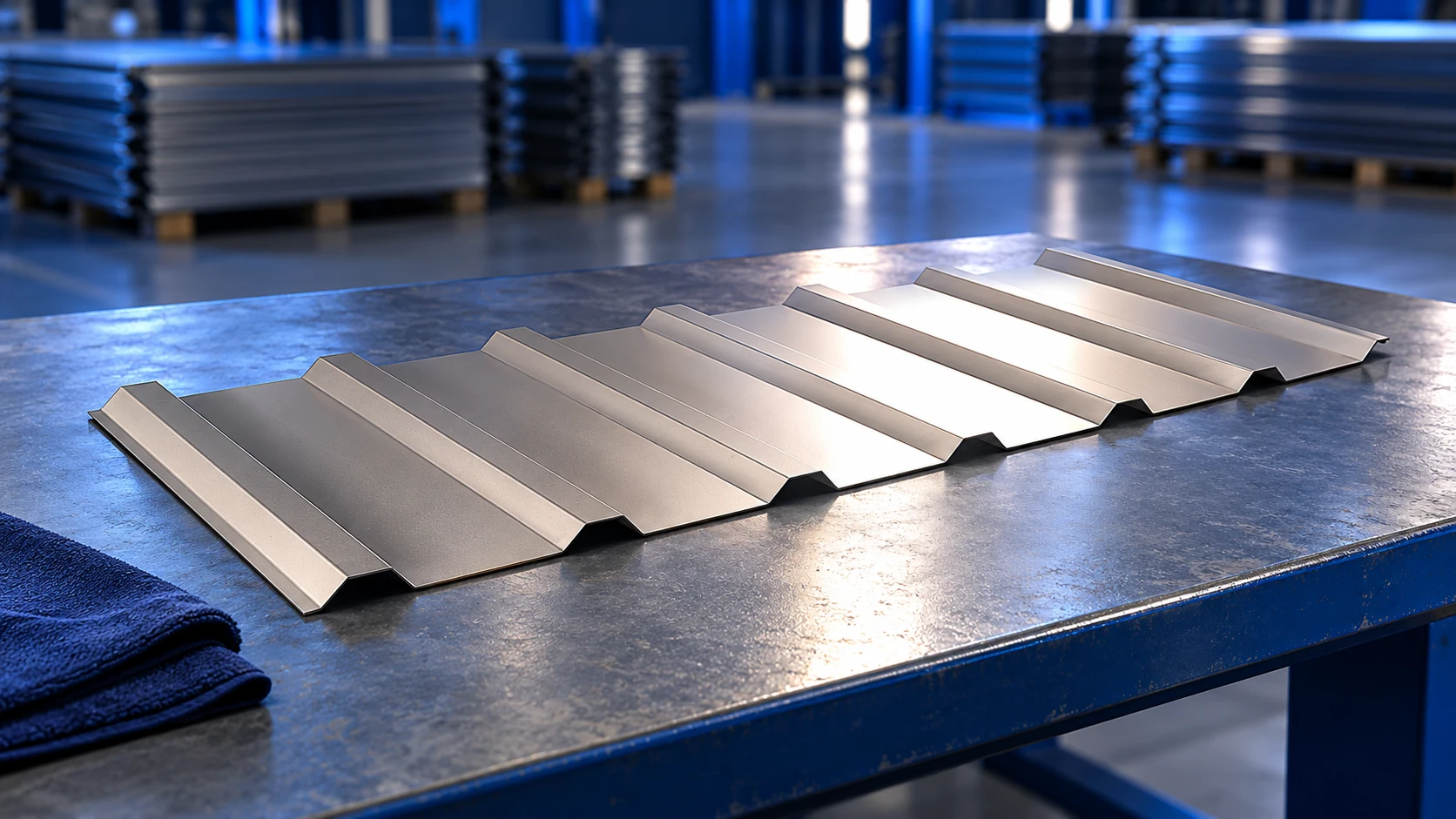
Second-grade trapezoidal steel sheet may cost less, but the actual batch needs assessment. The label can cover very different deviations: a scratch,…
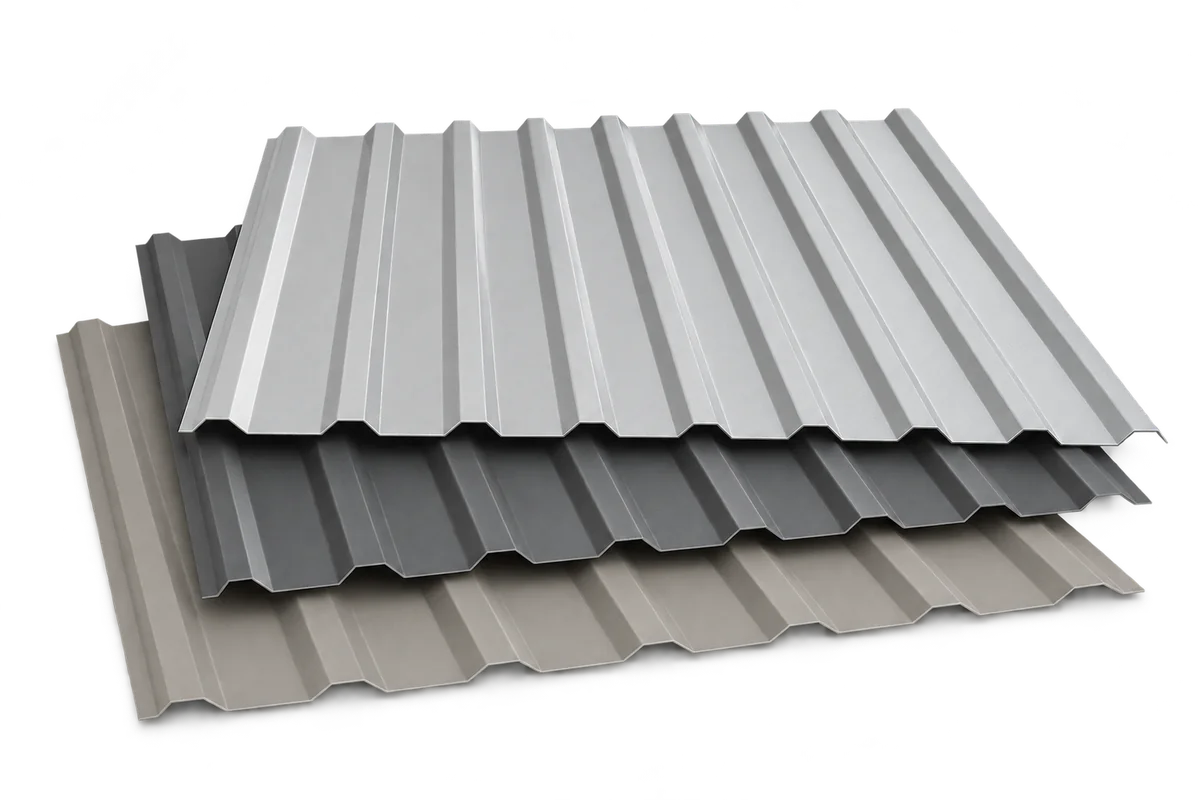
Trapezoidal steel sheets can quickly enclose a roof or facade once the supporting structure is ready. The sheets are lightweight, come in…
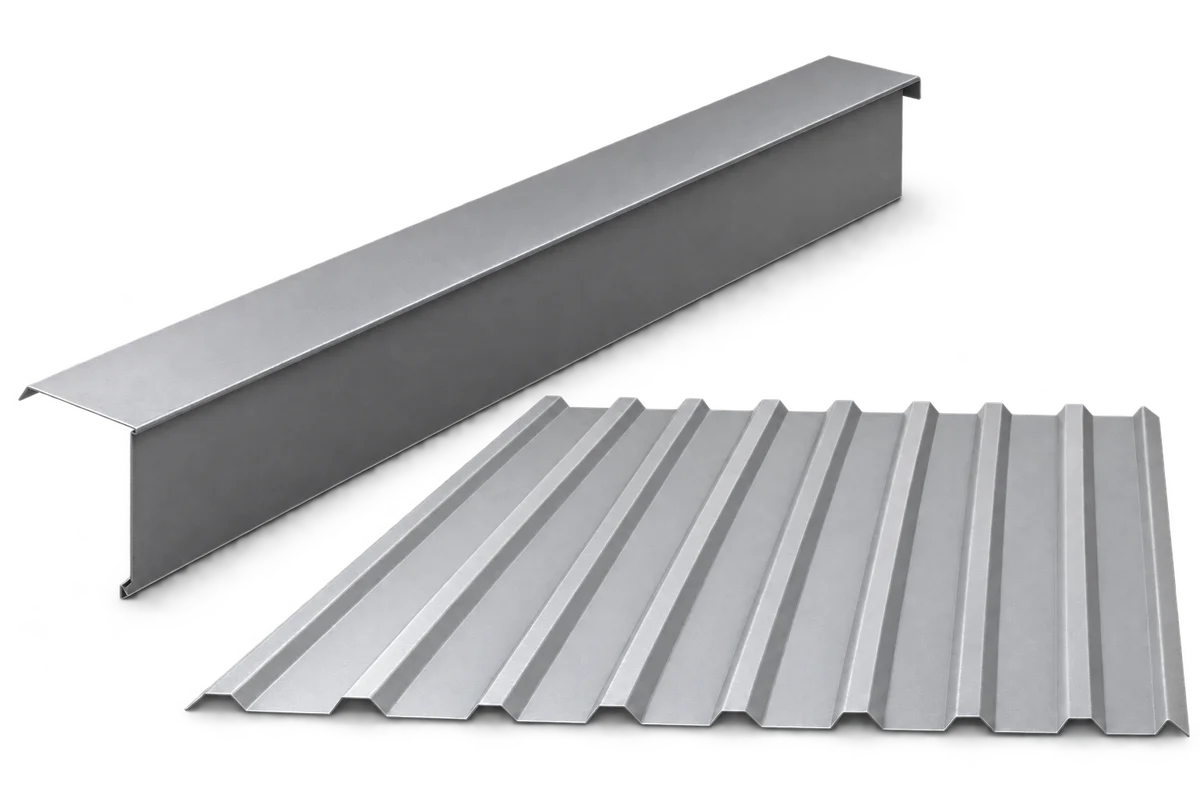
Order custom verge flashing for a house refurbishment from a drawing of the finished section and a detail agreed with the roofer.…
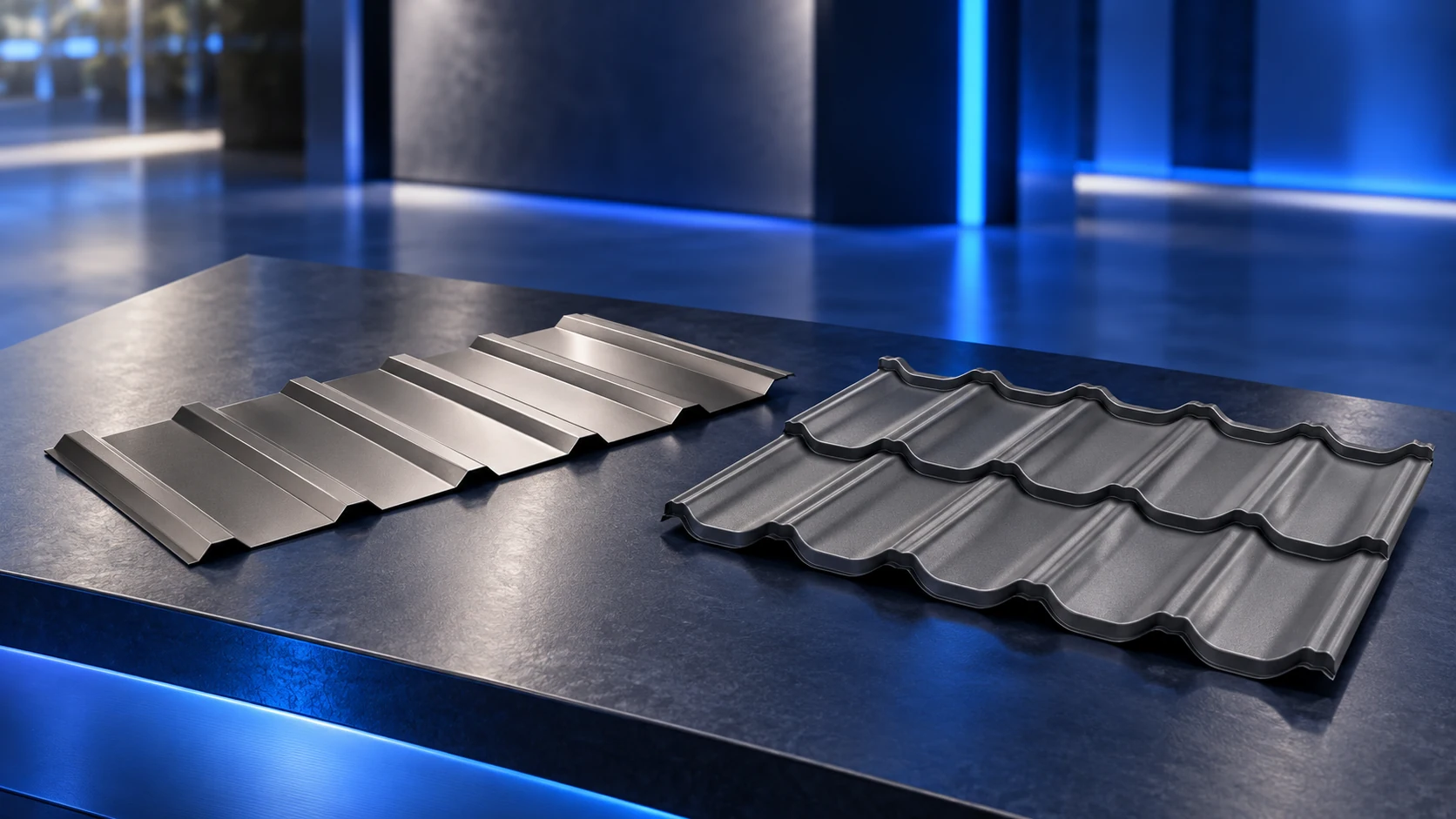
Both steel tile-effect sheets and trapezoidal profiles can form a reliable roof when they suit the design and are installed correctly. Tile-effect…
Organise roofing materials by their role in the assembly. Profiled sheets and tiles cover the slope, sandwich panels combine facings with insulation,…
A trapezoidal sheet's T18 or T35 designation does not tell you its service life. Steel protection, the building's surroundings, joint quality and…
A mansard roof comprises connected slope sections with different inclinations. Success depends on more than the covering: rainwater, ventilation and insulation must…
A trapezoidal-sheet designation starts product identification; it is not a complete specification. T18 and T35 usually refer to nominal profile height, but…