






Is second-grade trapezoidal steel sheet worth buying?
Roofing sheets
Second-grade trapezoidal steel sheet may cost less, but the actual batch needs assessment. The label can cover very different deviations: a scratch, colour variation and crushed edge have different consequences. Before buying, establish why the material was downgraded, which documentation applies and whether the intended use is supported. This guide separates appearance from joint function and compares purchase price with the cost of usable coverage. It also examines cutting losses, delivery checks and storage. “Second grade” alone does not describe material performance, and a discount is only worthwhile when the sheets that remain usable meet the needs of the planned work.
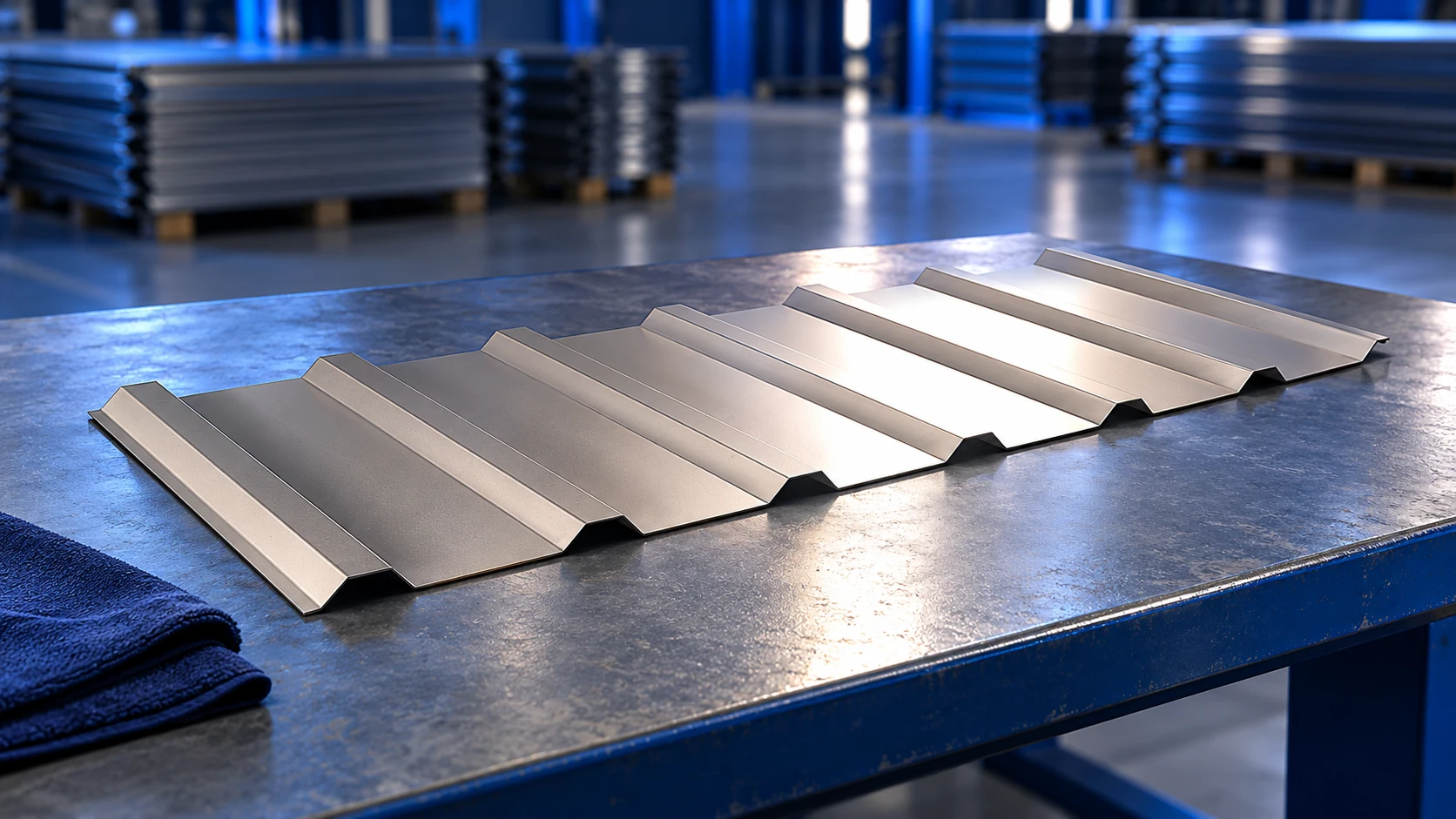
Ask exactly why the material was downgraded
Obtain a defect description and photographs of the entire batch. Check whether the issue concerns coating, colour, geometry, length or transport damage. One photograph of the best sheet cannot represent the whole delivery. Establish whether all pieces are in a similar condition.
Do not assume that downgrading means every property has been lost, or that the issue is only cosmetic. The decision depends on the actual deviation and documentation. If the seller cannot identify the manufacturer or model, cover width, steel specification and appropriate design data are harder to verify.
Establish whether the defect affects the whole sheet or only one end. If it can be cut away, calculate the remaining usable length and compare it with the cutting plan. Apparently inexpensive material may yield very few pieces in the required format.
Separate appearance from joint performance
A slight shade difference may be mainly a visual issue. A deformed edge affects whether an overlap can be made correctly. Coating damage requires assessment of the steel’s protection. A dent near a support can matter more than a similar defect elsewhere.
Incorrect handling can distort sheets and make installation difficult. During inspection, fit several pieces together and check contact and edge straightness. Looking at a flat surface from a distance says little. Also establish whether every piece belongs to the same profile and version.
Calculate the price of what can actually be used
For this calculation only, assume a 100 m² batch costs PLN 2,500 excluding VAT. If removing damaged sections and cutting leaves 80 m² usable, the cost is PLN 31.25 excluding VAT per usable square metre. An advertised PLN 25 no longer describes the actual benefit.
Add transport, sorting labour and any repairs. If lengths do not suit the roof, some material may remain unused. Prepare a cutting plan before purchase. These illustrative figures explain a method; they are not the price of a currently available batch.
Compare with new material of known specification
Use new material of a similar specification as the reference. An illustrative figure could be PLN 36.34 excluding VAT per m² of cover for T18 made from 0.50 mm steel with a 25 µm polyester coating. This is a calculation rate, not a current sales offer. Do not compare second-grade stock with any more expensive sheet simply to produce a large percentage saving.
Comparing a damaged thin profile with a new, thicker sheet in a more expensive coating exaggerates the apparent discount. Also check whether the batch price is per gross m². With irregular lengths, a quotation based on the actual sheets needed may prove more economical.
A roof needs closer scrutiny than a temporary screen
Roof drainage continuity and weather-tight overlaps are essential. Not every defect can be hidden beneath flashing. Confirm that the designed assembly retains its required properties. Load tables for a particular model do not automatically validate a damaged sheet.
For simple cladding, a defective section can sometimes be cut away, but the new edges and their required protection must be considered. Low building value alone should not determine use. Even an inexpensive fence is exposed to wind and needs correct fixings.
If properties are still declared for the batch, the product covered by the documentation must be clear. Do not use a data sheet for a random profile just because it looks similar. Where a defined load capacity or coating protection is required, missing identification is a significant problem.
Agree the sale conditions before loading
Record the batch description, quantity, lengths and disclosed deviations. Obtain clear information on the warranty and available documentation. Do not accept a general claim of “like first grade” if it does not identify what has actually been confirmed.
After buying, follow transport, storage and maintenance recommendations. Cheaper material can still be damaged by moisture trapped in a package or unsuitable cutting. The manufacturer’s instructions remain useful for an identifiable product. If the model cannot be established, treat this as a real uncertainty in the purchasing decision.
Ask whether the material can be inspected before loading. Discovering its condition only after transporting the entire batch increases the cost of a mistake. Photographs should show edges and sheet alignment as well as the coating.
Frequently asked questions
Does second grade always mean scratches only?
No. Reasons vary. Obtain a description of the actual batch and inspect both geometry and coating.
Is every second-grade sheet suitable for roofing?
That cannot be confirmed without assessing the defect, properties and intended use. Price does not determine suitability.

Free quote
What to include in your enquiry
Tell us how you plan to use the material, the dimensions and the quantity you need. Include the thickness, grade or variant name, along with the delivery town or your preferred collection branch. For a specific product, add its name or a link to the product page. We will reply to the email address you provide to discuss availability and the terms of your order.
More from the building guide
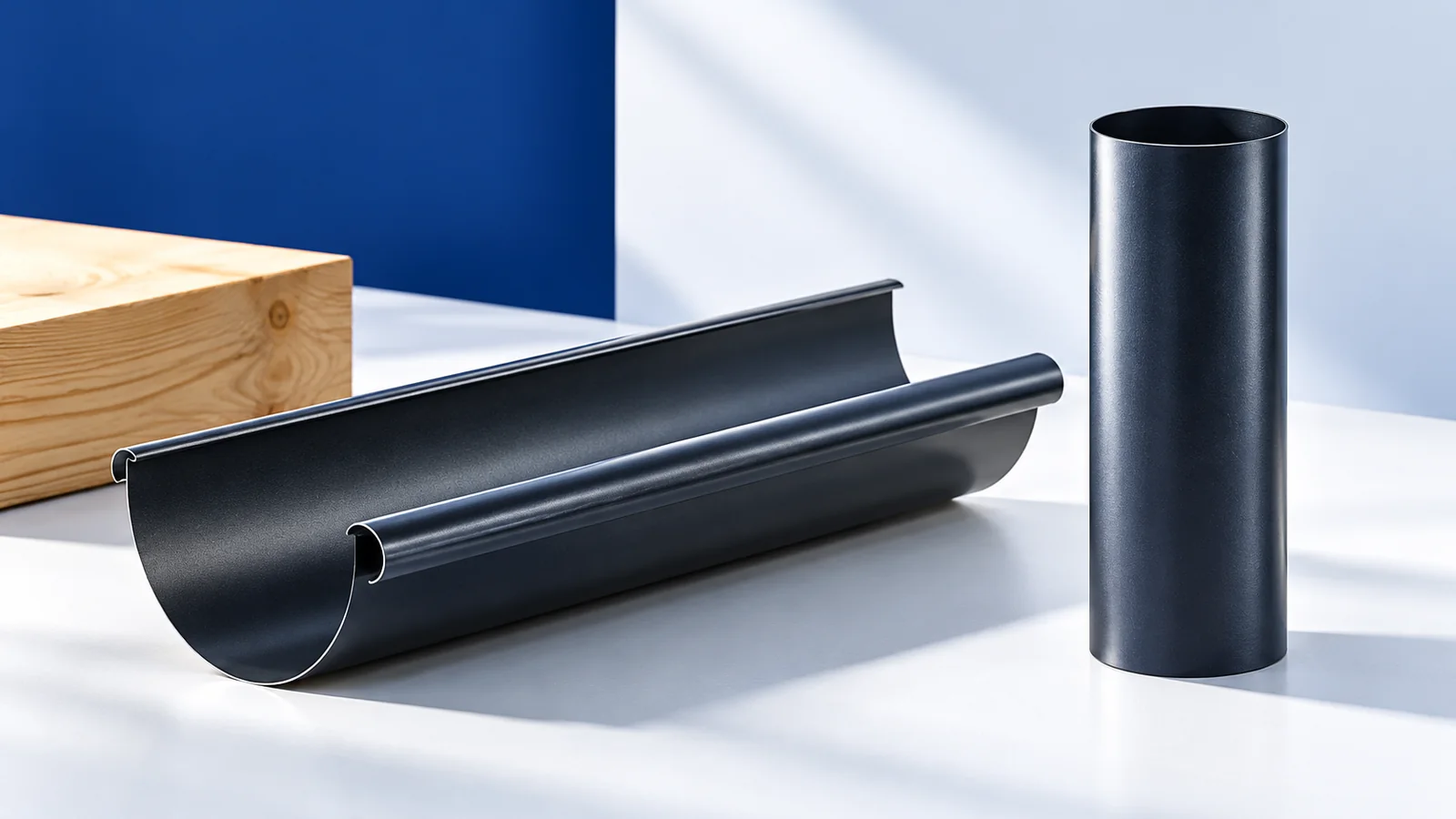
Start gutter selection for a metal roof with the amount and direction of runoff, then consider shape and colour. Relevant details include…
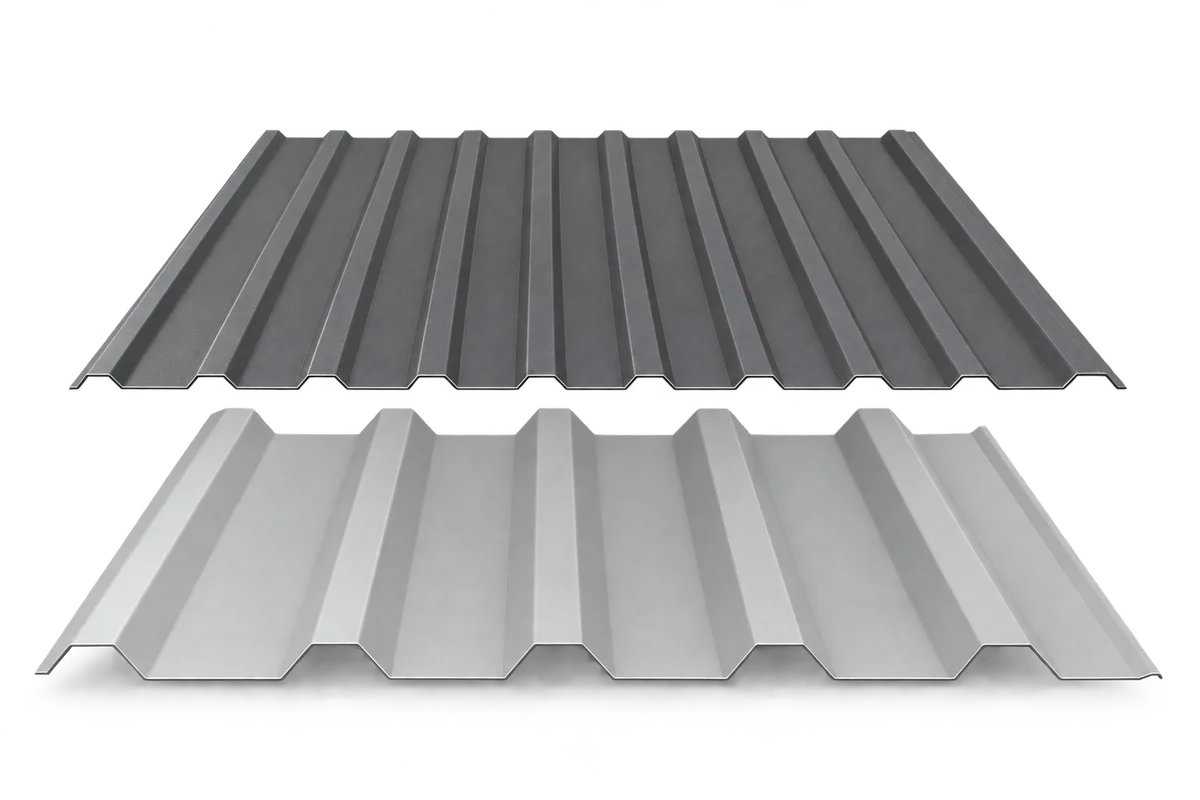
Start your garage cladding order with two sketches. Draw the roof slopes on one and the walls, door and openings on the…
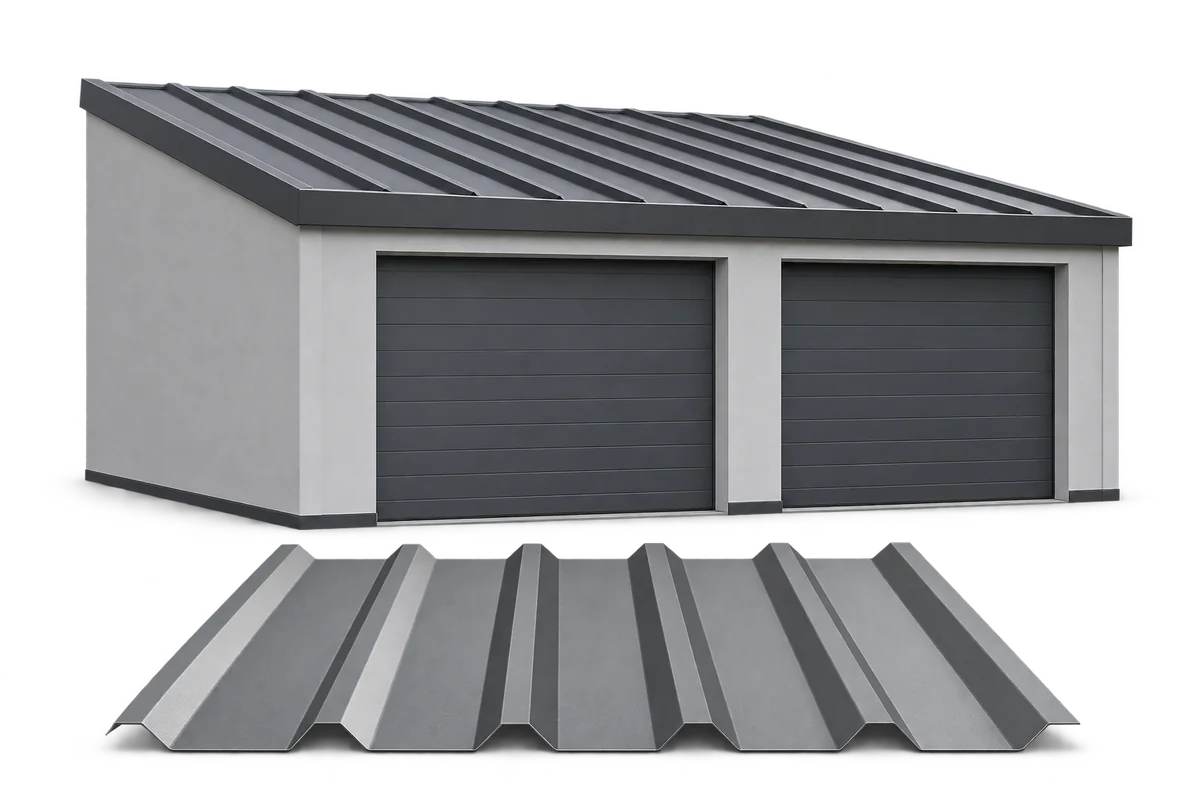
Trapezoidal steel sheets can cover a garage roof, clad its walls or screen the side of a carport. Choose the coating and…
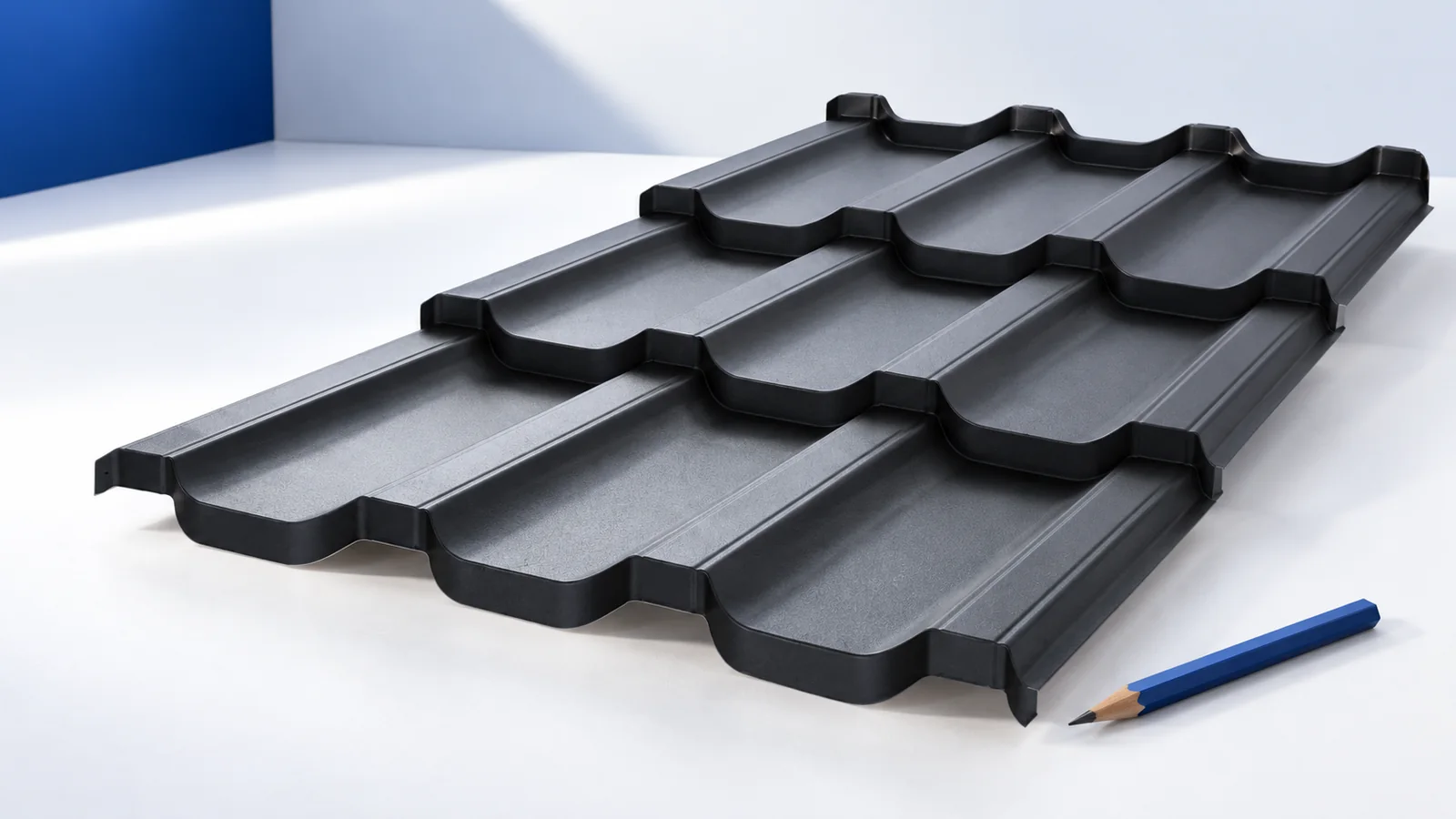
Choose a garage covering after establishing its operating temperature, roof geometry and supports. Single-skin trapezoidal sheets, metal roof tiles and insulated roof…
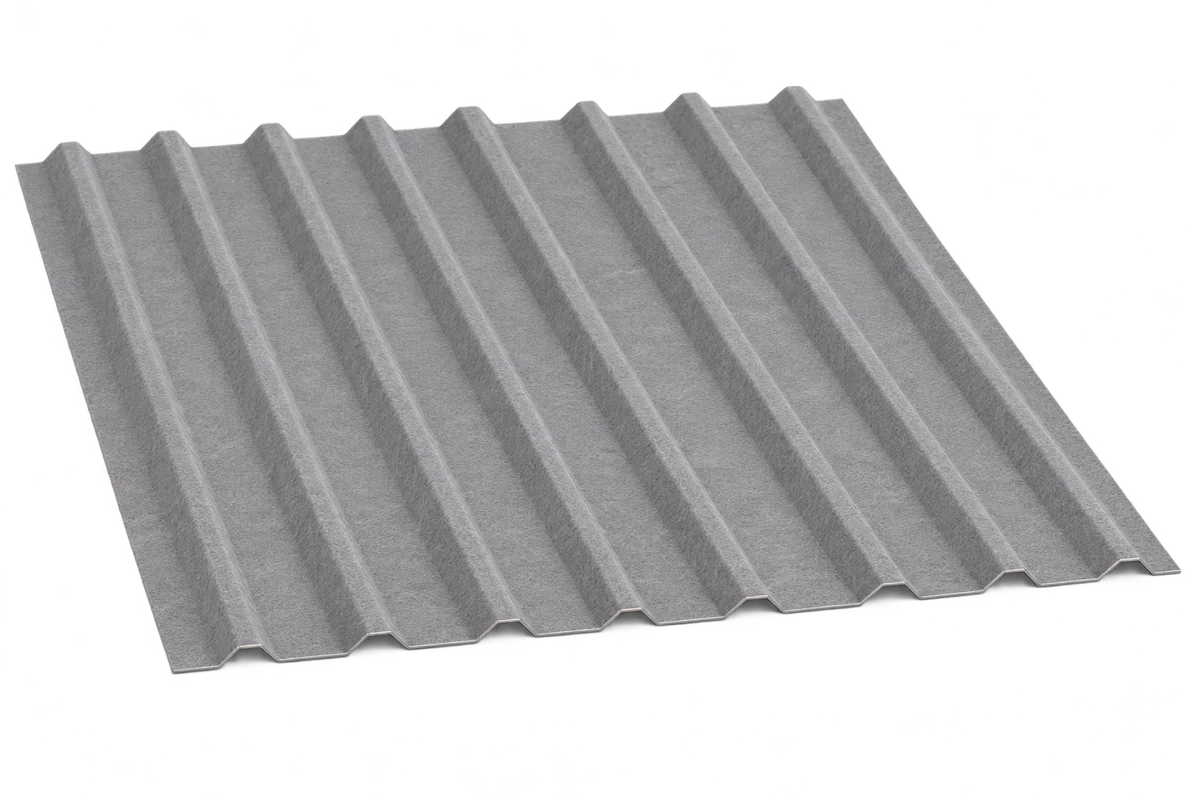
A factory-applied fleece on the underside of trapezoidal steel sheeting can temporarily hold condensation and may affect how the roof sounds. For…
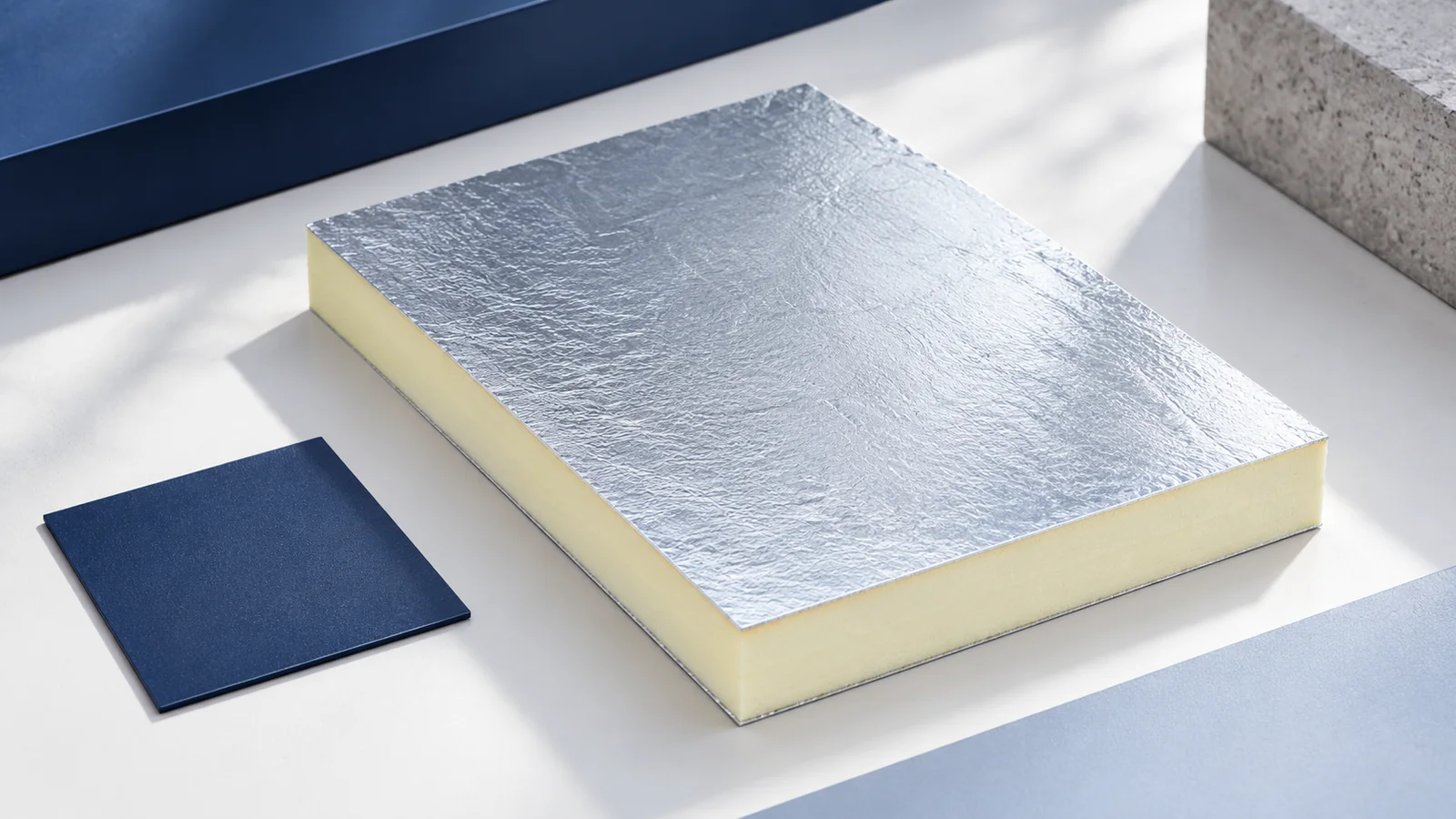
A flat roof covering should be selected around the roof's use, drainage and complete build-up. Structural trapezoidal decking, PIR insulation and waterproofing…
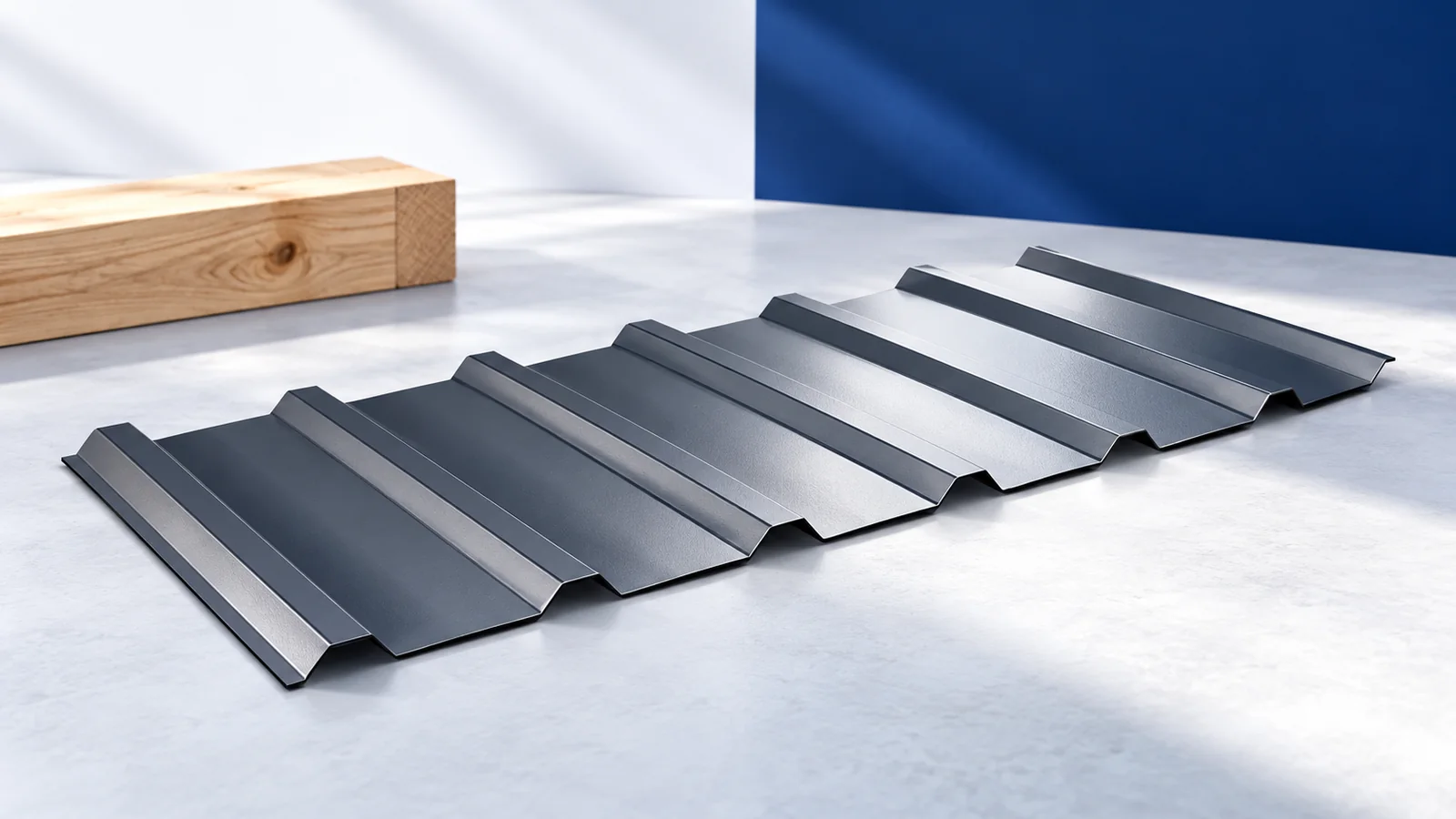
Trapezoidal façade cladding requires geometry and fixing design to be selected together. T18 usually gives a finer rhythm, while T35 creates stronger…
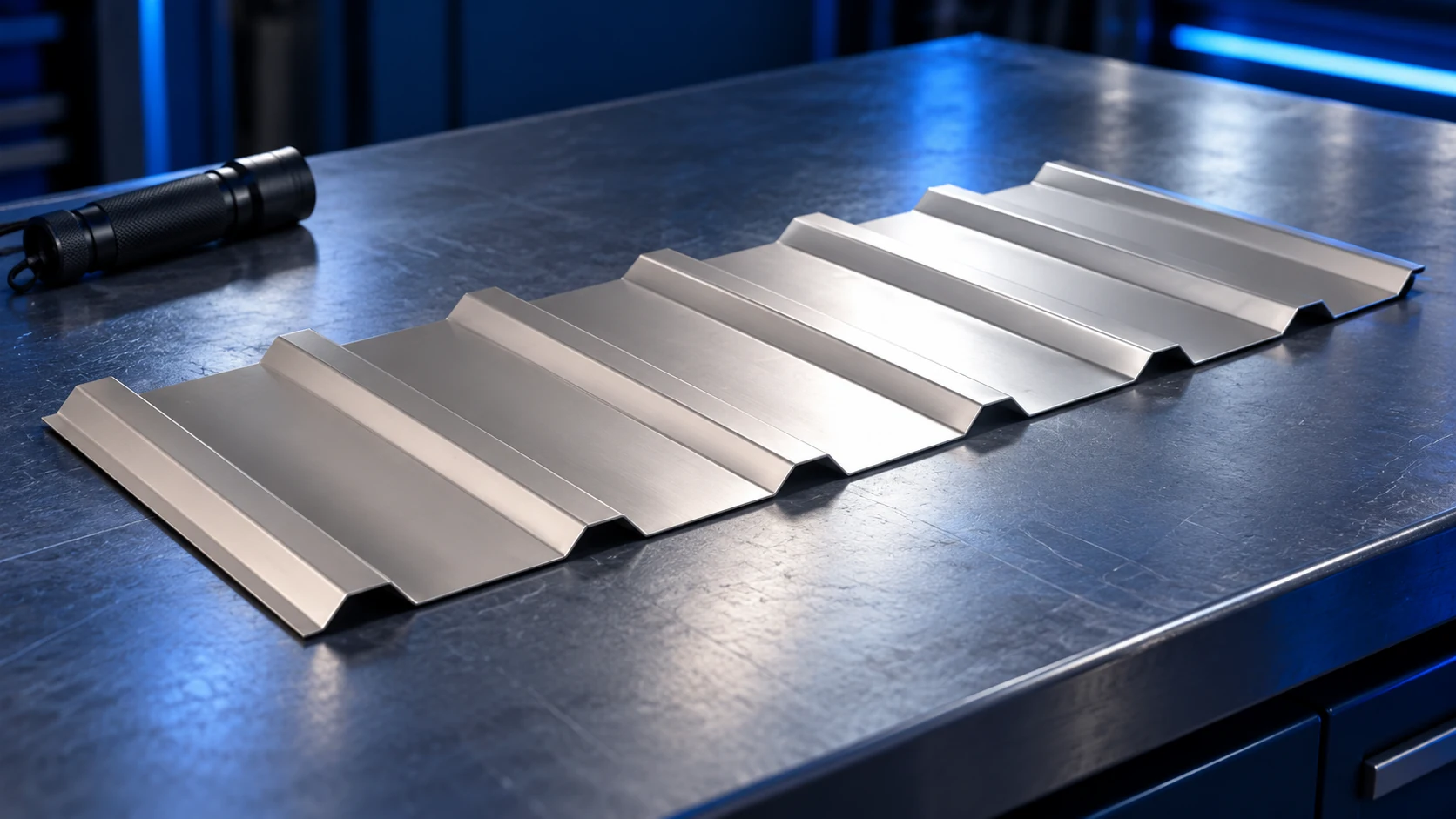
A useful trapezoidal steel sheet quotation lets you verify the product, quantity and complete price. The name T18 and a colour alone…