






What advantages can metal roofing offer?
Roof coverings
Metal roofing offers a choice of profiles, formats and coatings with a relatively low weight for the outer covering itself. These benefits must be assessed against the building’s structure, pitch, slope geometry and intended appearance. Cut-to-length sheets may simplify regular surfaces, while modules can ease work around numerous edges. Thermal performance, acoustics and durability depend on the complete assembly, not the sheet alone. This guide separates material advantages from the conditions needed to achieve them. It covers handling, finishes, protection during installation and cost comparison so low weight or an attractive price does not obscure support, weatherproofing and maintenance requirements.
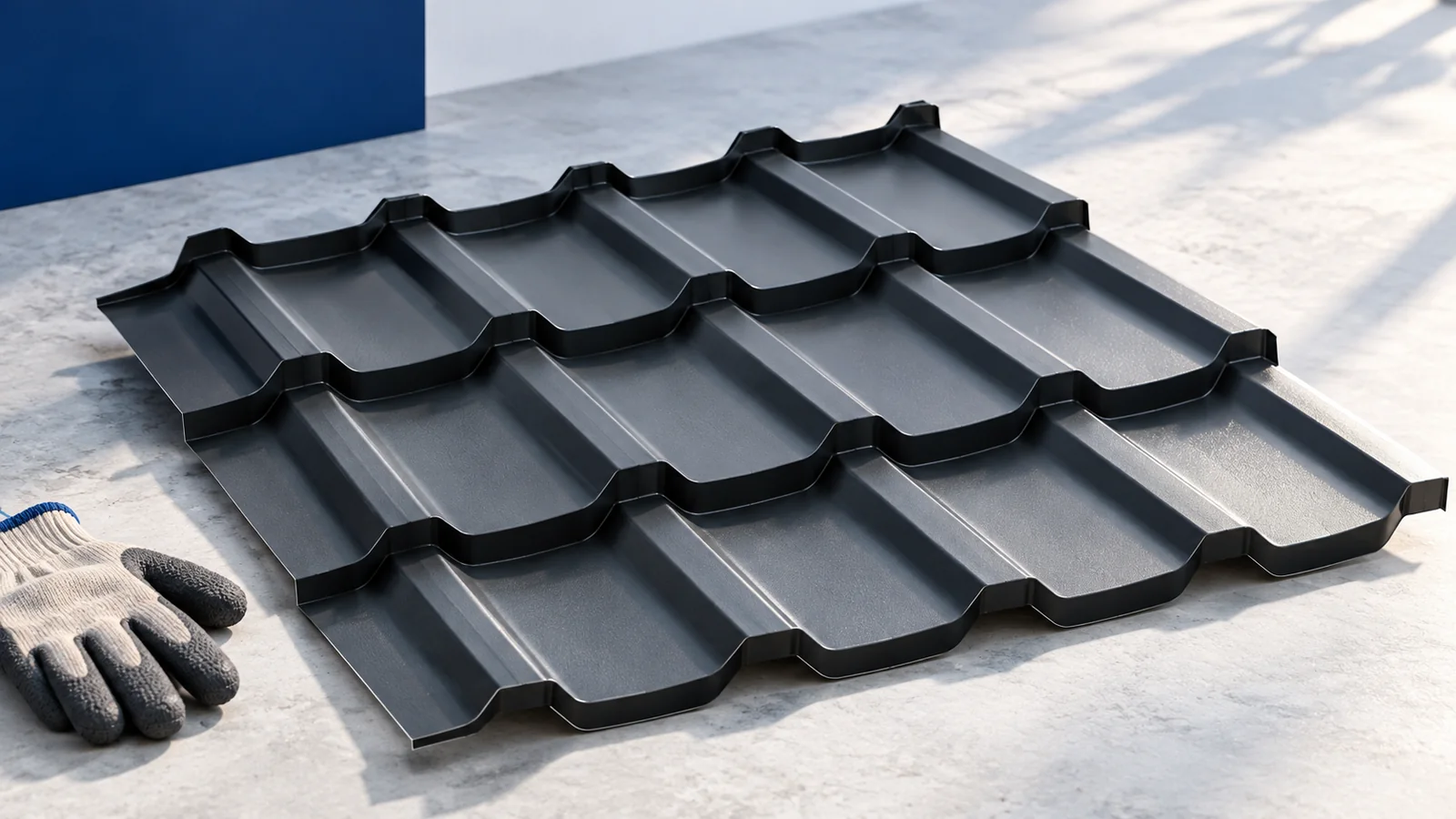
Why can low weight be an advantage?
Thin steel gains stiffness partly through its formed profile, allowing a lightweight covering for new construction or renovation. This does not automatically approve reuse of an old roof frame. Its condition needs assessment independently of the chosen sheet’s weight.
The structure also carries other roof layers, snow and wind actions. Replacing a heavy covering with a lighter one does not repair weakened supports or defective connections. Treat weight as one design parameter rather than a substitute for assessing the building.
What does the range of profiles allow?
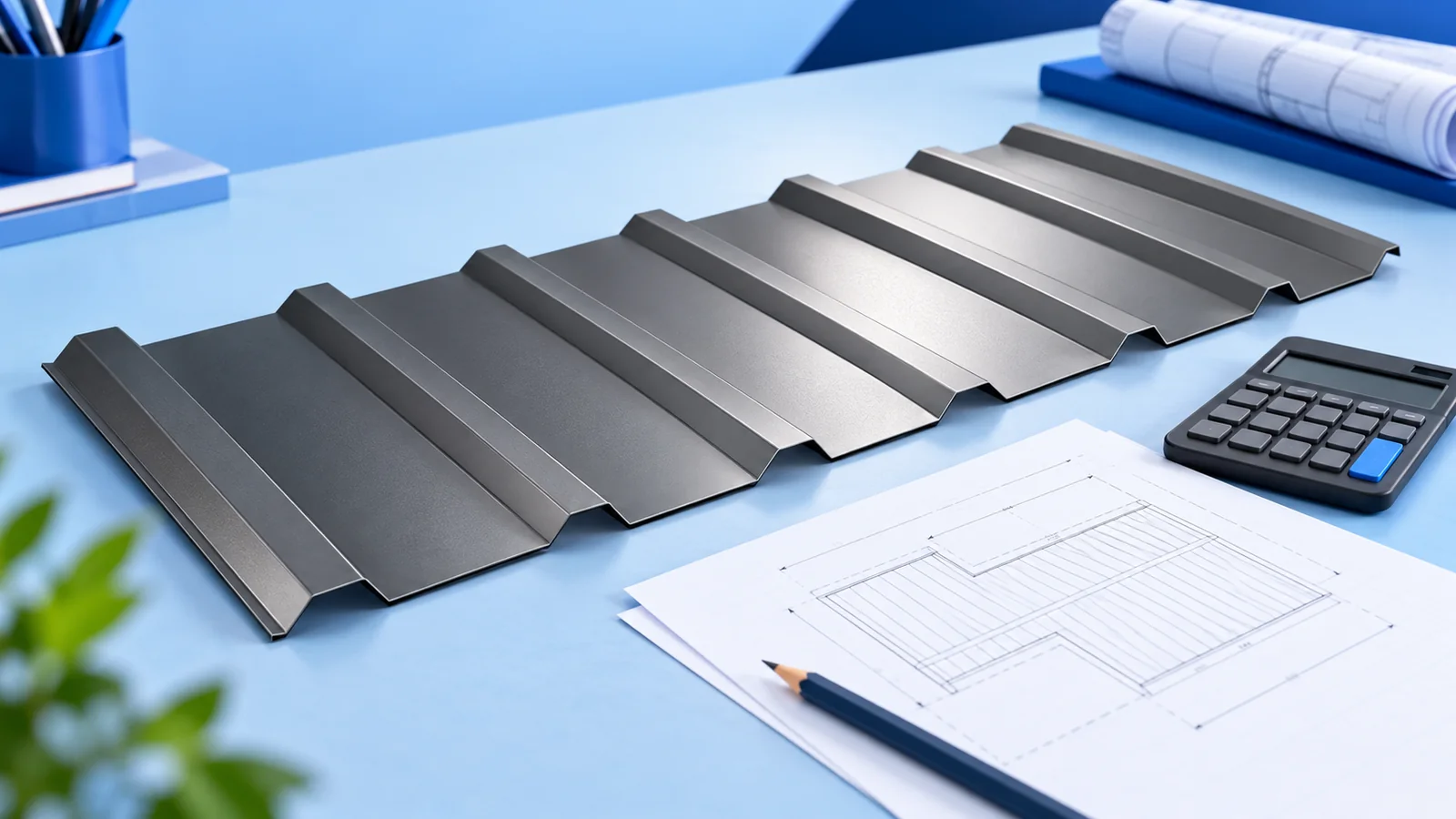
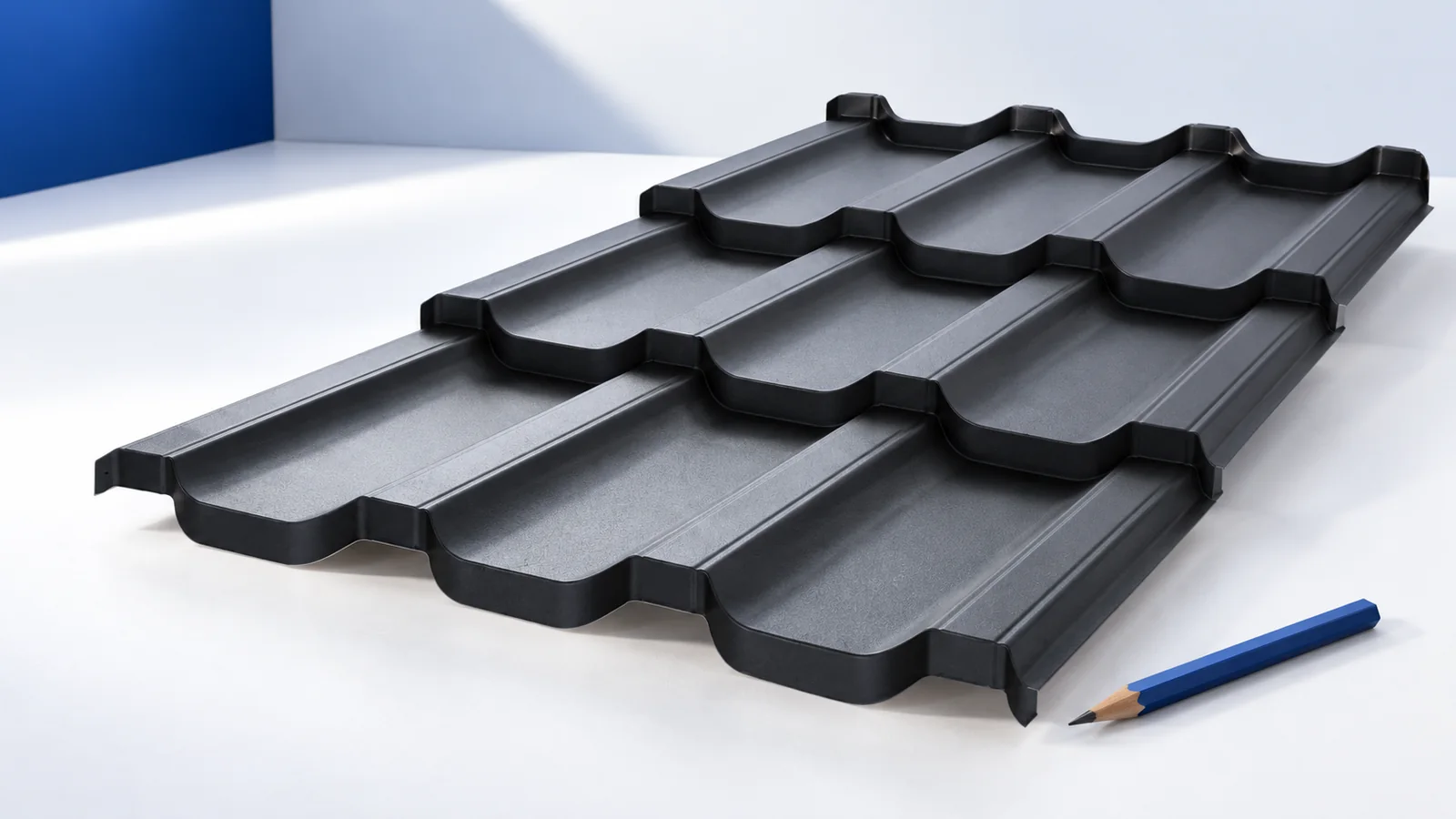
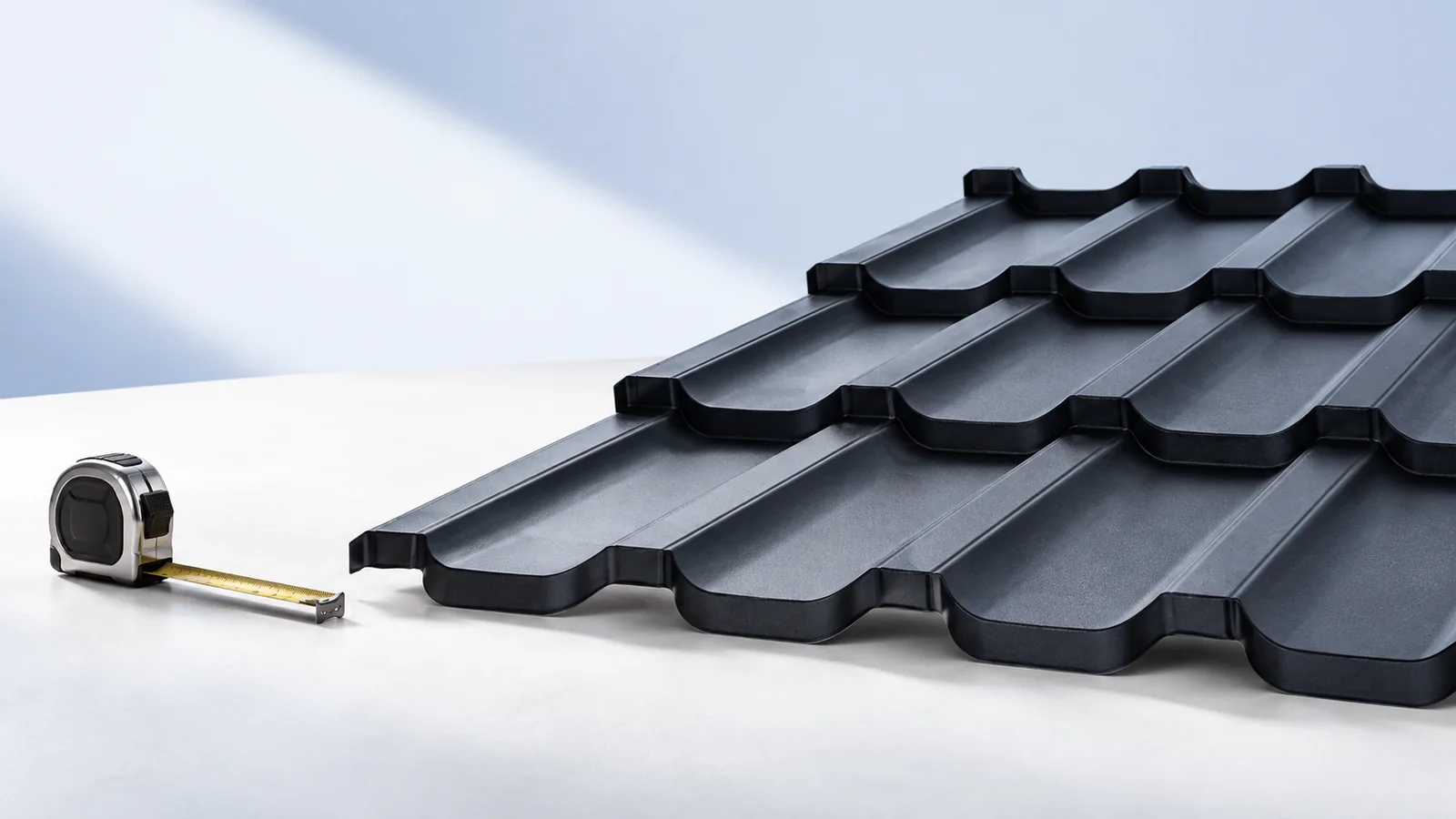
Steel roof tiles create tile-like rows, while T18 and T35 emphasise longitudinal lines. High-profile structural decking serves a different role, potentially supporting designed roof layers. These families cannot be selected by colour alone because their applications and documentation differ.
Within each family, check thickness, coverage and suitability for the slope. T35 alone does not determine support spacing, just as “modular” does not define every roof tile’s installation method. Compare the exact variant with the design using its current product sheet.
Can the sheet format simplify installation?
A sheet sized to a simple slope may reduce end laps. Smaller modules can ease layout and handling around numerous changes in geometry. Assess this using an actual cutting plan: format alone guarantees neither low waste nor rapid completion.
The substrate, battens and flashings still require careful preparation. Access, weather and detail count also affect the programme. Separate sheet laying from preparation and finishing rather than assuming equally fast installation on every house.
How can the appearance be tailored?
Colour, gloss and profile geometry shape the appearance. Matt and gloss reflect light differently, and taller waves cast stronger shadows. View a physical sample alongside façade and gutter materials; an isolated colour swatch does not show the complete combination.
Large surfaces reveal shade differences, so plan a coordinated order and consider delivery batches. Select flashings and eaves and chimney accessories alongside the covering. Even a well-chosen sheet cannot ensure a coherent result if finishing pieces are assembled casually at the end.
What does factory-applied surface protection provide?
Metallic protection and organic coatings operate under particular exposure conditions, including UV radiation. Check the coating system and warranty scope for the finish concerned. Neither colour nor one thickness figure replaces information on suitability for the location.
Protect the factory finish during transport and work. Cuts, scratches and leftover swarf can cause problems. Plan inspection and cleaning after installation and during use; “metal roofing” does not mean a roof with no maintenance needs.
Can a metal roof provide thermal and acoustic comfort?
Comfort depends on the covering, insulation, airtightness and internal finish together. The sheet alone does not perform all these functions. Anti-condensation fleece does not replace full thermal insulation either, so compare complete roof assemblies rather than individual sheets.
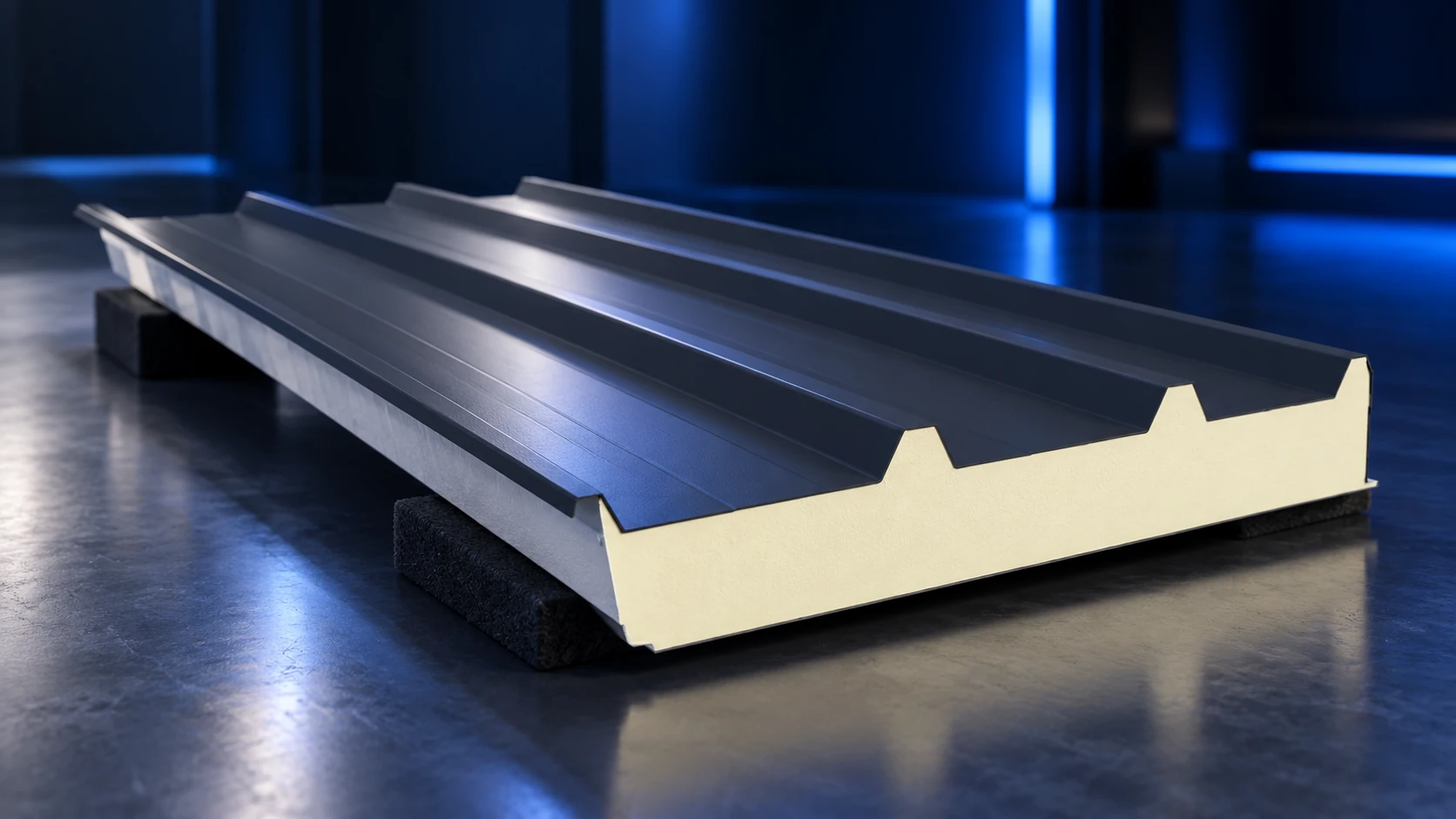
A roof sandwich panel combines facings and a core, while sheet roofing may receive insulation layers on site. These are different construction approaches. Compare all layers, joints and completed details when assessing cost and performance, not just the outer surface price.
How can these advantages be used without costly mistakes?
Confirm pitch and structure first, then choose profile, thickness and coating. Calculate effective coverage, cuts, accessories and drainage. This sequence helps avoid buying inexpensive material that proves unsuitable once installation constraints are considered.
Metal’s advantages become useful within a suitable, correctly installed system. Balance weight, appearance and work organisation against detail durability. Do not assess the whole roof solely by price, mass or a claimed sheet-laying speed.

Free quote
What to include in your enquiry
Tell us how you plan to use the material, the dimensions and the quantity you need. Include the thickness, grade or variant name, along with the delivery town or your preferred collection branch. For a specific product, add its name or a link to the product page. We will reply to the email address you provide to discuss availability and the terms of your order.
More from the building guide
A roof batten must both support the covering and provide a place to fix it. Its section and spacing therefore depend on…
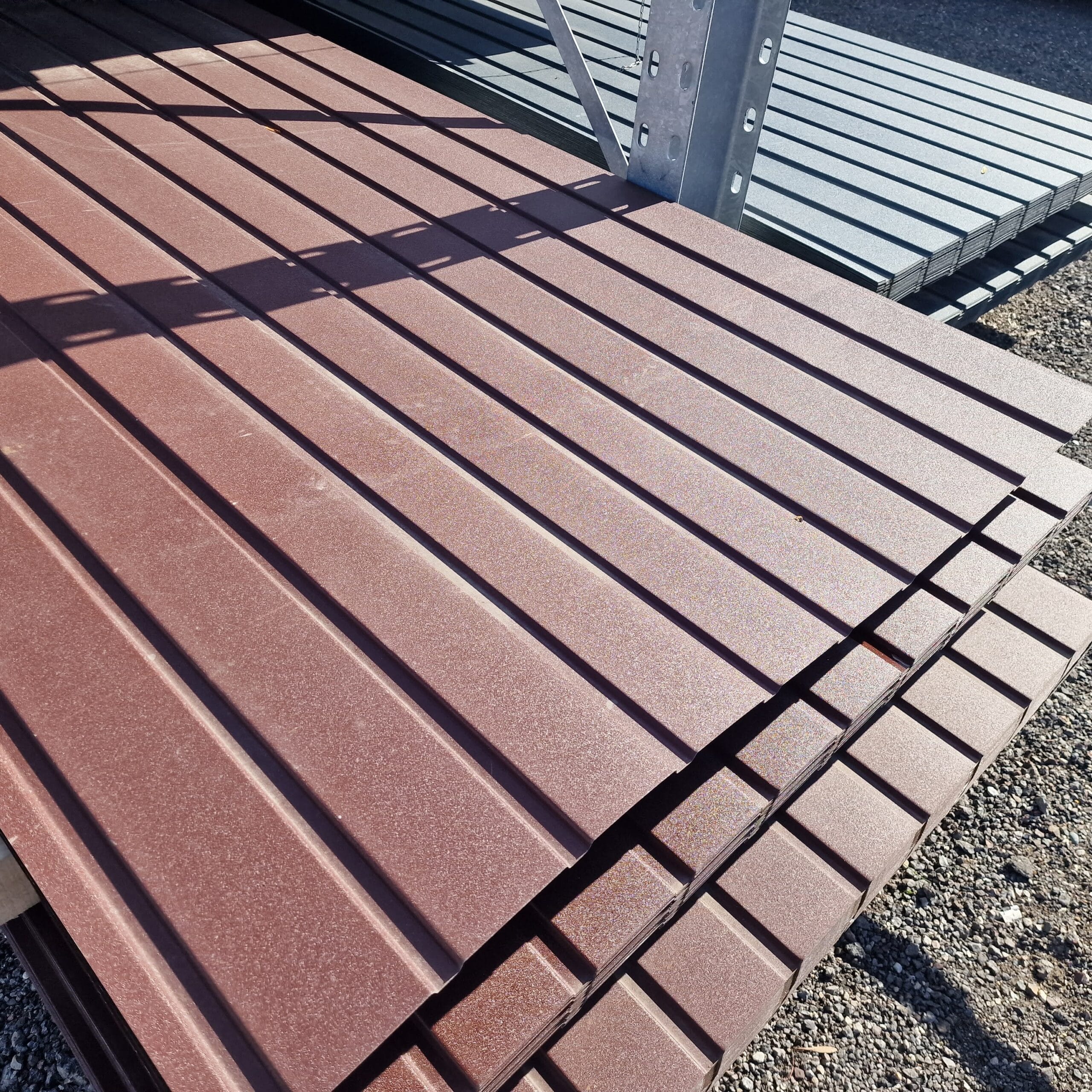
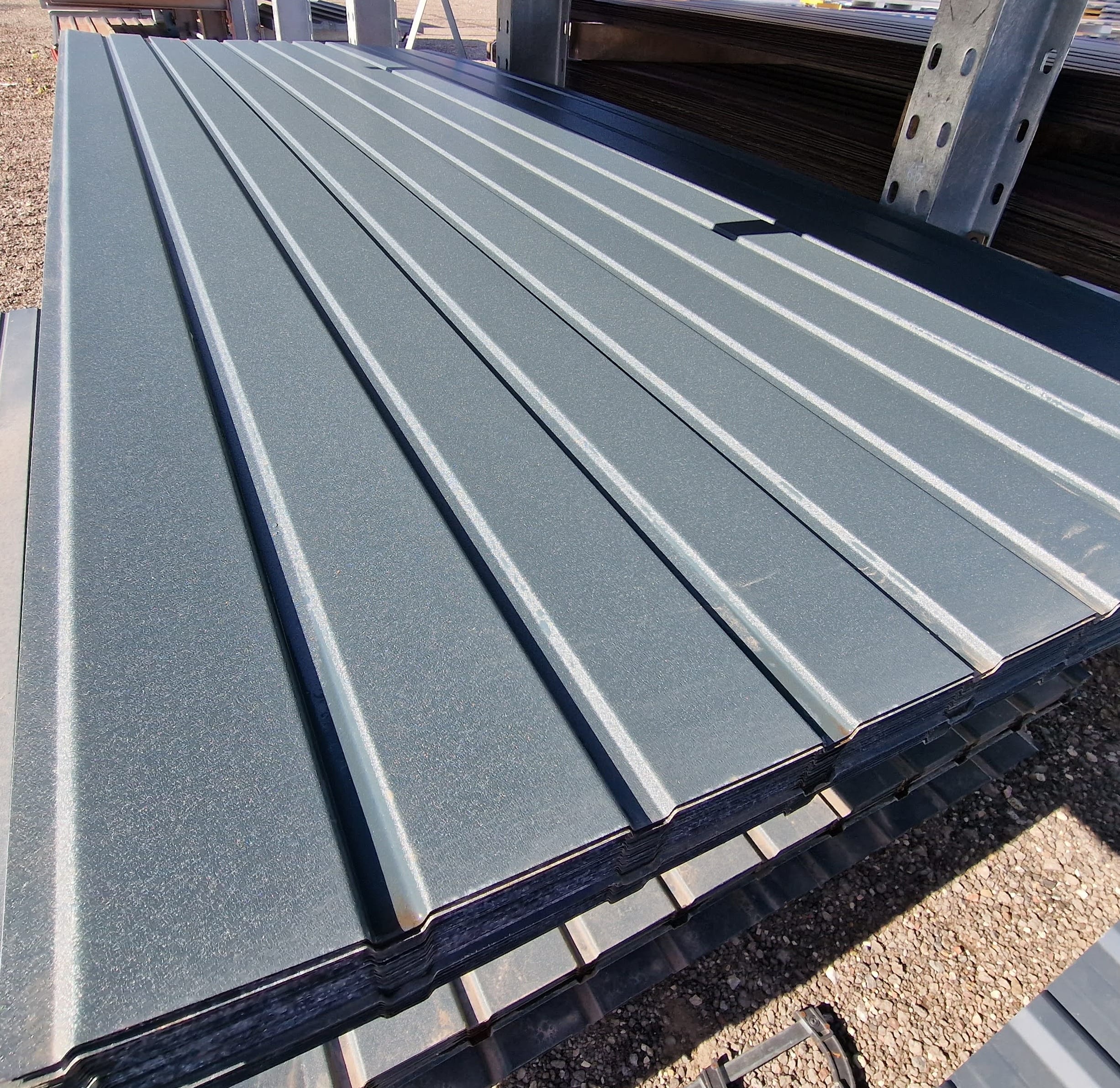
T18 and T35 trapezoidal steel sheets differ in profile height, but height is only the start of the comparison. Cover width, sheet…
Choosing trapezoidal steel roofing starts with the roof: its pitch, supports, loads and intended use. Those requirements determine a suitable profile and…
Steel roof tiles are profiled metal sheets with a pattern resembling individual roof tiles. The products discussed here use steel with protective…
Calculate a roof budget for a complete scope of work, rather than for sheets alone. Start with actual roof-slope areas, allowing for…
Choose a garage covering after establishing its operating temperature, roof geometry and supports. Single-skin trapezoidal sheets, metal roof tiles and insulated roof…
A discounted 40 mm roof sandwich panel can reduce the cost of a simple building, provided its model, condition and permitted application…
Choose steel roof tiles by their fit with the building, rather than searching for the year's universally best covering. Low weight, different…