Panels · Sheet metal · Insulation · Accessories

Inspecting XPS before it is covered: a site handover guide

Inspect XPS immediately before concreting, backfilling or fitting a lining hides it. Identify the boards, then check thickness, support, joints and continuity at thresholds, plinths and service penetrations. Inspect waterproofing separately: well-laid XPS is not evidence of a watertight membrane. On the inspection record, mark the areas checked and when any repairs must be reinspected. The next crew then knows which areas can be covered and which must stay accessible.
By |2026-11-12T17:27:10+01:0012 November 2026|PIR boards and insulation|Comments Off on Inspecting XPS before it is covered: a site handover guide

How much XPS to order: board coverage, packs and offcuts

To calculate an XPS order, separate the area to insulate, the number of layers and the coverage of one pack. Two layers on a 60 m² floor, for instance, need 120 m² of boards before cutting losses. If the layers have different thicknesses, order them as separate items. Below we show why rebated boards are measured by their cover size rather than their outer dimensions, and when to round up to whole packs. For foundation walls, measure plinths and changes of level separately.

By |2026-11-12T17:27:09+01:0012 November 2026|PIR boards and insulation|Comments Off on How much XPS to order: board coverage, packs and offcuts

Taking delivery of XPS and keeping the boards in good condition

XPS is light, but packs take up space and shaped edges can be damaged in handling. Before delivery, choose a level, sheltered storage area away from traffic. During unloading, check labels against the order and separate suspect packs from sound stock. Floor and plinth boards may look alike despite having different properties. Keeping batch labels legible and inspecting the boards again after storage helps prevent a mix-up that would be difficult to trace once the insulation is covered.

By |2026-11-12T17:27:08+01:0012 November 2026|PIR boards and insulation|Comments Off on Taking delivery of XPS and keeping the boards in good condition

Which adhesive for XPS? Check the board, substrate and waterproofing

Choose an XPS adhesive for the specific joint. The same board may need a different product or application pattern on concrete than on bituminous waterproofing. Look for confirmation that the adhesive suits both surfaces and the expected water exposure. Also establish what will support the bottom row until the adhesive sets. The following checks cover substrate condition, the difference between adjustment and setting time, and inspection before a basement wall is backfilled, while both layers are still accessible.

By |2026-11-12T17:27:06+01:0012 November 2026|PIR boards and insulation|Comments Off on Which adhesive for XPS? Check the board, substrate and waterproofing

Cutting XPS boards for close joints and less waste

Most waste can be avoided before the first saw cut. Draw the row using cover dimensions, mark the side to keep and decide which edge needs its factory rebate. Choose a tool for the board thickness and test it on a small piece from the same pack. Use a template at irregular walls and pipes. The dry fit tells you whether the cut worked: the piece should sit flat, with sound edges, without having to be forced into position.

By |2026-11-12T17:03:55+01:0012 November 2026|PIR boards and insulation|Comments Off on Cutting XPS boards for close joints and less waste

XPS below a garage floor: wheels, jacks and the threshold

Choose XPS below a garage floor by starting with the intended use. A parking bay, a jacking position and heavy shelving along a wall load the floor differently. Mark wheels, supports and the door threshold on one plan, and record whether the garage will be heated. This provides a basis for the insulation requirement, the floor’s response to pressure and protection against meltwater. The XPS designation or the vehicle weight alone cannot specify the build-up.

By |2026-11-12T17:03:54+01:0012 November 2026|PIR boards and insulation|Comments Off on XPS below a garage floor: wheels, jacks and the threshold

XPS beneath a raft foundation: information the designer needs

XPS beneath a raft foundation provides insulation and forms part of the load path from the house into the ground. To specify it, the designer needs ground and groundwater information, the load layout and evidence of XPS behaviour under sustained pressure. Mark slab edges, columns and service penetrations on the foundation plan from the outset. At these locations, a thickness alone does not define the support, the connection to plinth insulation or how to keep the waterproofing continuous.

By |2026-11-12T17:03:52+01:0012 November 2026|PIR boards and insulation|Comments Off on XPS beneath a raft foundation: information the designer needs

Square or rebated XPS boards: compare the joint and net coverage

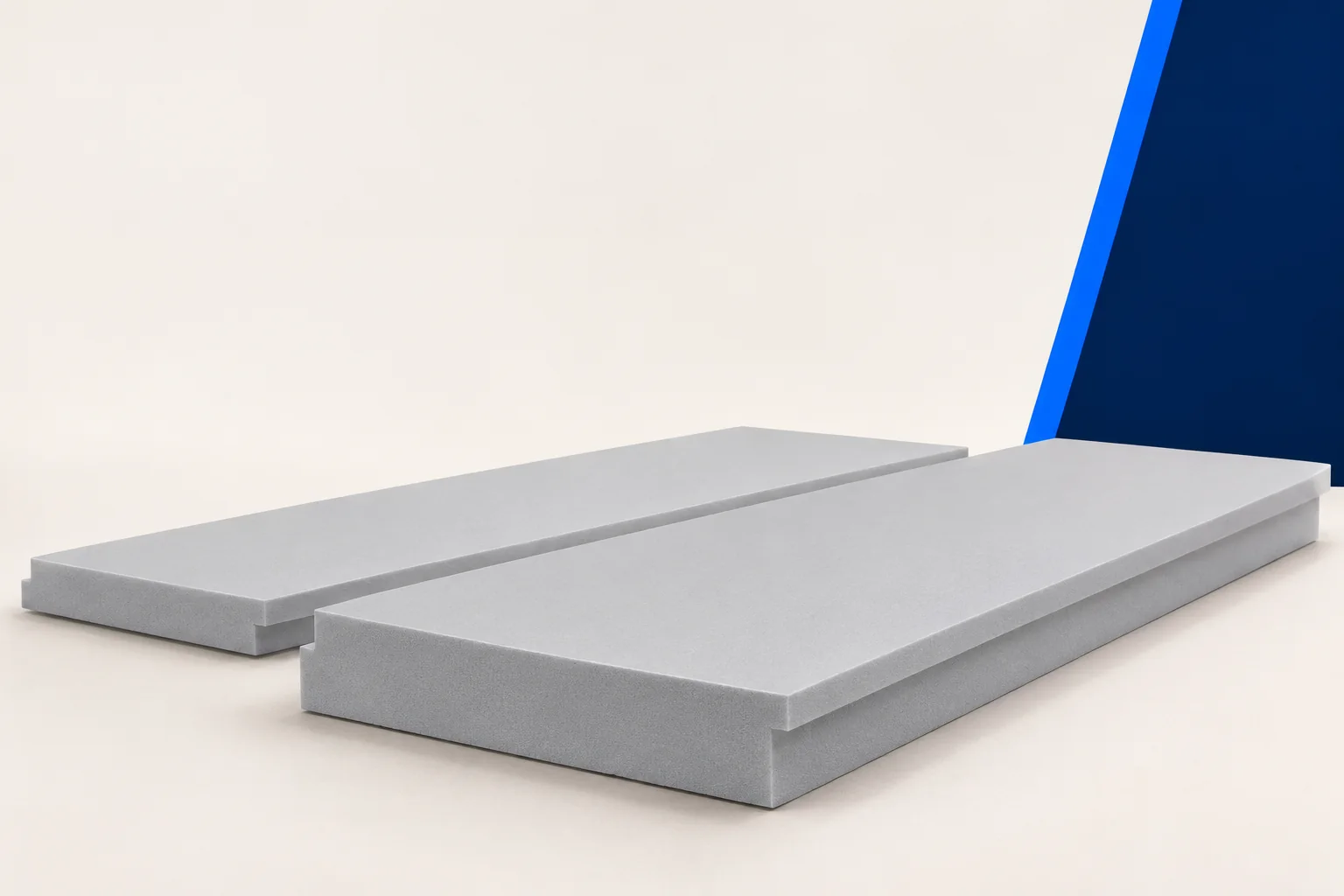
Choose an XPS edge to suit the layout and the ends of the insulation layer. Square edges butt together; rebated edges overlap in a step. In a room with many recesses, the number of factory edges left after cutting may matter more than the profile name. Draw a row from wall to wall using the working dimensions and mark every rebate that will be cut away. This shows how much board to order and what to inspect on a trial section before covering it.

By |2026-11-12T17:03:51+01:0012 November 2026|PIR boards and insulation|Comments Off on Square or rebated XPS boards: compare the joint and net coverage

XPS 300, 500 or 700: choosing insulation for the load

The 300, 500 or 700 in an XPS name points to a grade that should be checked for the exact board and thickness. It is not a permissible floor load. Consider a long storage unit on a continuous plinth and another of equal weight on four feet. The insulation may see different stresses, sustained for years. Choosing the grade therefore requires the support geometry, the load-spreading layers, the declared compression result and the creep data.

By |2026-11-12T17:03:50+01:0012 November 2026|PIR boards and insulation|Comments Off on XPS 300, 500 or 700: choosing insulation for the load

How to read an XPS pack label and declaration of performance

The XPS pack label identifies the boards delivered to site. The declaration of performance lets you check whether that exact product meets the design. Start with the grade, thickness and document number, then read thermal resistance, compression, water and frost data separately. Similar-looking packs can differ in net coverage or in the value declared for a particular thickness. Use the steps below to record what matters on receipt and to recognise a property for which no performance has been declared.

By |2026-11-12T17:03:49+01:0012 November 2026|PIR boards and insulation|Comments Off on How to read an XPS pack label and declaration of performance
Back to top