






Mineral wool or PIR sandwich panels: choosing the core for your building
Sandwich panels
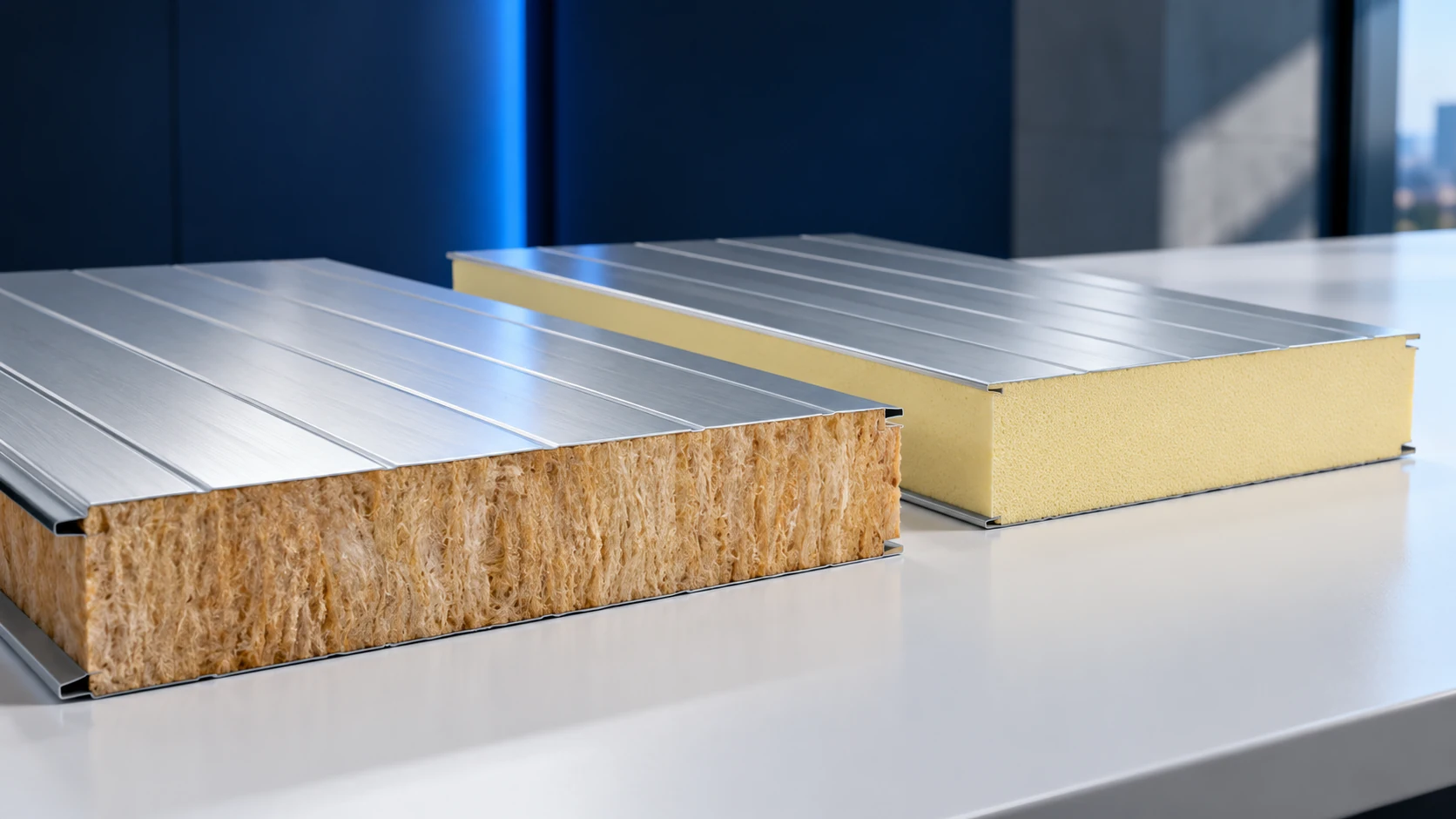
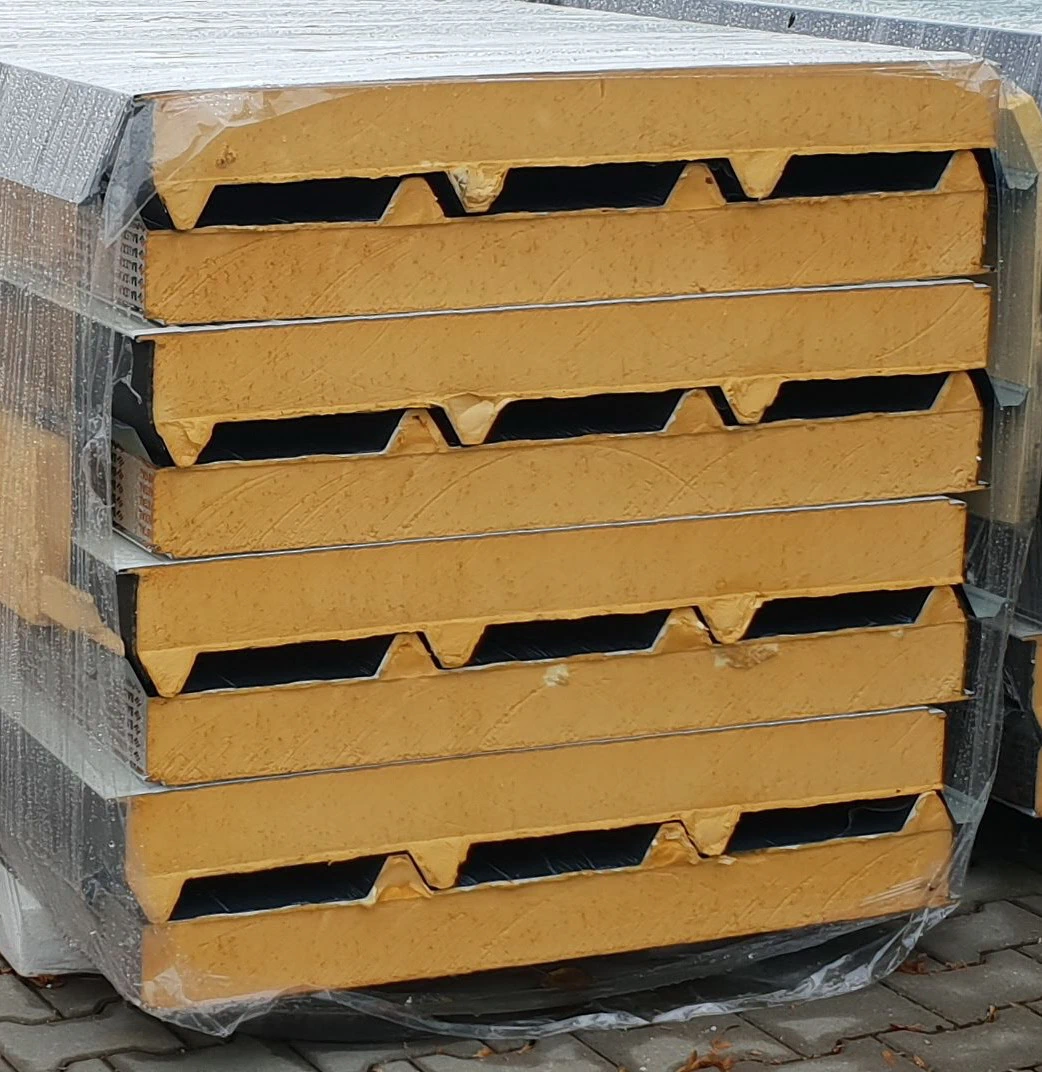
PIR generally achieves a low U-value with less thickness, while mineral-wool sandwich panels may suit particular fire requirements better. Neither is the universal choice for every hall. Compare finished products and complete assemblies rather than core names alone. This guide uses specific examples to distinguish thermal performance, weight, reaction to fire, fire resistance and acoustic performance. The figures belong to the stated configurations and must not be transferred to every panel in a material family. Coatings, joints, supports and installation also influence the outcome. A meaningful price comparison begins with two solutions that meet the same project requirements.
Thermal performance and weight: two differences in the data sheets
A selected 100 mm PIR wall panel has U = 0.22 W/(m²·K), while the compared 100 mm mineral-wool panel has U = 0.39 W/(m²·K). In this pair, PIR restricts heat flow more effectively at equal thickness. These are figures for selected versions, not a universal table for all panels containing either core.
If the objective is a particular wall U-value, compare versions that meet it. Comparing two 100 mm panels answers only the equal-thickness question. It does not show the cost of thermally equivalent solutions, which may require different flashings, fasteners and junction details.
Another example pairs a 120 mm PIR panel with U = 0.18 W/(m²·K) and a 200 mm mineral-wool panel with U = 0.20 W/(m²·K). They are not precisely thermally equivalent, but illustrate different thicknesses approaching a similar target. Again, these are specific products. Reduced thickness does not give PIR the fire properties of mineral wool; assess the other requirements separately.
In the first example pair, the 100 mm PIR panel weighs 12.3 kg/m² and the 100 mm mineral-wool panel 18.1 kg/m². Both use 0.5/0.5 mm facings. Across 100 m² the difference is 580 kg. This is panel weight only, excluding the frame and other envelope components. Different configurations may change the result.
A heavier panel may require different lifting arrangements, especially at greater lengths. That is not a reason to reject mineral wool when its properties are needed; plan the work accordingly. Access and unloading also matter. Manufacturers’ instructions set out how to protect packs and individual panels.
Fire: distinguish two different properties
A particular mineral-wool panel may have reaction-to-fire class A2-s1,d0 and a PIR panel B-s1,d0. Confirm the classes for the ordered products. Metal facings do not justify calling an entire PIR panel non-combustible. The assessment concerns the finished panel and its construction, not just the facing material’s classification.
The wall assembly’s fire resistance is a separate matter. A PIR panel may form part of a system with a specified EI classification, but only within the documentation’s scope. Equally, mineral wool does not automatically give every wall an arbitrary fire-resistance rating. Establish the project’s requirements and obtain evidence covering supports, fixings and openings.
Acoustics: product data matter more than assumptions
In one example comparison, the mineral-wool panel has Rw 33 dB and the PIR panel 26 dB. The first product performs better in that pair. This does not mean the finished building will be quieter by exactly the numerical difference, nor is it a rule for all panels. Use data for the selected version and assess the entire enclosure.
Include doors, garage doors and leaks in the assessment. Also distinguish sound insulation from sound absorption. If reverberation is the problem, changing the core behind a solid steel facing may not solve it. Select a solution with verified acoustic performance for that purpose rather than relying on a material’s reputation.
Operating conditions matter for both core types
Humidity, chemicals and cleaning methods affect facing selection. Do not choose a coating by colour alone. Different surface protections may be available with either core and must suit conditions on both sides of the enclosure. A suitable core cannot compensate for a coating unsuited to an aggressive environment.
Joint tightness remains essential regardless of core type. No panel removes the need to seal plinths and openings correctly. Damaged flashings can admit water to concealed areas. Inspections therefore cover surfaces and fixings, including on buildings without an obvious leak yet.
Compare prices after establishing suitability
Obtain two complete proposals meeting identical requirements. Specify lengths, facings, coatings and accessories, then add transport and installation. A single unit price for a 100 mm panel cannot settle the choice: it may compare different thermal or fire-performance levels.
A more complex building may use different systems in different locations, provided their connections and overall compatibility are verified. Do not mix core types within one enclosure simply because the joints look alike. Dimensional compatibility alone does not establish all required properties.
Frequently asked questions
Is PIR always cheaper than mineral wool?
That cannot be established without comparable quotations. Price depends on the specification and complete delivery scope.
Does 100 mm mineral wool insulate like 100 mm PIR?
Do not assume so. In the stated example, the mineral-wool panel has U = 0.39 and the PIR panel 0.22 W/(m²·K). Other configurations require separate checks.
Can the core type change after the frame has been purchased?
The design must be checked again. Weight, performance, fixings and details may all change.

Free quote
What to include in your enquiry
Tell us how you plan to use the material, the dimensions and the quantity you need. Include the thickness, grade or variant name, along with the delivery town or your preferred collection branch. For a specific product, add its name or a link to the product page. We will reply to the email address you provide to discuss availability and the terms of your order.
More from the building guide
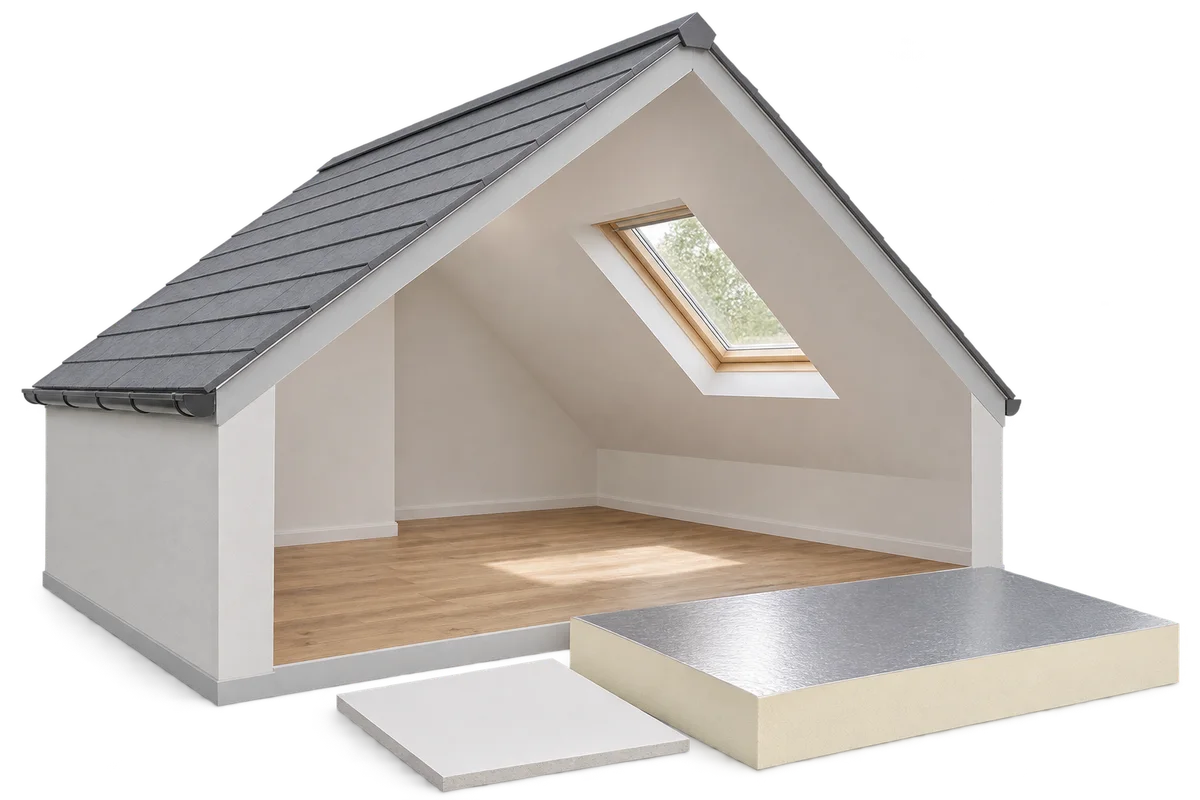
A loft fit-out starts well before the first plasterboard goes up. Inspect the roof, plan the insulation and establish how the layers…
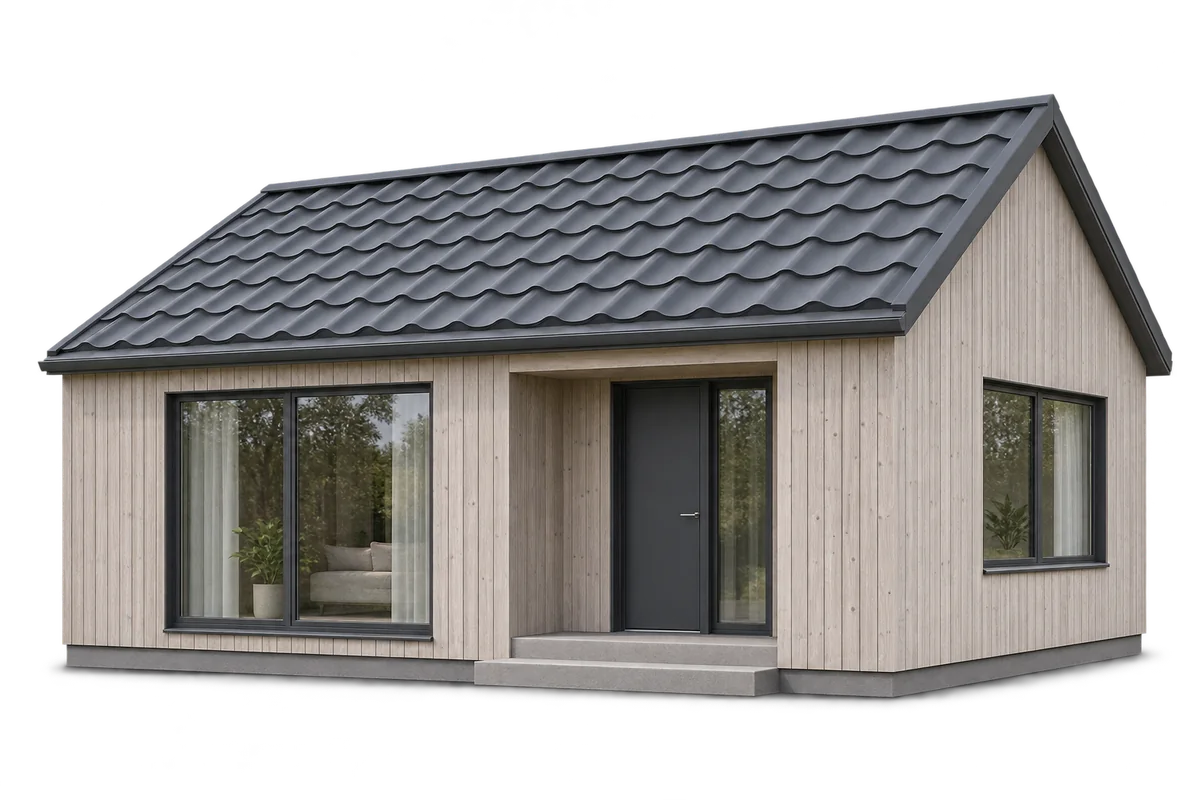
A timber house for year-round use must meet the requirements for a dwelling. In Poland, using timber does not in itself determine…
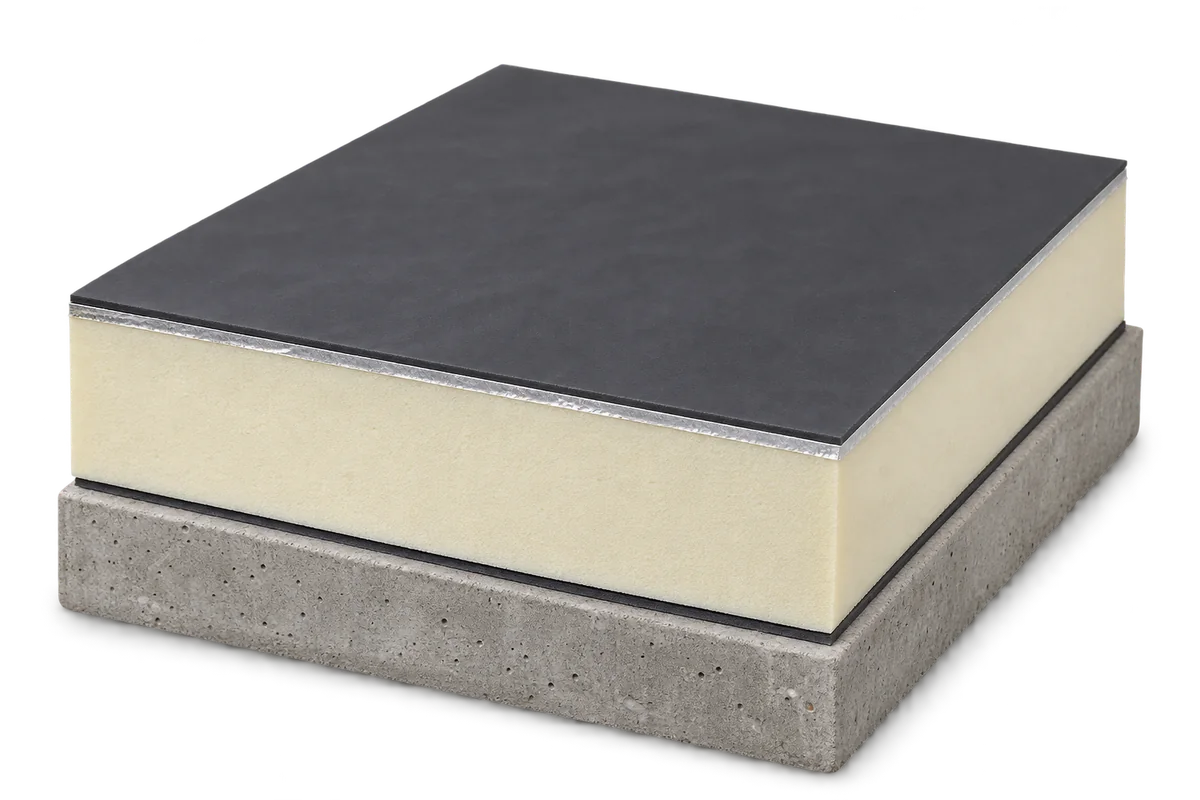
A flat roof consists of several layers that work together. The structure carries the loads, insulation reduces heat loss and waterproofing keeps…
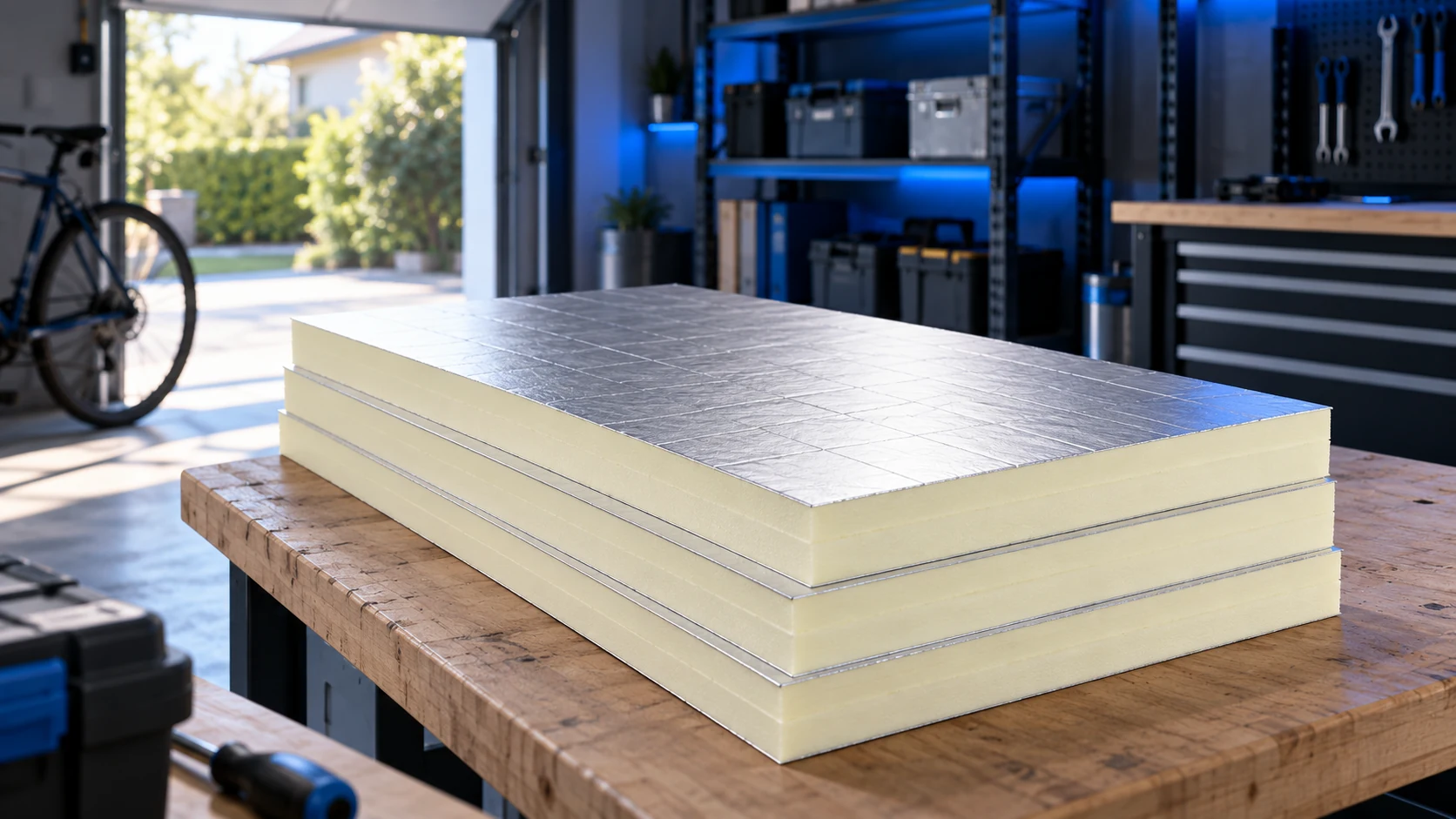
Cost-effective insulation suits the way a building is used. An unheated garage has different needs from a workshop or a holiday cabin…
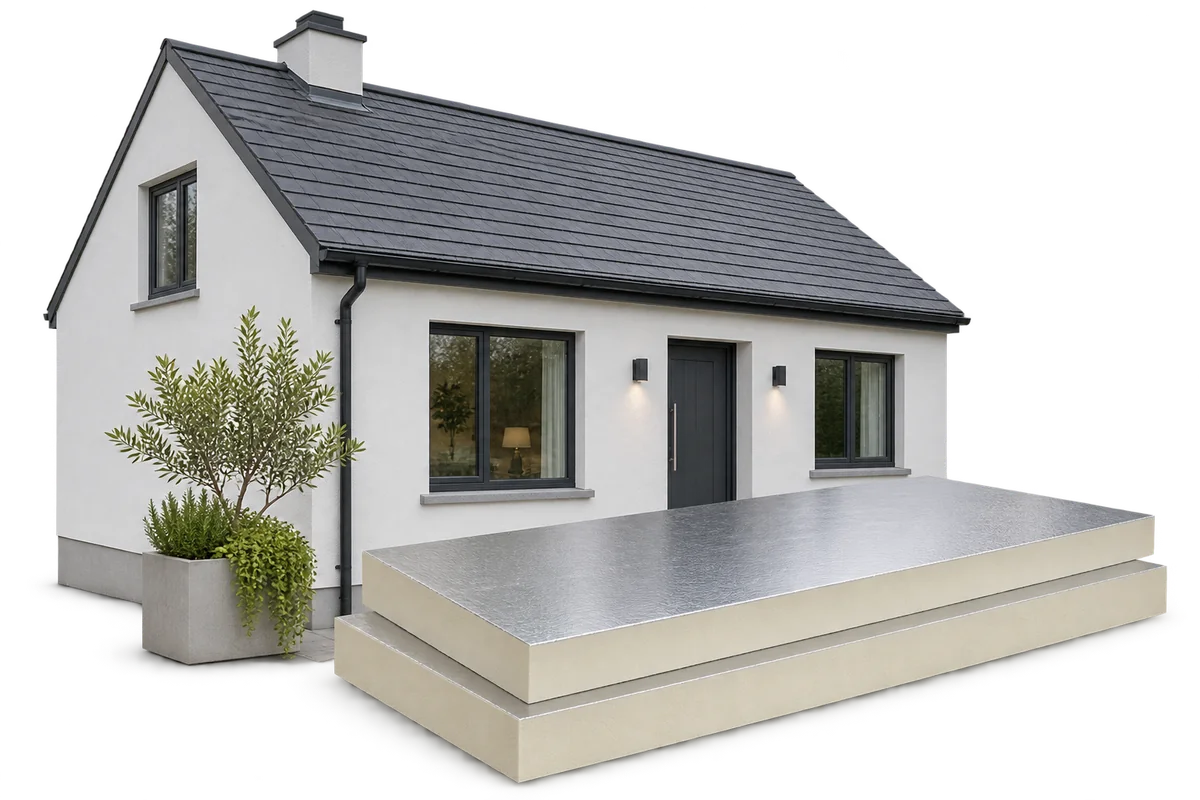
A retrofit can reduce energy use and retain parts of the existing building if their condition is assessed first. PIR is useful…
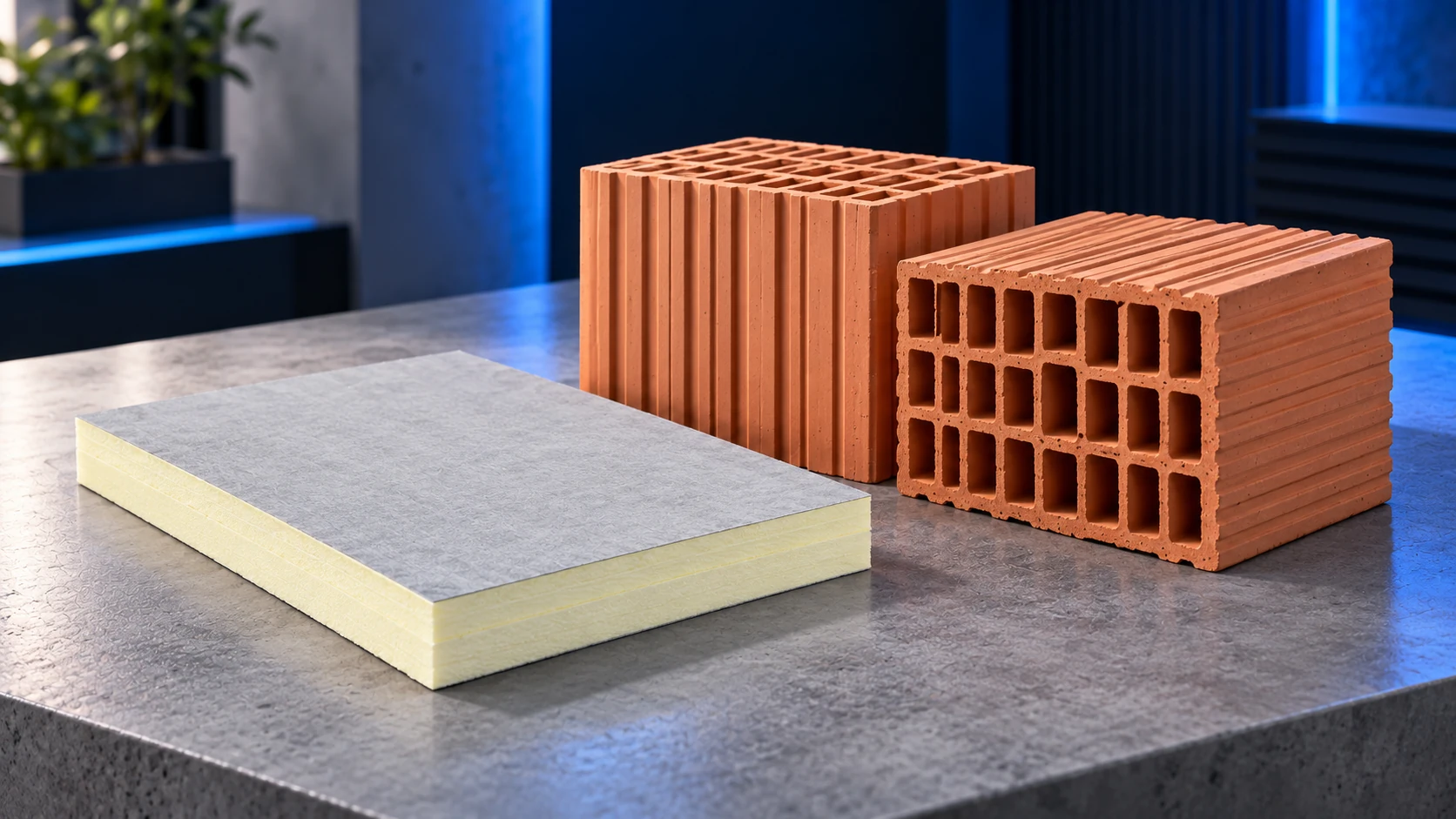
A clay block's family name is not enough to select insulation thickness. You need the precise block, masonry thickness and mortar-joint arrangement,…
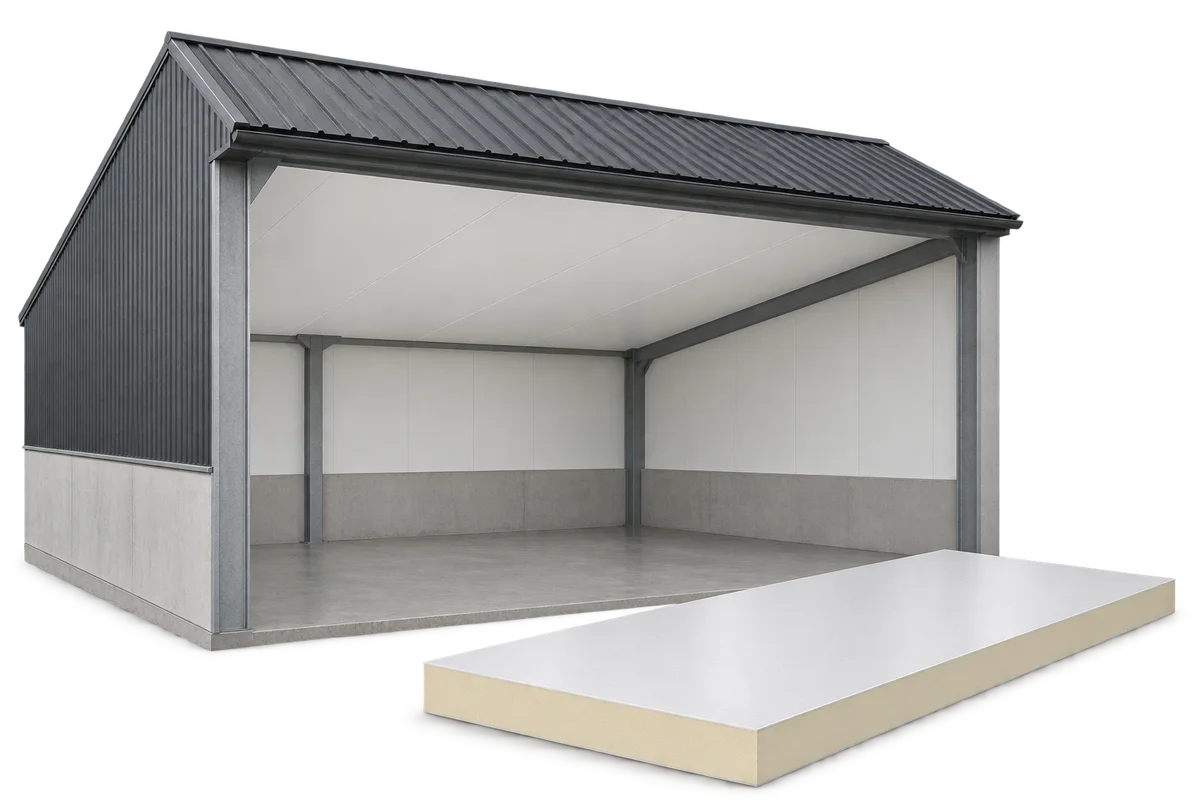
An internal ceiling can separate a heated or climate-controlled room from the roof void. In a cattle shed or warehouse, its appearance…
When damp repeatedly appears at home, gather organised observations before choosing a repair. A mark beside a window, a wet corner and…