






Damp on a north-facing wall: identifying the cause before tackling mould
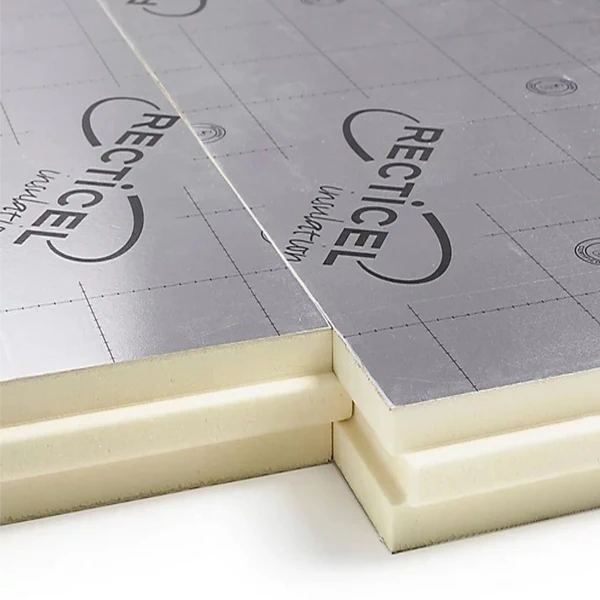
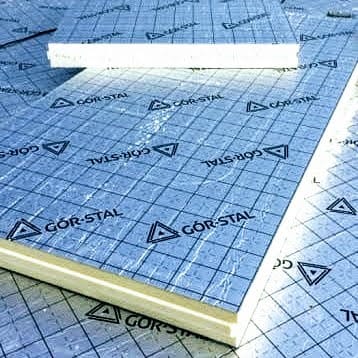
PIR boards and insulation
A north-facing wall is not inherently damp. Problems arise when a cold surface combines with excess indoor moisture or water entering the building. Insulation may help, but its design should follow a diagnosis rather than conceal a stain. Check the location and timing of dampness, surface temperatures, ventilation and possible leaks. A thermal image can guide inspection but cannot identify the cause on its own. This guide explains what observations to collect, why even an apparently dry surface can support mould and how to check the result after repairs. Covering unassessed masonry with PIR may simply hide the original problem.
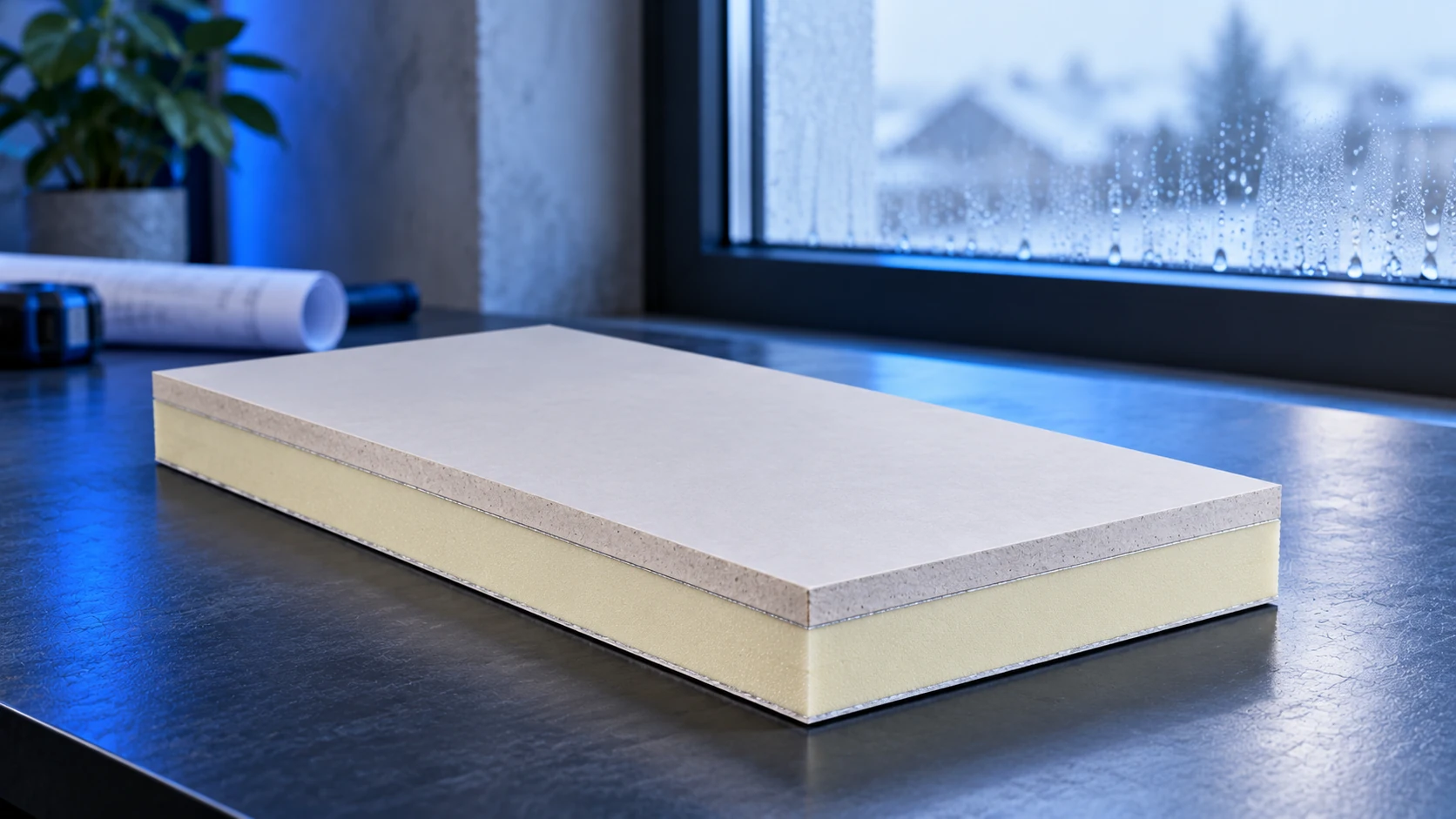
A stain indicates where to investigate
Look at the shape and position of dampness. A stain following rain may indicate leaking flashing or a façade defect. Marks near the floor call for inspection of the base and damp-proofing. A damp corner behind a wardrobe may involve a cold surface and poor air movement.
These are inspection clues, not a finished diagnosis. Several causes may coexist. Take photographs on different dates and record weather and room use. This helps distinguish leakage from conditions occurring mainly during the heating season.
Measure humidity and temperature
Measurements of room air and wall surfaces are useful. One midday reading cannot represent a full day. Observe conditions after bathing, cooking and overnight heating reduction. Check unobstructed ventilation and the supply of fresh air to rooms.
Mould risk depends on conditions at the surface, not just average room humidity. A cold corner may therefore be troublesome while the rest of the wall remains dry. Simplified calculations help assess this, but cannot replace inspection, leak investigation or information about actual room use.
Do not judge the wall from thermography alone
Thermal imaging helps locate cold areas, but its interpretation depends on measurement conditions. Sun, wind and heating influence the result. A cold area is not proof of missing insulation by itself; moisture or airflow may also be involved.
Inspect wall-to-floor junctions, reveals and lintels, where a simple layer section may be insufficient. More detailed calculations can assess temperatures within the junction. A successful repair should address that detail too: insulating a broad flat area can leave the corner problem unresolved.
Stop water entering first
If rain or services wet the wall, remove the cause. New insulation cannot replace a working gutter or sound sill flashing. Assess whether and how the masonry can dry. There is no universal drying time for every thickness and material.
Internal boards need a prepared substrate. Before using PIR-plasterboard, assess masonry and room-air moisture. Excess moisture can hinder adhesive drying and curing. Establish conditions for a lasting installation, and decide when to cover the wall from its actual state rather than a fixed timetable.
Choose PIR for its position in the wall
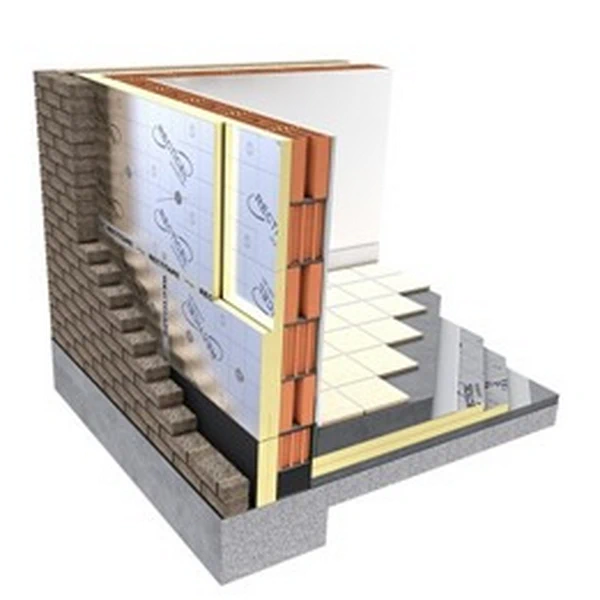
External and internal insulation alter temperatures differently, so their assemblies are not interchangeable. Beneath render, use a board intended for the façade system. Internally, a plasterboard composite with a vapour-control layer may be considered.
Both options need detailed junctions. Gaps, sockets and ceiling connections cannot be omitted. Select thickness from wall analysis. More insulation does not always reduce moisture problems when its position or continuity is wrong.
Mould does not always start with visible droplets
No visible condensation does not prove suitable wall conditions. Humidity beside a cold surface can be much higher than in the room centre, allowing dark spots without obvious dripping. Wiping the surface alone changes neither corner temperature nor water vapour in the air.
Check whether the problem intensified after window replacement or a heating change. That timing suggests checking ventilation, but is not conclusive evidence. Altering one building element affects others. Renovation should address the cause, not only the place where it is most visible.
Check the repair during normal use
Remedy moisture damage according to the materials’ condition. Severely damaged finishes may need replacement. Repainting cannot stop recurring damp if its cause remains. Extensive damage calls for an on-site assessment.
Keep critical locations accessible for observation, measure conditions and check ventilation. Do not obstruct airflow with large furniture directly against a cold wall. If staining returns, investigate again: it indicates that the original diagnosis or execution needs review.
Frequently asked questions
Is a north-facing orientation a wall defect?
No. It influences temperature and drying conditions, but does not by itself determine whether mould develops.
Does PIR remove moisture by itself?
No. In a suitable assembly it reduces heat loss; it does not dry a leaking or damp wall.

Free quote
What to include in your enquiry
Tell us how you plan to use the material, the dimensions and the quantity you need. Include the thickness, grade or variant name, along with the delivery town or your preferred collection branch. For a specific product, add its name or a link to the product page. We will reply to the email address you provide to discuss availability and the terms of your order.

More from the building guide
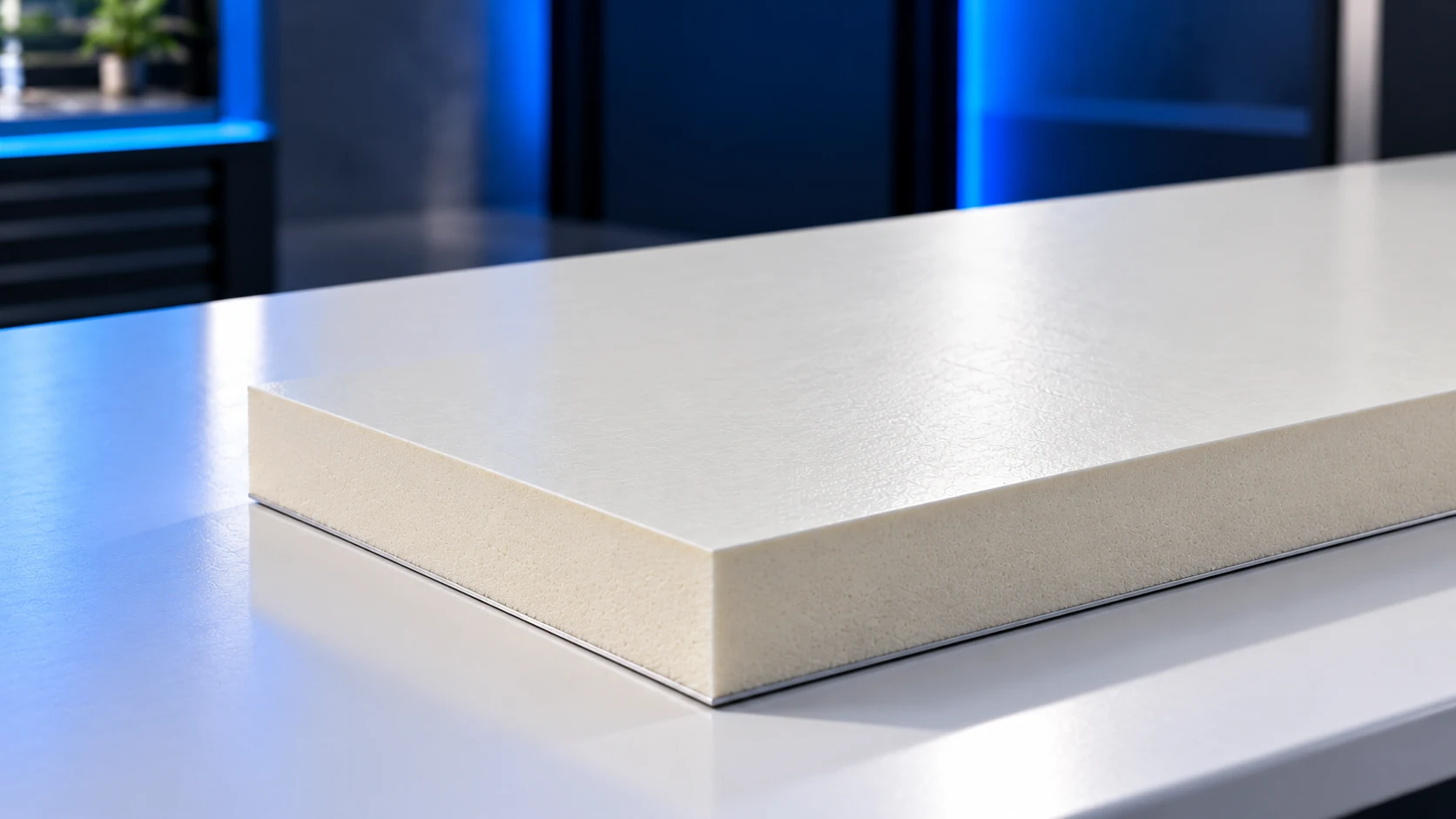
In these products, fibreglass means a glass-reinforced plastic facing, often described as GRP. It may protect the room-facing side of a PIR…
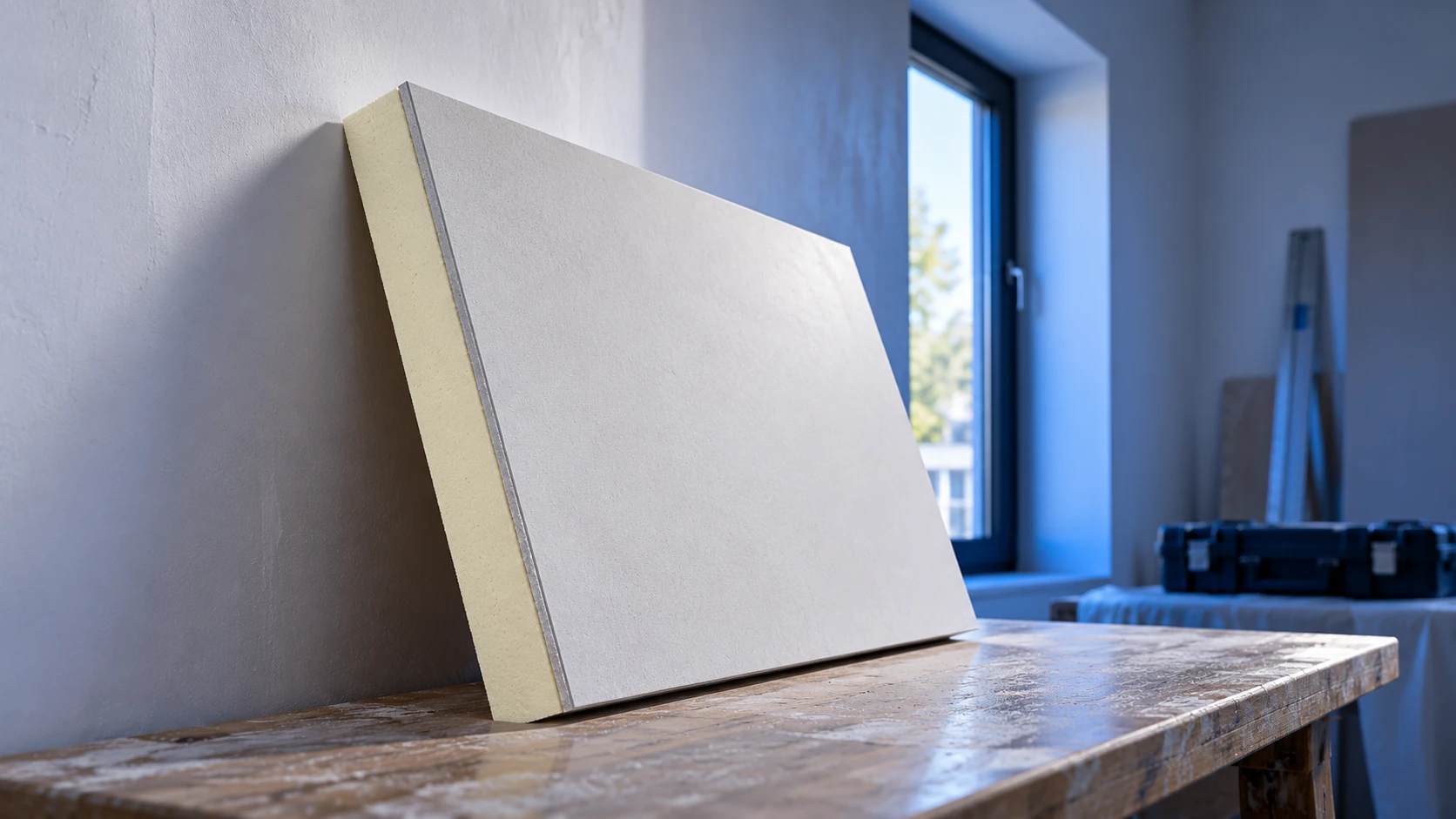
When there is no room for external insulation, an internal lining may be considered. It requires assessment of moisture, junctions and the…
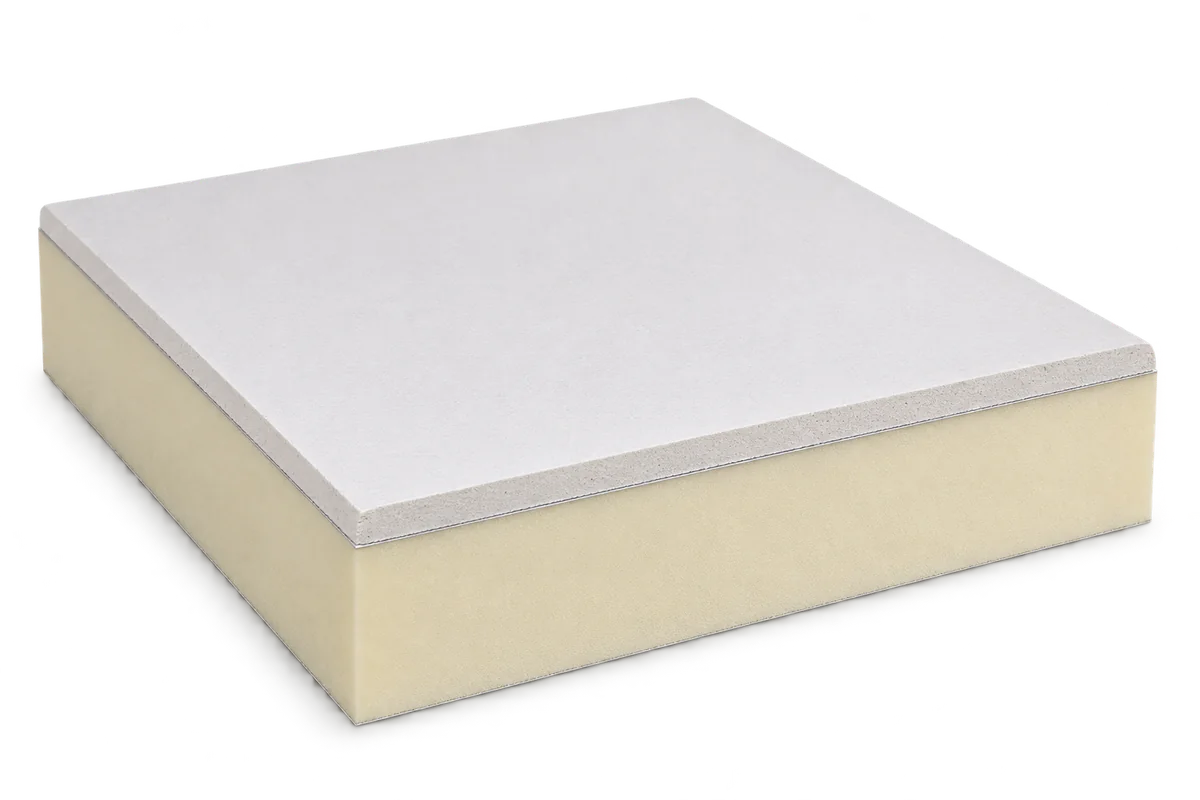
PIR insulated plasterboard combines thermal insulation with a surface ready for interior finishing. It can simplify refurbishment where space is tight and…
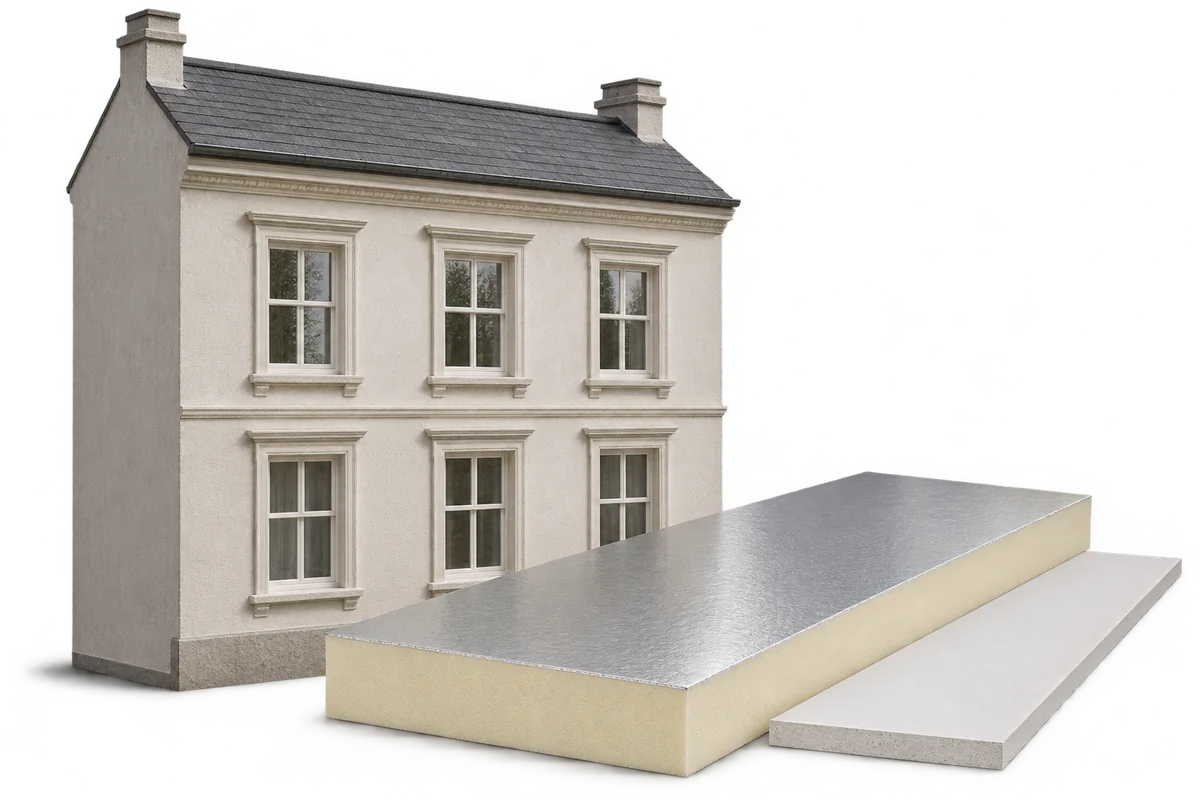
Before choosing insulation or finishes for a historic building, establish which features give it its character, what condition it is in and…
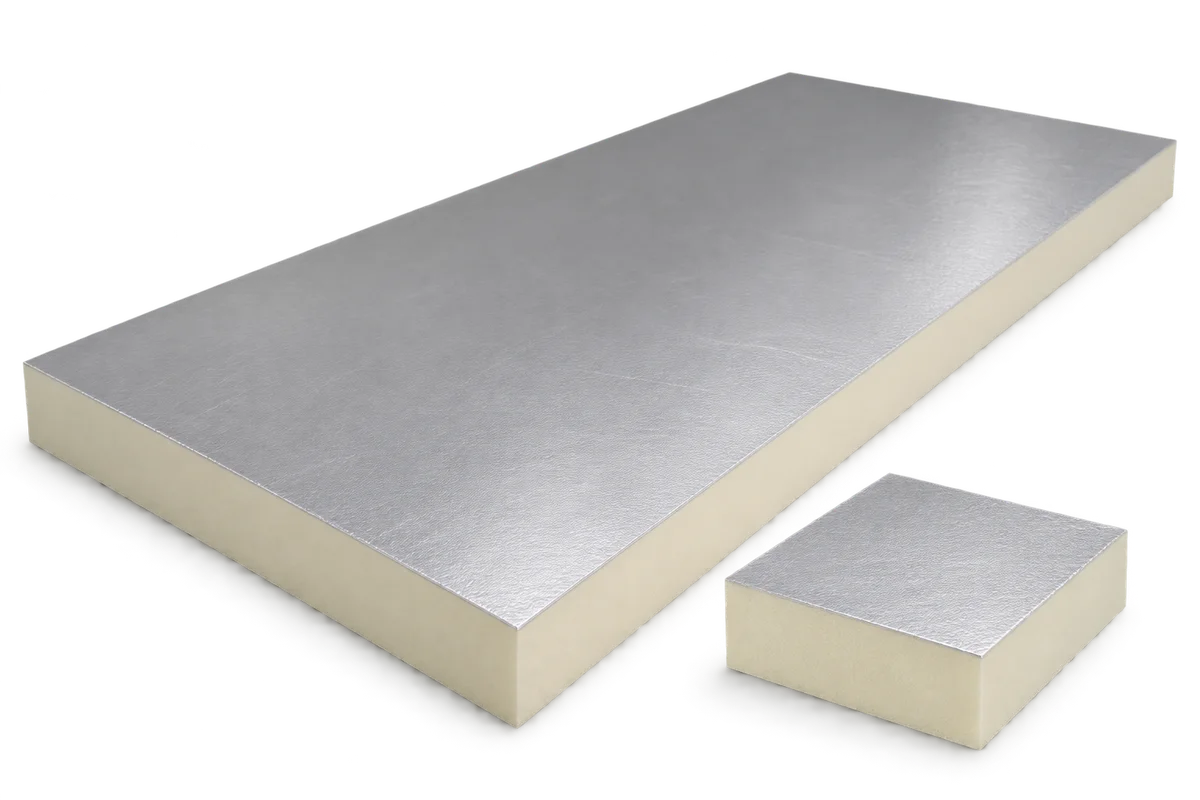
On a terrace above a heated room, the door threshold alone does not determine how much PIR insulation will fit. The available…
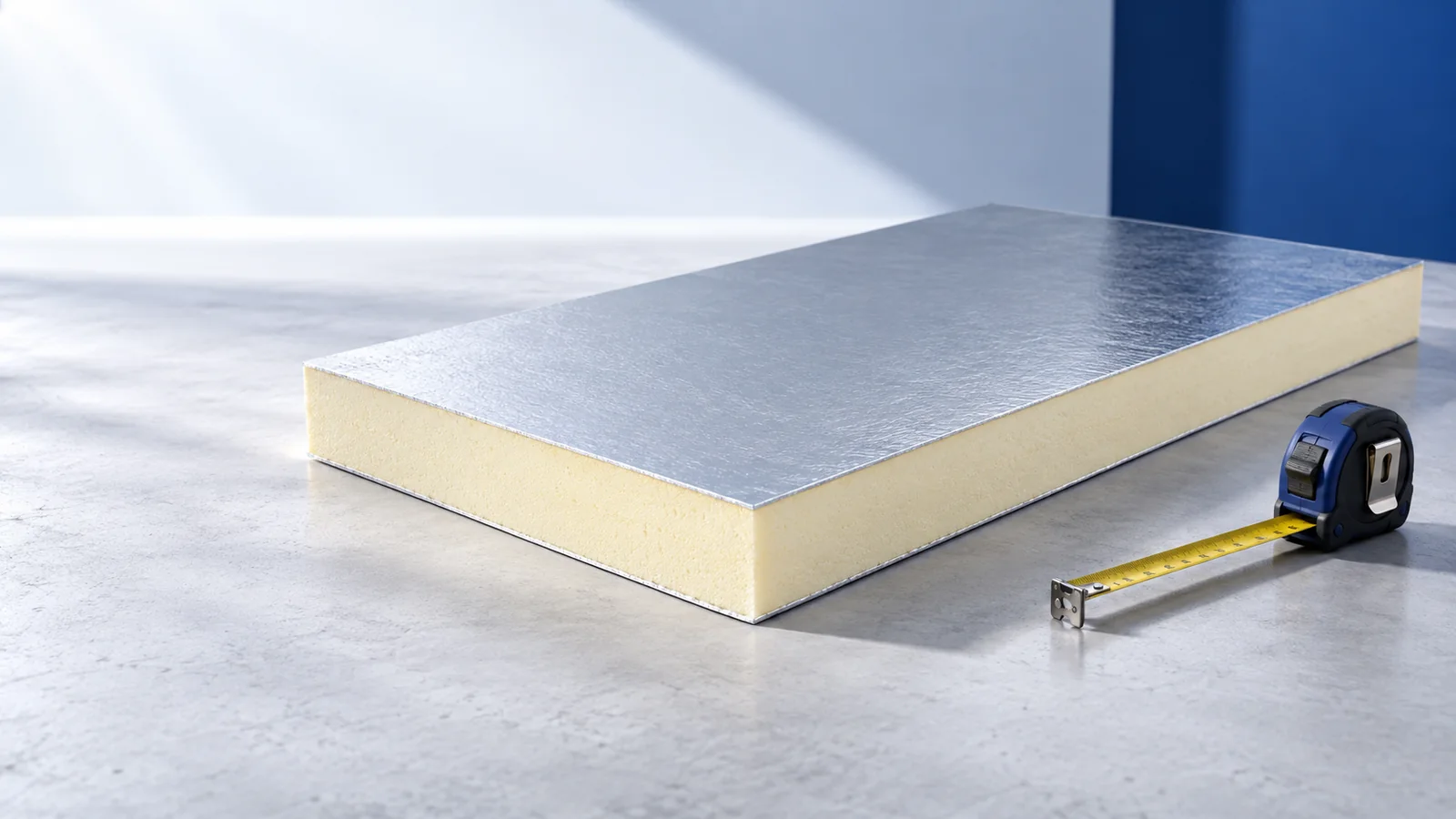
Effective roof insulation forms a continuous boundary around heated rooms, rather than merely a thick layer across the middle of a slope.…
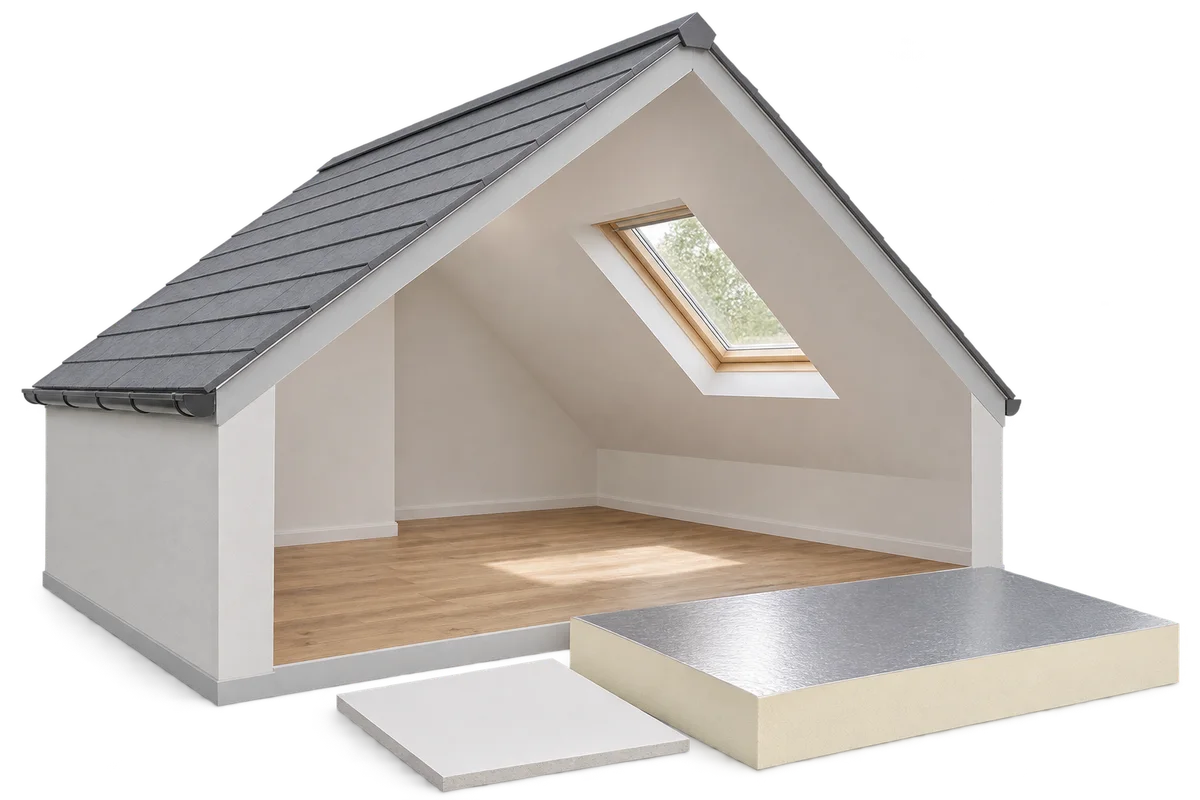
A loft fit-out starts well before the first plasterboard goes up. Inspect the roof, plan the insulation and establish how the layers…
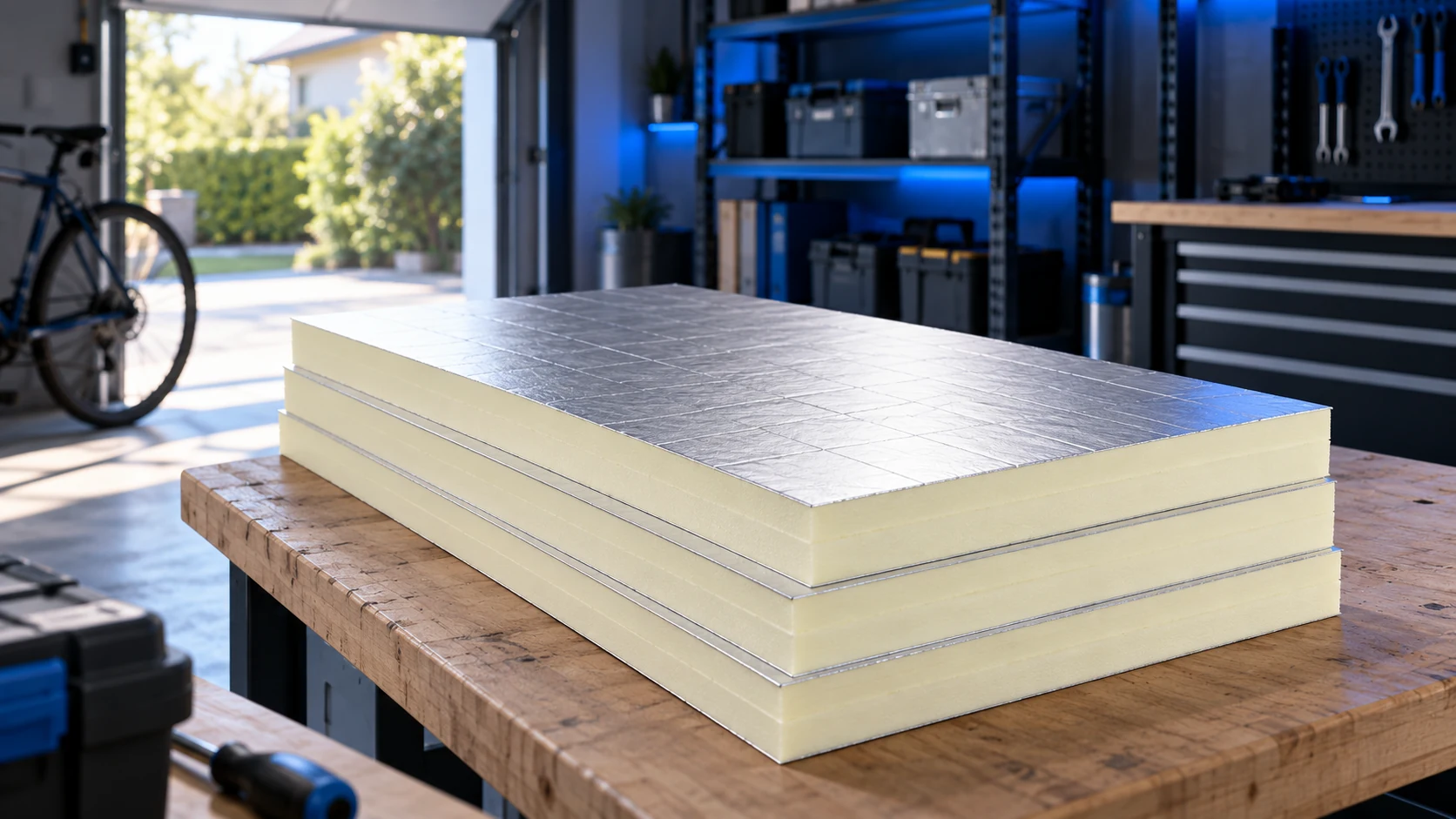
Cost-effective insulation suits the way a building is used. An unheated garage has different needs from a workshop or a holiday cabin…