






How to order integrated solar roof panels without missing essential parts
Roofing and energy
A solar roof order should be based on a dimensioned layout, not a single figure for the roof area. Measure the slopes, edges, changes of pitch and openings. Distinguish the area each panel covers from the area of its solar cells. Two roofs of equal size can require quite different numbers of panels. Check that the order includes active units, passive infill, flashings and accessories in the quantities shown on the approved drawing. An overlooked flashing or a panel that will not fit at the edge can stop the job just as effectively as a missing photovoltaic module.
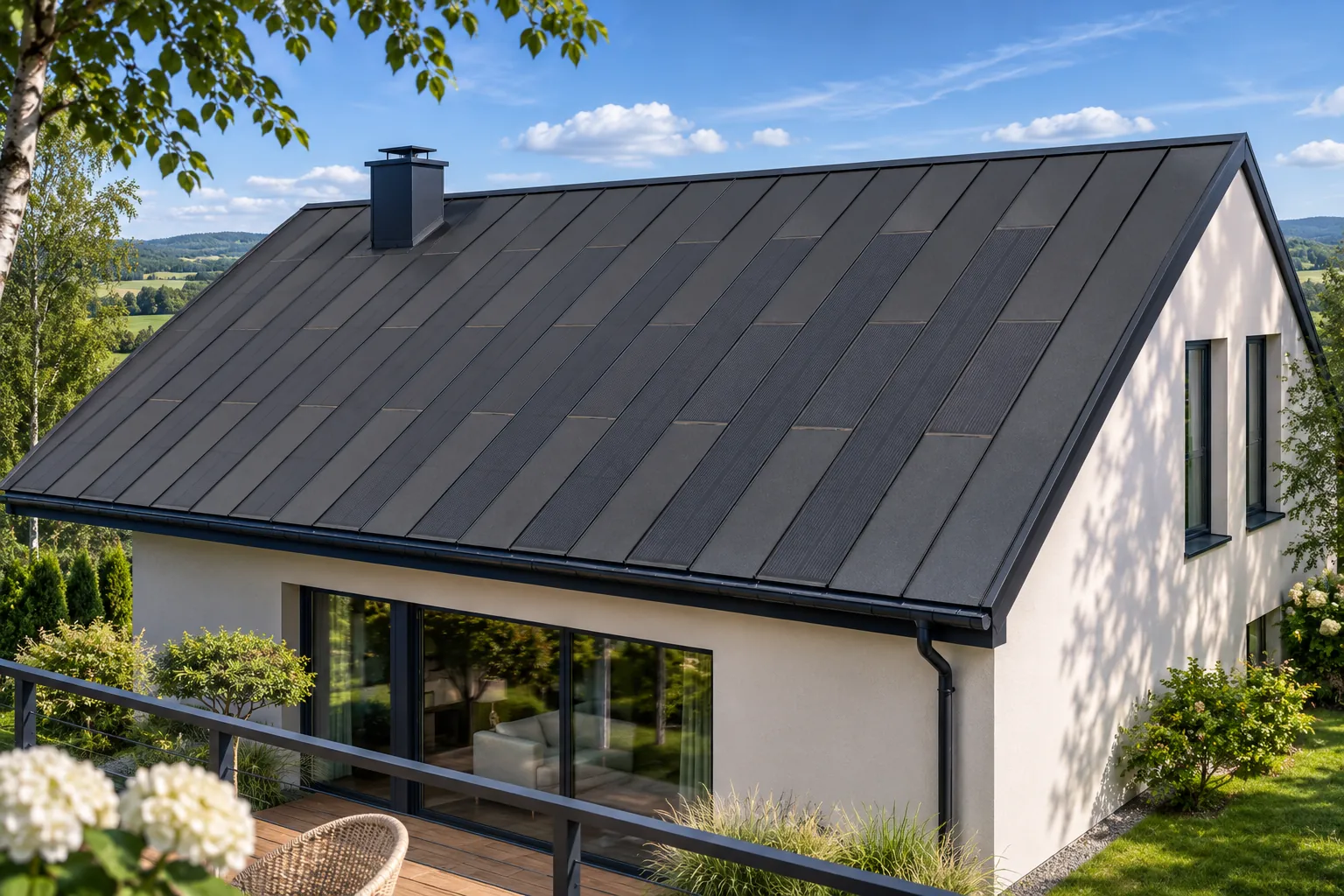
Why is the roof area alone not enough?
Confirm diagonals and opening positions on site before ordering: the roof as built may differ from the standard drawing. Agree who measures it and who approves the schedule. If a discrepancy arises, the owner, installer and supplier will know which figures were used.
Which panel area belongs in which calculation?
A panel has an overall area, an effective cover area and sometimes a smaller area occupied by active cells. Use cover dimensions for the roofing quantities and the module specifications for electrical output. Mixing the figures can distort both the order and the comparison between quotations.
Likewise, distinguish the mass of one panel from the weight per square metre of finished roof. Label every unit on the schedule. A shortened table that does not say what the figures describe is a poor basis for an order; clarify it before installation starts.
Why order passive elements alongside active ones?
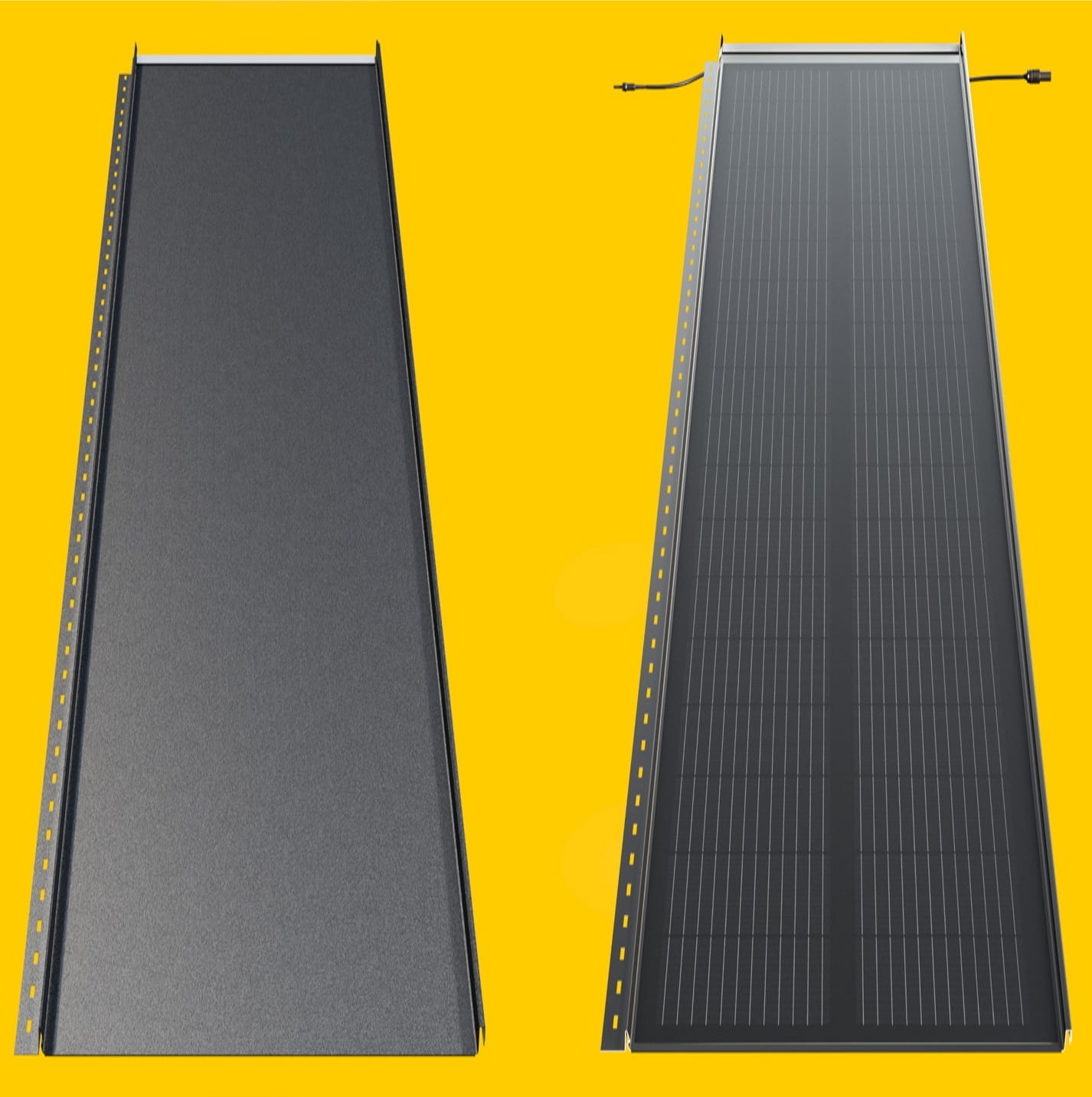
Panels without cells complete the roof at edges, around openings and where electricity generation is impractical. In a steel system they preserve the geometry of the covering. Plan their positions and quantities with the active panels rather than improvising infill when modules run short.
Specify the material, finish and joint. A standard sheet of the same colour will not necessarily fit the edge profile or carry water away correctly. Without the right passive parts it can be as hard to finish the roof neatly as it would be without the active panels.
What is easy to overlook besides the panels?
Allow for flashings, fasteners and details at the eaves, ridge and roof obstructions. Check the underlay, ventilation and cable routes too. Some items may come from the system supplier and others from the installer; agree that division before accepting the order.
Check electrical equipment, protective devices and accessories separately. Sellers do not all mean the same thing by a complete roof. Get a list of what is included in the price and what must be supplied separately so the job does not stop over an item both parties expected the other to provide.
Who should approve a substitute?
Ask the person responsible for the design to check any proposed change, even for a panel of similar dimensions or output. Electrical characteristics, joints and permitted uses can differ. With integrated solar roofing, the fit and performance of the covering matter as much as electrical compatibility.
A claim that a newer model is better is not enough. Check its effect on the complete design, documentation and warranty. If approved, record the substitute on the current schedule. A technician should be able to identify it later without guessing from its appearance.
What should you check on delivery and before installation?
Compare product codes, quantities and packaging condition with the delivery papers and schedule. Record damage under the agreed procedure. Store the panels as instructed and protect them from unintended loads. Handle a panel with a glass component as its manual specifies, not like an ordinary sheet of steel.
Before giving the go-ahead, check the roof preparation as well as the delivered material. A correct order will not fix a defective substrate. It will remove a common cause of delays, particularly when the list covers both the roofing and electrical functions from the outset.
Put the drawing revision on the order. If the roof window moves after the survey, the revision makes it easier to spot which edge panels need to be counted again before dispatch.
Names in the integrated solar roofing market include Electrotile, Solarstone, Wienerberger Wevolt, 3S Swiss Solar Solutions, MDM NT (MyRoof), Terrán, ML System, SunRoof, SolRoof and Megasol Energie.

Free quote
What to include in your enquiry
Tell us how you plan to use the material, the dimensions and the quantity you need. Include the thickness, grade or variant name, along with the delivery town or your preferred collection branch. For a specific product, add its name or a link to the product page. We will reply to the email address you provide to discuss availability and the terms of your order.
More from the building guide
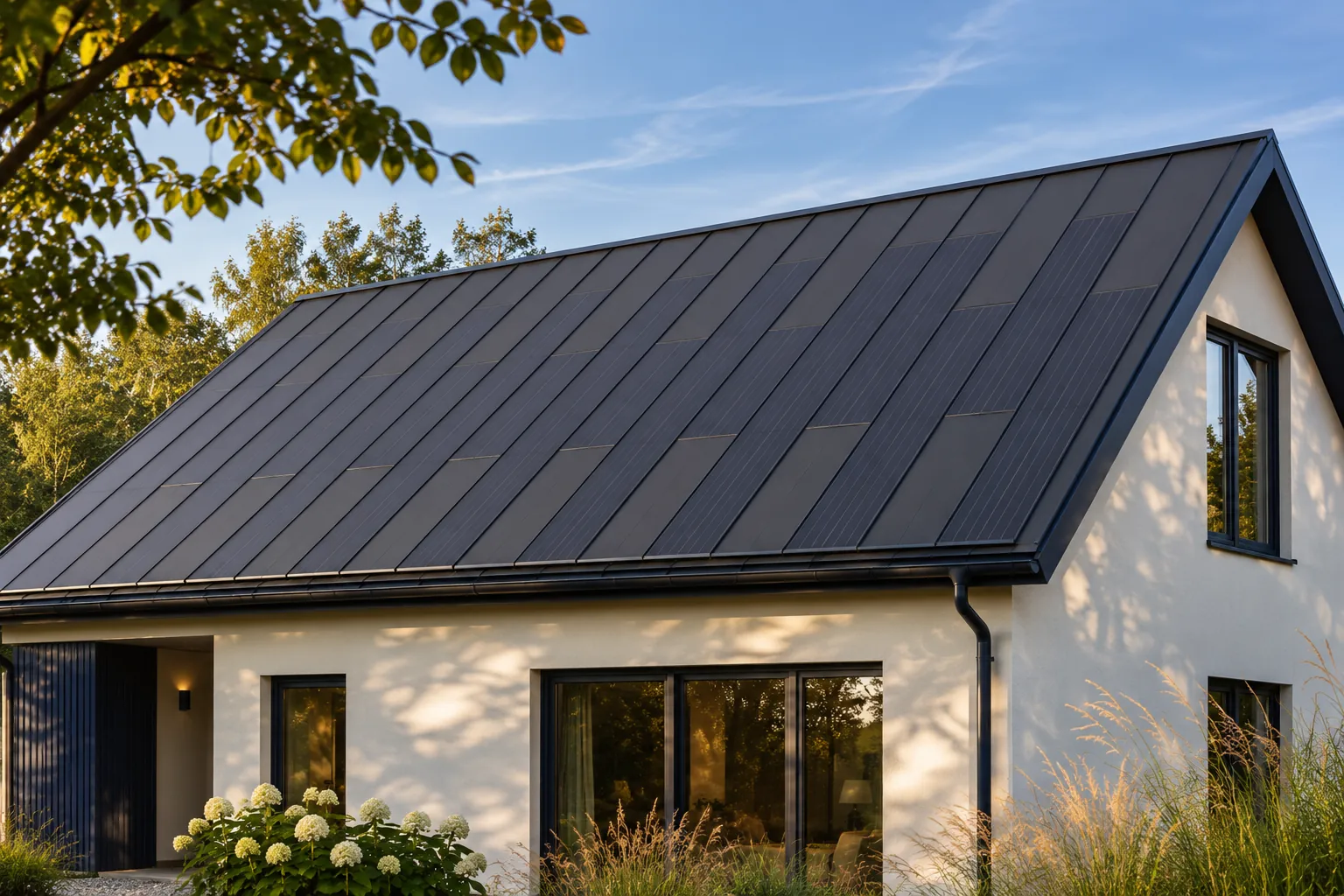
A smooth module surface alone cannot keep an entire roof weathertight. Rain reaches edges, eaves, ridges and penetrations, changes direction at joints…
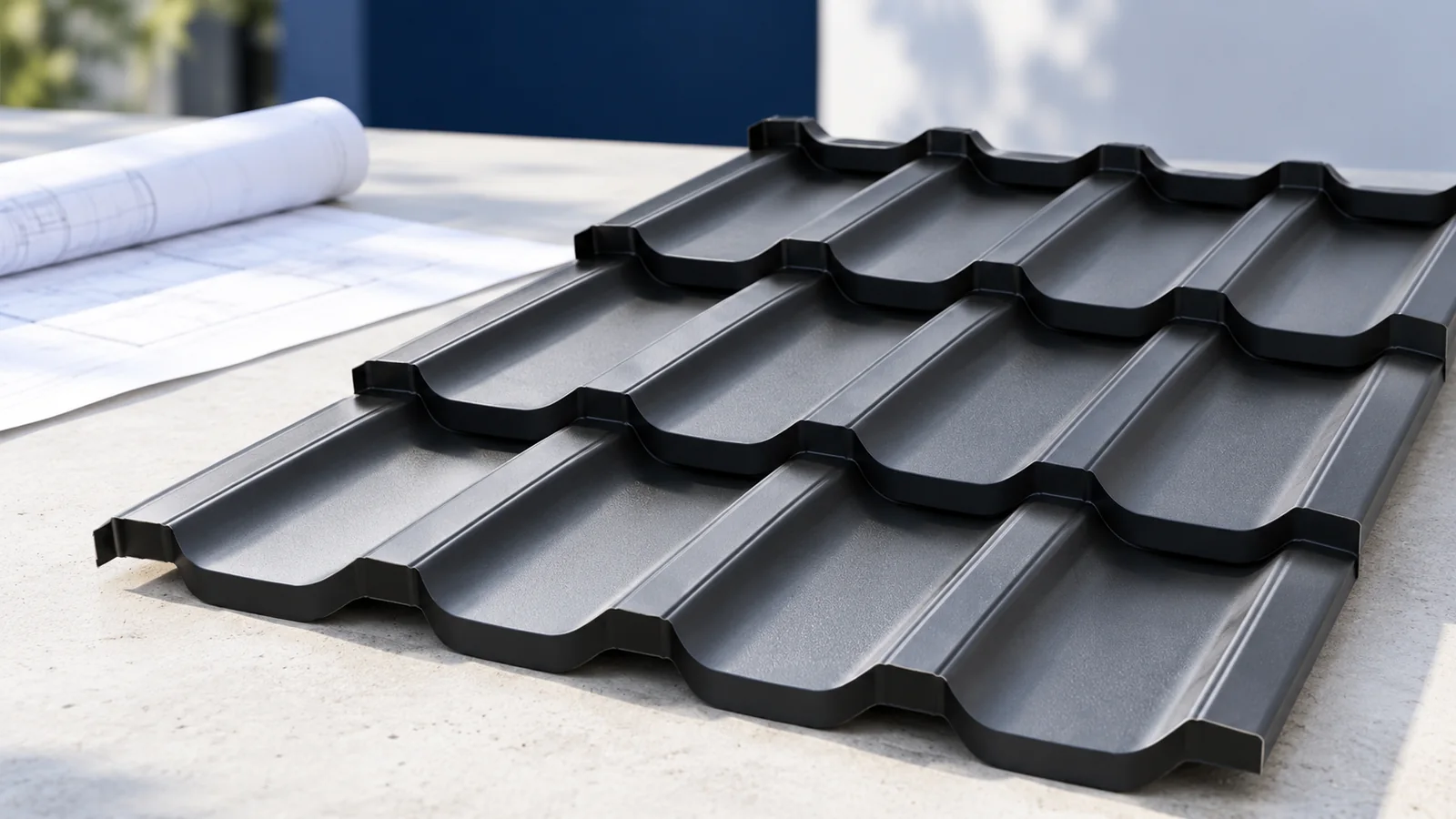
Installing solar PV on a metal roof starts by establishing how loads reach the structure. Bracket shape or profile name alone does…
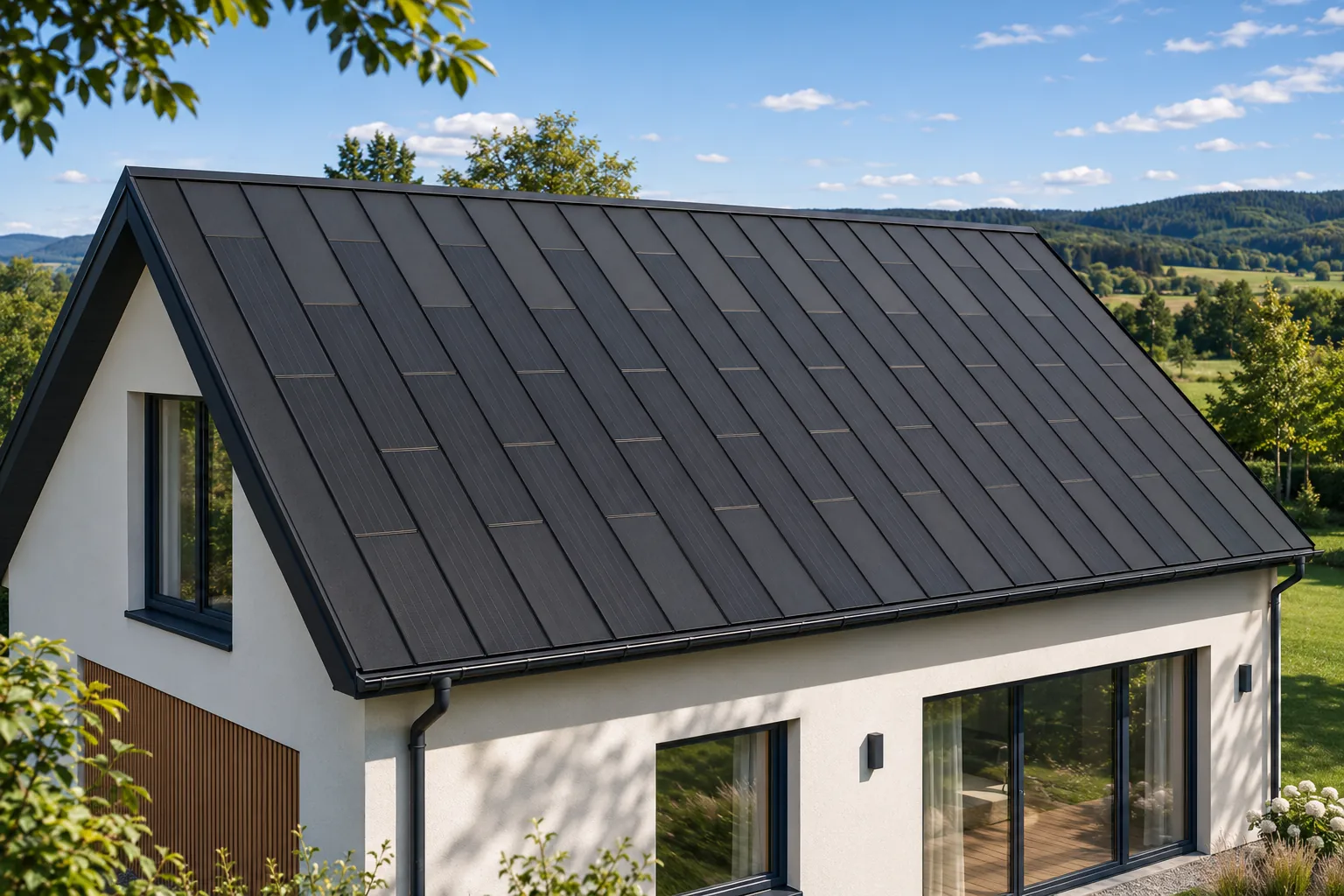
Handover of an integrated solar roof covers the roofing, electrical installation and records of how both were built. An app showing power…
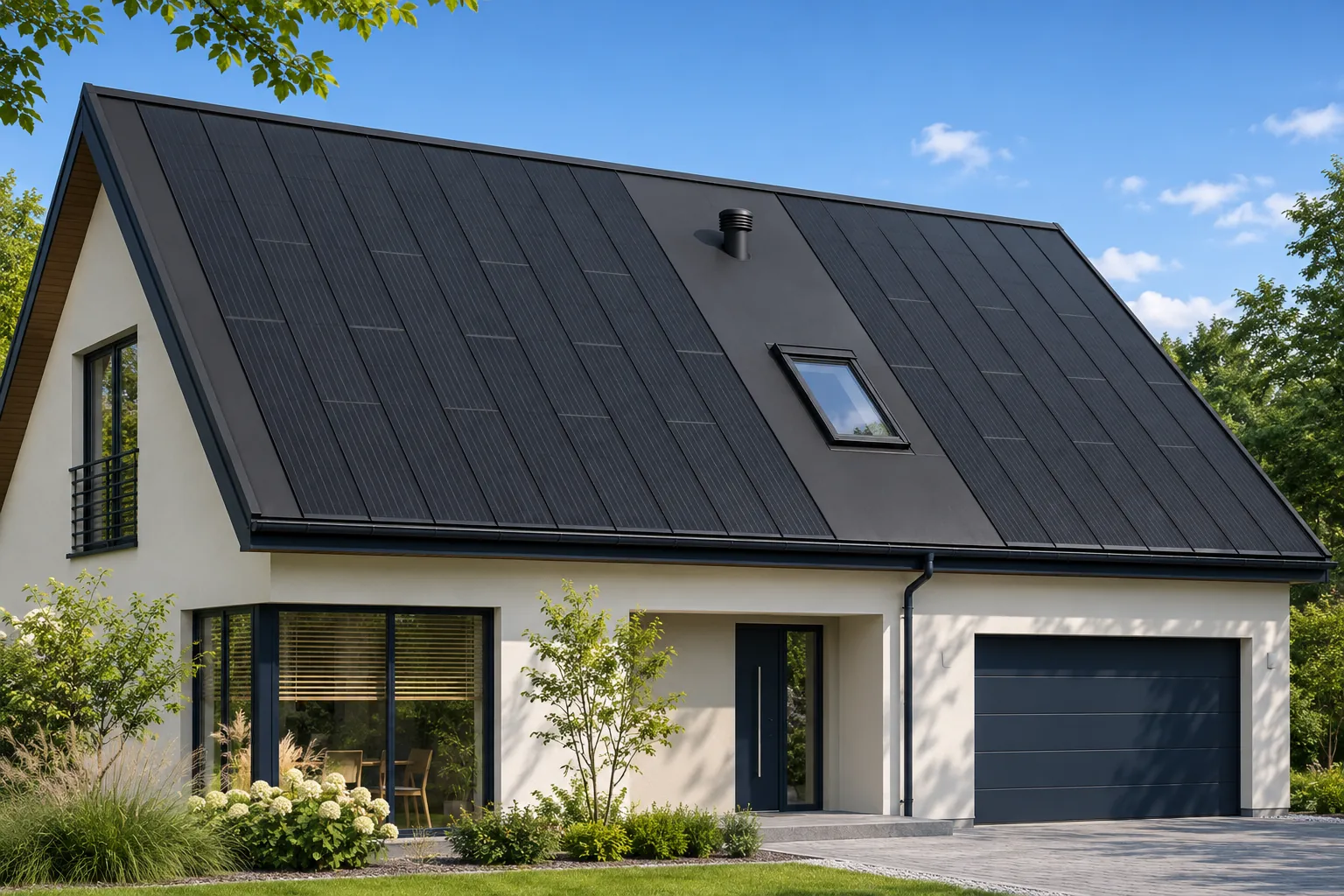
Roof windows and chimneys can share a slope with integrated photovoltaic panels. Plan the openings alongside the panel layout, allowing for shade,…
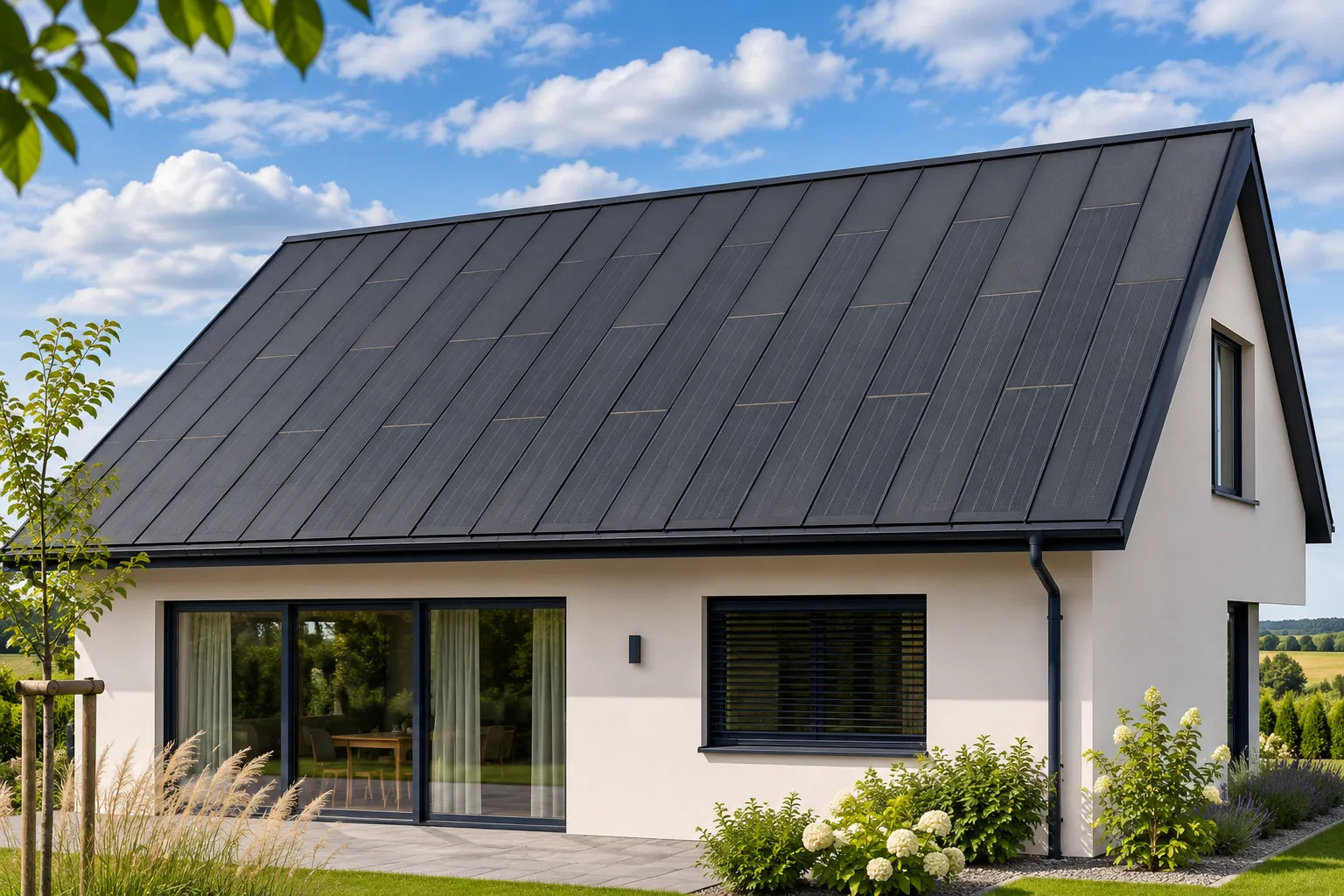
A building-integrated photovoltaic roof can sometimes be delivered in stages. Define the finished layout first and make sure the covering will protect…
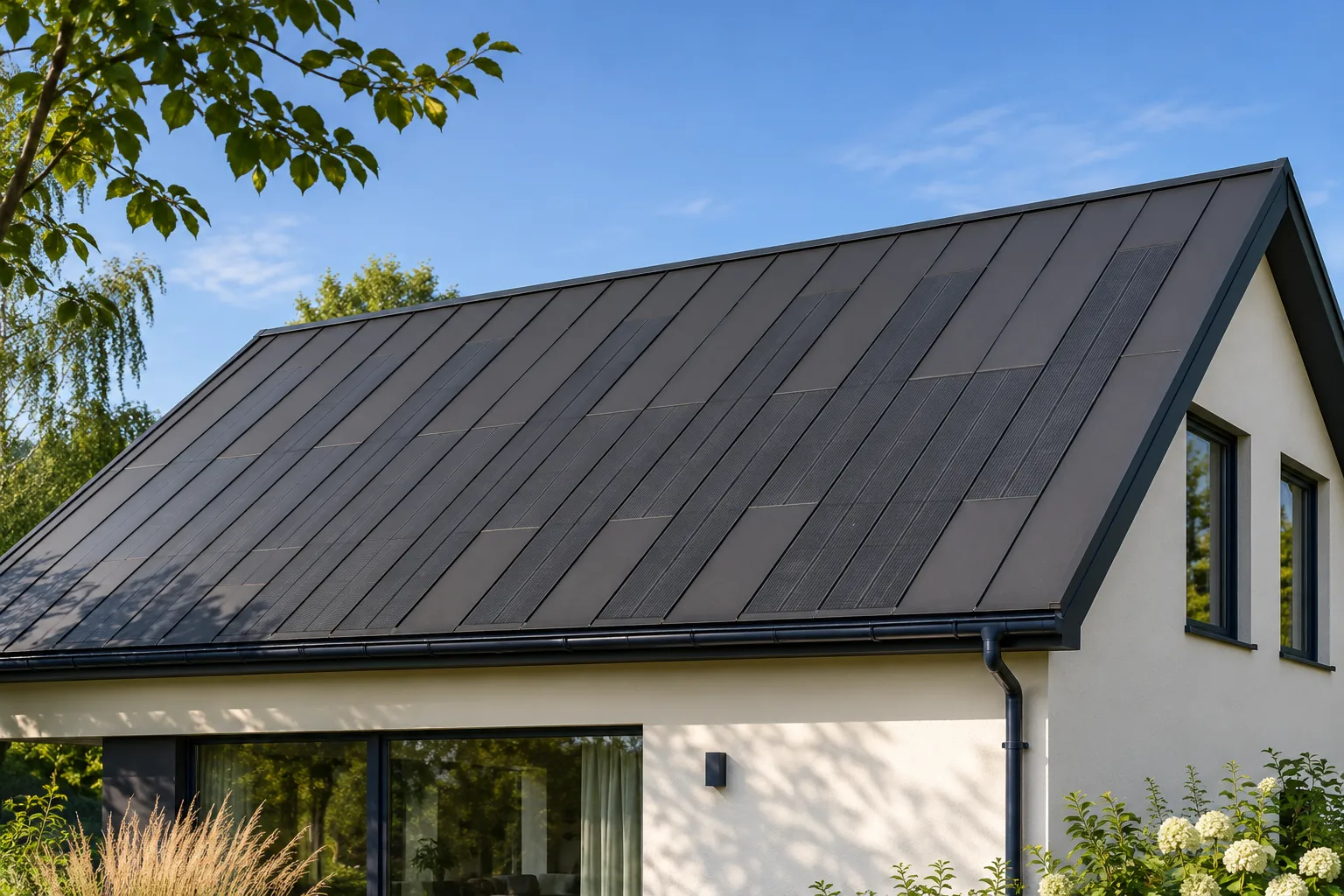
An active PV covering is one layer of the roof above a heated loft. The assembly still needs to shed water, limit…
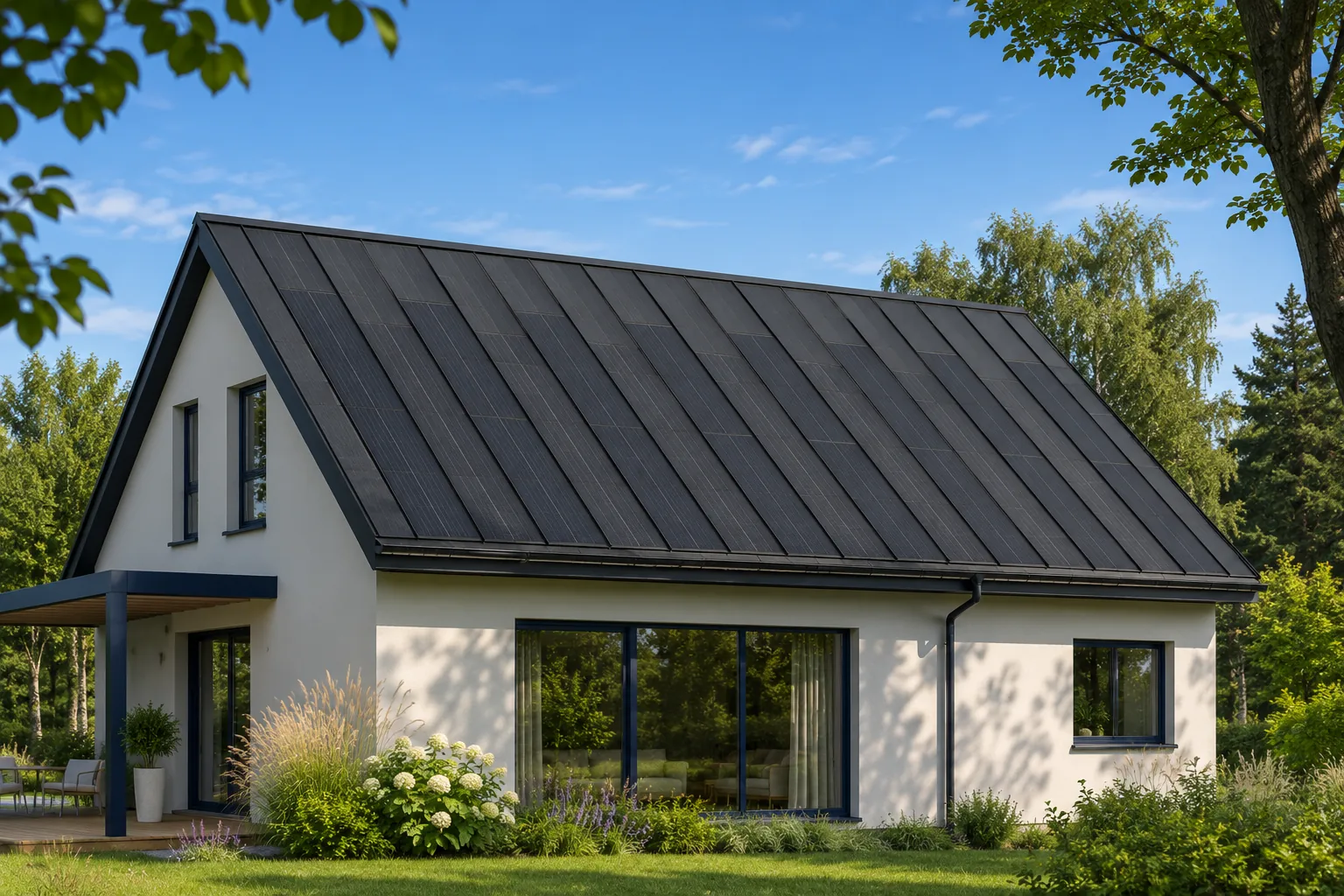
Keep the roofing and electrical records together once the photovoltaic roof is complete. The most useful documents describe what was actually installed:…
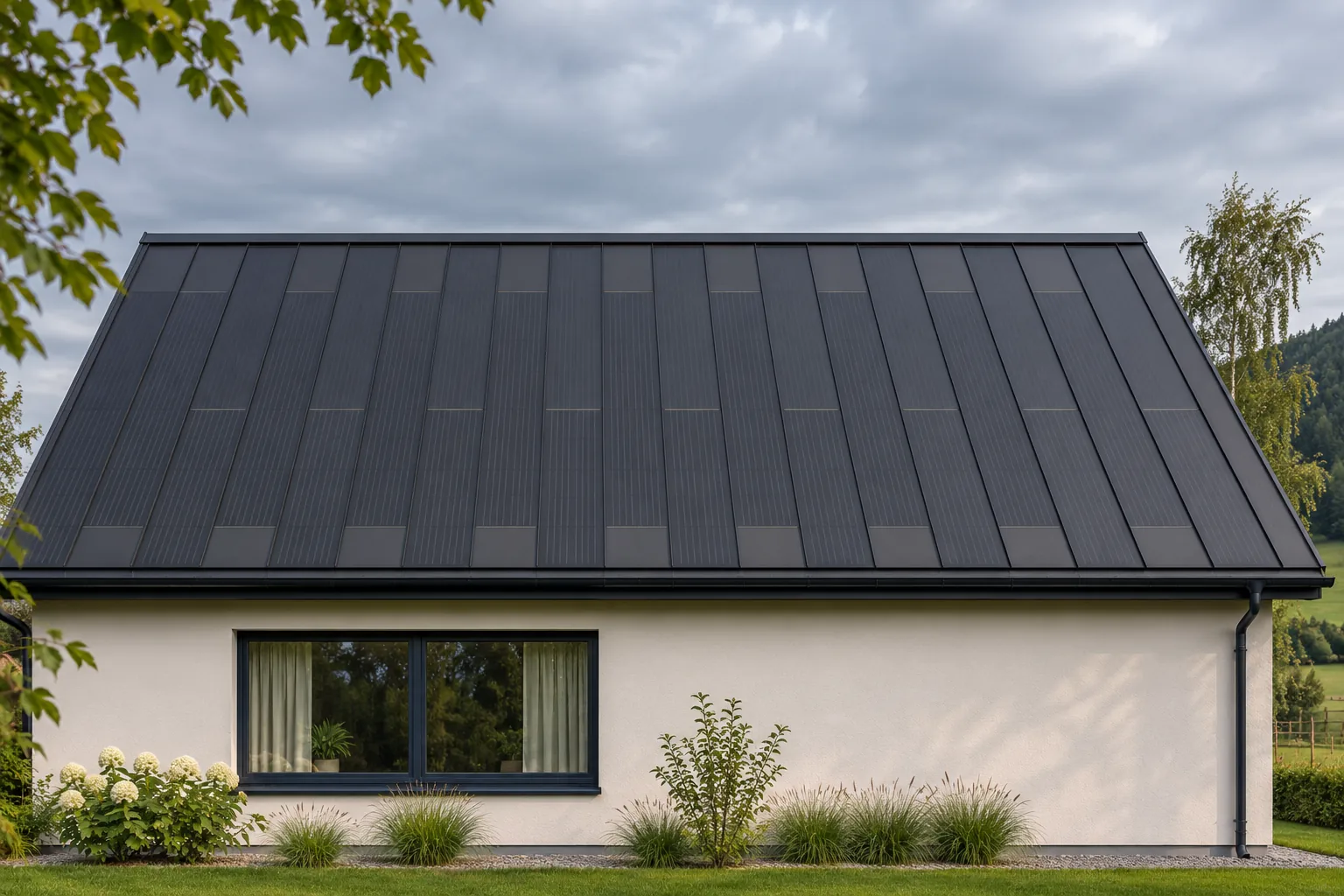
Installing an integrated solar roof brings the roofing and electrical trades together at several stages. First confirm the design and structure. Prepare…