






Planning safe access to an integrated solar roof
Roofing and energy
An integrated photovoltaic roof needs access for inspection and repair, both for the solar installation and for other parts of the building. That does not mean anyone can walk across the modules. Before filling a slope with active panels, identify what needs servicing: a chimney, roof window, hatch, aerial or ventilation equipment, for example. Then decide how a technician could reach each item, including a failed module. Planning access alongside the active and passive roof areas preserves the appearance of the roof and makes future repairs possible without improvising a route after the first fault.
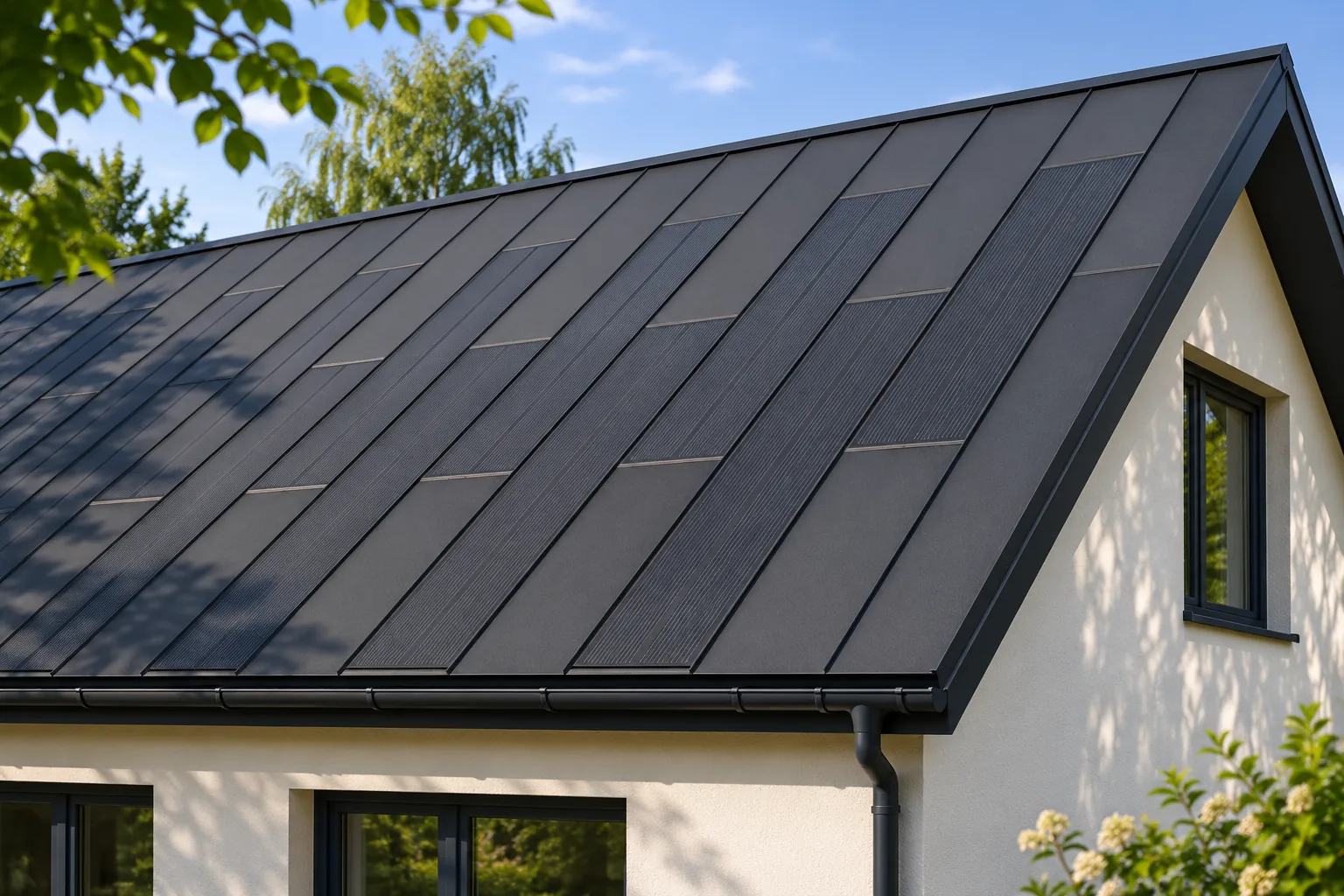
What will need to be reached once the roof is finished?
For each component, identify where a technician can inspect it and carry out the work.
Some tasks can be done from inside; others require access from outside. Walk through each case with the designer and installers. A promise of easy maintenance is of little use unless it is clear how the technician reaches the work area and protects the roof during the repair.
Why should you never assume the modules are walkable?
Passing a specified load test does not make a module a walkway. A foot concentrates pressure on a small area and can have a different effect from the test load. Damage to the photovoltaic part may not be visible straight away. Follow the access rules for the specific system and the arrangements for safe work.
Never step on a panel to see whether it holds. Tell everyone working on the roof about its limits, including aerial installers and chimney sweeps. The covering is also part of a live electrical system, a fact that concerns every trade using the roof.
How do access routes fit around the active panels?
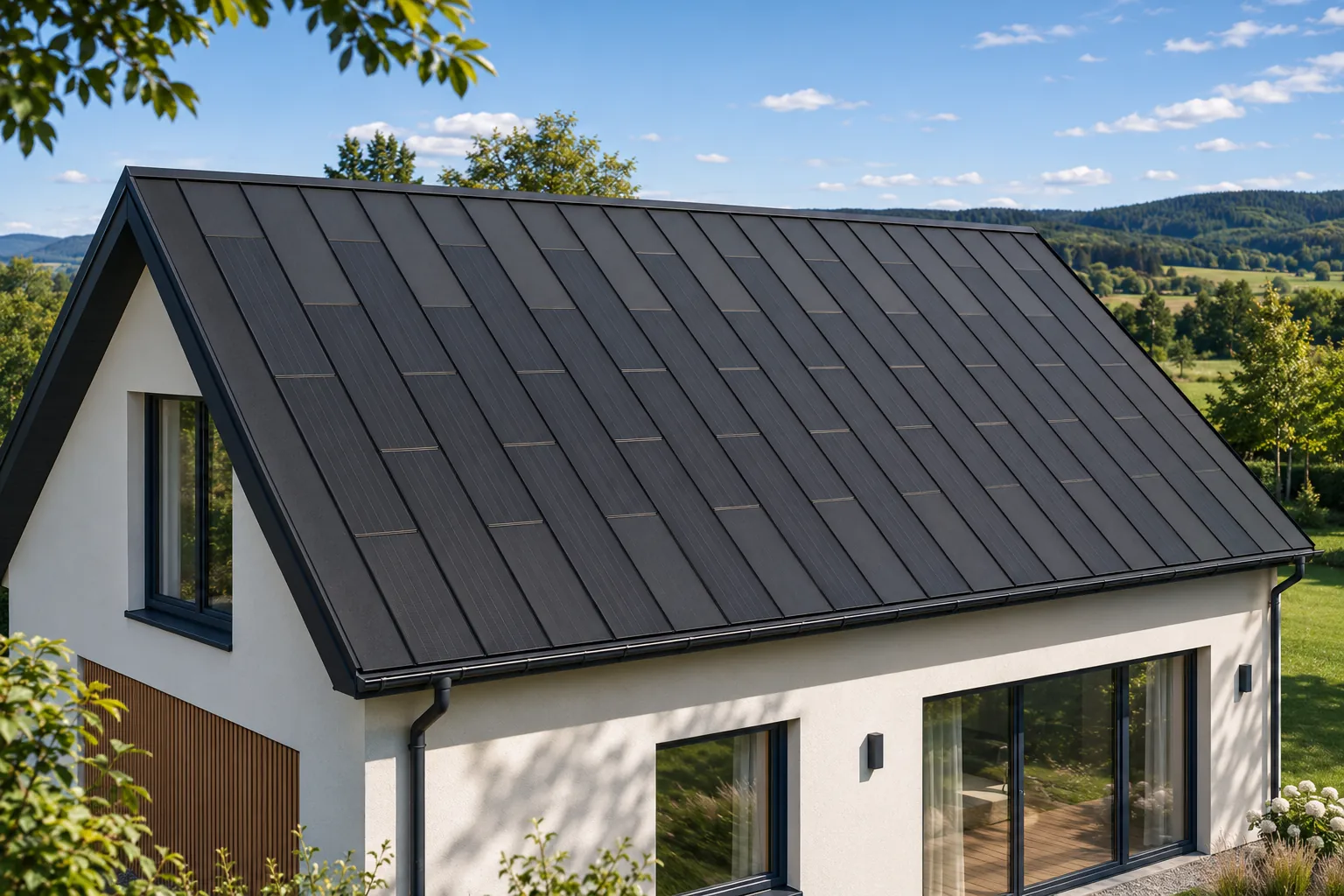
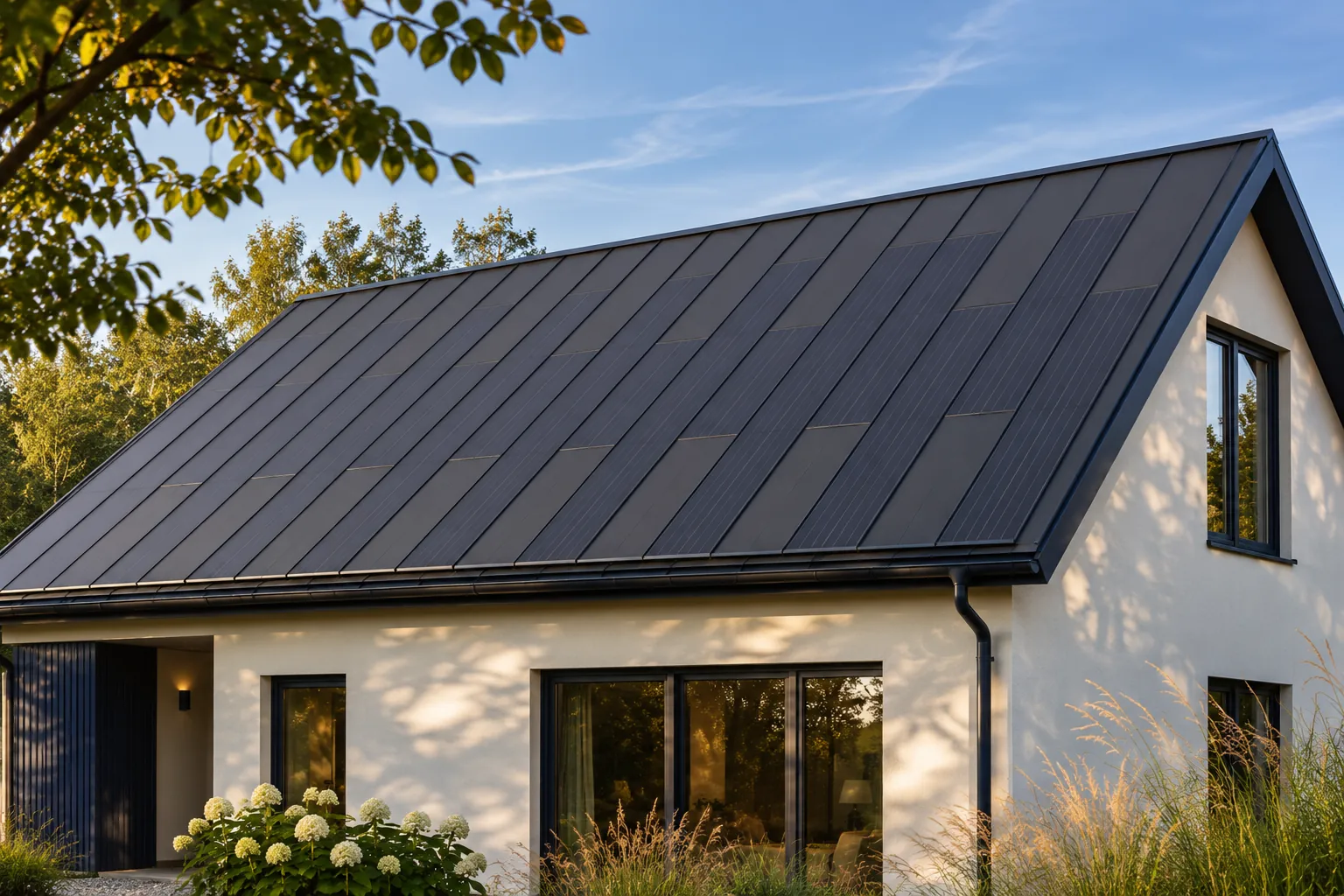
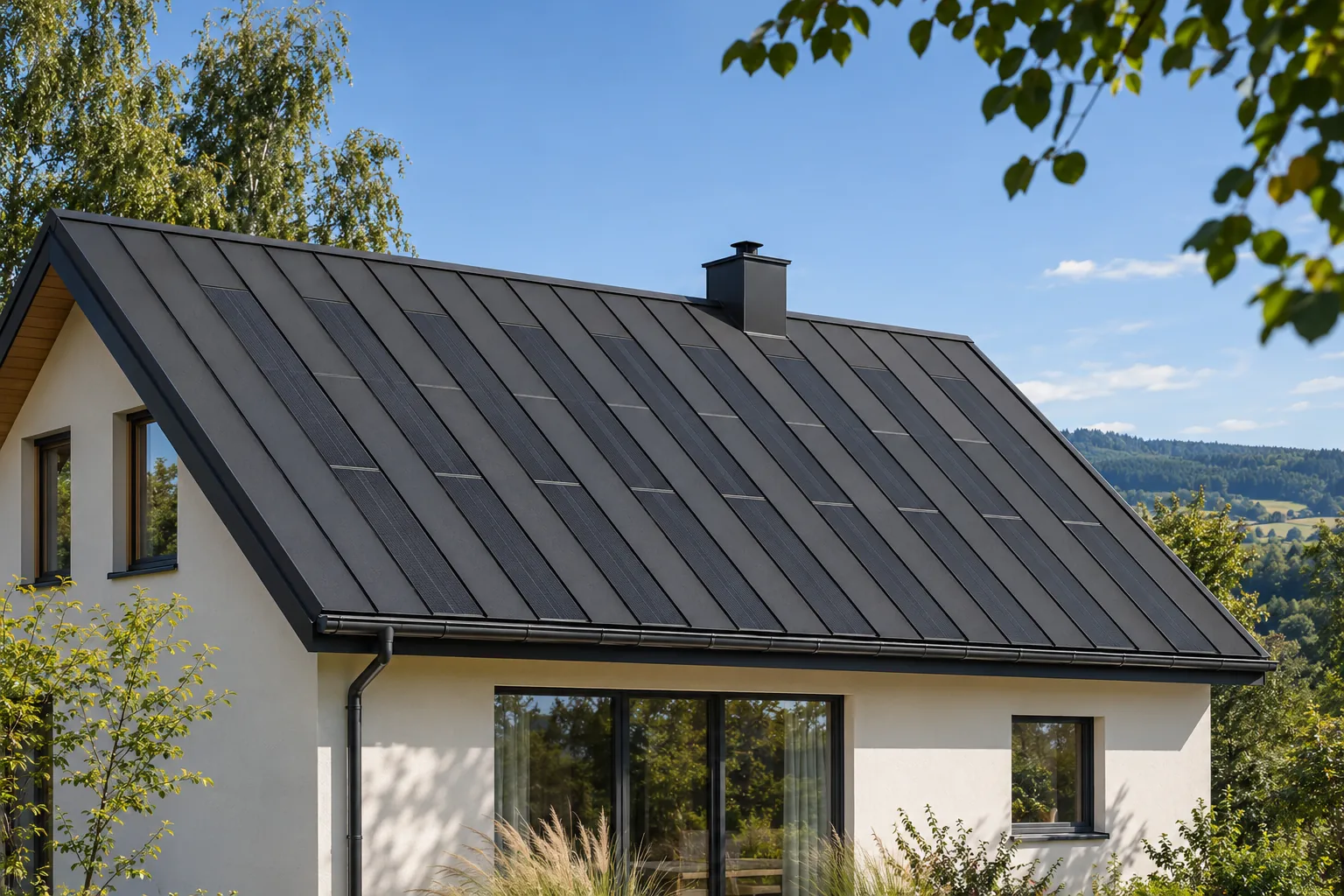
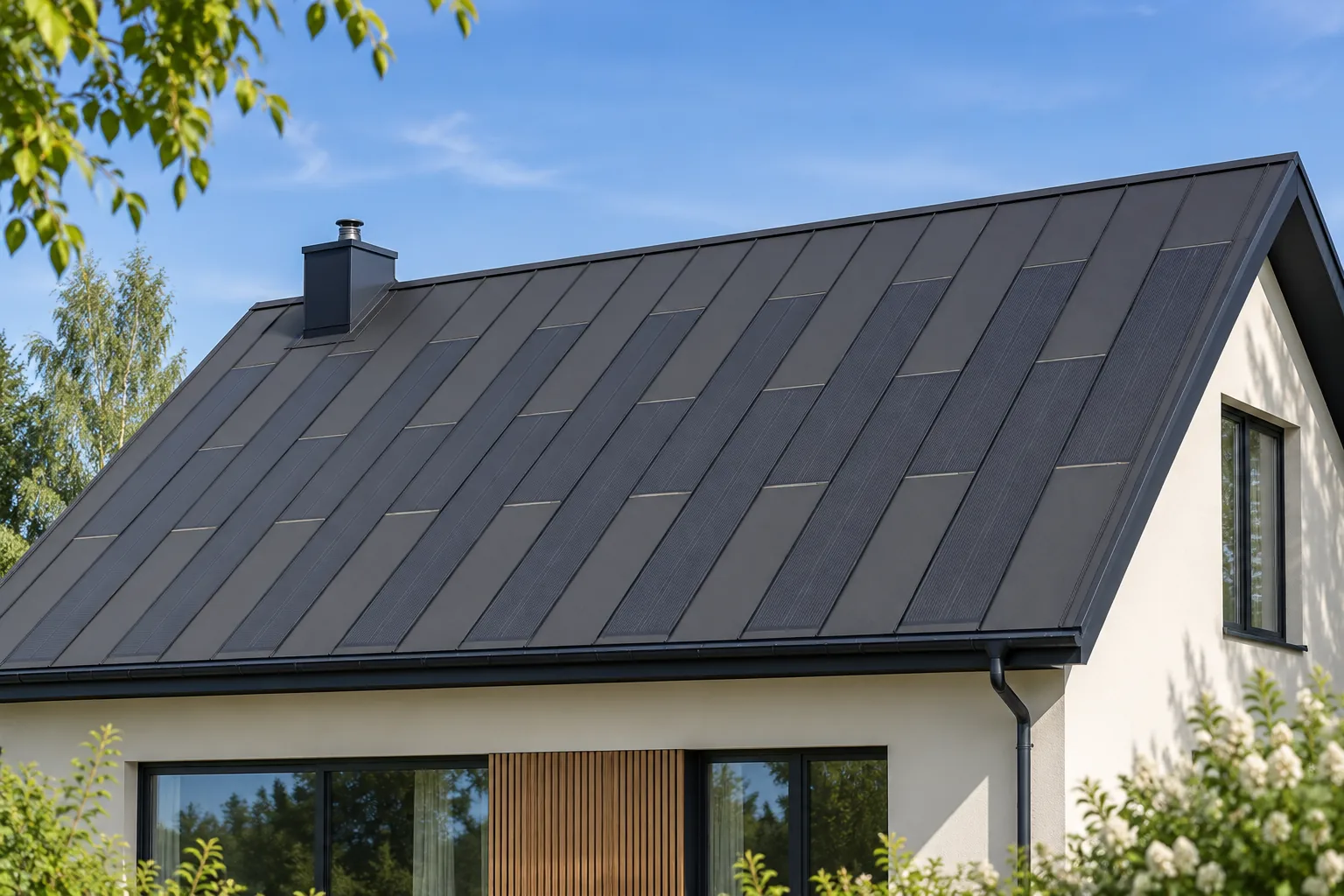
Mark the service points and routes first, then lay out the active and passive sections. With steel roof panels this can give a regular pattern without putting cells everywhere. The service area has a job to do; it is not wasted roof space.
Access equipment needs suitable supports and fixings. Matching the colour does not make an arbitrary fixing point suitable. Allow for shading and keep connections accessible. Coordinate the details with the roofing system so that fixings preserve weather tightness and leave the required ventilation paths clear.
What does replacing an active panel involve?
Technicians must be able to identify the module and reach its connections. Establish how much of the slope has to be opened and how the opening will be protected from rain. A BIPV repair affects both the electrical installation and the roof covering. Disconnecting the cables alone does not close the gap left in the roof.
Ask about the replacement procedure before buying. Check spare parts, tools and the division of work between roofer and electrician. This is about keeping the installation serviceable over time. A clear repair procedure tells you something a module output warranty cannot.
How can later alterations affect safety?
New equipment can block a planned route or cast a shadow. Check the roof drawings before adding it, including fixings, penetrations and existing cables. Drilling an active panel or blocking its ventilation space can affect much more than the appearance of the roof.
The same applies to snow retention equipment. Select it for the building and roof system. Protecting people at entrances and on walkways takes priority over maximising energy yield. The design should accommodate both needs instead of treating everything that takes up cell space as dispensable.
What should owners and future contractors receive?
The documents should identify access areas, equipment locations and restrictions. Add labelled photographs and instructions for requesting service. The owner should know whom to call rather than attempting access with a spare ladder. Safe arrangements depend on the building, the task and the applicable requirements.
A well-placed route and a passive section can make maintenance easier while giving the roof a clear layout. Plan them from the start so routine work on the building can coexist with electricity generation and the next repair does not depend on finding an unplanned way in.
At handover, ask the roofer to trace the route from the hatch to the chimney on the drawing. If it crosses an active module, clarify the route before giving the plan to the maintenance team.
Companies and brands in roof-integrated photovoltaics include Wienerberger Wevolt, Electrotile, SunRoof, Solartag, GAF Energy, Tesla, Megasol Energie, MDM NT (MyRoof), SolRoof and ML System.

Free quote
What to include in your enquiry
Tell us how you plan to use the material, the dimensions and the quantity you need. Include the thickness, grade or variant name, along with the delivery town or your preferred collection branch. For a specific product, add its name or a link to the product page. We will reply to the email address you provide to discuss availability and the terms of your order.
More from the building guide
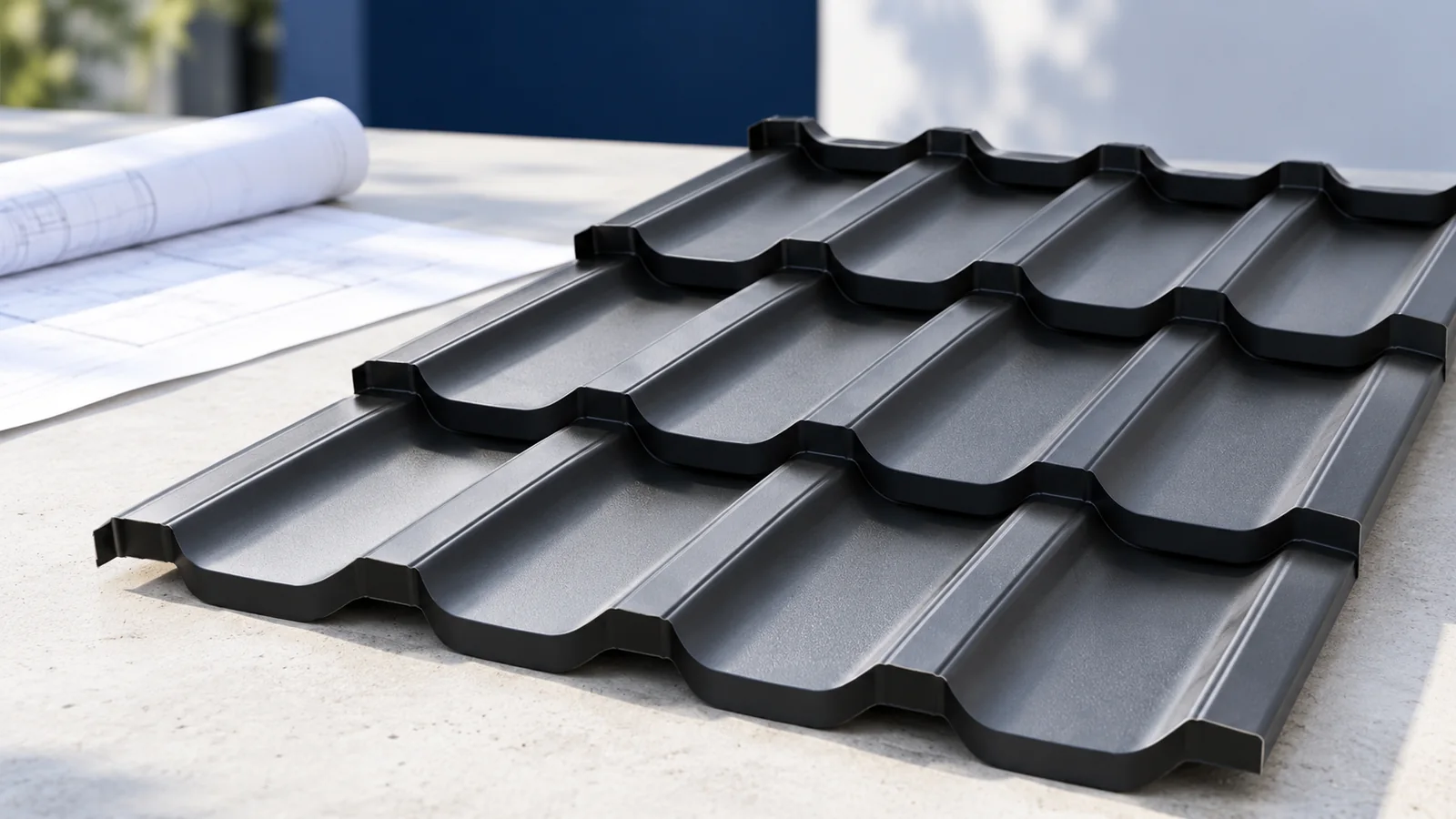
Installing solar PV on a metal roof starts by establishing how loads reach the structure. Bracket shape or profile name alone does…
Handover of an integrated solar roof covers the roofing, electrical installation and records of how both were built. An app showing power…
A smooth module surface alone cannot keep an entire roof weathertight. Rain reaches edges, eaves, ridges and penetrations, changes direction at joints…
A lightweight integrated PV roof still needs a structural assessment. A panel with cells weighs more than its metal sheet alone. Snow…
The longest warranty in a solar roof quotation may cover only one feature. The coating, roofing element, PV module, retained output, inverter…
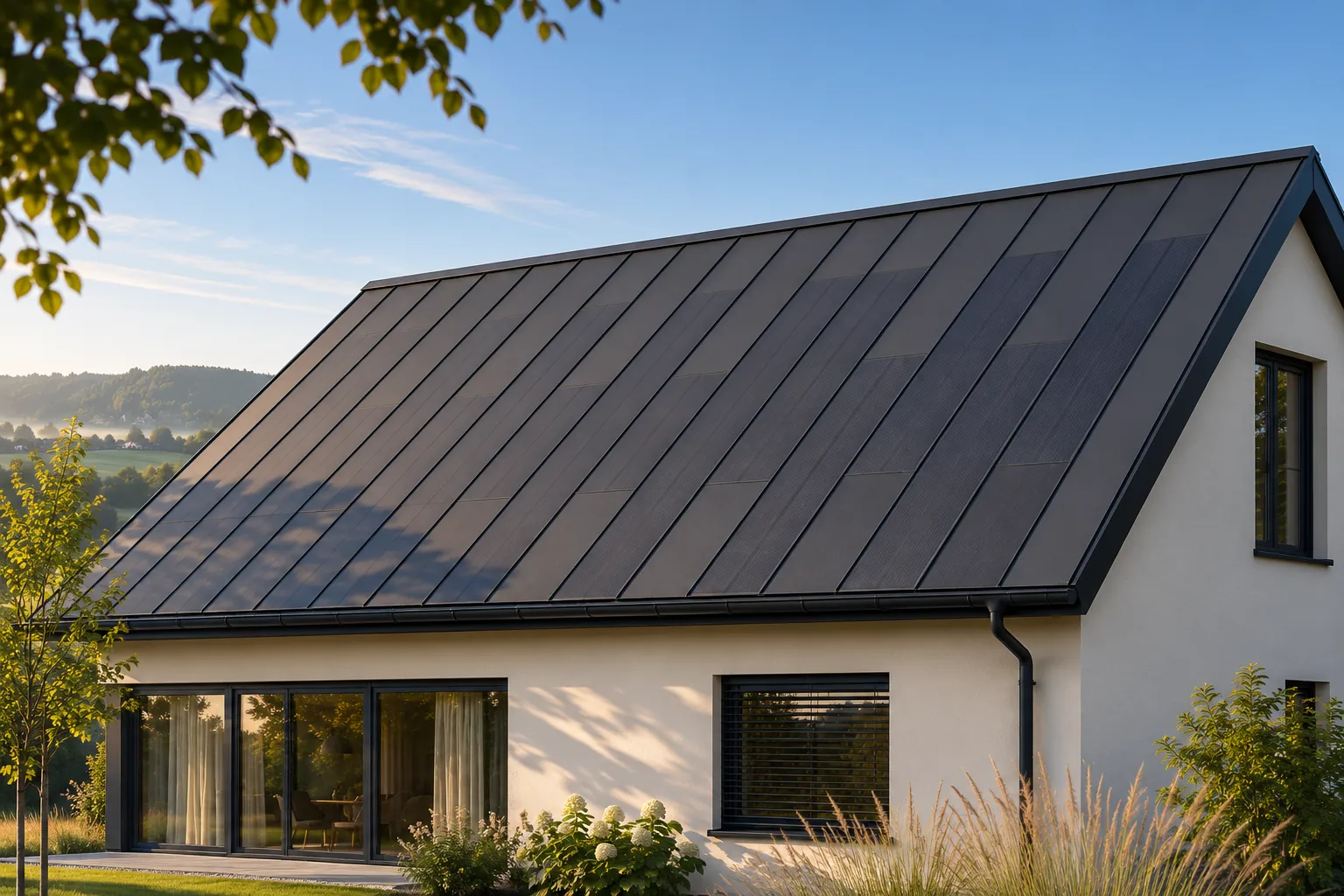
An integrated PV roof design needs the roof geometry, layers, supports, flashings and cable routes alongside the module count. Combine these with…
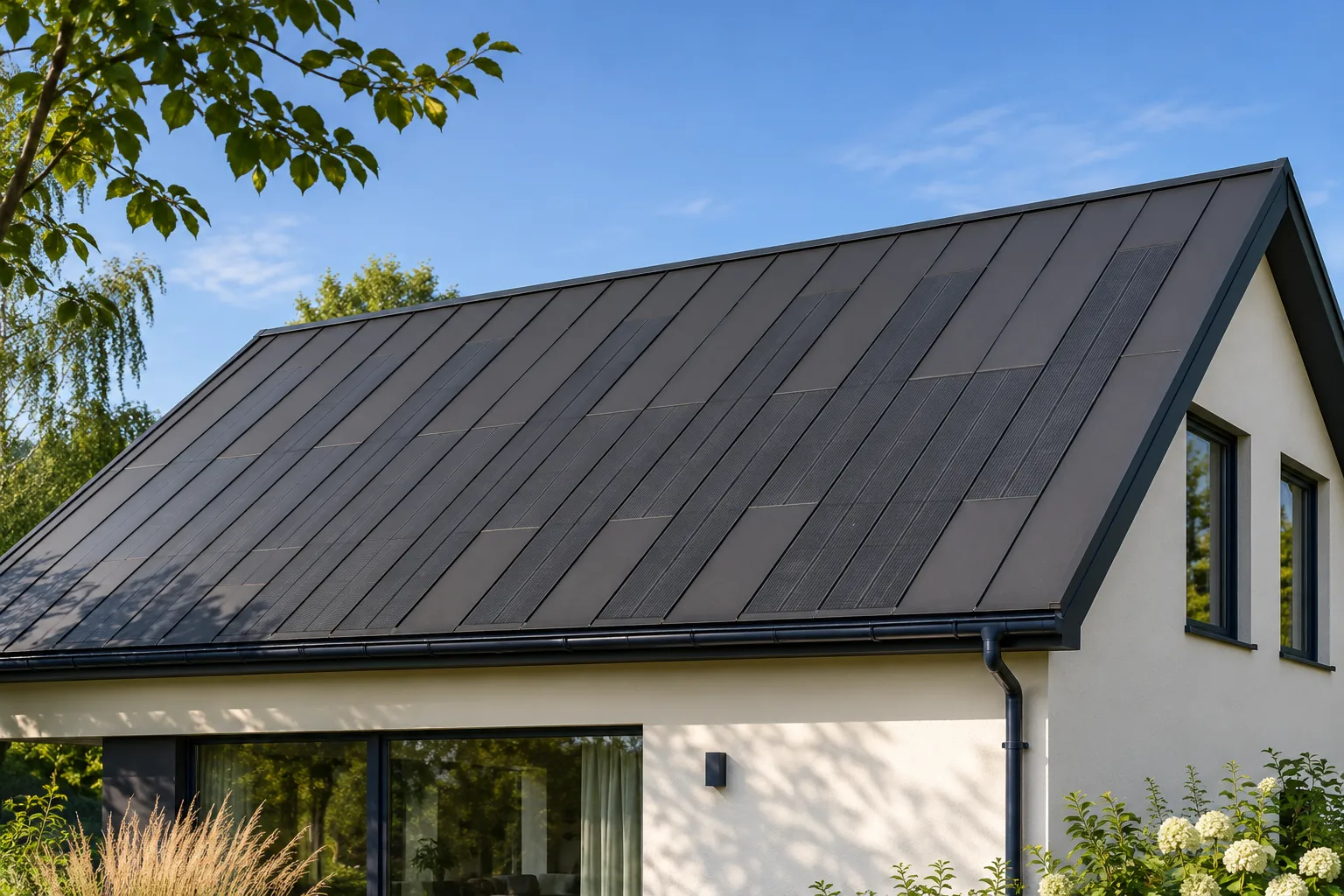
An active PV covering is one layer of the roof above a heated loft. The assembly still needs to shed water, limit…
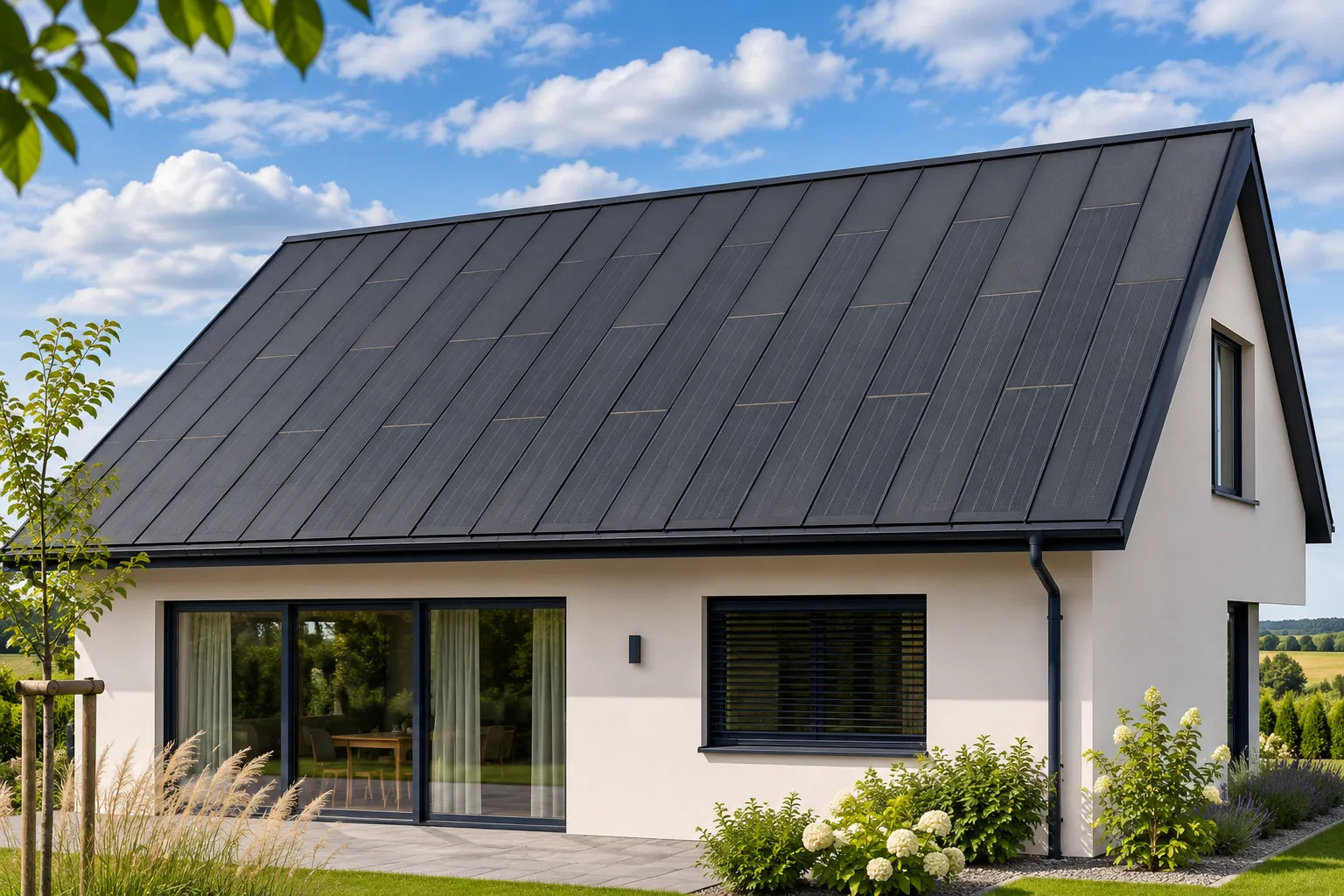
A building-integrated photovoltaic roof can sometimes be delivered in stages. Define the finished layout first and make sure the covering will protect…