Can water condense on sandwich panels? Causes and prevention
Sandwich panels
Water on a sandwich panel can be condensation rather than a roof leak. Warm, moist air releases water when it meets a sufficiently cold facing. Metal facings also do not guarantee that moisture can never reach the core: joints, edges and penetrations remain potential entry points. Investigating the problem means checking when the water appears, measuring indoor temperature and humidity, and inspecting both sides of the envelope. This guide explains how to distinguish possible causes, identify cold details and plan repairs. Increasing panel thickness alone will not correct a leaking joint, an unsuitable base detail or inadequate ventilation.
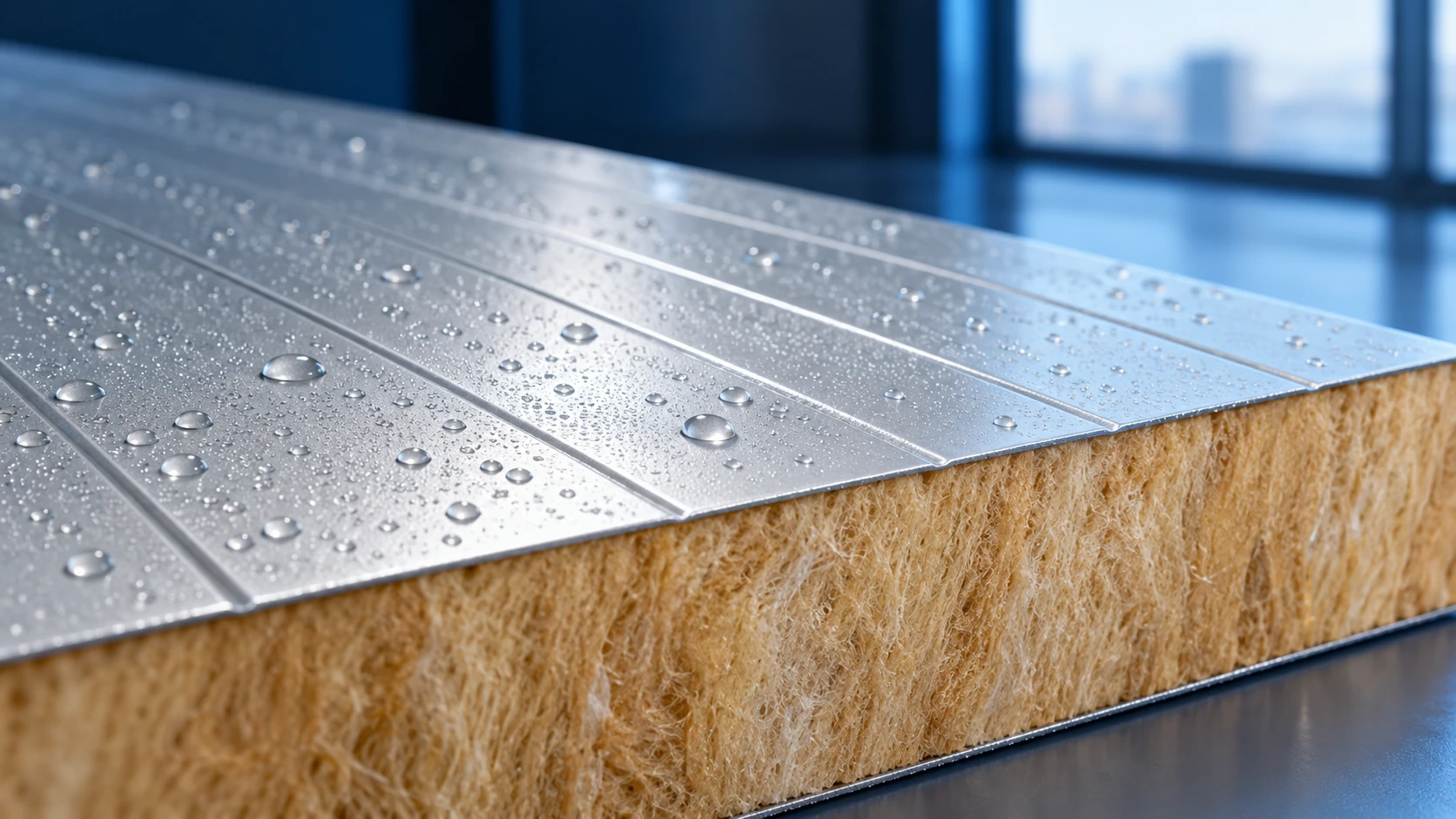
First distinguish condensation from a leak
Record when the water appears. Does it follow rain or become worse on cold mornings? Do droplets cover a broad area or occur around one joint? These observations help direct the investigation, but do not establish a reliable diagnosis on their own.
A leak may depend on wind direction and rainfall; condensation depends on surface temperature and moisture in the air. Both can occur together. Inspect inside and outside, assessing joint tightness, insulation continuity and room use separately. Each may require a different remedy.
A cold detail can undermine an otherwise good wall
A thin panel, a thermal bridge at the base or interrupted insulation can reduce the internal surface temperature and cause local condensation. The U-value of the panel field is not enough to assess this. Inspect corners, structural connections and openings, especially exposed metal.
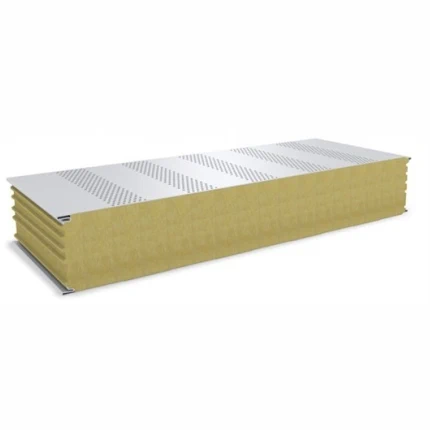
For example, a 100 mm mineral-wool panel variant may have U = 0.39 W/(m²K), compared with 0.20 W/(m²K) for its 200 mm counterpart. This illustrates thickness effects within a particular product family; other products have their own data. A thicker panel improves the wall field’s insulation, but cannot repair a broken seal or unsuitable base detail.
Metal restricts vapour diffusion, but joints still matter
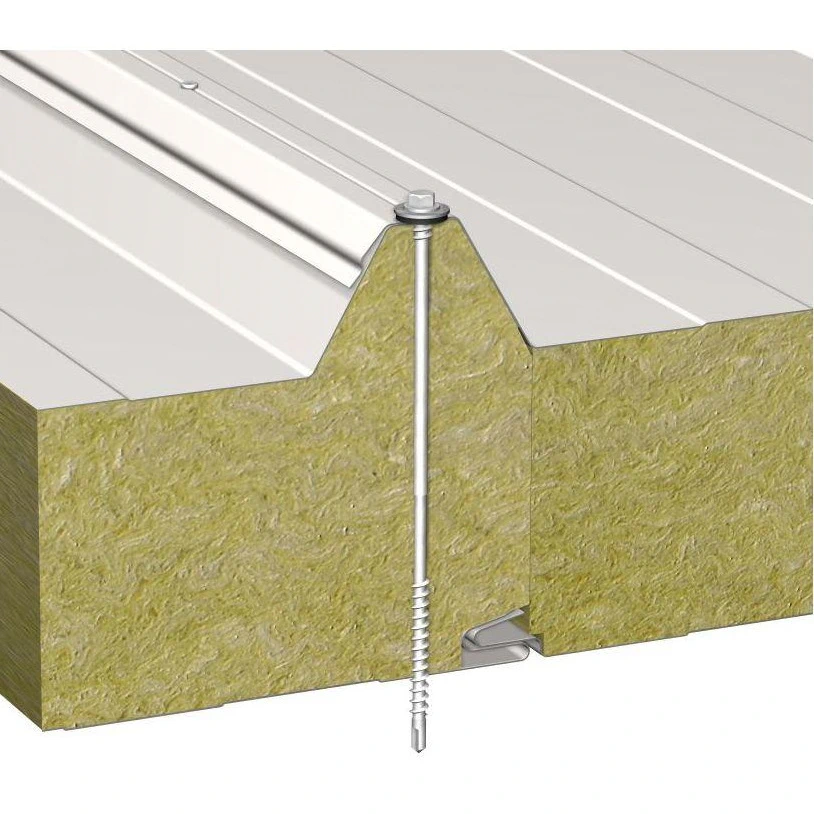
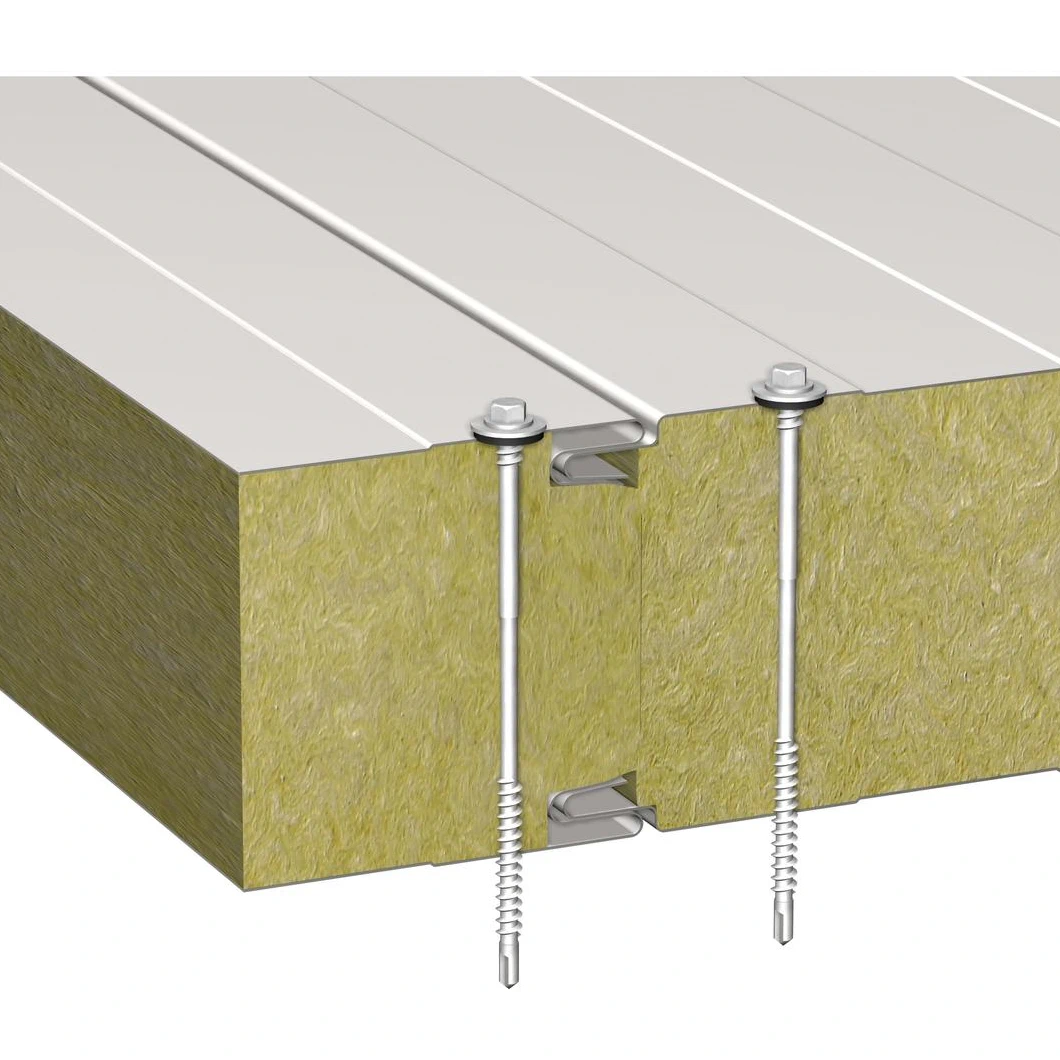
Metal facings strongly restrict vapour passage through their surface. A completed envelope also contains joints, terminations and service penetrations. Leaks can admit moist air or water to the core. It is therefore incorrect to say that internal moisture is impossible in a metal-faced panel.
Select seals for the building use and joint design. Faulty fasteners or flashings can admit moisture into panels, so a general statement about low water absorption is insufficient. Investigate the complete path of air and water: even a small gap behaves differently from an intact facing.
Control moisture inside the building
Wet processes, washing, drying materials and occupants add water vapour. If ventilation does not remove it, condensation becomes more likely. Measure temperature and humidity during normal operation; one reading in an empty hall may miss the problem.
Do not cover a damp surface with another lining before identifying the cause: that may merely hide symptoms. Check the moisture source, surface temperature and tightness first. The solution may involve ventilation, a repaired detail, changed insulation or all three.
Repair the cause, not just the mark
Identify the panel model and installation details before starting. Choose sealant compatible with the coating and location. Do not indiscriminately close gaps that serve a function in the system. Manufacturer instructions describe joints and edge closures; the building’s construction design should specify the relevant details.
If the core may be wet, the facing’s appearance cannot settle the question. A technical assessment of a joint or envelope section may be necessary. Surface drying does not guarantee full restoration of performance. Repair scope depends on the damage, duration of wetting and condition of the core-to-metal bond.
What to prepare before an inspection
Photograph wet areas and mark them on a simple wall sketch. Record time, weather, room use, temperature and humidity. Note whether the issue occurs only during washing or when equipment runs. This helps distinguish an isolated defect from a building-wide problem.
Check whether hall use changed before the water appeared. A new heater, wet process or reduced ventilation can alter conditions without any panel modification. Conversely, a new cable through the wall may interrupt a previously sound seal. Reconstruct both weather events and building work.
After repair, observe the same locations under comparable conditions. No marks on a warm, dry day do not prove that the cause has gone. Inspection should include the conditions in which the problem previously returned.
Frequently asked questions
Does every droplet mean there is a hole in the roof?
No. Water may be condensation. Check its relationship with weather, temperature and indoor humidity.
Will an additional vapour barrier always solve the problem?
No. Identify the moisture entry path and wall build-up first. Adding layers indiscriminately can conceal a defect.

Free quote
What to include in your enquiry
Tell us how you plan to use the material, the dimensions and the quantity you need. Include the thickness, grade or variant name, along with the delivery town or your preferred collection branch. For a specific product, add its name or a link to the product page. We will reply to the email address you provide to discuss availability and the terms of your order.
More from the building guide
A garage clad with sandwich panels can be assembled quickly, but its cost depends on the complete building. Budget separately for foundations,…
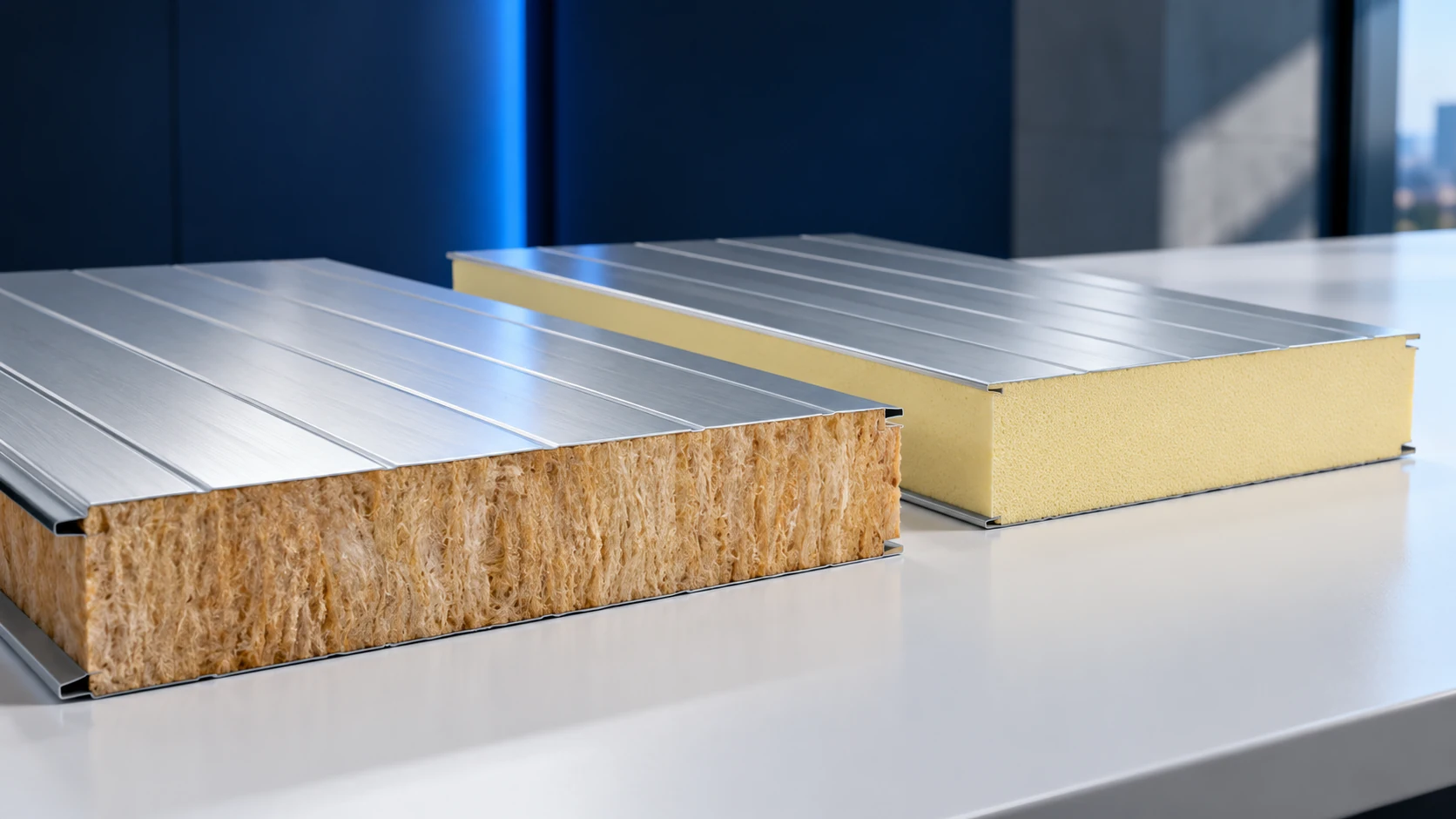
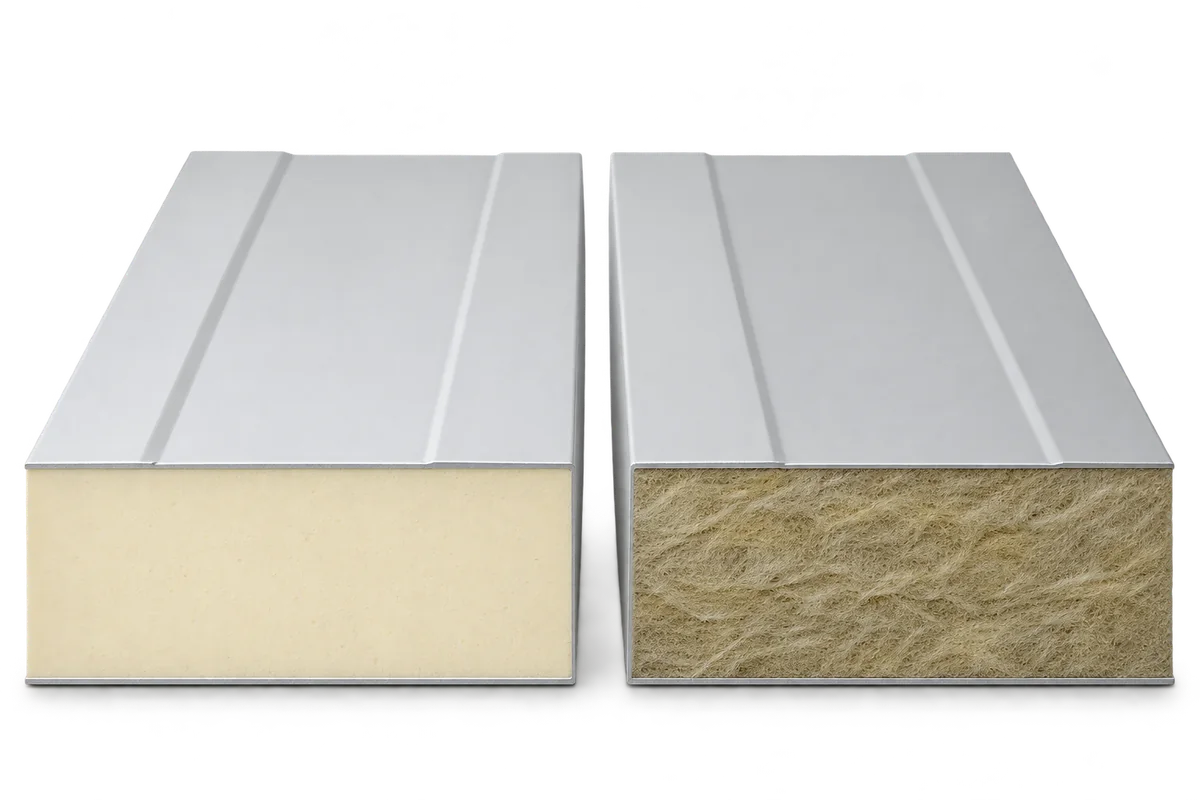
PIR generally achieves a low U-value with less thickness, while mineral-wool sandwich panels may suit particular fire requirements better. Neither is the…
Installing roof sandwich panels begins with checking the supporting structure and product documents, before any panel is lifted into place. Roof pitch,…
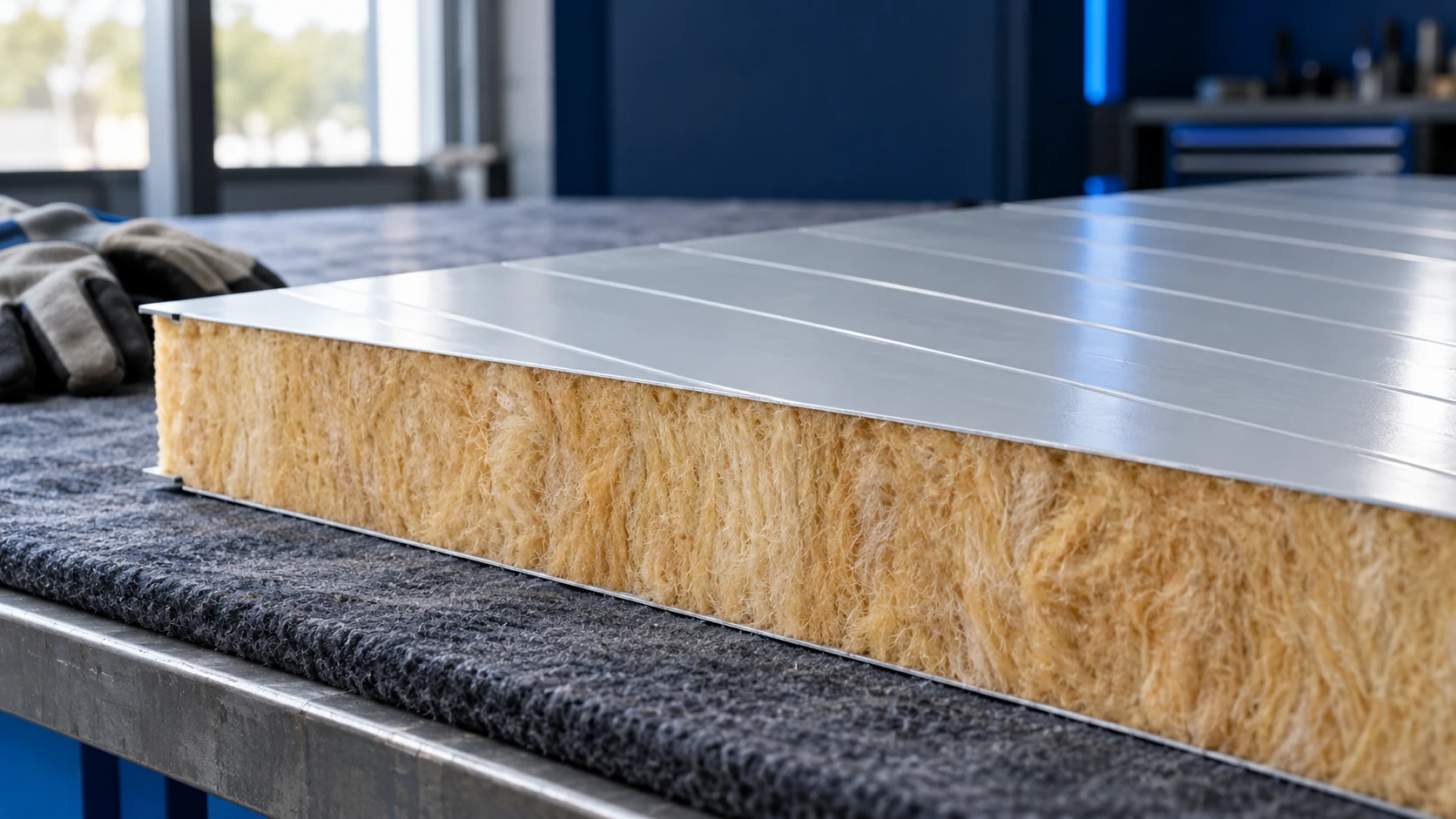
Sandwich panels need a cutting method that avoids overheating their steel facings. Select equipment for the complete panel section, such as a…
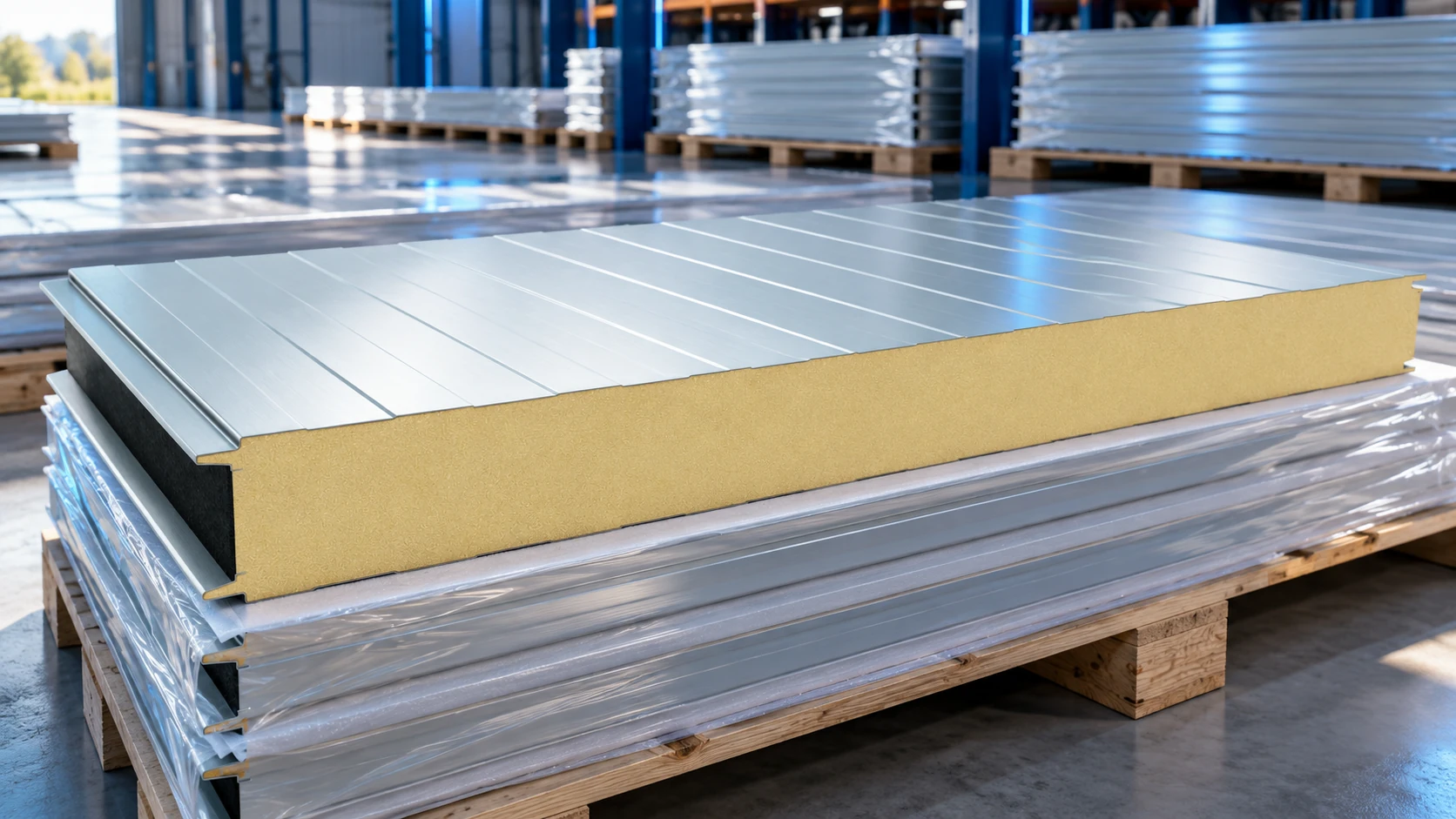
Efficient sandwich panel installation depends on preparation: panels must match the supporting structure, accessories must be available, and the crew needs agreed…
The designations EI and REI describe how a wall or roof performs when exposed to fire. Each letter identifies a function and…
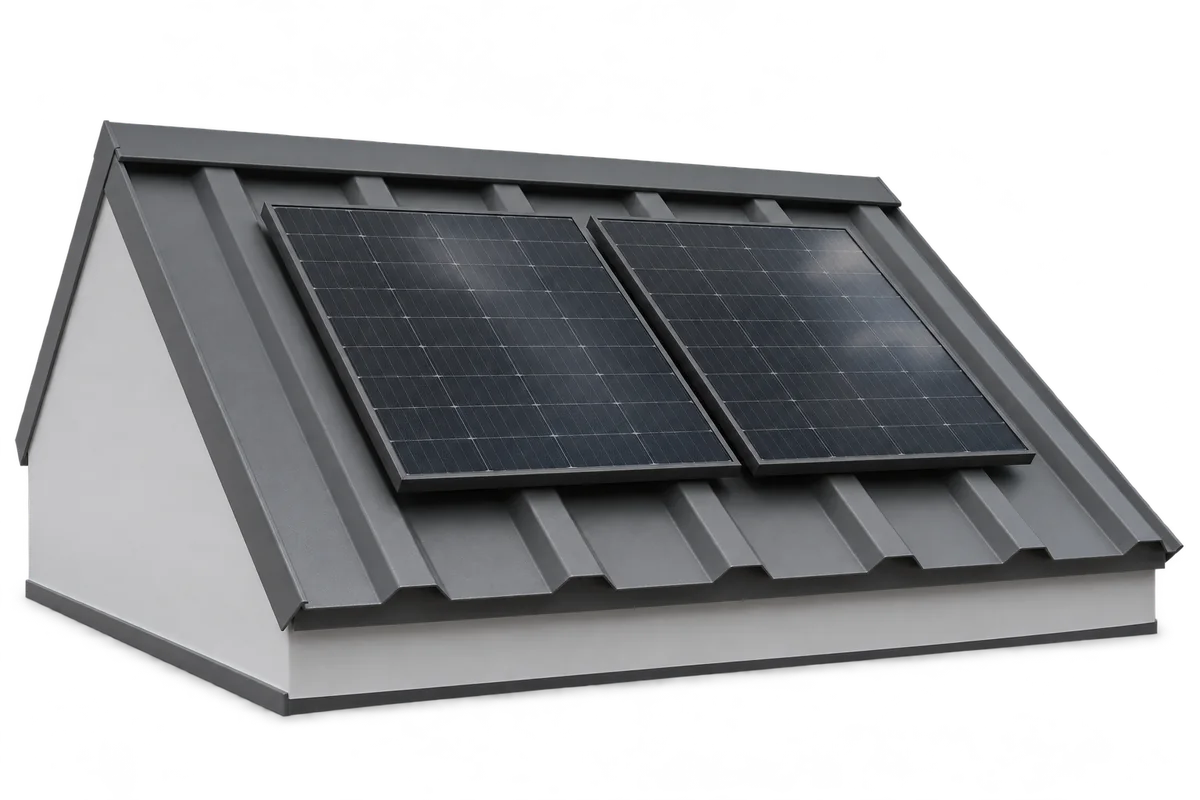
The fixings for a photovoltaic array must suit the specific roof and the loads it will carry. Metal tile roofing, trapezoidal sheets…
Sandwich-panel installation cost depends on the agreed scope and working conditions, not simply the area to be covered. A price per m²…