






U-value and lambda in mineral-wool panels: assessing a wall’s thermal performance
Sandwich panels
When comparing mineral-wool wall panels, start with the U-value declared for the finished product. Lambda describes the core material’s thermal conductivity, not the performance of an entire panel or completed wall. Thickness, panel construction, joints, fasteners and details around openings all affect the result. A calculation based only on wool thickness is therefore an approximation. This guide distinguishes lambda, thermal resistance and U-value, compares examples from two panel families and explains which documents to request. The final wall must be assessed against the project’s requirements, including relevant corrections and thermal bridges, rather than accepted on the strength of a single catalogue figure.
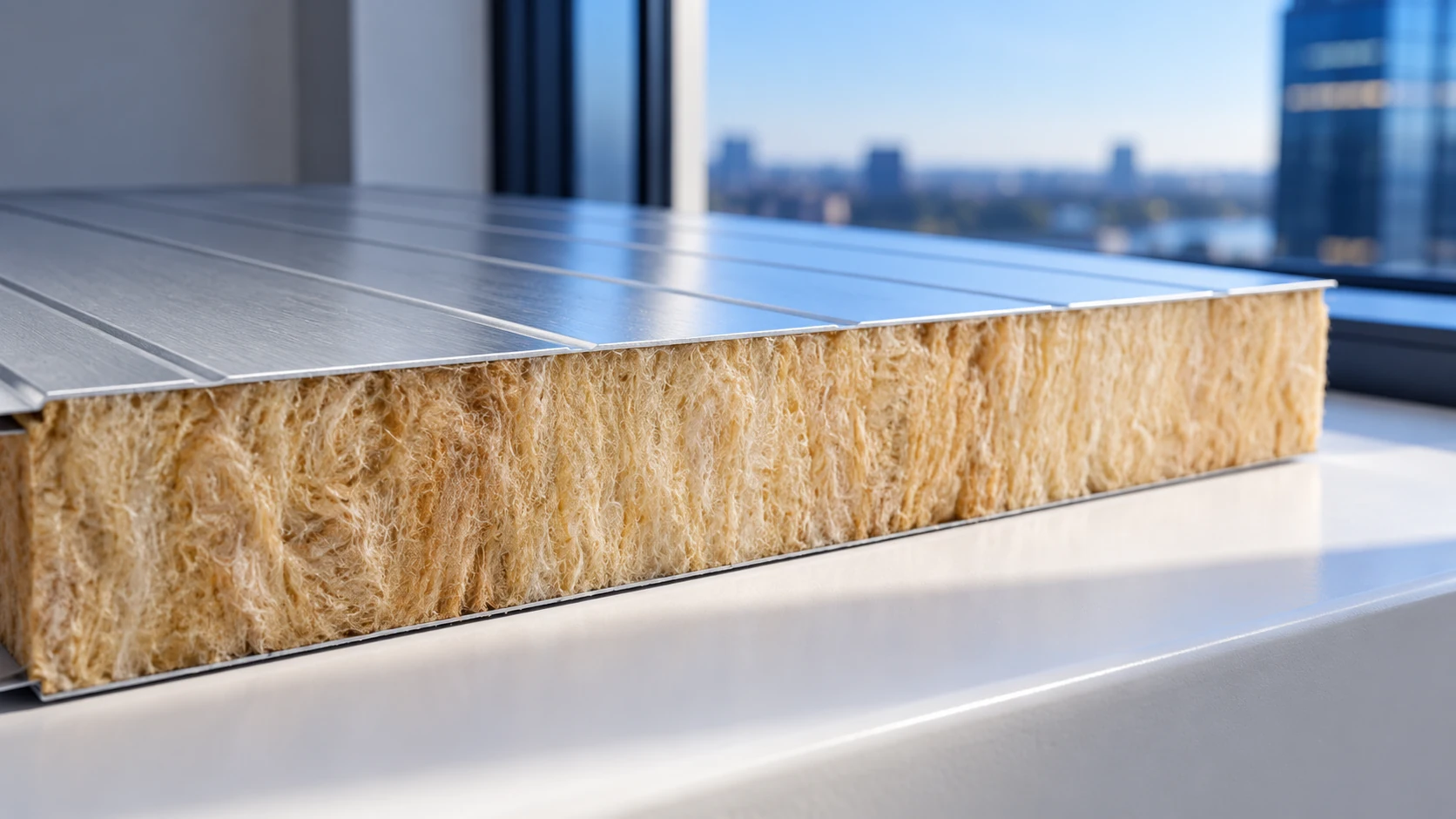
Lambda describes a material
Lambda, written λ, describes heat conduction through a material, in W/(m·K). At equal thickness, a lower value means greater thermal resistance. Do not take one lambda value from the internet and apply it to every mineral-wool panel.
A particular core may combine wool types with lambda values of 0.038 and 0.040 W/(m·K). These belong to specified materials, not to all panels. The arrangement of wool within the finished product also matters. Panel U-values are therefore more useful for comparison than simply choosing the lowest advertised lambda.
U-value describes heat transmittance
U-value is expressed in W/(m²K). A lower figure means less heat flow per square metre at the same temperature difference. Documentation may also use Uc: check its definition and scope. It is not the core’s lambda value.
For a simple layer, thermal resistance is R = d/λ, with thickness d in metres. Thus 0.10 m of material at lambda 0.040 gives R = 2.5 m²K/W. This is a layer calculation, not a declared U-value for a panel; it omits factors considered in the manufacturer’s product assessment.
Keep units consistent: 100 mm equals 0.10 m, not 100 m. Do not add the U-values of layers together; the relevant thermal resistances are combined before determining the result. Use manufacturer data for a finished panel. If a simplified calculation differs, compare the assumptions rather than replacing the declared value.
Equal thickness does not mean equal performance
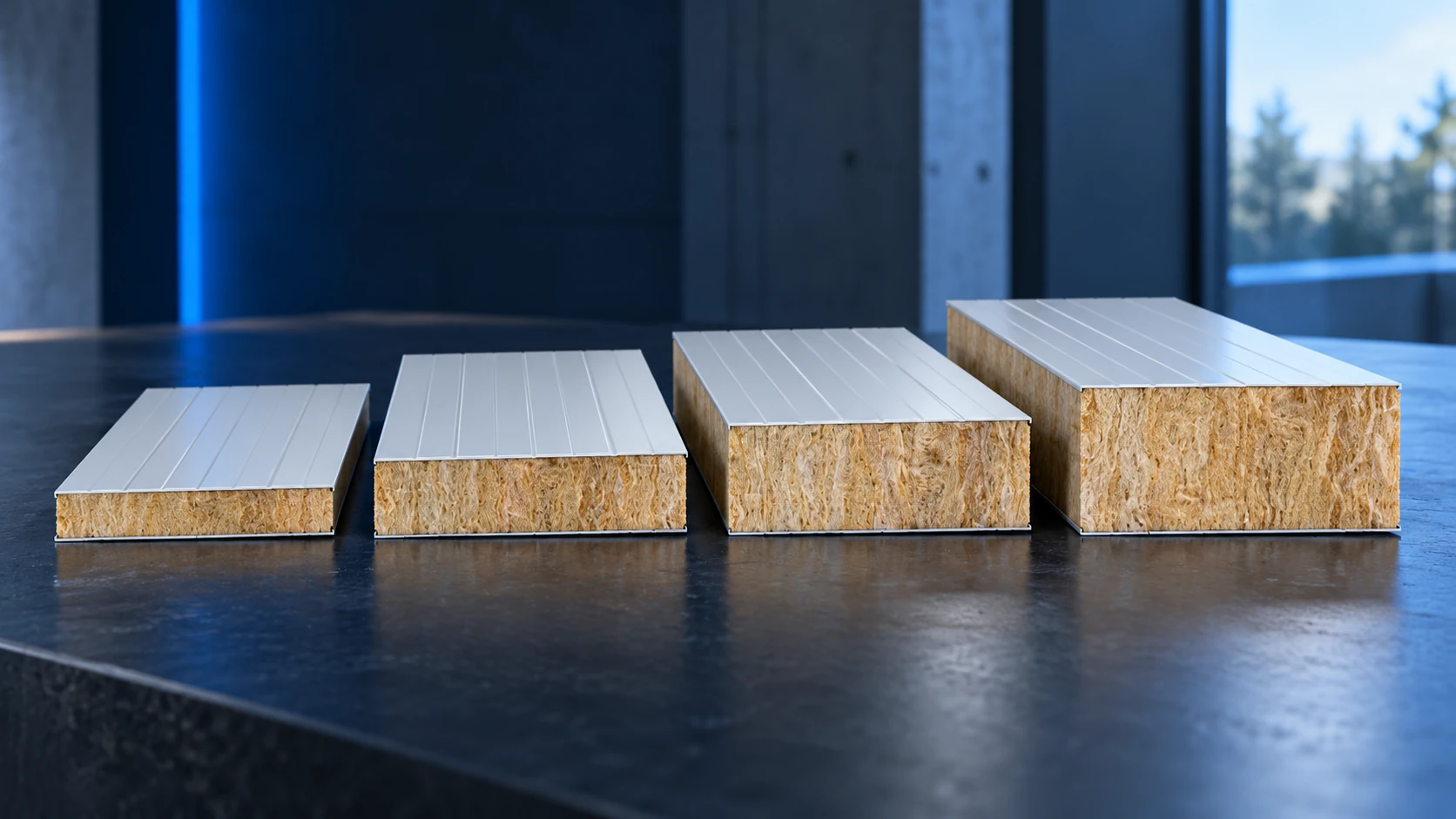
The following examples compare two mineral-wool panel families. All figures are U-values in W/(m²K), not a common specification for all wall panels.
| Example variant | 100 mm | 150 mm | 200 mm |
|---|---|---|---|
| PWW-S | 0.39 | 0.27 | 0.20 |
| IzoWall MWF | 0.37 | 0.25 | 0.19 |
Different results need not mean a table is wrong: the products differ in construction and assessment. Do not transfer these values to every panel with a similar core. Specify the exact variant and thickness in the enquiry, and obtain renewed confirmation if the product is substituted.
A wall also includes its connections
The panel field is only part of the envelope. Bases, corners, roof junctions and door surrounds can create local heat-loss paths. Fasteners and how the cores meet also matter. Air leakage can add heat loss and moisture problems.
Connections need the correct compression and seals suitable for the building. Increasing panel thickness does not replace these. A well-built wall of correctly selected panels may perform better than a thicker envelope with faulty details. List connections that will become difficult to inspect once flashings are fitted.
Set the thermal target for the project
First establish the required performance of the complete wall, based on its use and the design assumptions. Then select a panel allowing for the effects of details. An article or calculator should not determine building compliance from one product table.
An illustrative design target of 0.20 W/(m²K) does not mean that every panel with catalogue U = 0.20 achieves that value in a completed wall. Determine which corrections and thermal bridges apply. Summer overheating, moisture and ventilation also need separate assessment: a good U-value does not solve every envelope issue.
Avoid misleading quotation comparisons
Request the current technical sheet, not just a screenshot of a table. Check product name, edition and units, and whether the value concerns a wall panel, roof panel or insulation alone. One manufacturer can offer several similarly named product families.
If only lambda is quoted, also request the declared U-value for the ordered thickness. If a whole-wall U-value is stated, ask which details and calculations support it. Three decimal places do not make a result more reliable when important connections are omitted.
Frequently asked questions
Does lower lambda always mean a lower U-value for the entire wall?
It helps in a comparable build-up, but thickness, panel construction and wall details also affect the result.
Can U-value be calculated as lambda divided by thickness?
That is a simplification for a homogeneous layer. It does not replace finished-panel data or a calculation of the complete wall.

Free quote
What to include in your enquiry
Tell us how you plan to use the material, the dimensions and the quantity you need. Include the thickness, grade or variant name, along with the delivery town or your preferred collection branch. For a specific product, add its name or a link to the product page. We will reply to the email address you provide to discuss availability and the terms of your order.
More from the building guide
PIR generally achieves a low U-value with less thickness, while mineral-wool sandwich panels may suit particular fire requirements better. Neither is the…
Attic insulation works when it forms a continuous layer and the entire roof manages moisture and air leakage. A thicker board cannot…
Mineral-wool sandwich panels can be useful where fire performance and efficient cladding installation are important. They may form walls of industrial buildings,…
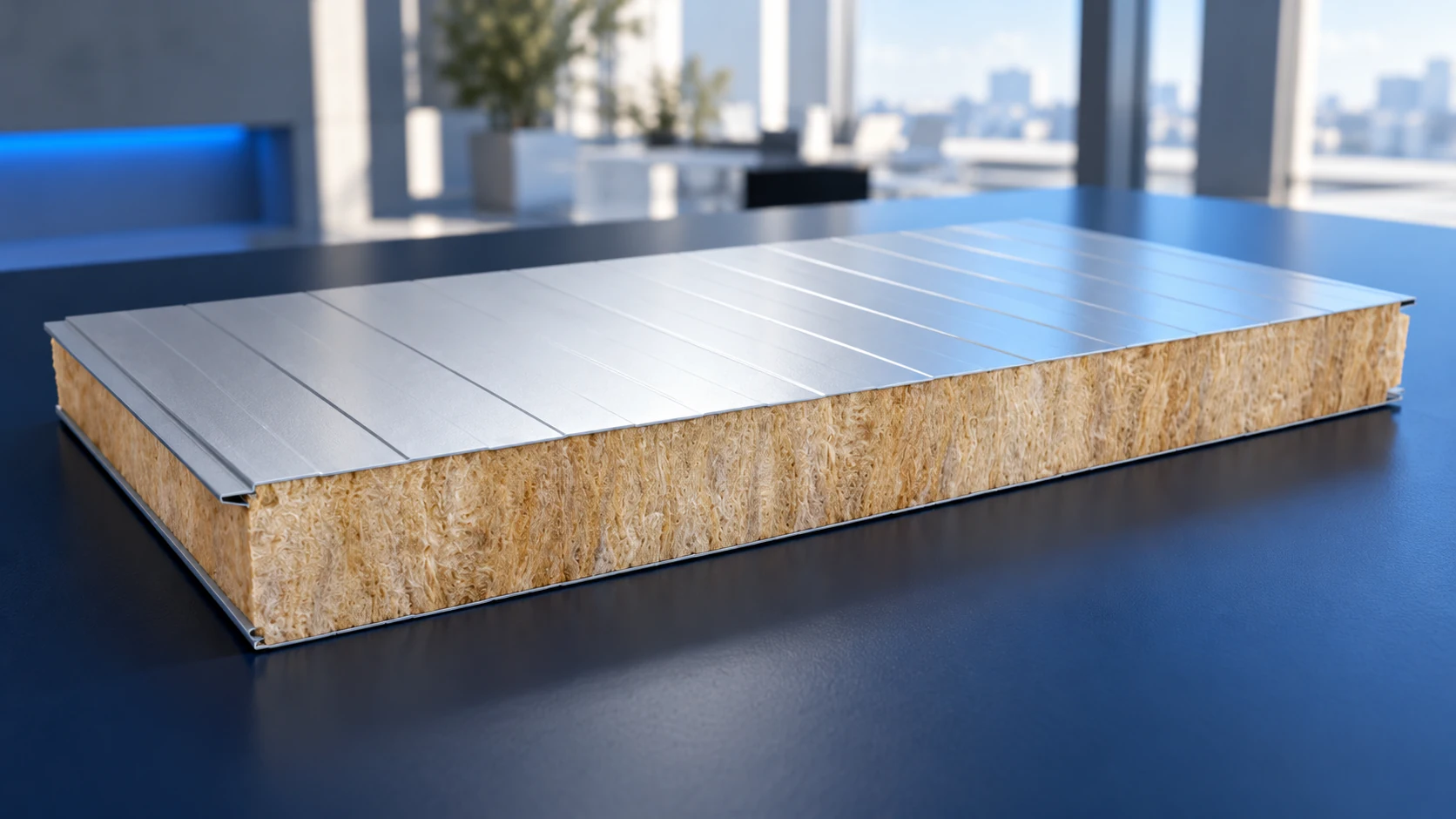
An offer for a 40 mm mineral-wool wall panel needs careful identification: thickness alone does not confirm the core. Some mineral-wool panel…
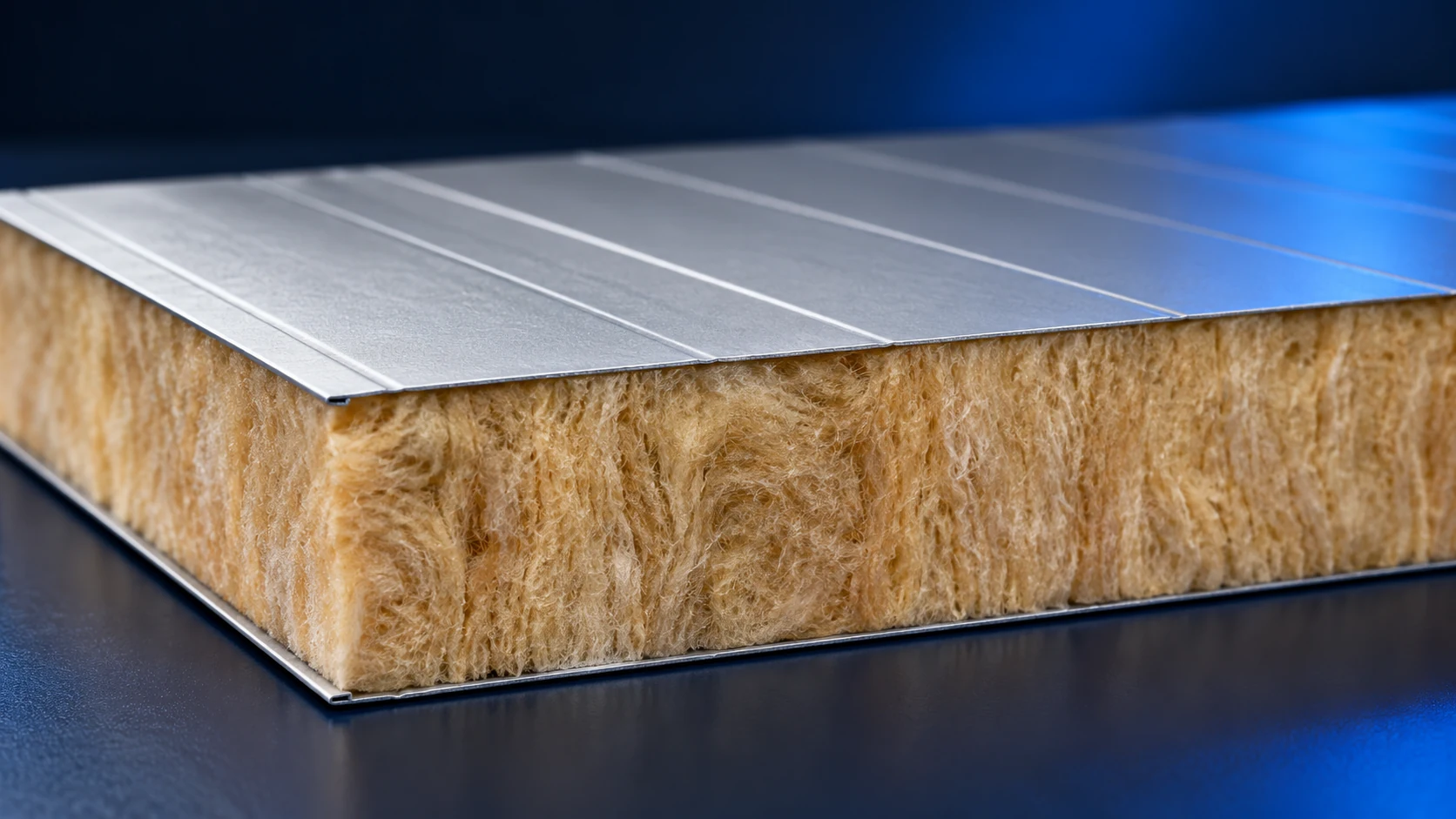
A sandwich wall panel combines an insulating core with two facings. The products discussed here use mineral wool between steel facings and…
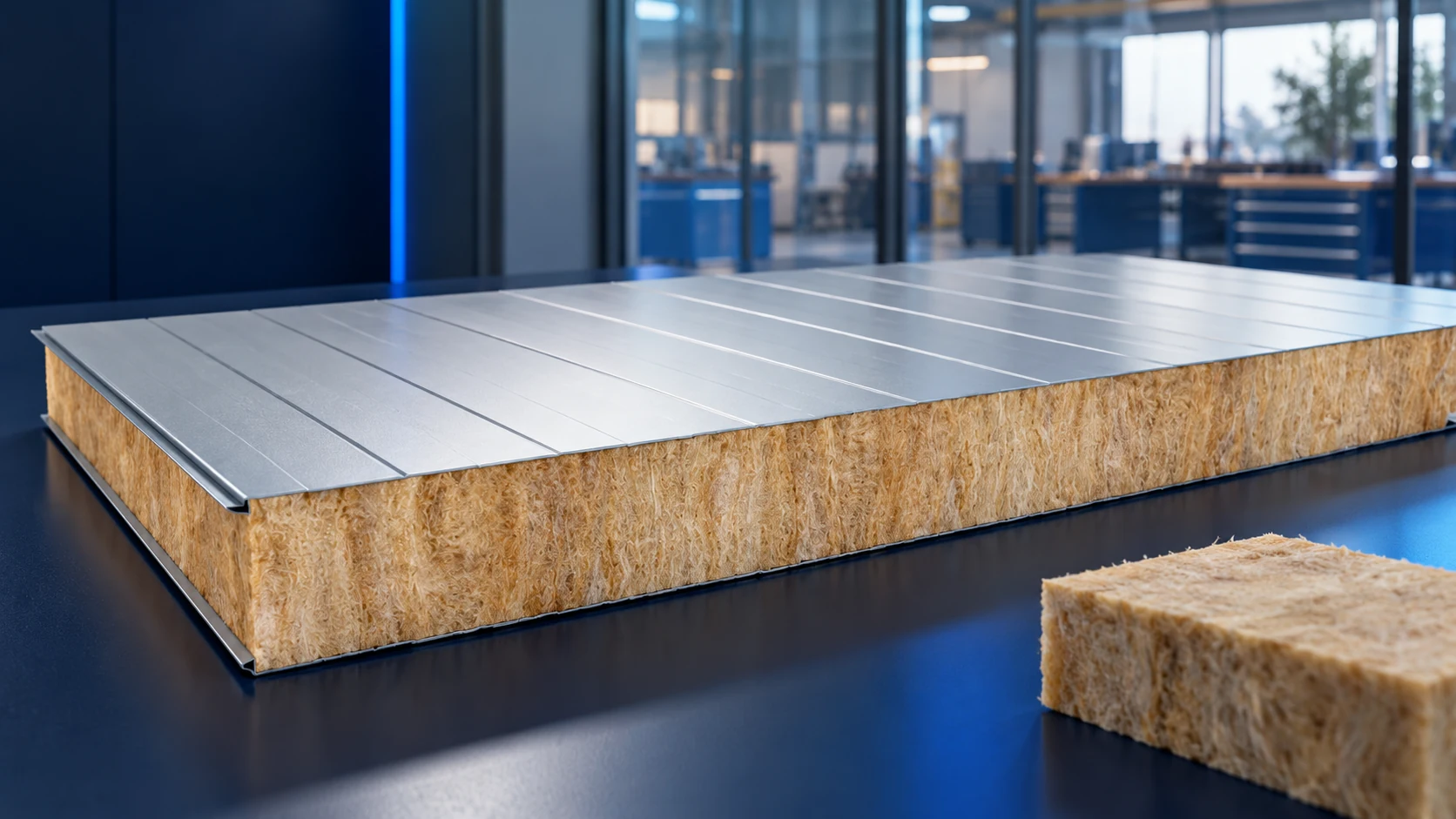
A mineral-wool sandwich panel can reduce sound transmission, but the performance belongs to the specific product, not the core material alone. Distinguish…
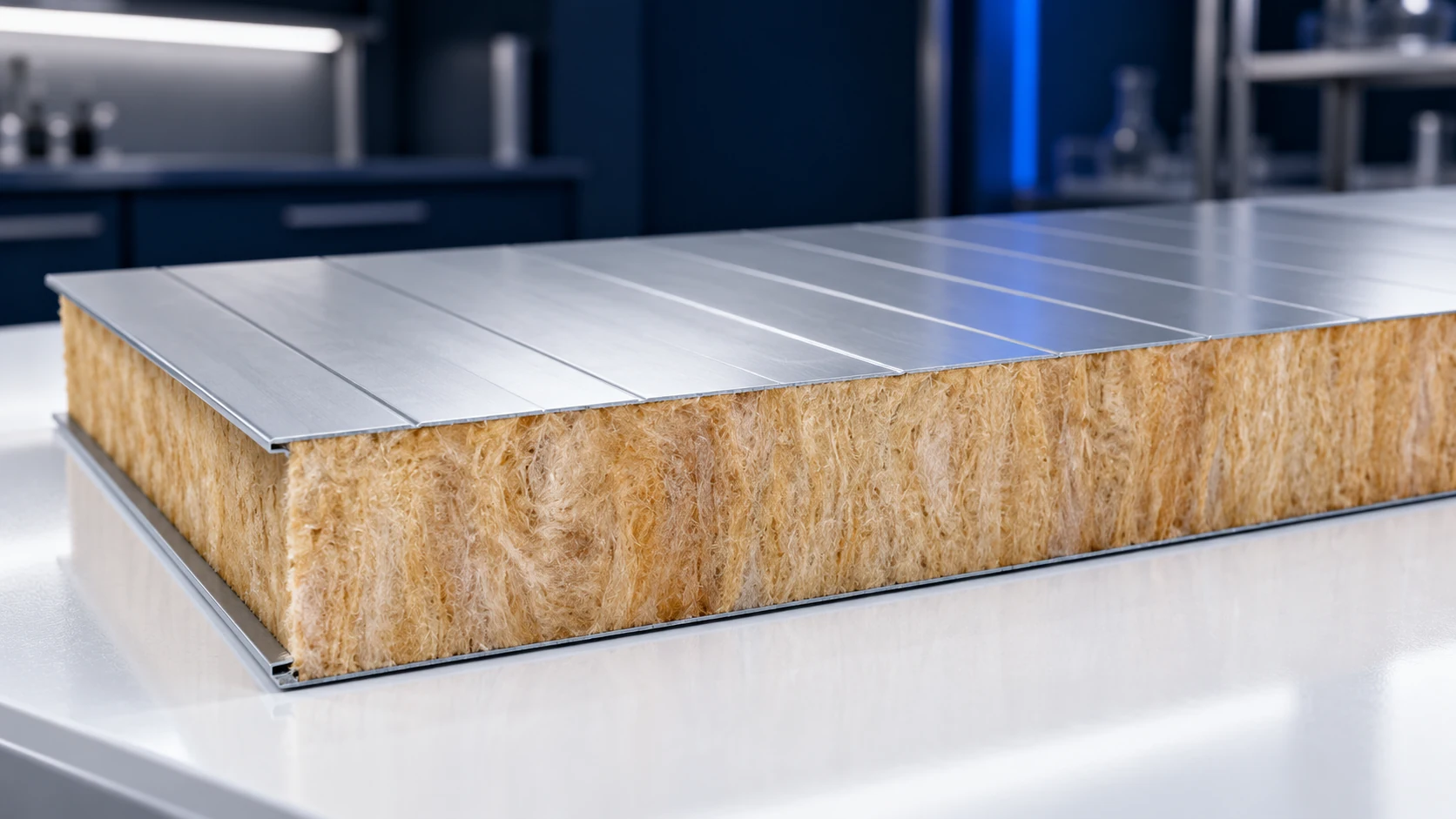
A mineral-wool core does not automatically give a finished wall panel an A1 classification. The complete panel is assessed as a separate…
Wall-panel thickness must satisfy several requirements together: thermal insulation, fire performance, span and weight. Do not start by assuming that 100 mm…