






What is a mineral-wool sandwich wall panel, and how do you choose one?
Sandwich panels
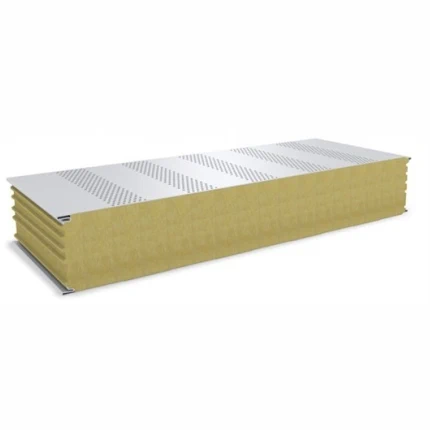
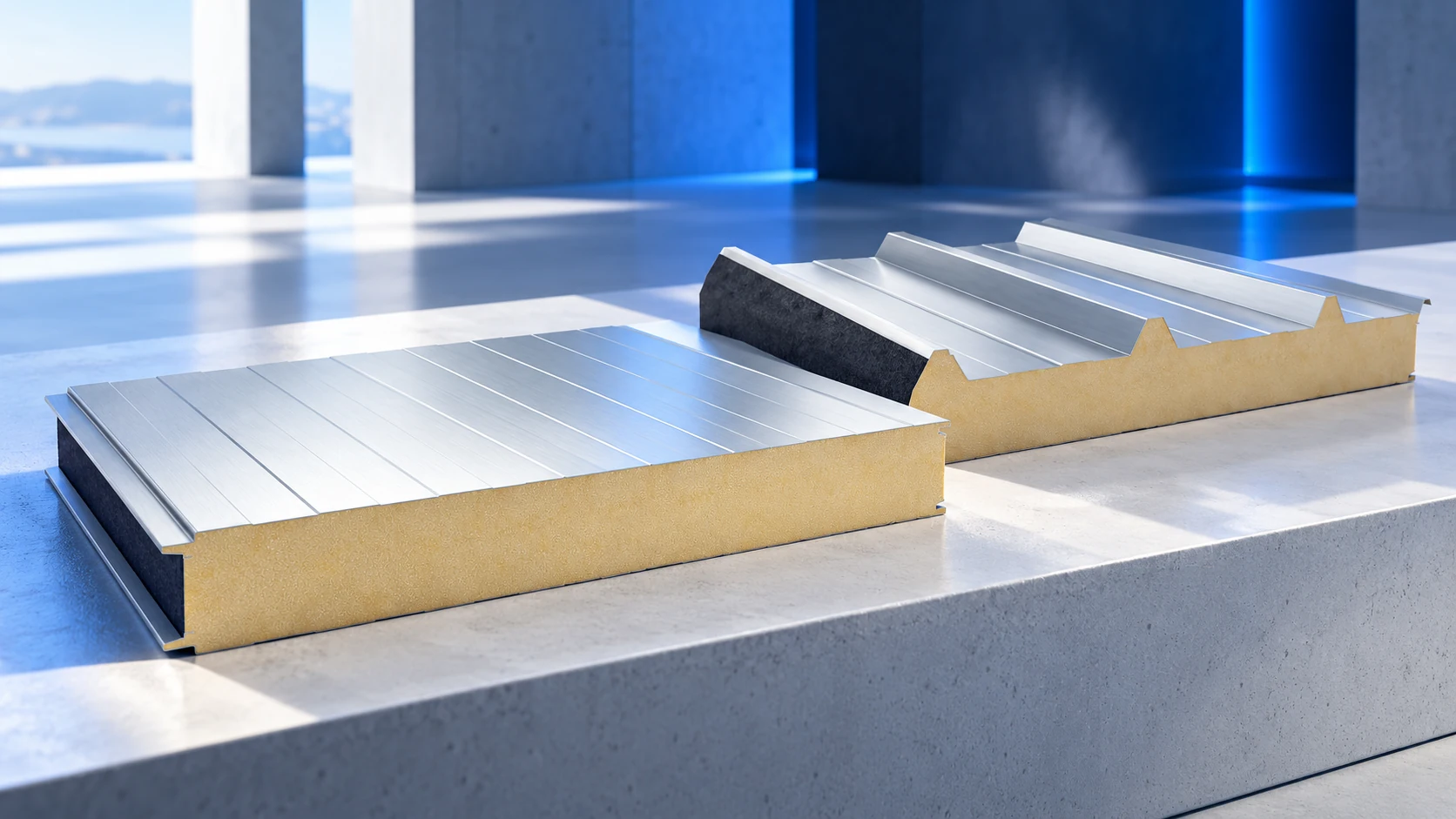
A sandwich wall panel combines an insulating core with two facings. The products discussed here use mineral wool between steel facings and form cladding attached to a supporting structure. Choosing a panel means checking the whole product, its joints and the proposed wall assembly. Thickness alone does not establish thermal performance, fire resistance or sound insulation. Dimensions, fixings, supports and finishing details also affect the result. This guide follows the choice from the panel’s construction through performance and ordering to installation and maintenance, distinguishing documented properties of particular variants from claims that would apply to every mineral-wool panel.
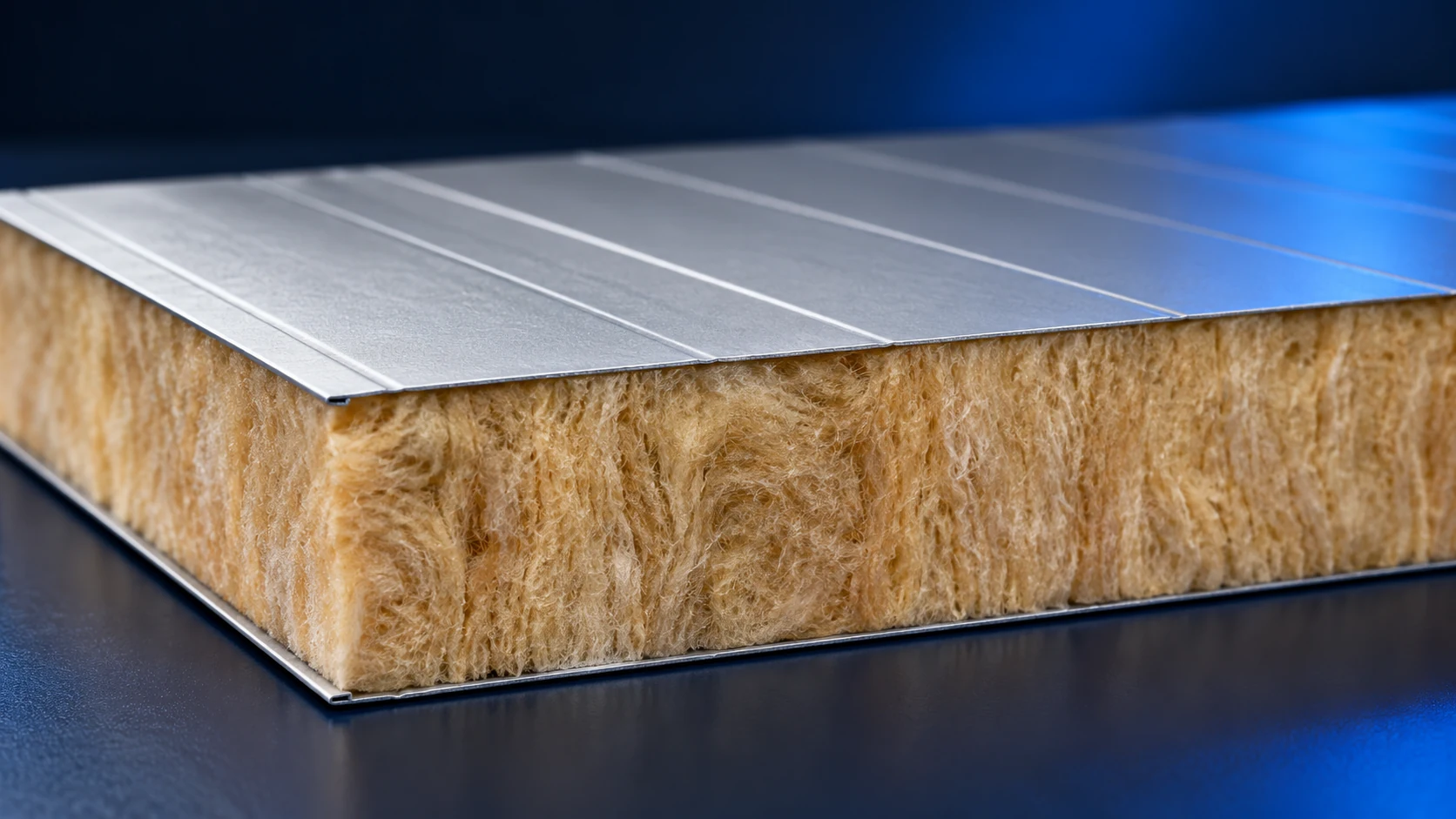
How the panel works
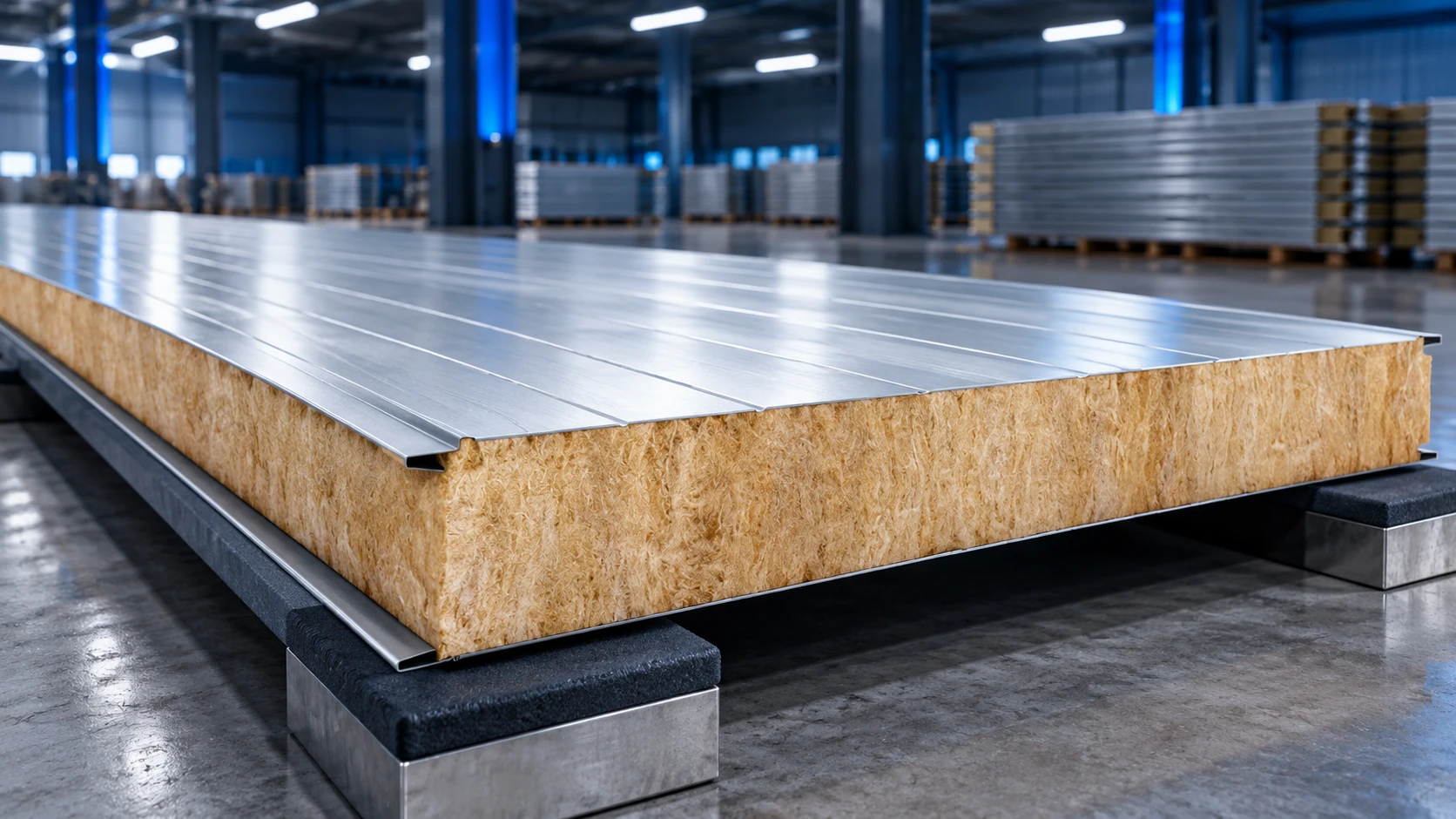
The facings and core act together in the finished element. It is not simply loose wool inserted between two sheets. The bond between layers matters to performance, so delamination needs assessment even if the outer steel still looks sound.
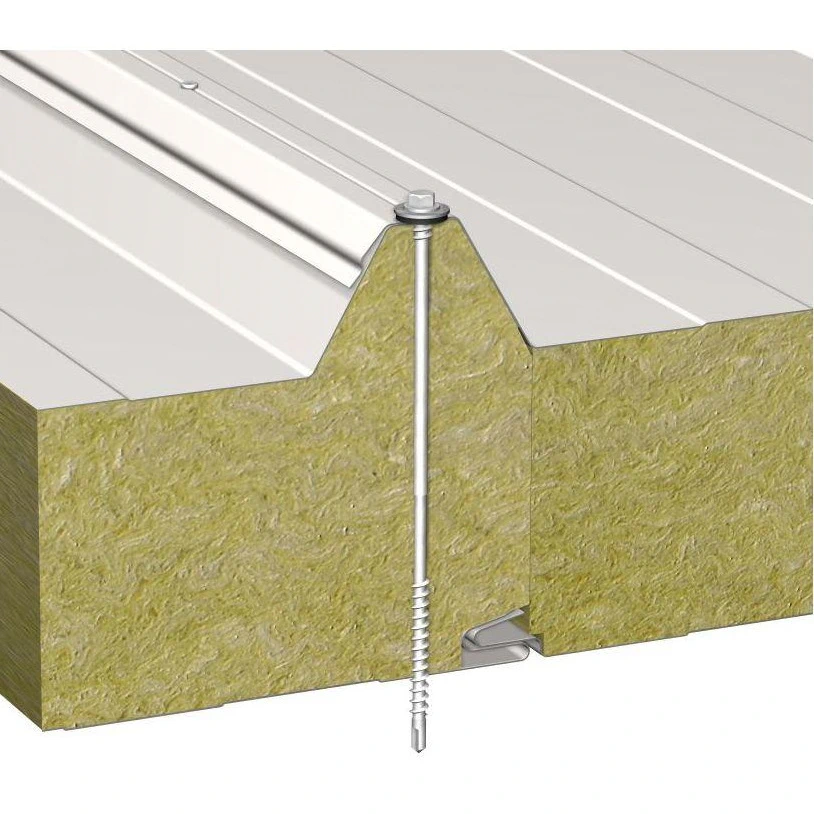
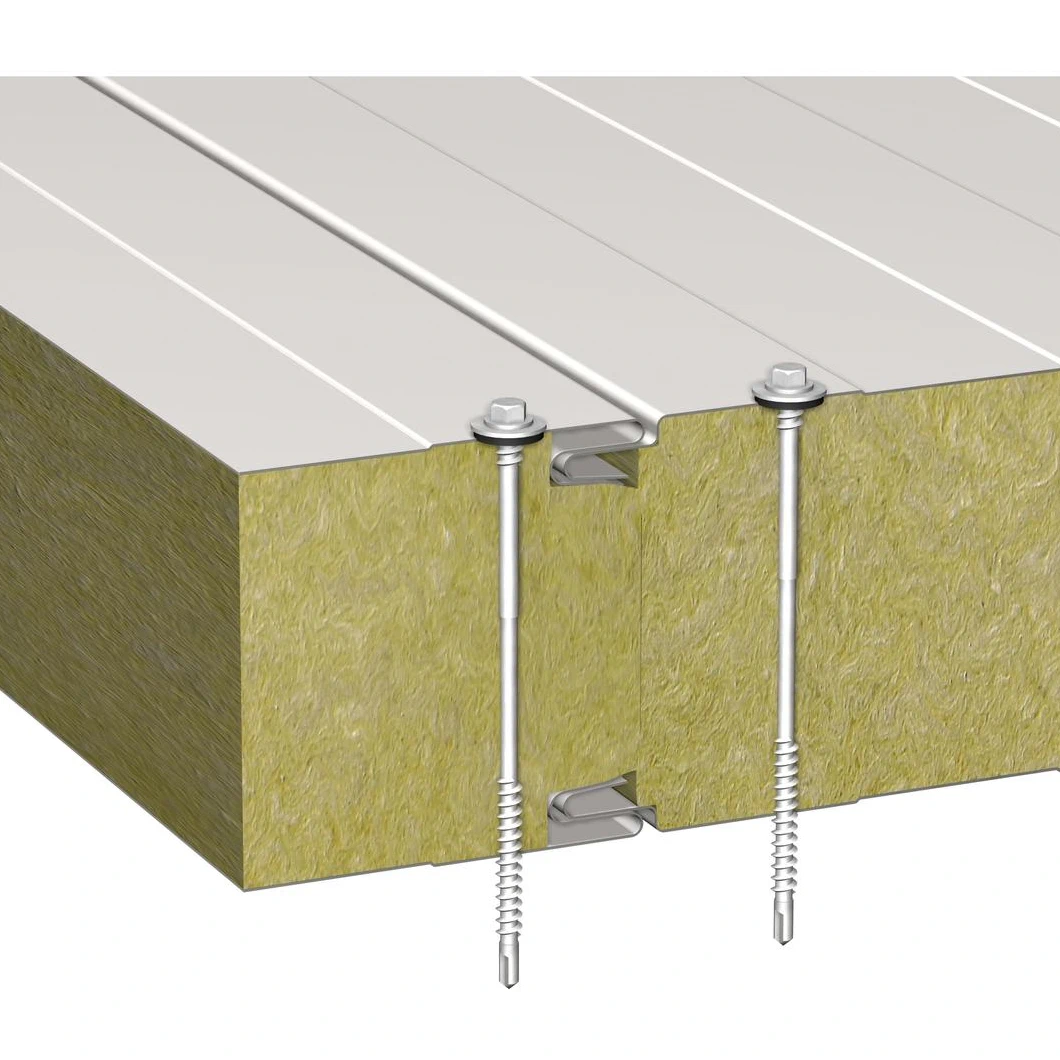
Panels can use exposed fasteners or concealed fixing within a specially formed joint. Both suit wall cladding but have different details. Do not substitute one for appearance alone without checking the design. The joint also affects load transfer, fastener quantities and installation.
Thermal performance: compare U-values, not just core names
In one example family, U is 0.39 W/(m²K) at 100 mm and 0.20 W/(m²K) at 200 mm. Another core construction gives 0.37 and 0.19 W/(m²K) respectively. These are selected variants. There is no single table for all mineral-wool panels; check the data for the product being ordered.
Lambda describes the core material, while U describes heat transfer through the panel. Assessing the whole wall also requires junctions and thermal bridges. A poorly executed base or joint can undermine good insulation, so choose thickness alongside the connection details.
Fire and sound are separate criteria
A2-s1,d0 is one possible reaction-to-fire classification for a finished mineral-wool panel and must be confirmed for the selected variant. Wall fire resistance needs its own assessment of the complete assembly, including supports, orientation, fixings, joints and service penetrations. The material name is insufficient.
For acoustics, check the rating of the actual version. Example products may have Rw of 33 dB or 27 dB; these do not define a range for every panel. Doors, gates and other sound paths also affect the wall. Rw is not a measure of sound absorption inside a hall. Do not merge these different properties into a single “soundproofing” claim.
Choose dimensions from the wall drawing
Panels are supplied in specified lengths and modular widths. The module determines coverage and may differ from the overall element width because the joint can project beyond it. Calculate quantities using the correct module and verify the distinction for the selected product.
Draw the façade layout and openings before purchase. Identify reusable offcuts and the installation sequence. Long panels can reduce joints but need suitable transport. Short lengths do not necessarily save money if they add flashings and supports.
A 10 m wide wall does not always need exactly ten panels. Divide the cladding width by the cover module, not the overall sheet width, then check the edge cuts and corner detail. Rounding the count gives only a preliminary quantity. The final layout must also fit openings, supports and connectable edges.
Installation starts with the supporting structure
The manufacturer’s requirements include checking support geometry and conformity with the design. Select fasteners, seals and flashings accordingly and follow the specified panel arrangement. Overtightening screws is not a way to correct an inaccurate frame.
Use cutting tools that do not overheat the facings, remove swarf and protect edges. Give particular attention to the base, corners and openings. Even excellent catalogue performance cannot compensate for water reaching the core through an unprotected termination.
Ordering and subsequent maintenance
Specify the model, thickness, both facings, coating and colour, together with lengths and accessories. Request the documentation and scope of use. For outlet stock, establish each batch’s condition. A grade label alone proves neither full conformity nor a complete absence of declared performance.
Keep the installation records and an inspection plan. Schedule cladding inspections at least annually, taking account of the particular coating’s requirements. Check fasteners and flashings too, so defects can be found before moisture or corrosion spreads. Factory-made panels still require properly maintained cladding after installation.
Frequently asked questions
Does a mineral-wool panel replace a hall’s structure?
No. A cladding panel needs appropriately designed supports and fixings.
Where should an order start?
Start with the wall’s requirements and a layout drawing, then choose the model, thickness, lengths and complete accessory set.

Free quote
What to include in your enquiry
Tell us how you plan to use the material, the dimensions and the quantity you need. Include the thickness, grade or variant name, along with the delivery town or your preferred collection branch. For a specific product, add its name or a link to the product page. We will reply to the email address you provide to discuss availability and the terms of your order.
More from the building guide
A building envelope must limit heat loss and meet the building’s safety requirements. When choosing sandwich panels, consider those two tasks together.…
Sandwich panels can be supplied in lengths suited to a project, but the permitted maximum depends on the model, thickness, colour and…
A sandwich panel combines external facings with a bonded core. Their joint action can form a lightweight building enclosure and limit heat…
Installing roof sandwich panels begins with checking the supporting structure and product documents, before any panel is lifted into place. Roof pitch,…
Mineral-wool panel weight depends on the model, thickness and both facings; there is no single figure for the whole product group. Planning…
A sandwich panel enquiry should define a particular delivery, rather than just an area and a core thickness. The buyer needs to…
A sandwich-panel price per square metre becomes useful only when the product is specified. Core type, thickness, facings and coating all affect…
Choosing a sandwich panel starts with the building's intended use. A cold store, heated workshop and simple warehouse enclosure need different combinations…