






Comparing mineral-wool wall-panel variants: weight, core and performance
Sandwich panels
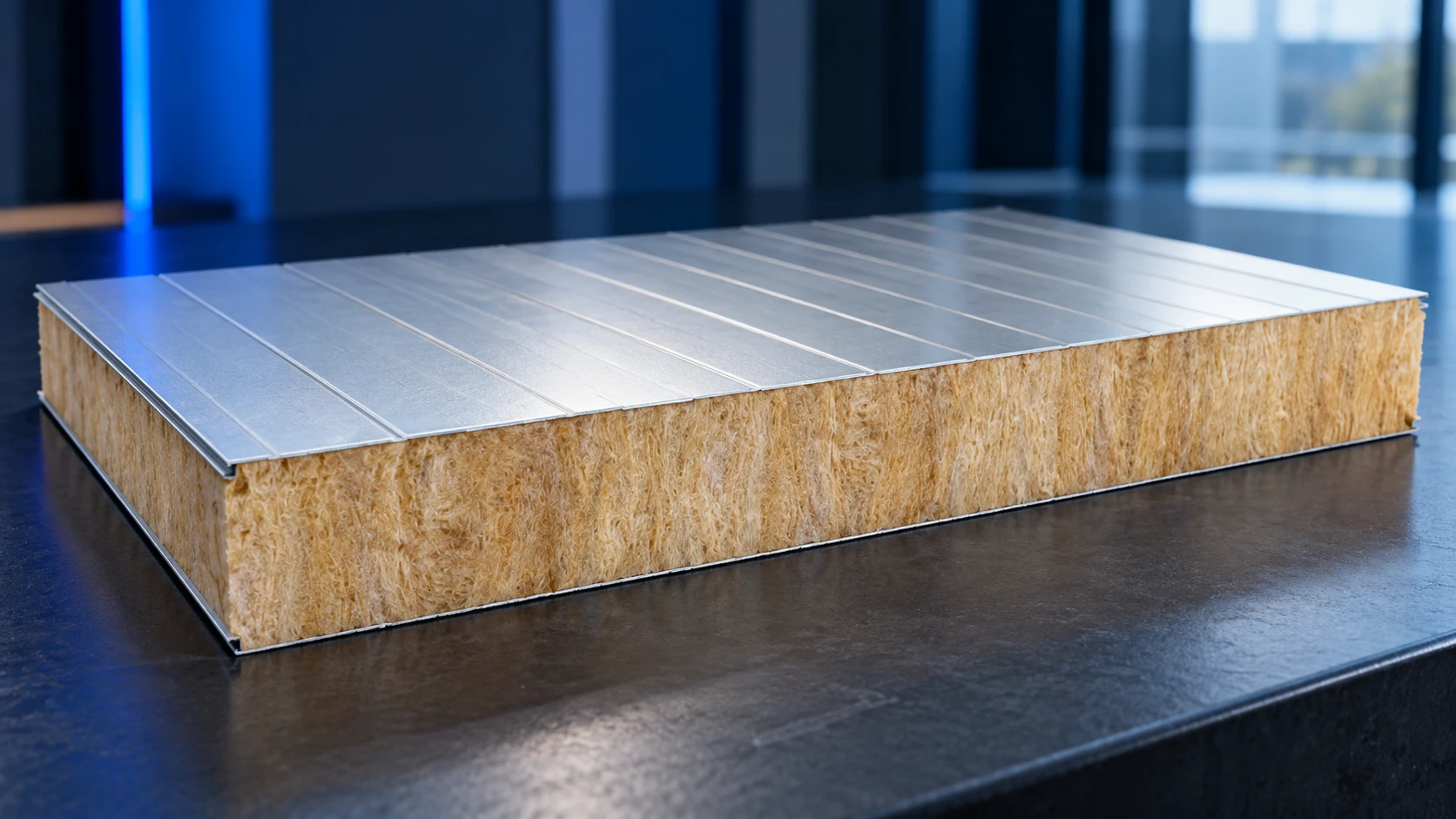
Mineral-wool wall panels of equal thickness can differ in weight, load-bearing performance and thermal insulation. These differences arise from the complete product, not simply the name of a variant. A lighter panel need not perform worse thermally, while a heavier one is not automatically suitable for a longer span. Start with the construction and the full set of properties required by the building. Compare the two facings, core, joints, dimensions and documented conditions of use before comparing prices. The examples below show why core density or a commercial label alone cannot decide which panel is appropriate for a particular wall.
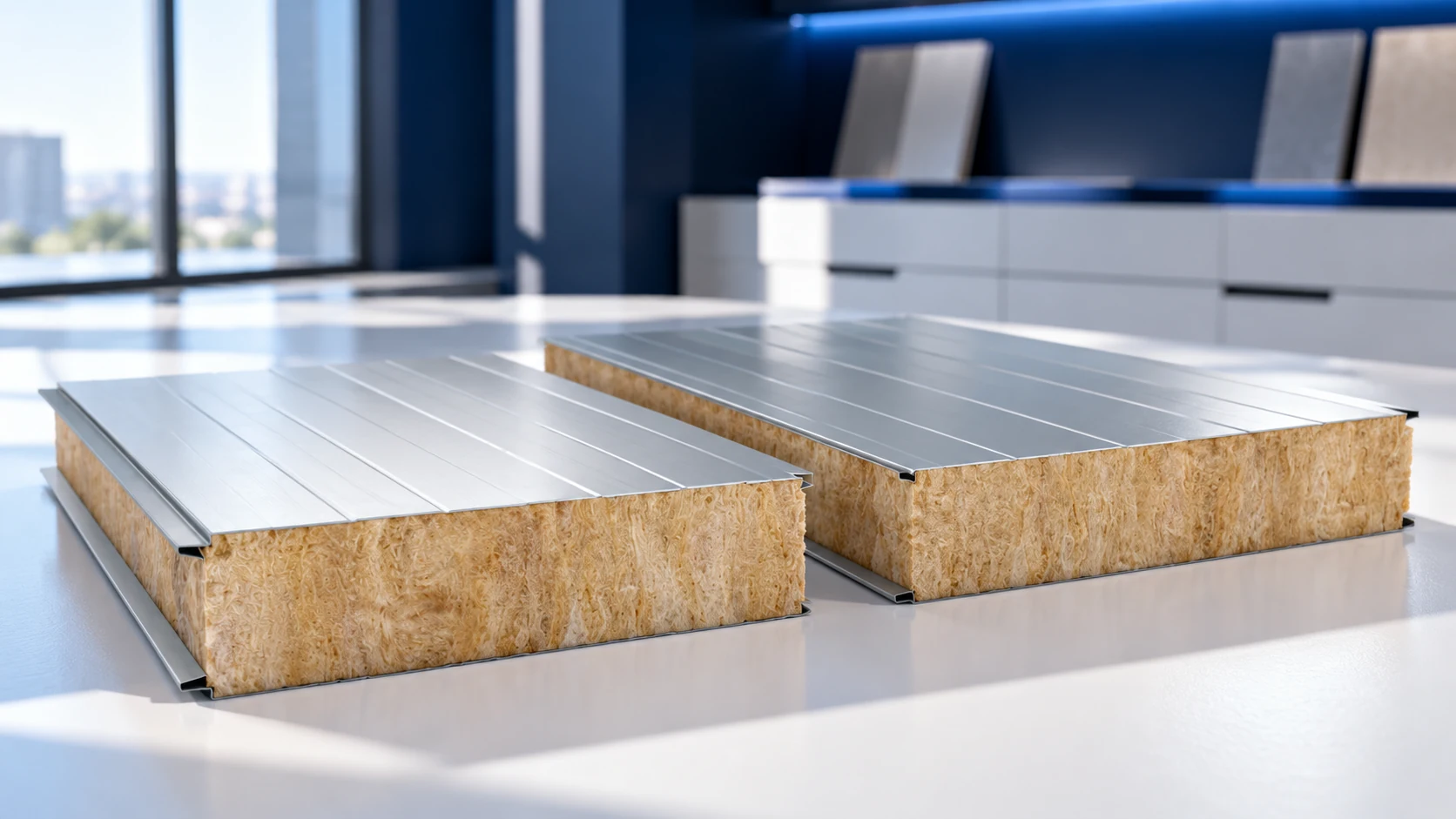
Compare the construction, not just the variant name
Variant names are not a market-wide quality scale. A short label may refer to weight, joint type or a product’s position in a range. Without further information, its meaning remains unclear. Compare the construction and properties of the precise versions offered.
Check the core material and arrangement, both facing thicknesses, fixing method and available dimensions. Compare versions that can actually be ordered. Combining the properties of one version with the price of another may look attractive but describes no real delivery.
Core density is only one property
One example family may use a 100 kg/m³ mineral-wool core, with an 85 kg/m³ core in its lighter version. These are figures for selected variants, not categories covering all panels. The first panel is not necessarily better in every respect: facings and the bond between layers also determine finished-product performance.
Another example combines wool densities of 80 and 110 kg/m³ within the core. “Lighter” or “stronger” alone cannot adequately describe it. Density comparisons omit the facings, joint and interaction of the layers. Nor should these particular densities be assumed for every composite core arrangement.
A lighter panel can still insulate well
Consider two example 100 mm panels with 0.5/0.5 mm facings. The heavier version has U = 0.39 W/(m²K) and weighs 18.1 kg/m²; the lighter has U = 0.38 W/(m²K) and weighs 16.6 kg/m². In this pair, lower weight does not worsen thermal insulation. These are specific configurations, not a universal relationship for mineral-wool panels.
This does not make the lighter variant the better purchase in every case. Load capacity and fire requirements still need checking. Weight may matter most for one wall, while span or classification scope matters more for another. A label or single figure cannot replace comparison of the complete solution.
Load capacity requires the full table
Obtain the table for the actual thickness and facings ordered. Check the single-span or multi-span arrangement and applied loads. Temperature and colour matter too. A result for another variant does not establish the properties of your panel.
Read the conditions behind the maximum span rather than selecting the largest number. A different deflection criterion can change the result. Fixings and supports must also be assessed. A “reinforced” variant may help in a particular configuration, but the marketing term alone proves neither the scope of that benefit nor suitability for your building.
Fire performance is not a simple ranking
Reaction to fire and the wall’s fire resistance require separate assessment. Two variants may share A2-s1,d0 without having identical EI application ranges. Check the complete assembly conditions. Calling a version lighter or heavier does not assign it a particular fire resistance.
If a description promises “greater protection”, ask which property it means: reaction to fire, EI, span or coating. Without that answer, a price premium is difficult to judge. Conflicting data sheets and instructions need manufacturer clarification, not assumptions in place of application documents.
Compare two quotations using explicit specifications
List the full model name, core thickness, both facings and coating. Add U-value, weight and the required structural and fire-performance scope. Agree lengths and widths, then compare prices including transport and accessories for that same specification.
Confirm that the version is available in the required thickness. Ranges can differ and change over time. A familiar name does not replace checking the current specification. A detailed quotation makes clear what the supplier means by basic, lightweight or reinforced versions.
Assess any premium against a named benefit: less weight, a different span range or a required design property. Ask which document confirms it. “Higher product quality” alone leaves the quotation incomplete. A cheaper variant may meet every requirement; a more expensive one may reduce support or installation costs. Both conclusions require checking the complete assembly.
Frequently asked questions
Does the variant name define the panel’s quality grade?
No. Compare the construction, performance and conditions of use of the specific version.
Does denser wool always produce a better U-value?
No. Assess the whole panel’s U-value. A lighter variant may have a slightly lower U-value in a particular comparison, but this is not a rule for all products.

Free quote
What to include in your enquiry
Tell us how you plan to use the material, the dimensions and the quantity you need. Include the thickness, grade or variant name, along with the delivery town or your preferred collection branch. For a specific product, add its name or a link to the product page. We will reply to the email address you provide to discuss availability and the terms of your order.
More from the building guide
Outlet mineral-wool wall panels can reduce cladding costs if the reason for their lower price is understood. Surplus stock and a panel…
An offer for a 40 mm mineral-wool wall panel needs careful identification: thickness alone does not confirm the core. Some mineral-wool panel…
The right mineral-wool wall panel is the one that meets the building's requirements, not necessarily the thickest or most expensive option. Start…
There is no single service-life figure for every mineral-wool sandwich panel. Conditions in a dry warehouse differ from those in a plant…
Wall-panel thickness must satisfy several requirements together: thermal insulation, fire performance, span and weight. Do not start by assuming that 100 mm…
No single screw suits every mineral-wool sandwich panel. The fastener must match panel thickness, support material and the loads on the connection;…
A mineral-wool core does not automatically give a finished wall panel an A1 classification. The complete panel is assessed as a separate…
A thickness of 100 mm does not define every property of a mineral-wool wall panel. Models can differ in thermal performance, weight,…