






Where are mineral-wool wall panels a useful choice?
Sandwich panels
Mineral-wool sandwich panels can be useful where fire performance and efficient cladding installation are important. They may form walls of industrial buildings, warehouses or internal rooms, provided the exact product suits the application. Building type alone does not settle the choice: two similar-looking halls can have very different requirements. This guide considers storage and production conditions, fire-resisting partitions, sound insulation, cleaning and moisture protection. It also explains when another system should be compared. Selection should follow the requirements of the particular wall, the supporting structure and the selected product’s documentation rather than a general assumption about mineral wool.
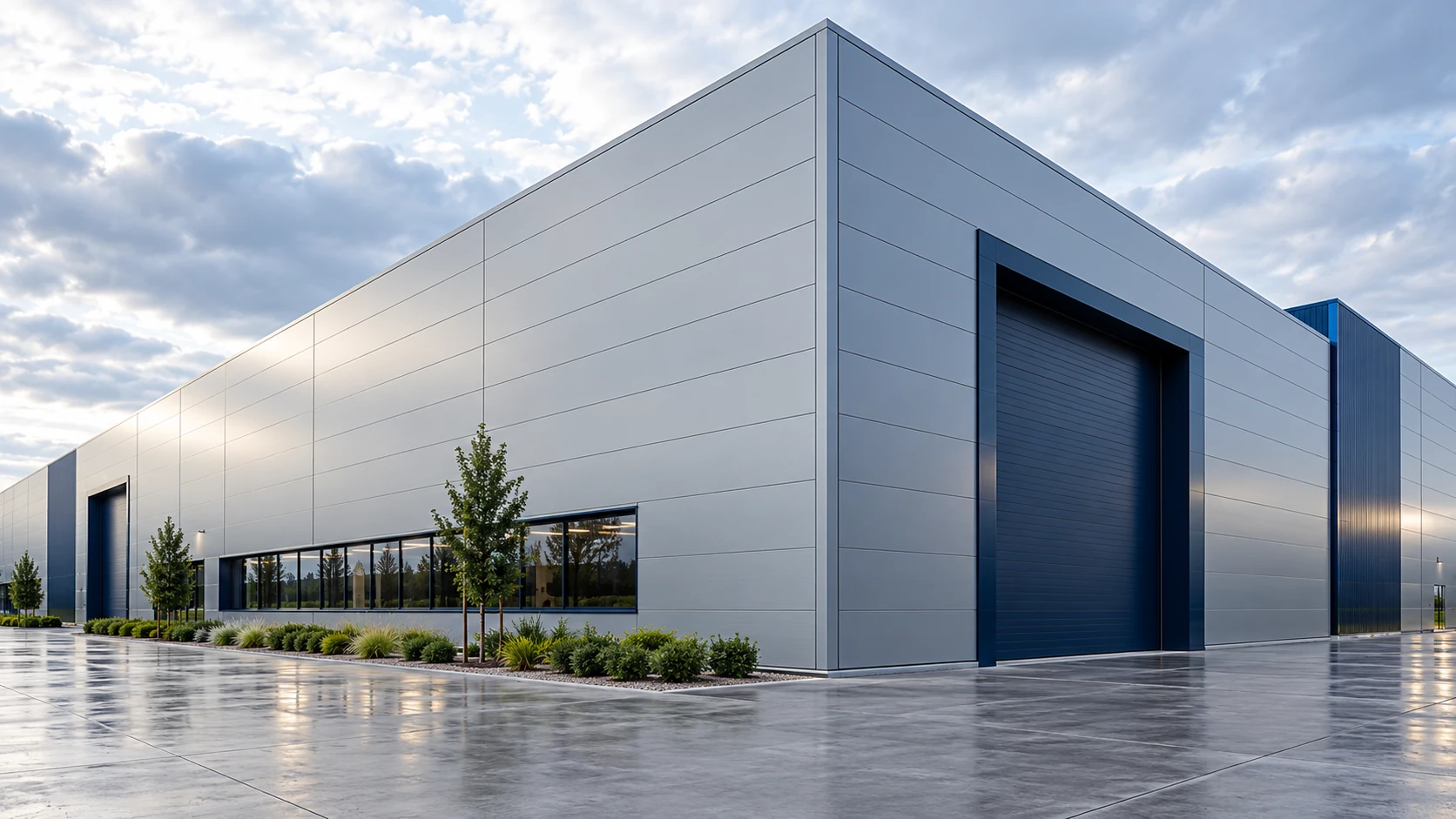
Industrial buildings and warehouses
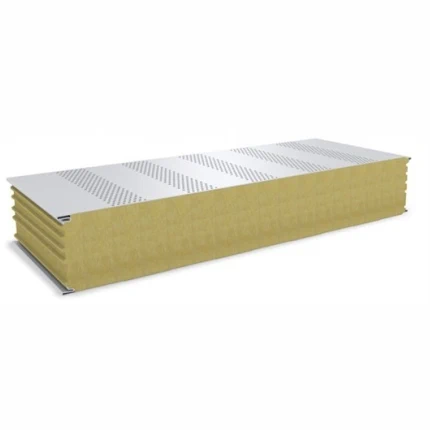
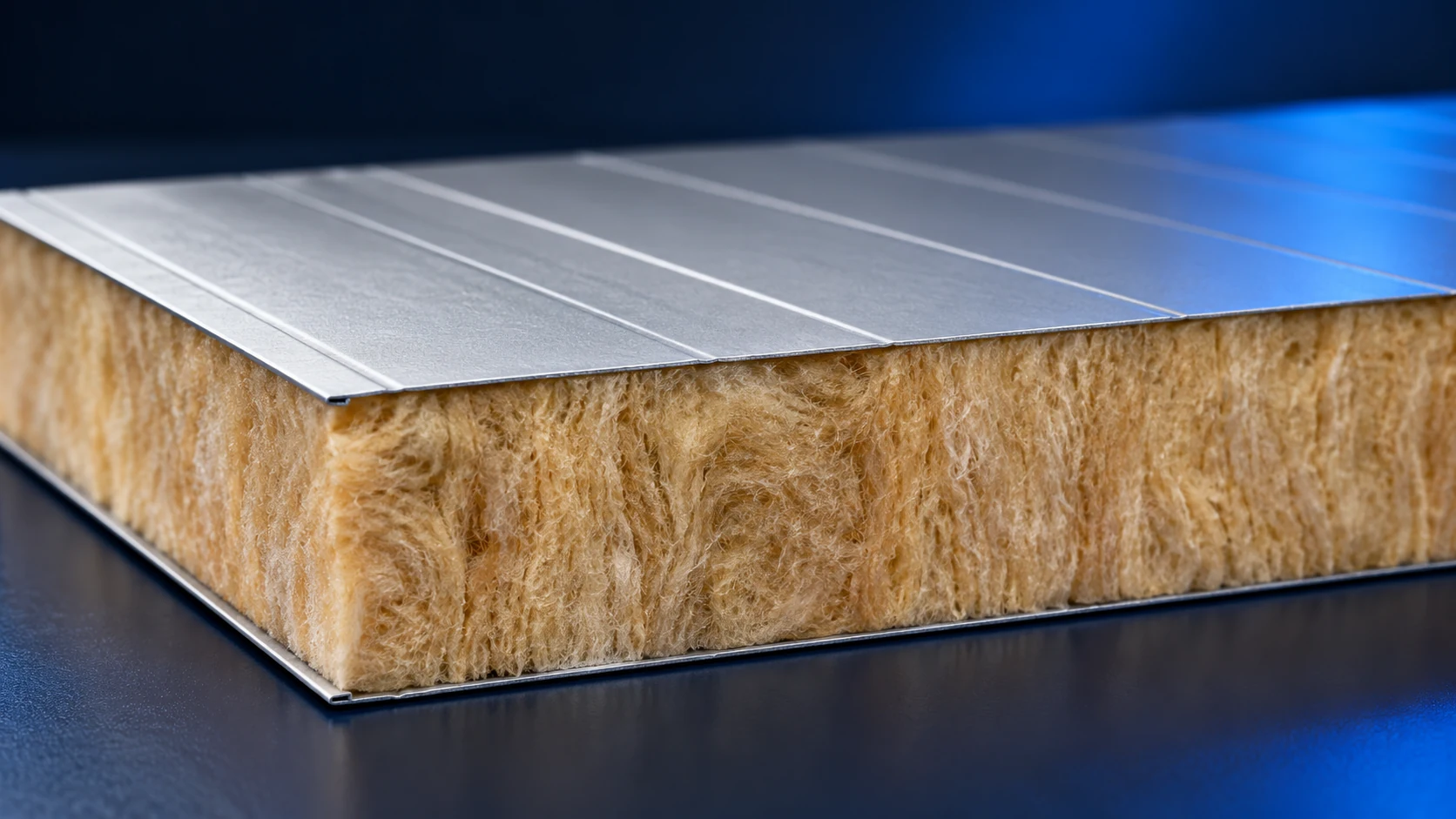
Sandwich panels form cladding on a prepared frame. The outer steel facing protects the core, while the inner facing forms the room surface. Depending on its declared use, a product may serve as an external wall or an internal partition. Check that scope for the selected version; a mineral-wool core alone does not establish it.
For a warehouse, identify what will be stored. For production premises, describe process conditions too: humidity, temperature and airborne substances matter. A solution for dry storage cannot be transferred to a frequently washed building without checking coatings and joints again, including on the inner face.
Walls with specified fire-resistance requirements
Mineral wool can help achieve the required fire performance. Reaction to fire is assessed for the finished panel; fire resistance is assessed for the wall in a defined assembly. These figures are not interchangeable. A2-s1,d0 does not specify how long a wall maintains integrity and insulation in a fire.
Supports, fixings and openings also matter in a fire-resisting wall. A door, service penetration or roof junction gap can alter the performance of the whole partition. Detailed design is therefore required. Buying the panel with the highest EI figure in a catalogue is insufficient; the conditions behind that rating must be met.
Rooms where noise is a concern
A mineral-wool core does not automatically create a quiet interior. A panel has a stated resistance to sound transmission through the wall, while a hall also has reverberation within it. These are separate problems. Smooth steel does not become a sound-absorbing lining simply because there is wool behind it.
Example mineral-wool wall panels may have Rw values of 27 or 33 dB. This is not a guaranteed range for the entire group. The examples show why results for specific versions must be compared. Doors, gates and leakage paths can limit the completed wall’s performance. Comparing two figures alone does not replace a building acoustic assessment.
Commercial premises and ancillary spaces
Mineral-wool panels are used in retail buildings, staff facilities and industrial ancillary areas. Selection must account for room use. Hygiene, surface impact resistance and washability may be important, as is the system’s suitability within the building design.
It would be wrong to claim that every public building requires mineral-wool panels; this depends on many building characteristics. Likewise, proximity to a site boundary does not by itself specify one panel thickness. A guide can explain the selection process, but project documentation, rather than a sales slogan, must establish the required performance of a particular wall.
Areas that need extra attention
Protect the mineral-wool core from moisture. Bases, openings and panel ends need particular care. Faulty flashing can admit water beneath the facing even when the wall looks sound from a distance. Include these areas in inspections of heavily used buildings. If a leak occurs, remove its cause and then assess the panel’s condition.
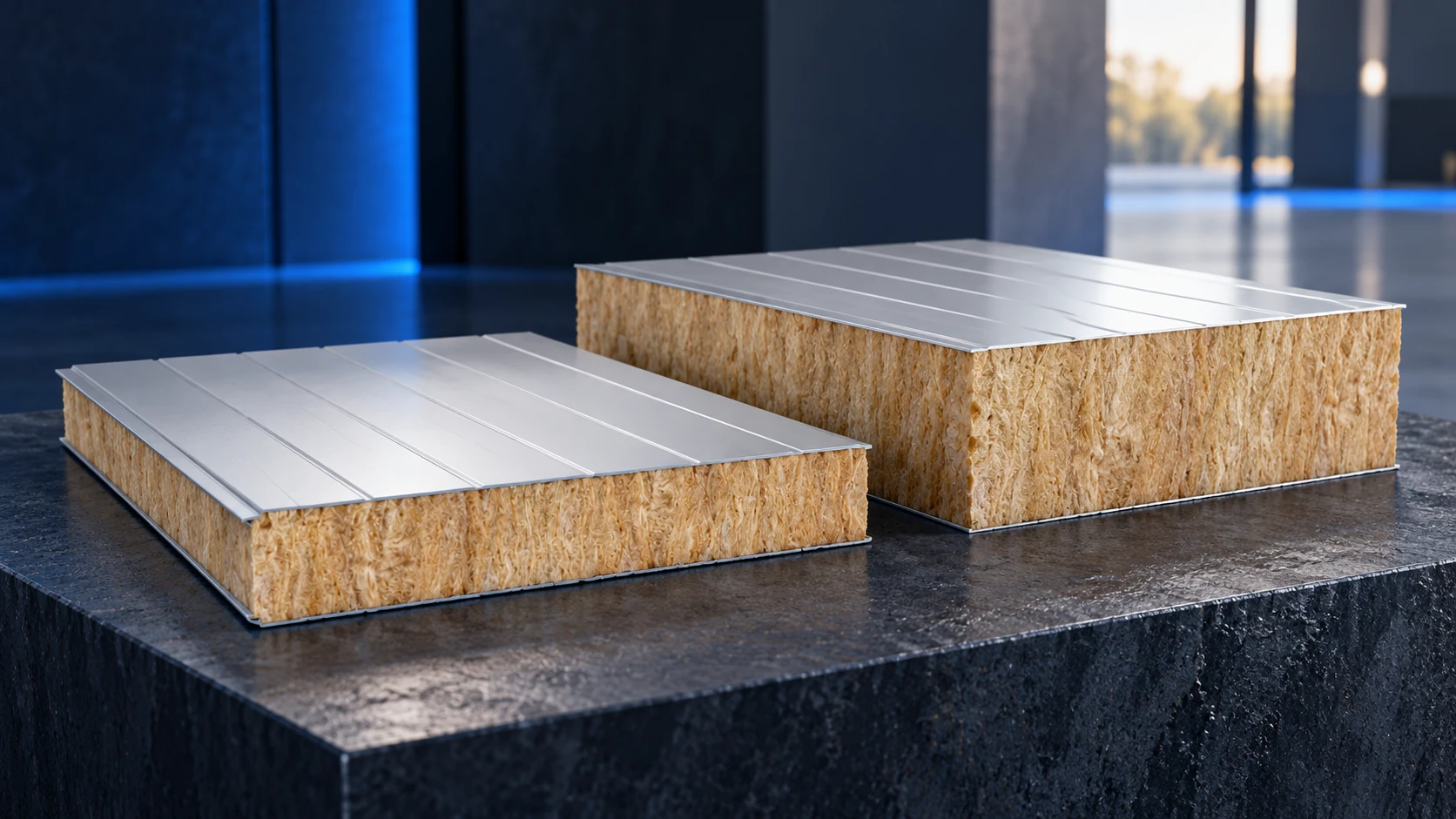
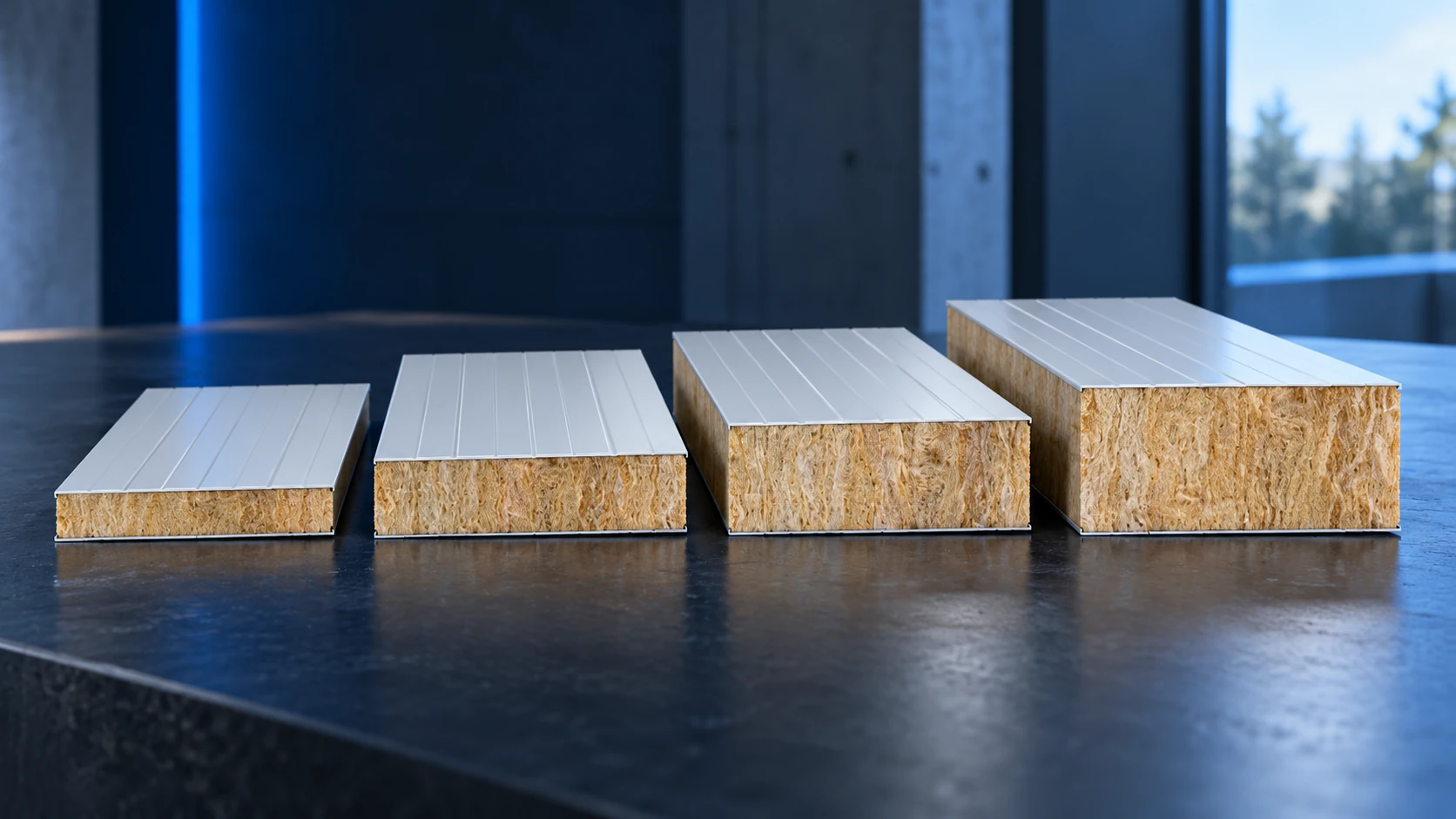
Before buying, check cladding weight and frame capacity. A 200 mm panel may require a different lifting arrangement from a thinner element. Request a schedule of weights, lengths and accessories. Only the complete arrangement shows whether the solution suits the building. A material name alone describes neither installation work nor subsequent maintenance.
When to consider another solution
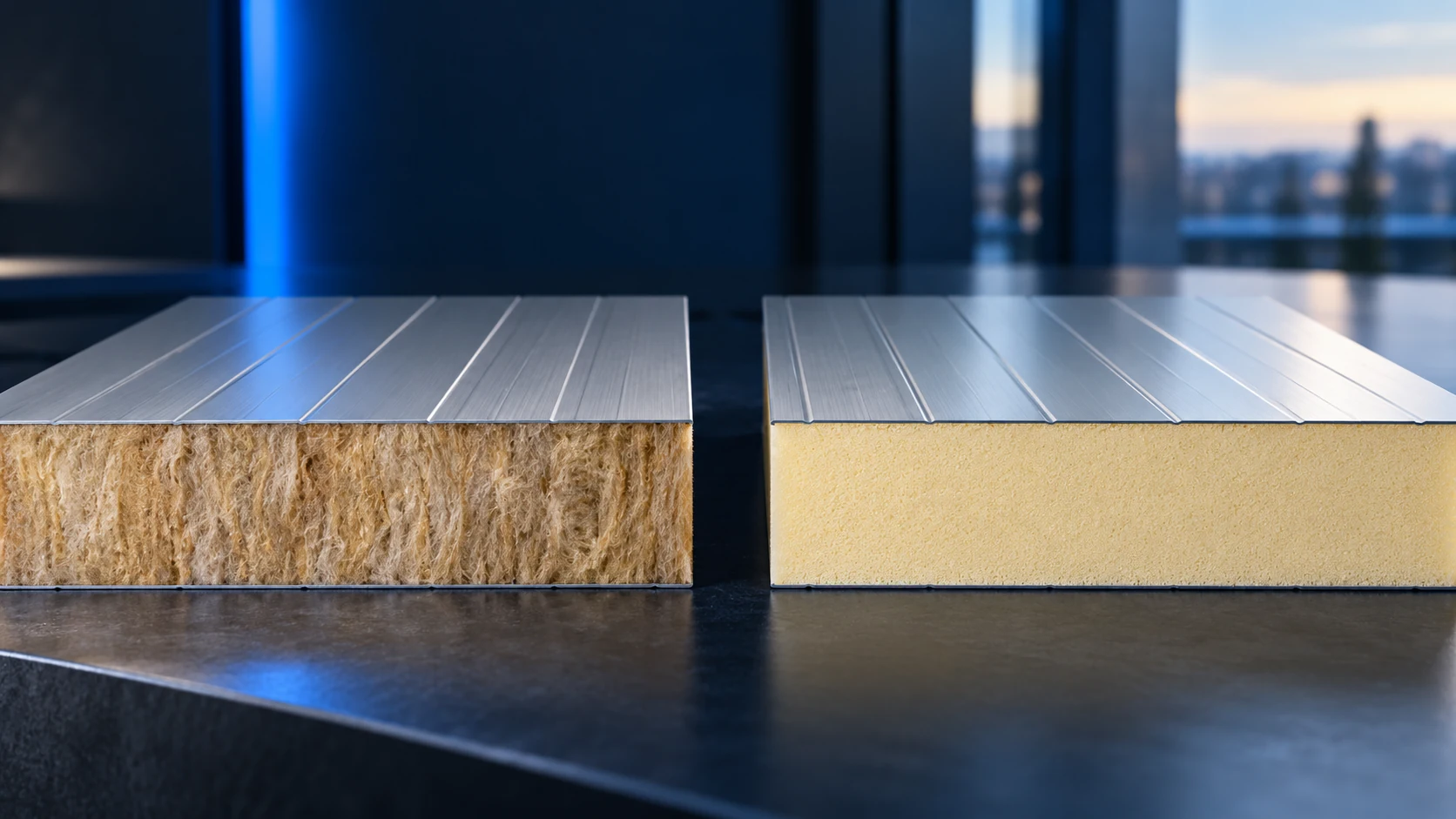
If the main aim is strong thermal performance with limited thickness, compare a PIR panel. A wall with a different function may need an entirely different layer arrangement, for example in a room with demanding acoustic requirements. Changing the core type alone may not solve that need.
Consider the existing structure as well. When extending an older building, do not assume the frame can carry any new cladding weight. Inspect the supports and their condition. Replacing lightweight cladding with a thicker panel changes loads and often alters the way joints and flashings work.
Selection should lead to a specific solution rather than declaring one material the winner. Explain what the wall must protect or separate: heat, privacy, a compartment or an industrial process. That makes it easier to judge whether wool provides a necessary benefit or simply adds weight.
Frequently asked questions
Is every mineral-wool wall a fire-compartment wall?
No. The complete wall must comply with the project requirements and the applicable classification conditions.
Will mineral-wool panels reduce reverberation in a hall?
That cannot be assumed. Sound insulation through a wall and sound absorption inside a room are different properties.

Free quote
What to include in your enquiry
Tell us how you plan to use the material, the dimensions and the quantity you need. Include the thickness, grade or variant name, along with the delivery town or your preferred collection branch. For a specific product, add its name or a link to the product page. We will reply to the email address you provide to discuss availability and the terms of your order.
More from the building guide
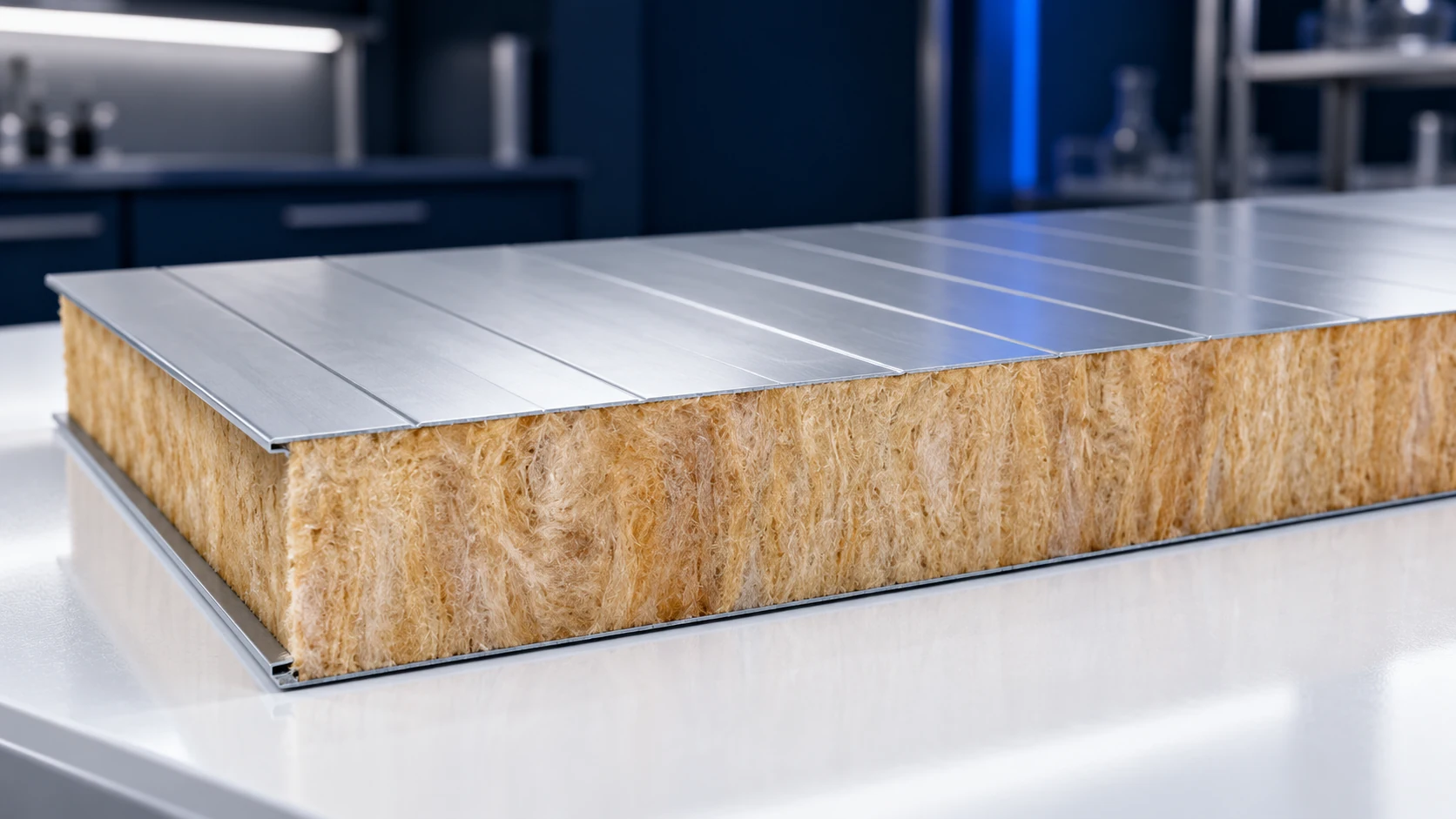
A mineral-wool core does not automatically give a finished wall panel an A1 classification. The complete panel is assessed as a separate…
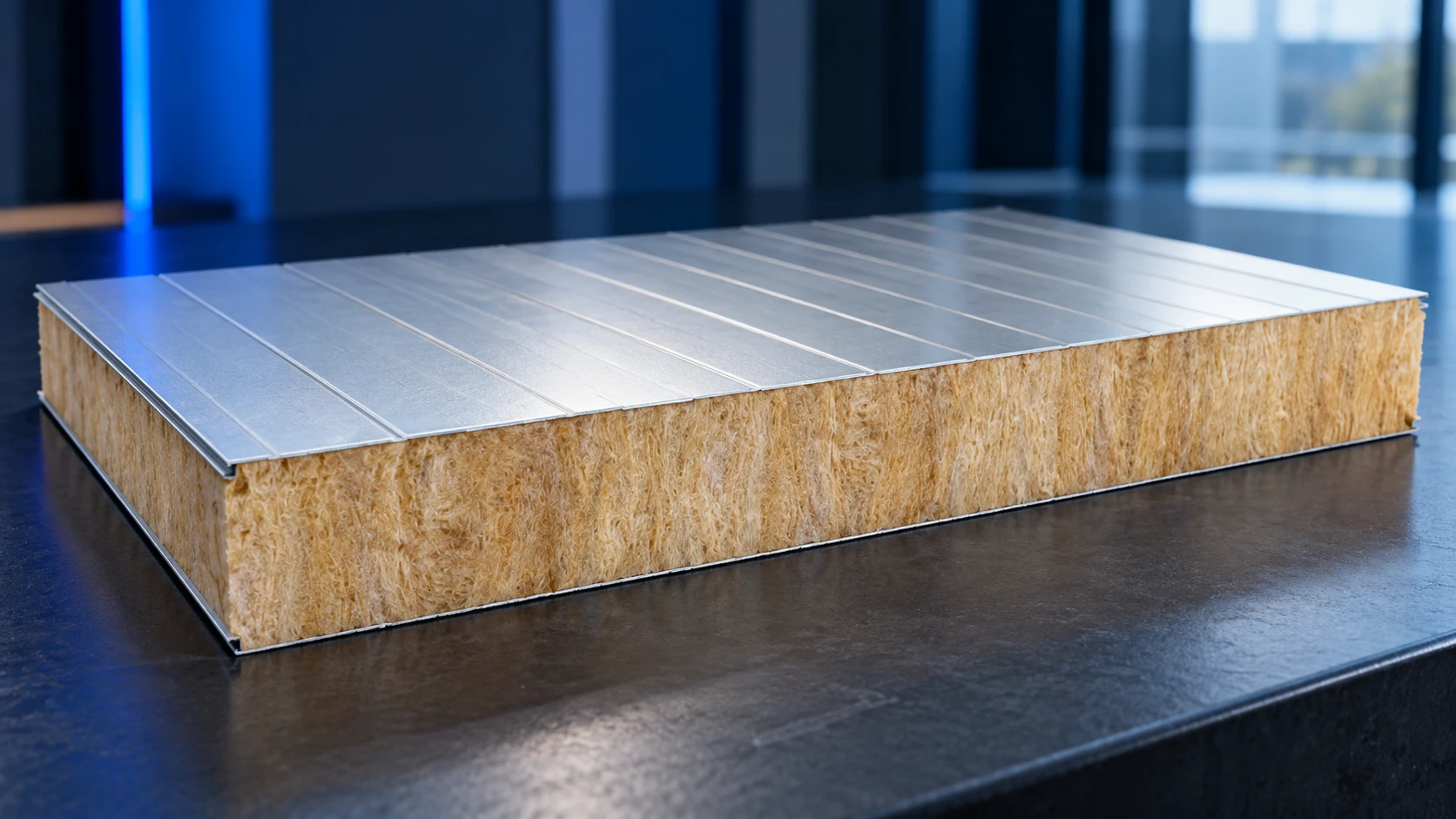
A thickness of 100 mm does not define every property of a mineral-wool wall panel. Models can differ in thermal performance, weight,…
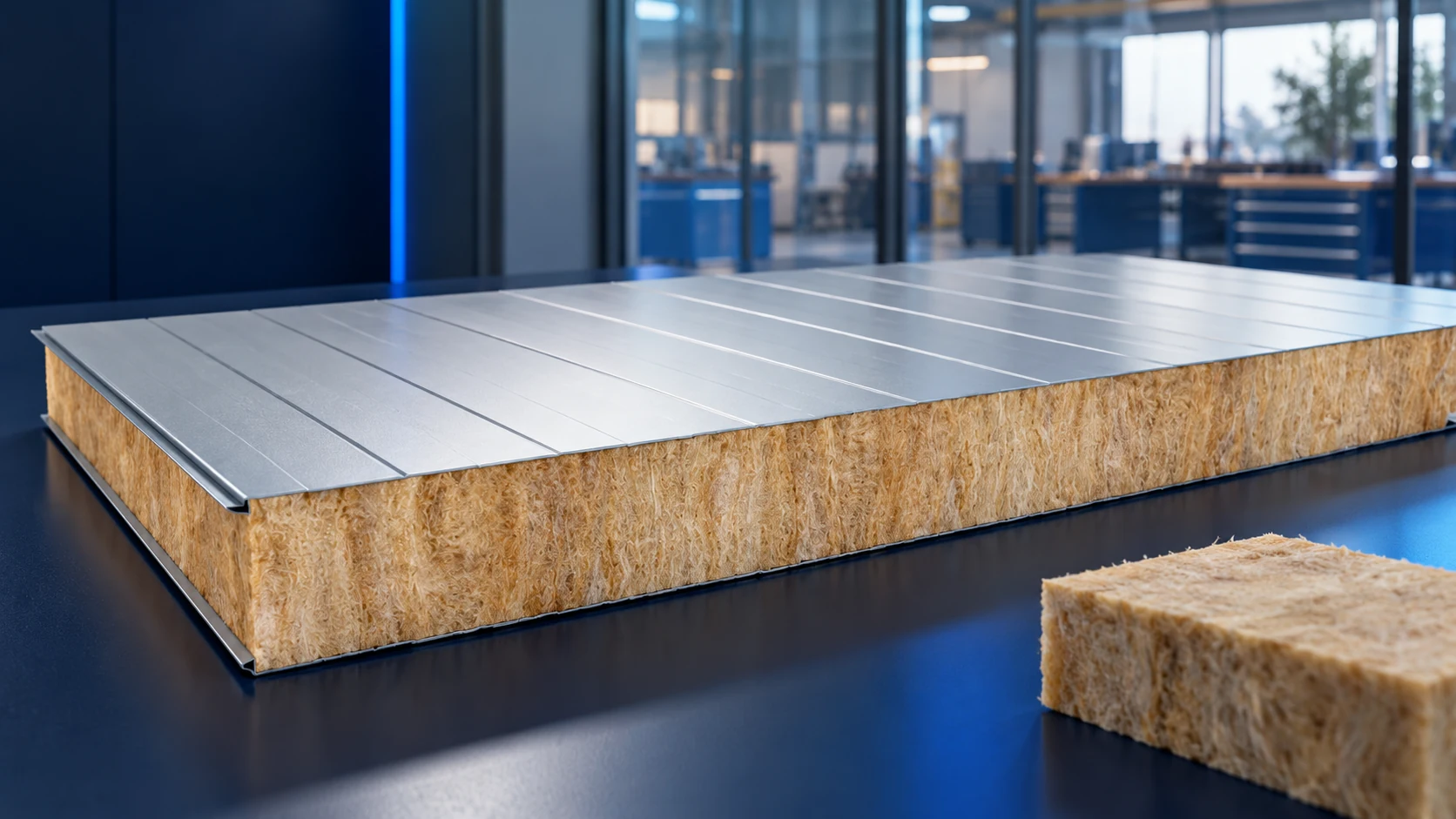
A mineral-wool sandwich panel can reduce sound transmission, but the performance belongs to the specific product, not the core material alone. Distinguish…
Mineral-wool sandwich panels have useful strengths, but they are not the best option for every application. Selection should start with the building's…
A 200 mm mineral-wool wall panel reduces heat flow more than a thinner version of the same model, but also weighs more.…
Wall-panel thickness must satisfy several requirements together: thermal insulation, fire performance, span and weight. Do not start by assuming that 100 mm…
A sandwich wall panel combines an insulating core with two facings. The products discussed here use mineral wool between steel facings and…
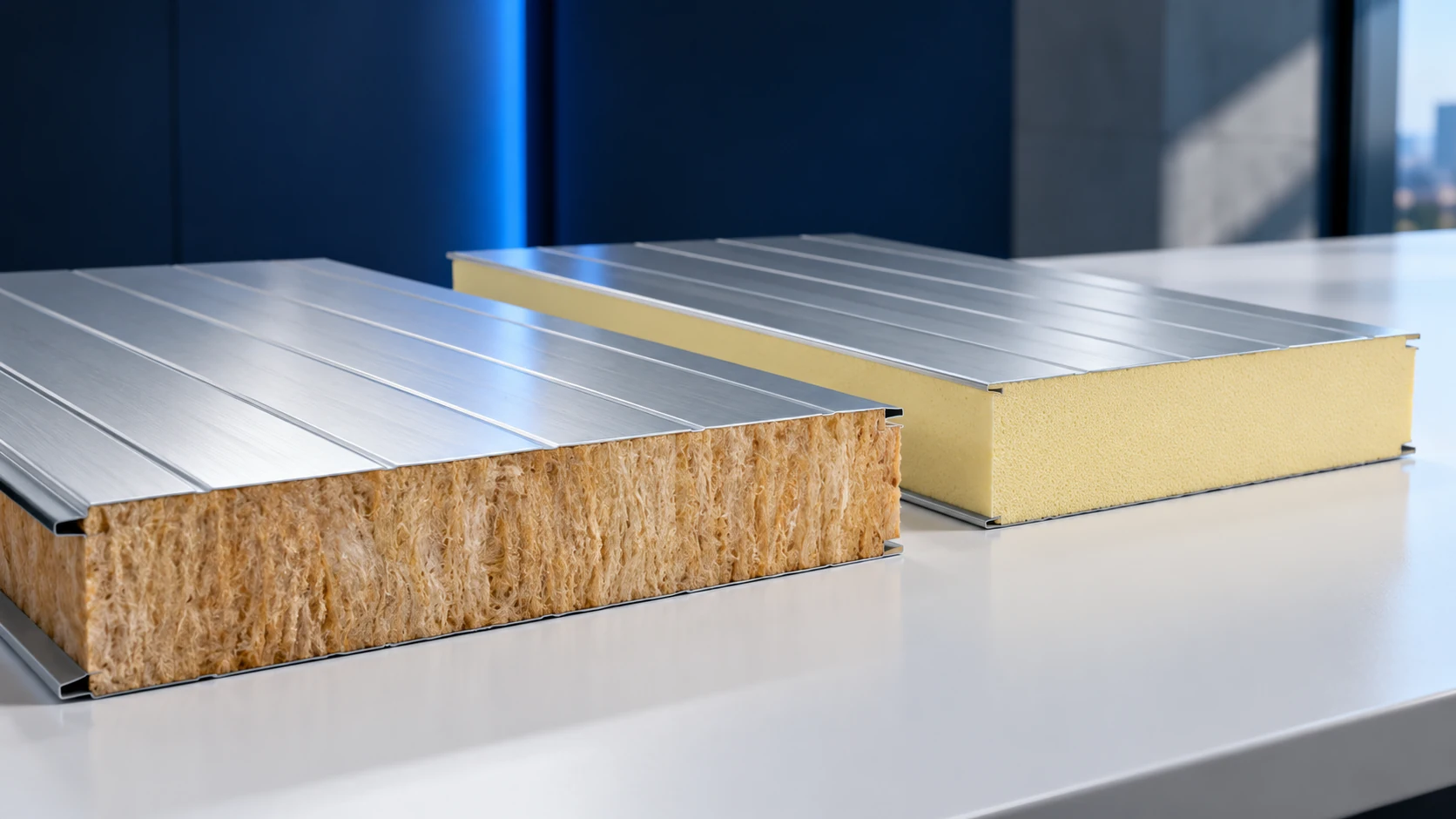
PIR generally achieves a low U-value with less thickness, while mineral-wool sandwich panels may suit particular fire requirements better. Neither is the…