Are mineral-wool wall panels non-combustible? Understanding A1, A2 and EI
Sandwich panels
A mineral-wool core does not automatically give a finished wall panel an A1 classification. The complete panel is assessed as a separate product, including its facings and the bond between its layers. One possible reaction-to-fire classification is A2-s1,d0, but it must be confirmed for the exact variant. The fire resistance of the assembled wall, expressed using designations such as EI, is a different assessment. Check the specified supports, orientation, joints and penetrations as well as the panel itself. This guide explains what these labels mean and which documents are needed to specify a complete wall rather than just its insulation.
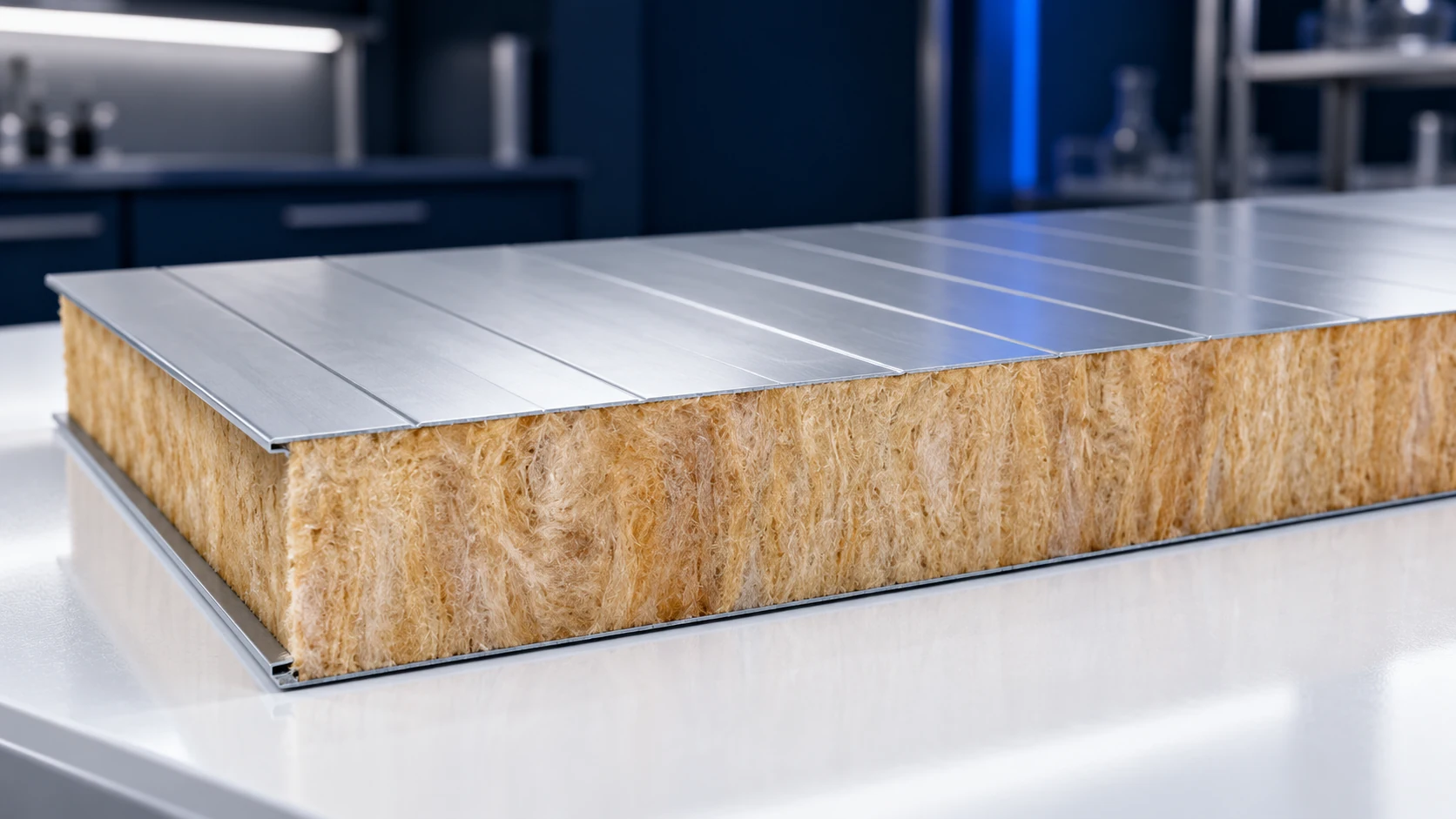
The core and the finished panel are assessed separately
A panel contains a core, facings and the connections between them, as well as coatings and other components. The classification of the wool alone cannot simply be assigned to the complete product. Look for the name of the finished panel in its documentation, not just the insulating material.
A2-s1,d0 is an example of a finished mineral-wool panel’s reaction-to-fire classification. It does not describe every panel with this core. The result belongs to the assessed product. For older, used or unidentified stock, establish its construction and properties first. The appearance of a cut edge does not prove its classification.
What s1 and d0 tell you
The s1 part concerns limited smoke production within the test criteria. The d0 designation concerns the absence of flaming droplets or particles under the classification conditions. Neither promises that no smoke will occur in every real fire, nor that toxic gases cannot be produced.
Do not reduce these symbols to “completely safe in a fire”. They allow comparison of specific product behaviour. Building safety also depends on the structure, escape arrangements, services and use. A favourable material property cannot describe all these factors.
EI describes the performance of a building element over time
E stands for integrity and I for insulation in a fire-resistance assessment. The number denotes a period under the relevant classification. It is not a promise that an arbitrarily assembled wall will withstand every real fire for exactly that many minutes. Test conditions and the field of application matter.
The classification covers a particular panel type and assembly. Orientation, span and connections are among the relevant factors. Read the footnotes instead of taking only the highest number from a table. Conditions may differ between arrangements using the same panel, so a general product-family label is insufficient for wall design.
Openings and building junctions belong to the solution
A wall includes its connections to the floor, structure and roof. It may also contain doors and service penetrations. Each junction needs a detail consistent with the design. The panel does not transfer its classification to any arbitrary mounting foam or sealant used beside it.
Retain the specified arrangement and accessories during installation. Do not alter supports or installation direction without checking the consequences. Later openings for services also need assessment. A previously completed wall does not automatically retain all its properties after every alteration; the documentation should reflect its actual condition.
When documents give different ranges
A public product sheet and an installation manual may be updated at different times. A discrepancy does not justify selecting whichever statement looks more favourable. Obtain the manufacturer’s confirmation of the current classification and scope for your assembly, and retain it with the project records.
Different tables may refer to a different panel variant, support arrangement or classification scope. Do not fill gaps by assumption. Confirm which document applies to the proposed solution and keep it with the design and order. Weight or thermal-performance figures do not settle fire-performance requirements.
State the requirement clearly when ordering
Specify the product and required reaction-to-fire classification. If the wall needs a particular fire resistance, include the design assumptions: orientation, span and supports. Request documentation that relates to that complete arrangement.
At delivery, verify panel identification and keep the batch documents and instructions. Do not accept substitution solely because another product “also has wool”. Similar core material and thickness do not establish equivalence. Clear records show what was installed and the basis on which the wall was assessed.
Keep panel documentation distinct from that of doors or sealing compounds. Each component may have its own classification, yet combining them arbitrarily does not create a classified wall. The complete assembly must be compatible. At acceptance, check both that documents are present and that they describe the components actually installed.
Frequently asked questions
Does A2-s1,d0 mean EI 120?
No. These are different classifications: A2-s1,d0 concerns reaction to fire, while EI concerns the fire resistance of a specified building element.
Does s1 mean there will be no smoke at all?
No. It refers to test criteria, not a promise of no smoke or toxic products in any possible fire.

Free quote
What to include in your enquiry
Tell us how you plan to use the material, the dimensions and the quantity you need. Include the thickness, grade or variant name, along with the delivery town or your preferred collection branch. For a specific product, add its name or a link to the product page. We will reply to the email address you provide to discuss availability and the terms of your order.
More from the building guide
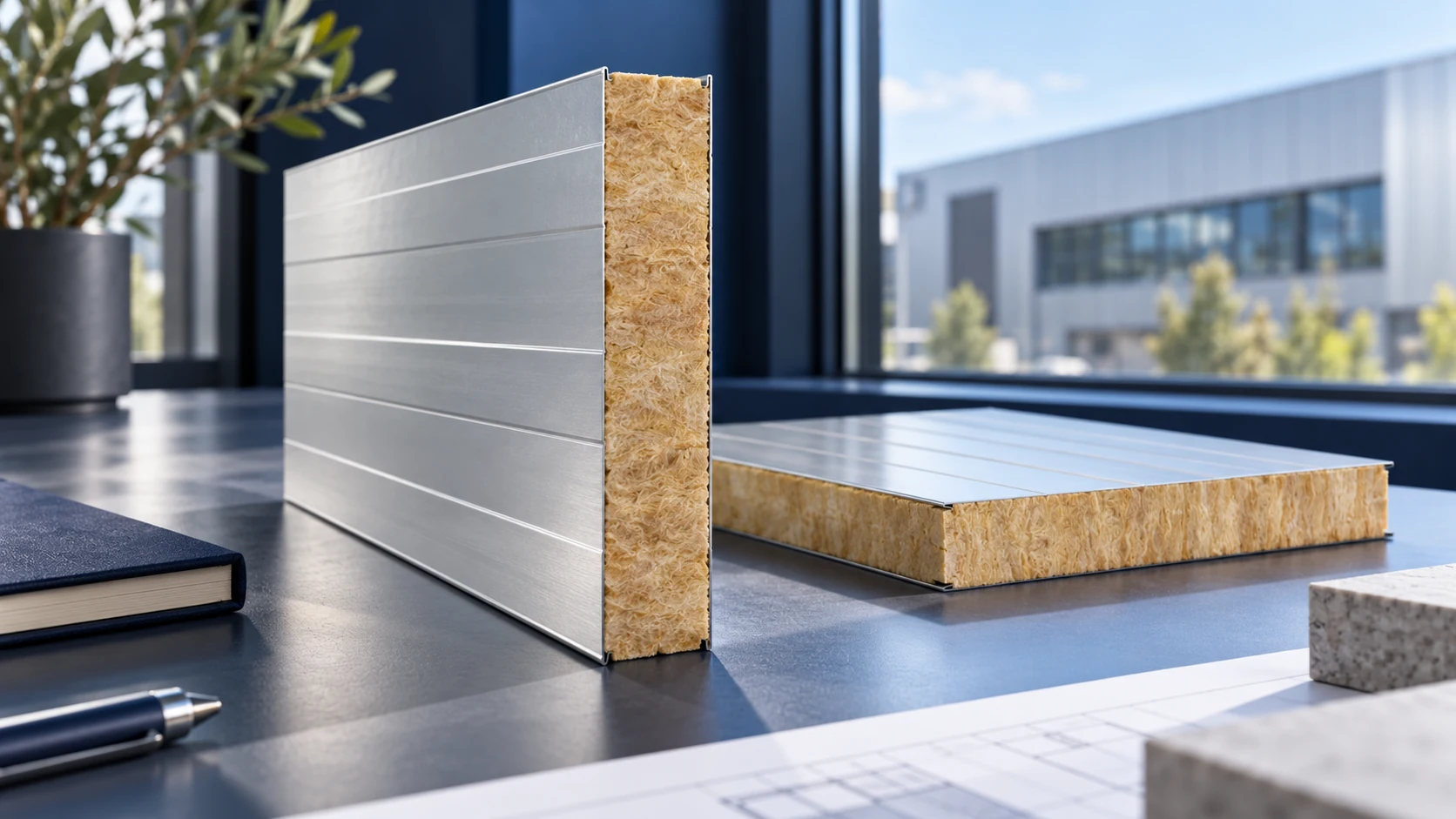
The right mineral-wool wall panel is the one that meets the building's requirements, not necessarily the thickest or most expensive option. Start…
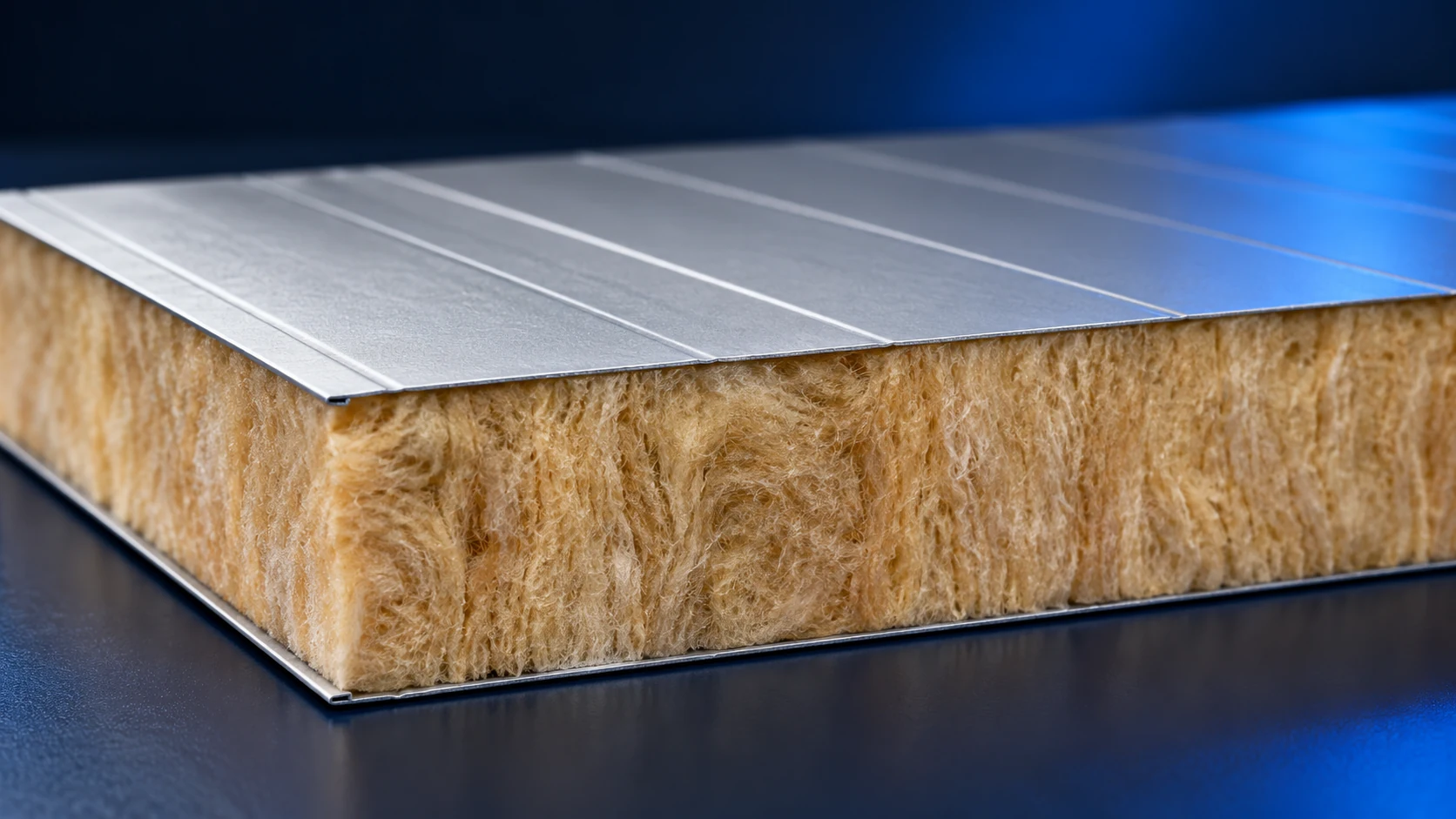
A sandwich wall panel combines an insulating core with two facings. The products discussed here use mineral wool between steel facings and…
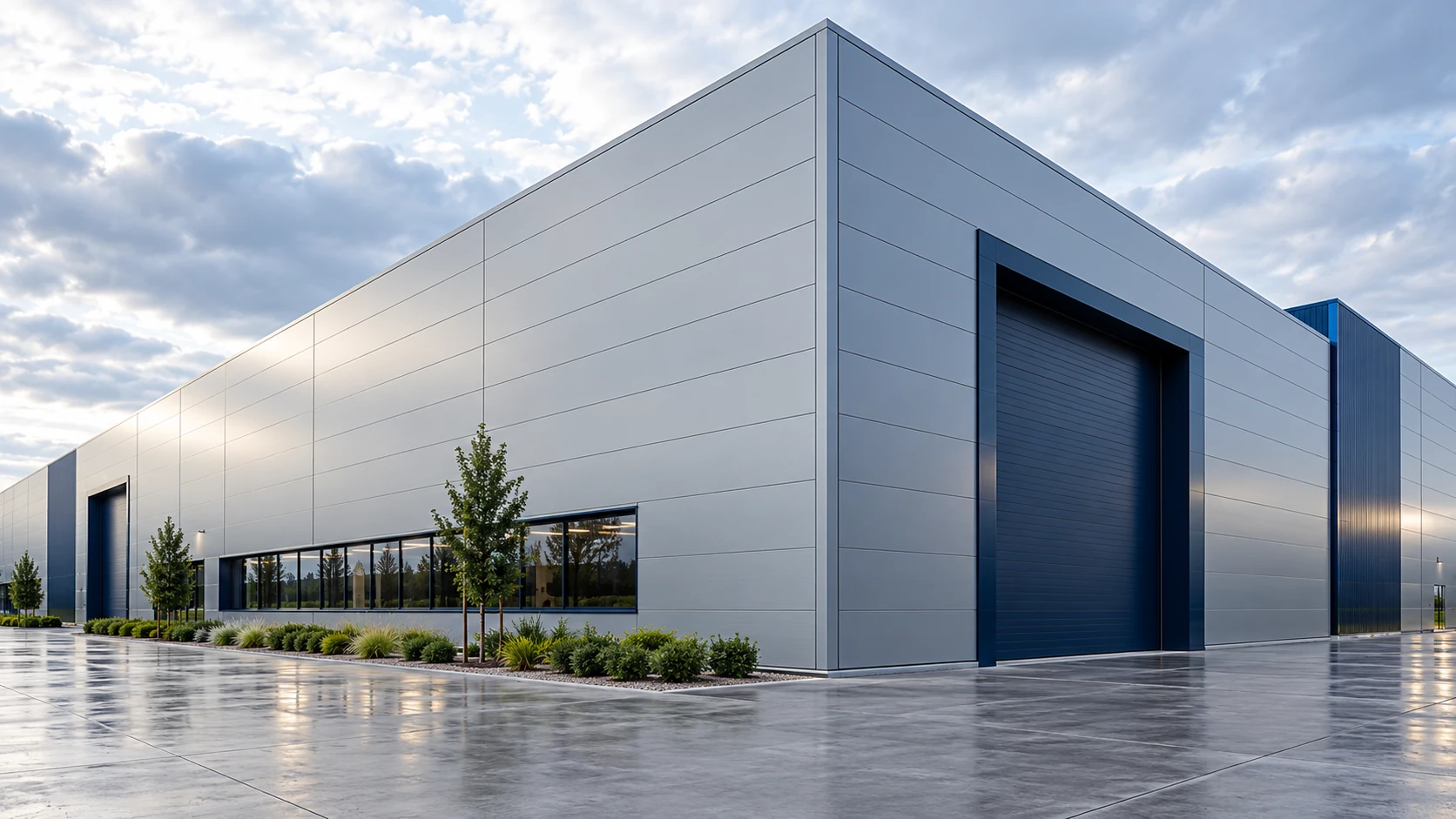
Mineral-wool sandwich panels can be useful where fire performance and efficient cladding installation are important. They may form walls of industrial buildings,…
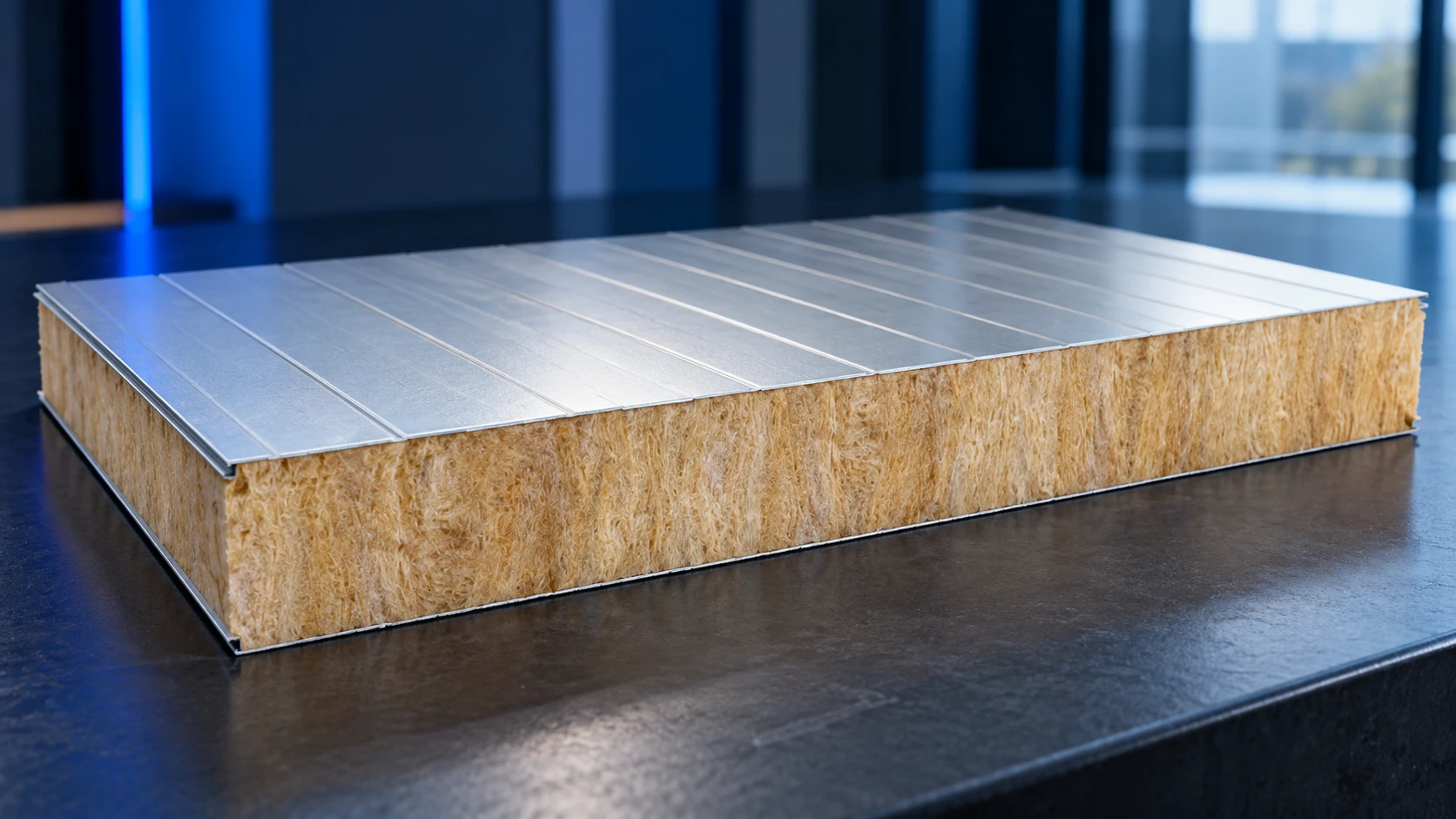
A thickness of 100 mm does not define every property of a mineral-wool wall panel. Models can differ in thermal performance, weight,…
Attic insulation works when it forms a continuous layer and the entire roof manages moisture and air leakage. A thicker board cannot…
PIR generally achieves a low U-value with less thickness, while mineral-wool sandwich panels may suit particular fire requirements better. Neither is the…
No single screw suits every mineral-wool sandwich panel. The fastener must match panel thickness, support material and the loads on the connection;…
Mineral-wool sandwich panels have useful strengths, but they are not the best option for every application. Selection should start with the building's…