Can a mineral-wool wall panel be 40 mm thick? Understanding the 60 mm option
Sandwich panels
An offer for a 40 mm mineral-wool wall panel needs careful identification: thickness alone does not confirm the core. Some mineral-wool panel families start at 60 mm, while thinner panels in a similar range may contain PIR foam. That does not establish a universal market rule. Before buying, obtain the manufacturer, product code, batch identification and relevant technical sheet. This guide compares examples of 60 mm panels, explains why equal thickness does not mean equal performance, and outlines structural and fire-document checks. An unusual offer should be assessed as a specific product rather than accepted as equivalent to a familiar panel.
Why two products are easily confused
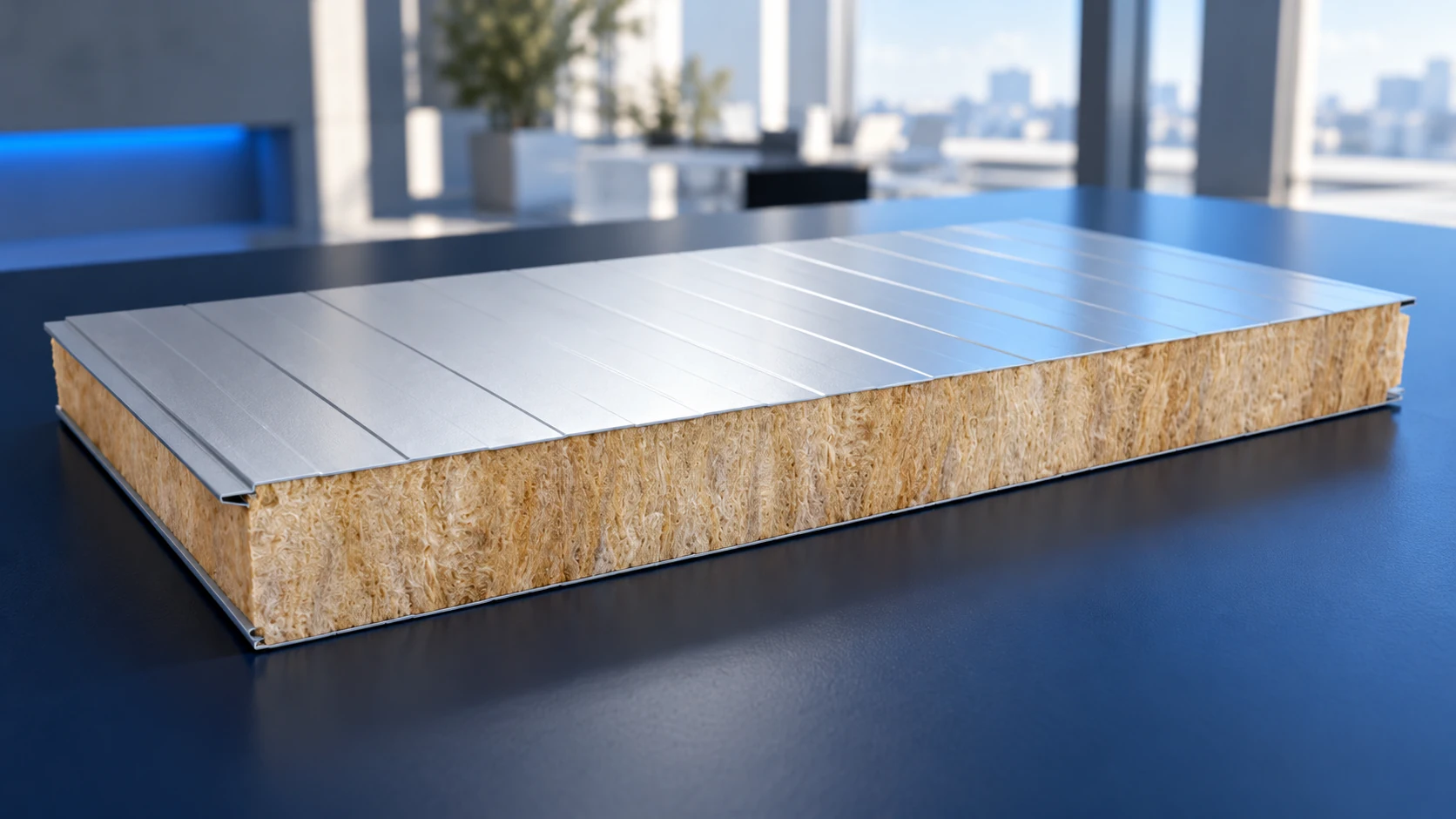
Similar names and photographs may describe different cores. A range might offer PIR panels from 40 mm and mineral-wool wall panels from 60 mm. This is an example, not a rule for all suppliers. The panels may look alike; omission of “PIR” from a short description does not prove a mineral-wool core.
Request the manufacturer’s name, product code and technical sheet. Compare thickness and a photograph of the batch label. A generic description such as “40 mm sandwich panel” cannot confirm core type, reaction to fire or thermal performance.
Reading the data for a 60 mm variant
One example 60 mm mineral-wool wall panel has U = 0.66 W/(m²K), mass 14.1 kg/m² with 0.5/0.5 mm facings, and reaction-to-fire class A2-s1,d0. These are not universal properties of all 60 mm panels, nor do they establish an arbitrary fire-resistance class for a completed wall.
Consider it only for applications matching its properties. Small thickness alone does not determine value. Check the required U-value, span and wall function. If better insulation is needed, a low price for a thin panel does not solve the problem; a different variant or wall assembly is necessary.
Why another panel of the same thickness can differ
A second example 60 mm panel with variable-density mineral wool has U = 0.61 W/(m²K) and mass 13.6 kg/m² with 0.5/0.5 mm facings. It is a different product despite matching thickness. Dimensions alone are insufficient: each panel needs its own confirmed properties.
Compare a specific variant from each brand, including module width and available lengths. These affect quantities and waste. Do not assemble a specification from the most favourable figures of several manufacturers. The ordered panel must match one coherent specification.
A thin panel does not permit arbitrary support spacing
Lower weight can simplify logistics but does not define structural resistance. Check facings, loads and support arrangement in the table for the exact variant and thickness. Include spans, colour group and deflection criterion. A result cannot be transferred merely because both panels are 60 mm thick.
Do not copy spacing from an existing building without comparing conditions. Wall height and location can change wind loads. Fasteners and bearing widths matter too. Being able to screw a panel to the frame does not establish a correctly designed connection.
Do not promise EI performance from the core alone
Mineral wool is associated with non-combustibility, but the finished wall needs a separate assessment. Thin panels may have a different declared fire-resistance scope from thicker versions. Check the precise product type and current classification for the planned assembly.
This is especially important for offers labelled “fire-resistant”. Obtain documents rather than a verbal assurance. Check orientation, supports and joint conditions. Without these, a number of minutes in a description does not justify use in the required wall. Choosing mineral wool cannot replace missing documentation.
NPD means that no performance is declared for the relevant characteristic. It is neither zero nor confirmation of high resistance. If the design requires a specific property, NPD alone cannot substantiate it. Obtain the exact variant’s document and clarification of its scope before buying, rather than interpreting it only at wall acceptance.
Checking an unusual 40 mm offer
Ask whether the dimension describes the whole panel, the core or insulation alone. Establish whether it is current production or older stock. Older batches need matching documents; a current sheet for another model cannot establish their properties.
What to do when information is incomplete
Do not treat incomplete information as evidence of equivalence to a known panel. Ask the manufacturer to identify it, or choose a product with a complete specification. Saving a few centimetres is useful only if the whole product meets the wall’s requirements; otherwise the apparent benefit becomes an installation problem.
Frequently asked questions
Does 40 mm automatically mean PIR?
No. Thickness does not identify the core. Product identification and confirmed construction and properties are required.
Is a 60 mm panel suitable for every partition?
No. Check fire and acoustic requirements, loads and conditions of use.

Free quote
What to include in your enquiry
Tell us how you plan to use the material, the dimensions and the quantity you need. Include the thickness, grade or variant name, along with the delivery town or your preferred collection branch. For a specific product, add its name or a link to the product page. We will reply to the email address you provide to discuss availability and the terms of your order.
More from the building guide
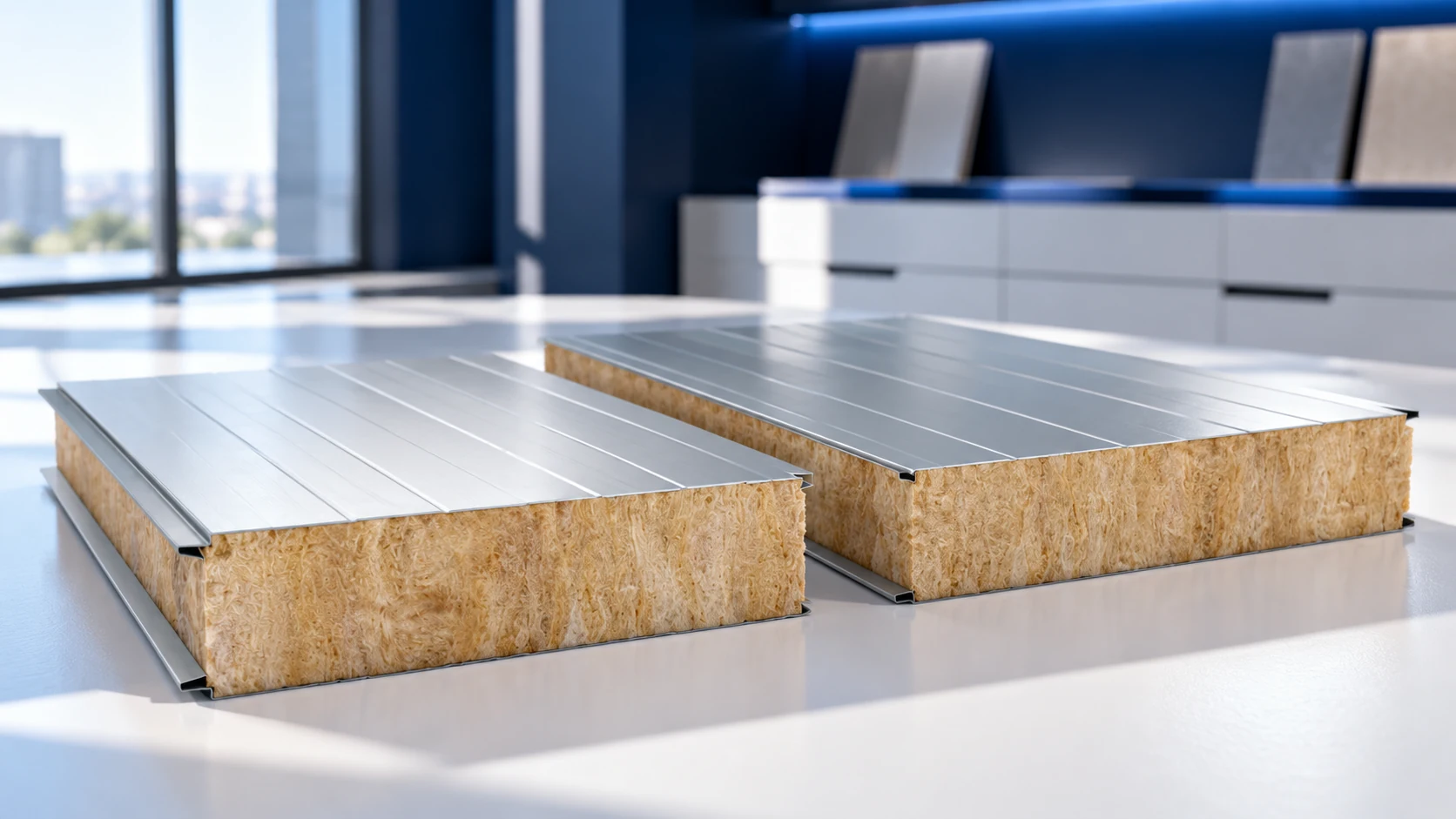
Mineral-wool wall panels of equal thickness can differ in weight, load-bearing performance and thermal insulation. These differences arise from the complete product,…
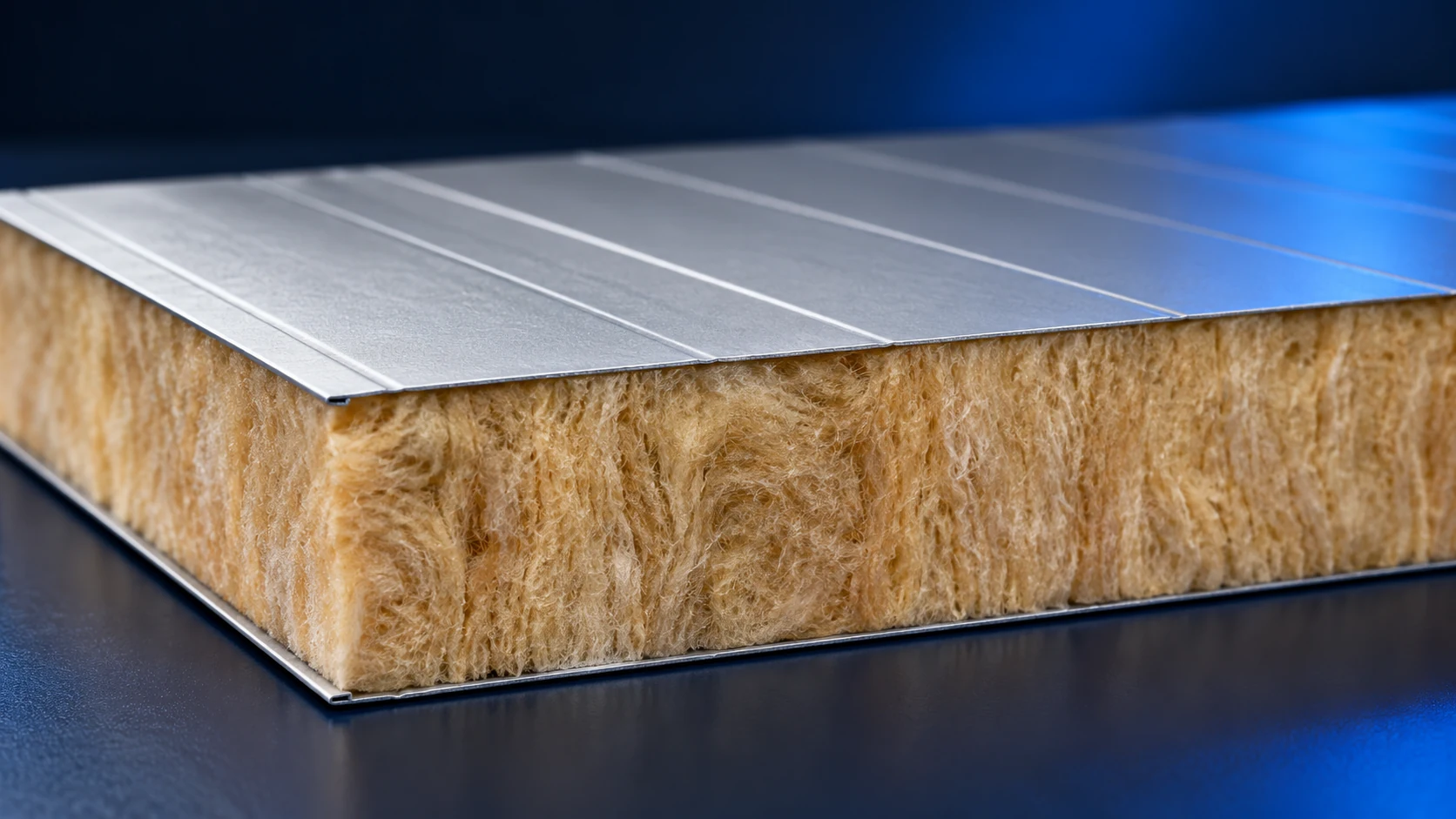
A sandwich wall panel combines an insulating core with two facings. The products discussed here use mineral wool between steel facings and…
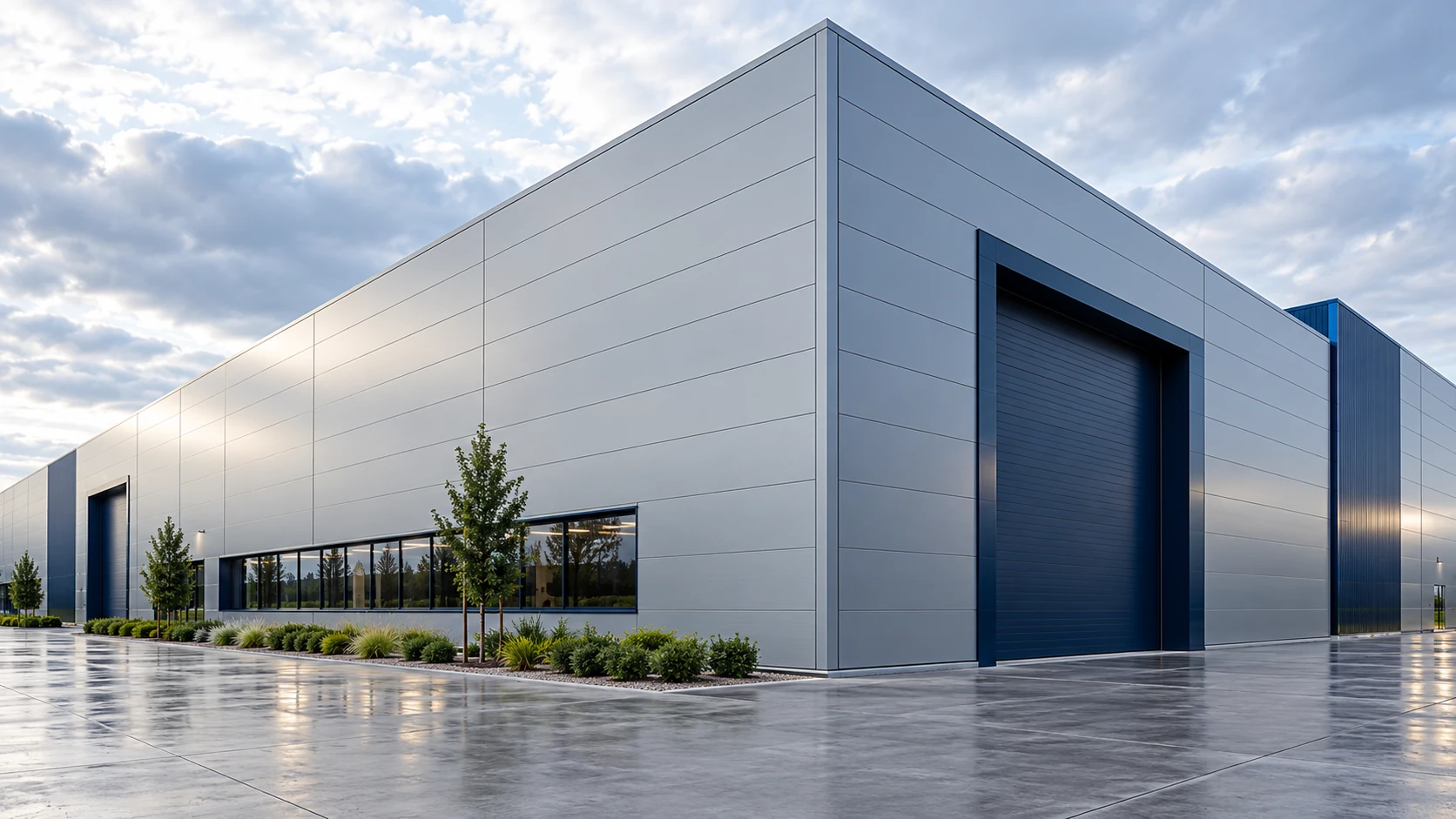
Mineral-wool sandwich panels can be useful where fire performance and efficient cladding installation are important. They may form walls of industrial buildings,…
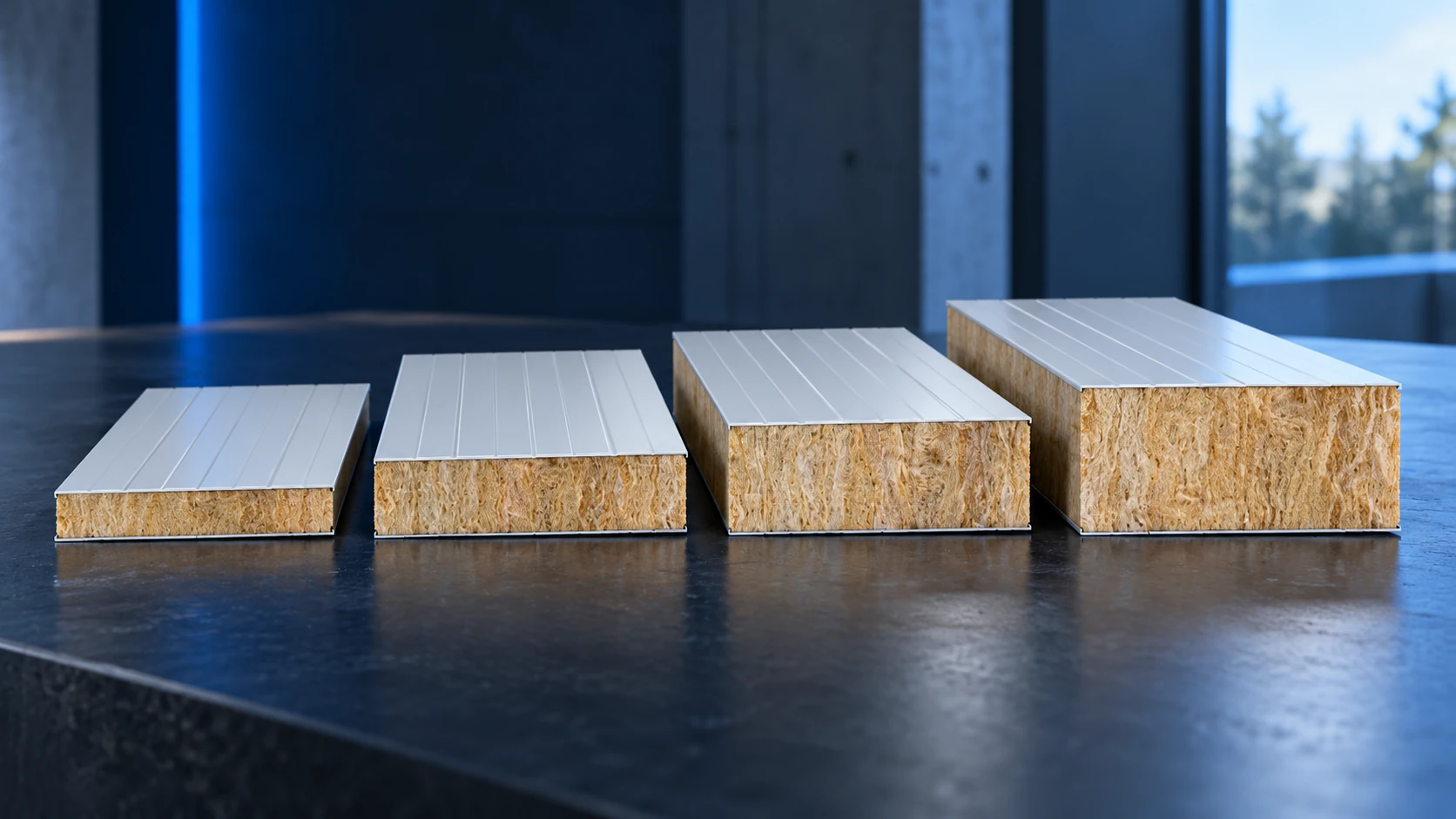
Wall-panel thickness must satisfy several requirements together: thermal insulation, fire performance, span and weight. Do not start by assuming that 100 mm…
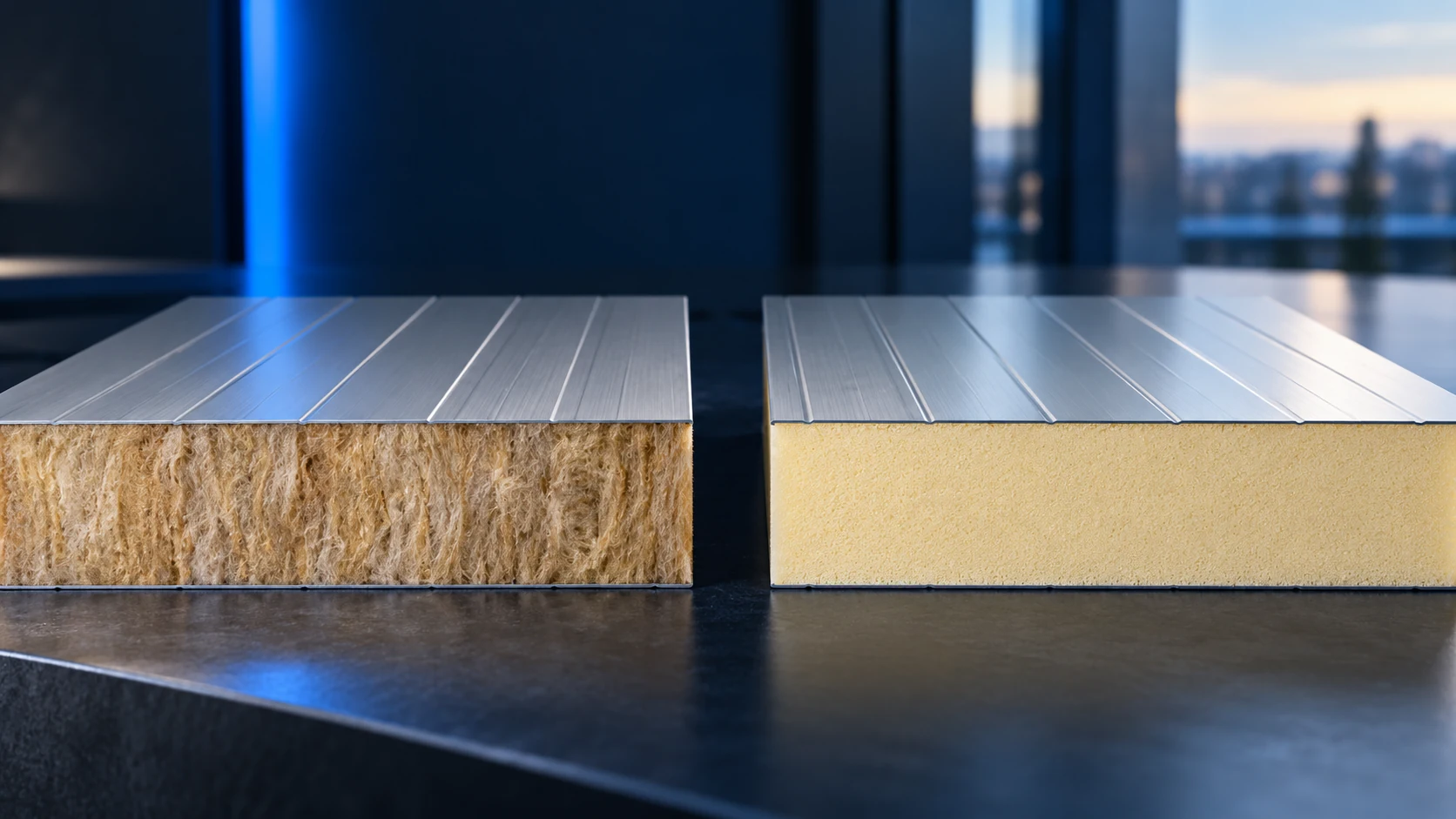
Mineral-wool sandwich panels have useful strengths, but they are not the best option for every application. Selection should start with the building's…
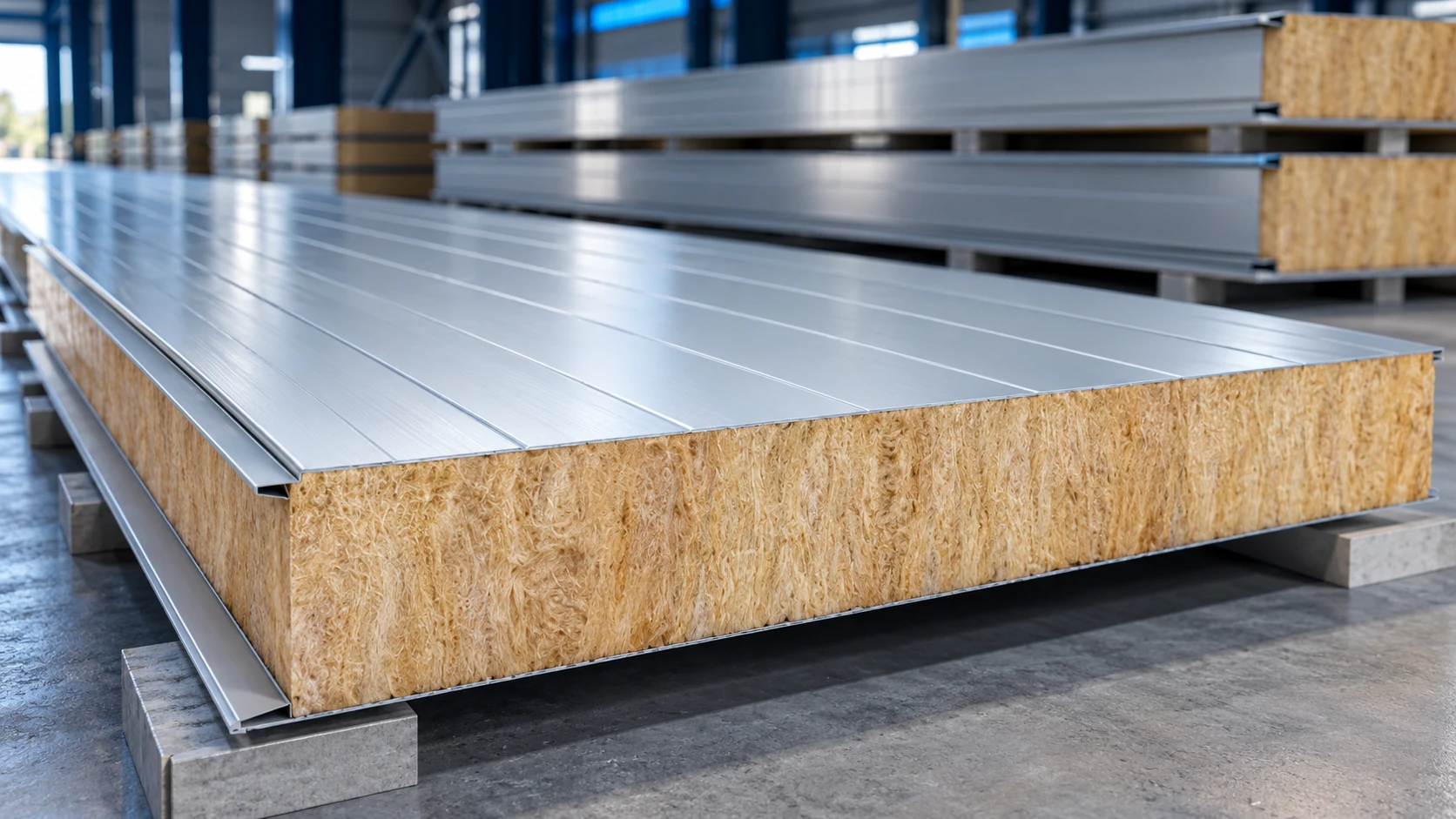
Outlet mineral-wool wall panels can reduce cladding costs if the reason for their lower price is understood. Surplus stock and a panel…
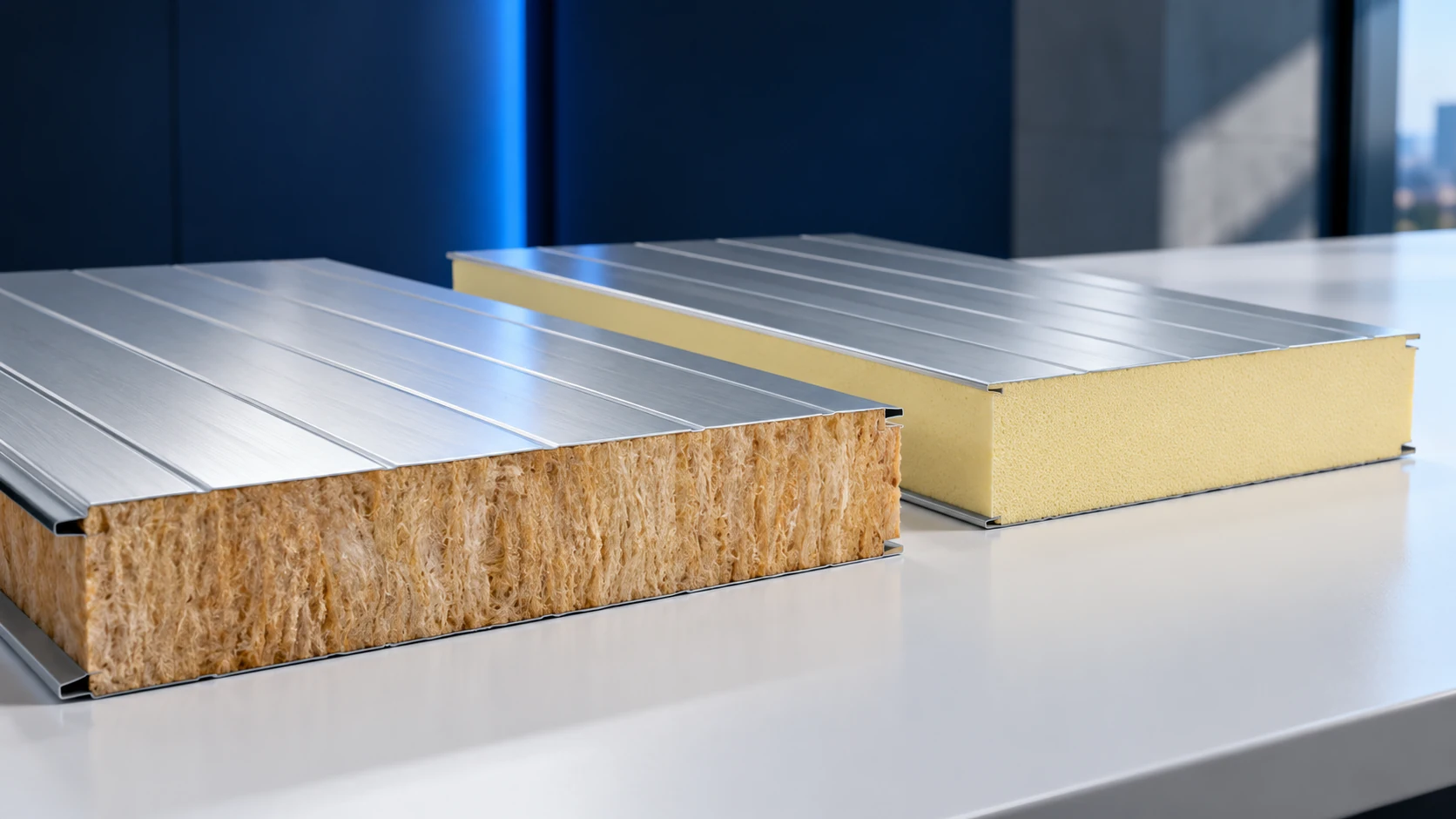
PIR generally achieves a low U-value with less thickness, while mineral-wool sandwich panels may suit particular fire requirements better. Neither is the…
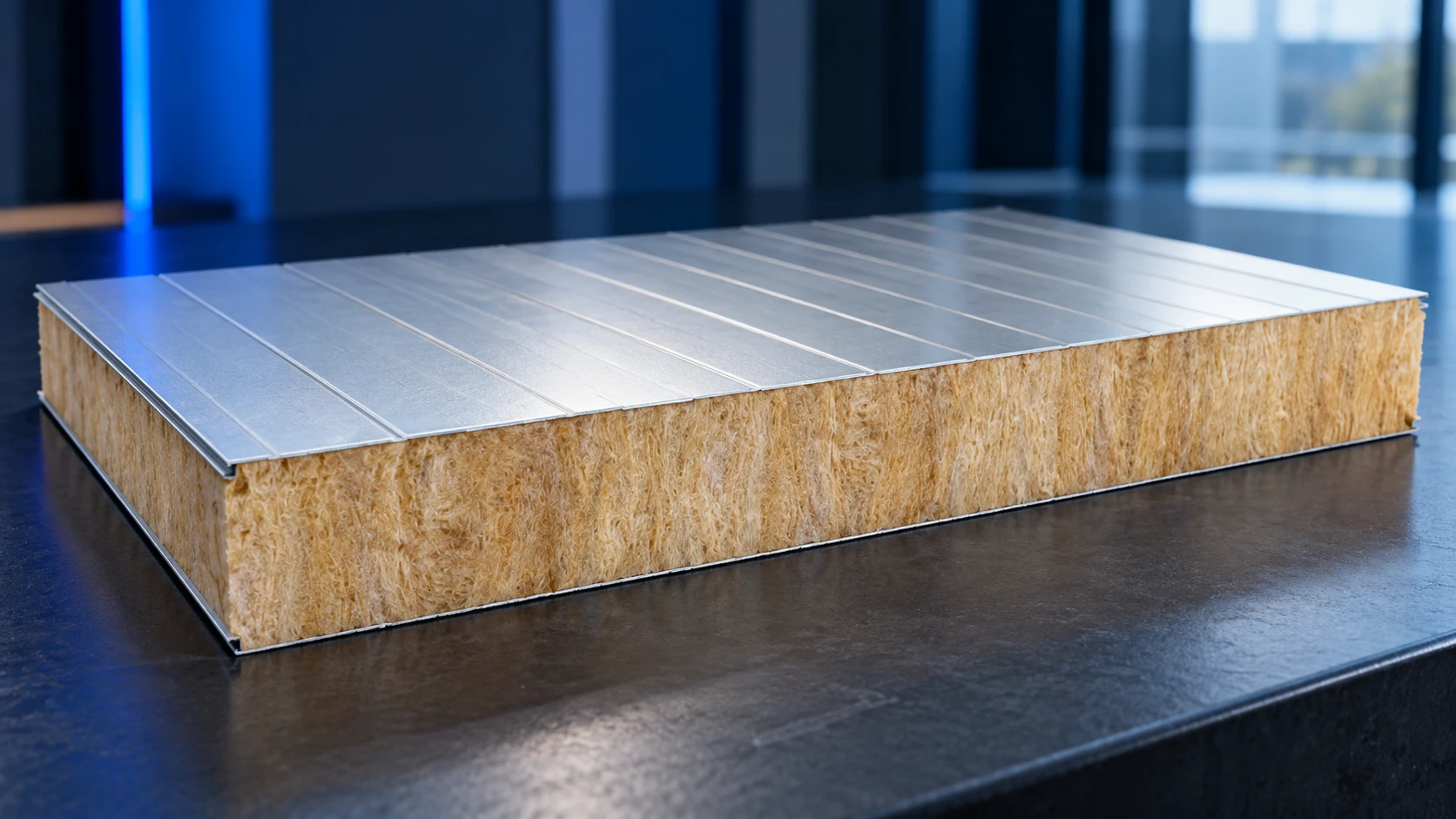
A thickness of 100 mm does not define every property of a mineral-wool wall panel. Models can differ in thermal performance, weight,…