Panels · Sheet metal · Insulation · Accessories

What should you know about 100 mm mineral-wool wall panels?

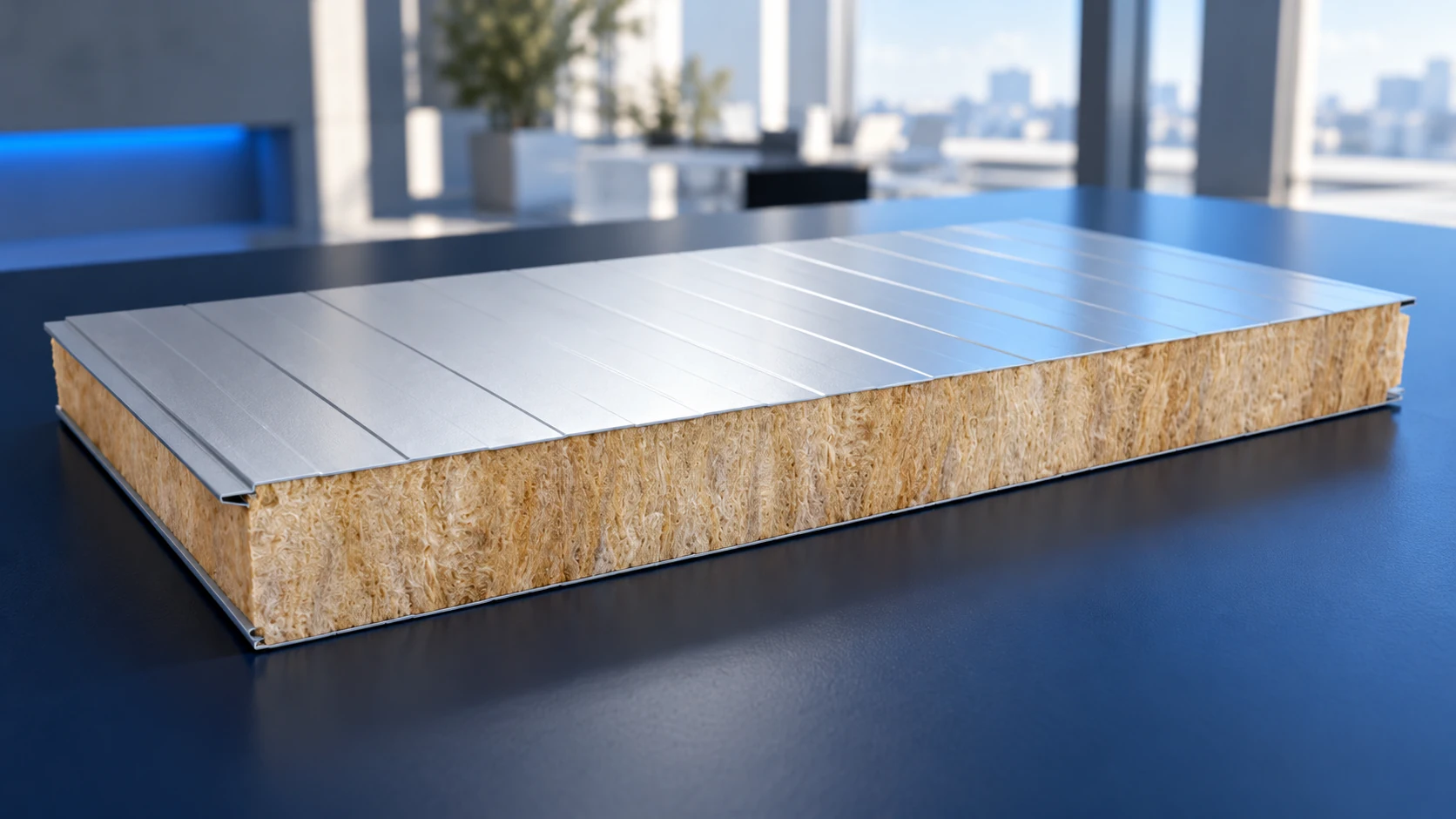
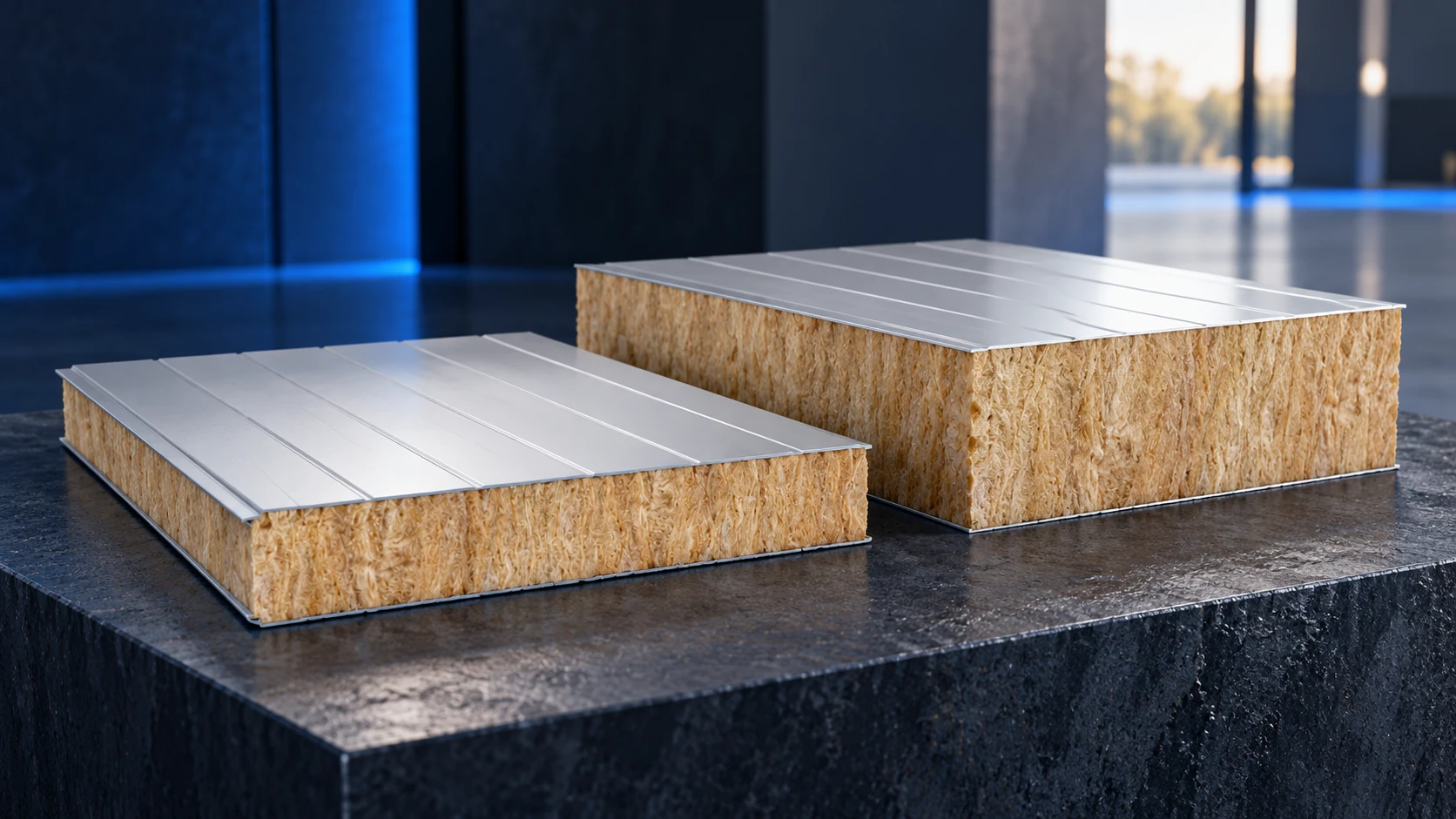
A thickness of 100 mm does not define every property of a mineral-wool wall panel. Models can differ in thermal performance, weight, dimensions and conditions of use, so identify the full product name before buying. Distinguish declared panel properties from the performance of a wall installed in a particular building. This guide compares two example core constructions, shows a panel-weight calculation and outlines checks for heat loss, fire, acoustics, pricing and supports. Use each example only for the stated variant. Confirm the ordered facings, coating, joint and documentation rather than treating “100 mm mineral wool” as a complete specification.
By |2026-11-11T08:22:18+01:0011 November 2026|Sandwich panels|Comments Off on What should you know about 100 mm mineral-wool wall panels?

Can a mineral-wool wall panel be 40 mm thick? Understanding the 60 mm option

An offer for a 40 mm mineral-wool wall panel needs careful identification: thickness alone does not confirm the core. Some mineral-wool panel families start at 60 mm, while thinner panels in a similar range may contain PIR foam. That does not establish a universal market rule. Before buying, obtain the manufacturer, product code, batch identification and relevant technical sheet. This guide compares examples of 60 mm panels, explains why equal thickness does not mean equal performance, and outlines structural and fire-document checks. An unusual offer should be assessed as a specific product rather than accepted as equivalent to a familiar panel.

By |2026-11-11T08:22:17+01:0011 November 2026|Sandwich panels|Comments Off on Can a mineral-wool wall panel be 40 mm thick? Understanding the 60 mm option

150 or 200 mm mineral-wool wall panels: heat loss, weight and fire performance

A 200 mm mineral-wool wall panel reduces heat flow more than a thinner version of the same model, but also weighs more. Thickness alone does not guarantee the highest fire-resistance class or represent the thickest insulation available. Choosing between 150 and 200 mm requires the wall's thermal target, structural checks and the complete project requirements. This guide compares example U-values and weights, demonstrates the limited meaning of a heat-flow calculation and identifies changes to fixings and flashings. Treat the figures as product-specific examples. A percentage reduction through the panel field is not the same as a percentage saving on the building's heating bill.

By |2026-11-11T08:22:16+01:0011 November 2026|Sandwich panels|Comments Off on 150 or 200 mm mineral-wool wall panels: heat loss, weight and fire performance

Mineral-wool wall-panel costs: obtaining quotations you can compare

The cost of mineral-wool wall panels depends on the variant, thickness, facings and order size. A price per square metre covers only part of the budget: cutting waste, flashings, fasteners, seals, delivery and installation can all affect the total. Send suppliers the same specification and panel schedule so their quotations describe comparable solutions. This guide explains how to define the product, convert purchased area into useful wall cost and compare logistics and tax bases. It provides a calculation method rather than a current market price. Confirm each quotation's validity, delivery date and scope before deciding which offer is economical.

By |2026-11-11T08:22:15+01:0011 November 2026|Sandwich panels|Comments Off on Mineral-wool wall-panel costs: obtaining quotations you can compare

How much does a mineral-wool sandwich panel weigh? Calculating a whole panel’s mass

Mineral-wool panel weight depends on the model, thickness and both facings; there is no single figure for the whole product group. Planning transport and installation also requires the panel's length and width. A catalogue mass in kg/m² is the starting point: calculate the area of each element, apply the correct unit mass and total the delivery by variant. This guide demonstrates that calculation, compares two panel families and explains allowances for packaging and handling. Confirm actual delivery weights with the supplier. Similar weight alone does not identify an unknown panel or establish its structural, fire or quality classification.

By |2026-11-11T08:22:14+01:0011 November 2026|Sandwich panels|Comments Off on How much does a mineral-wool sandwich panel weigh? Calculating a whole panel’s mass

What supporting structure do mineral-wool wall panels need?

Mineral-wool wall panels need a properly designed supporting structure; they do not replace the complete building frame. Supports and their connections must carry envelope loads and provide suitable fixing locations. Rail spacing cannot be chosen from core thickness alone: panel model, facings, wind loads and span arrangement also matter. This guide explains the roles of the panel and frame, the effect of installation direction, and checks on bearing width, alignment and weight. For refurbishment, the existing structure's condition must be assessed as well as its dimensions. A panel that fits the available space is not automatically suitable for the structural arrangement.

By |2026-11-11T08:22:13+01:0011 November 2026|Sandwich panels|Comments Off on What supporting structure do mineral-wool wall panels need?

Which screws should secure mineral-wool sandwich wall panels?

No single screw suits every mineral-wool sandwich panel. The fastener must match panel thickness, support material and the loads on the connection; its protective coating and sealing washer also matter. Choosing a screw simply by adding an arbitrary 20 mm to panel thickness is not a reliable method. Start with the documented connection detail and confirm the actual support on site. This guide covers drilling capacity, thread engagement, exposed and concealed fixings, fastener quantities and installation checks. The correct product still needs controlled installation: an overdriven screw can damage the facing or seal rather than make the connection stronger.

By |2026-11-11T08:22:11+01:0011 November 2026|Sandwich panels|Comments Off on Which screws should secure mineral-wool sandwich wall panels?

U-value and lambda in mineral-wool panels: assessing a wall’s thermal performance

When comparing mineral-wool wall panels, start with the U-value declared for the finished product. Lambda describes the core material's thermal conductivity, not the performance of an entire panel or completed wall. Thickness, panel construction, joints, fasteners and details around openings all affect the result. A calculation based only on wool thickness is therefore an approximation. This guide distinguishes lambda, thermal resistance and U-value, compares examples from two panel families and explains which documents to request. The final wall must be assessed against the project's requirements, including relevant corrections and thermal bridges, rather than accepted on the strength of a single catalogue figure.

By |2026-11-11T08:22:09+01:0011 November 2026|Sandwich panels|Comments Off on U-value and lambda in mineral-wool panels: assessing a wall’s thermal performance

Can water condense on sandwich panels? Causes and prevention

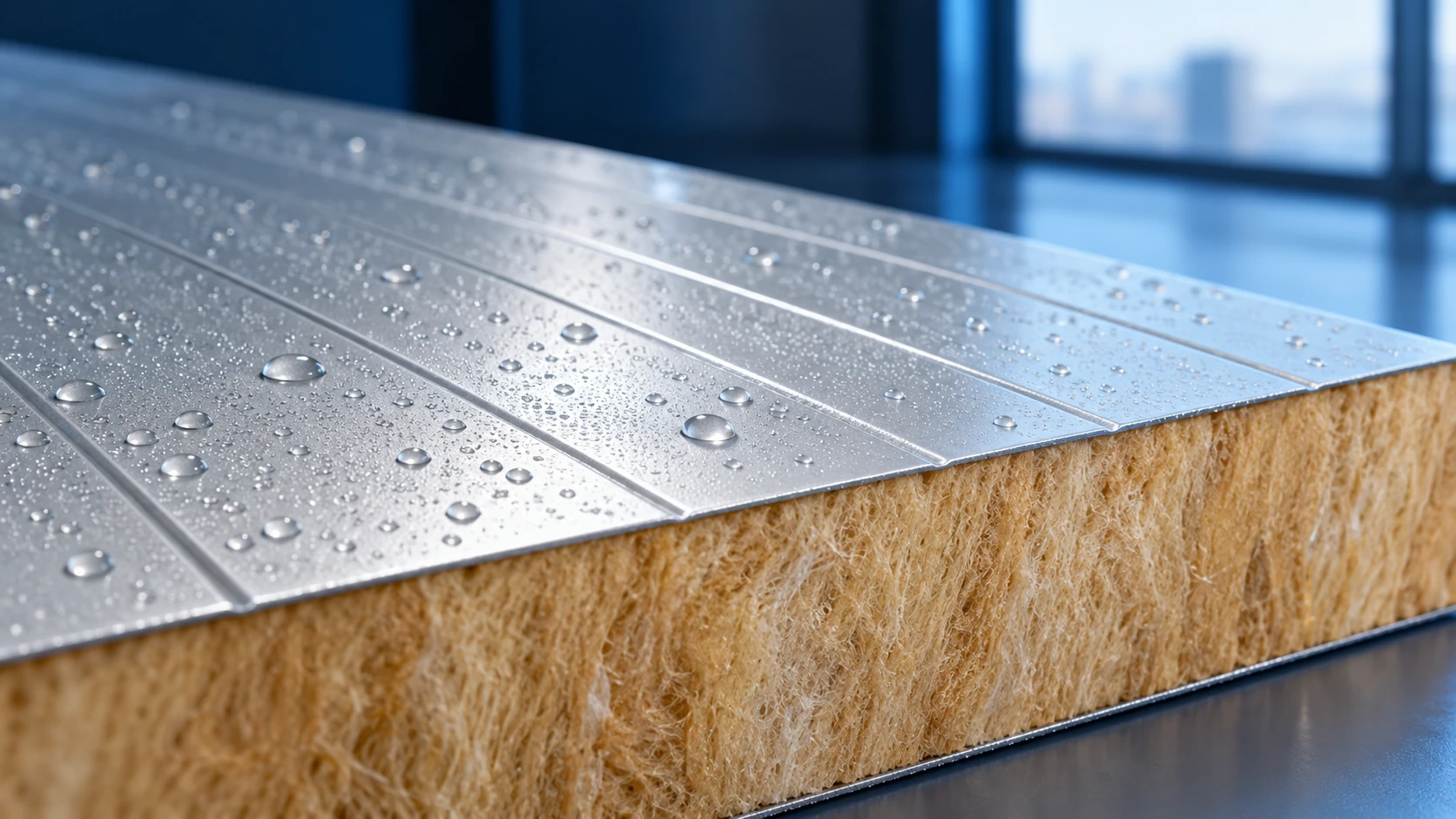
Water on a sandwich panel can be condensation rather than a roof leak. Warm, moist air releases water when it meets a sufficiently cold facing. Metal facings also do not guarantee that moisture can never reach the core: joints, edges and penetrations remain potential entry points. Investigating the problem means checking when the water appears, measuring indoor temperature and humidity, and inspecting both sides of the envelope. This guide explains how to distinguish possible causes, identify cold details and plan repairs. Increasing panel thickness alone will not correct a leaking joint, an unsuitable base detail or inadequate ventilation.

By |2026-11-11T08:22:08+01:0011 November 2026|Sandwich panels|Comments Off on Can water condense on sandwich panels? Causes and prevention

Mineral-wool sandwich panels: advantages, limitations and comparison with PIR

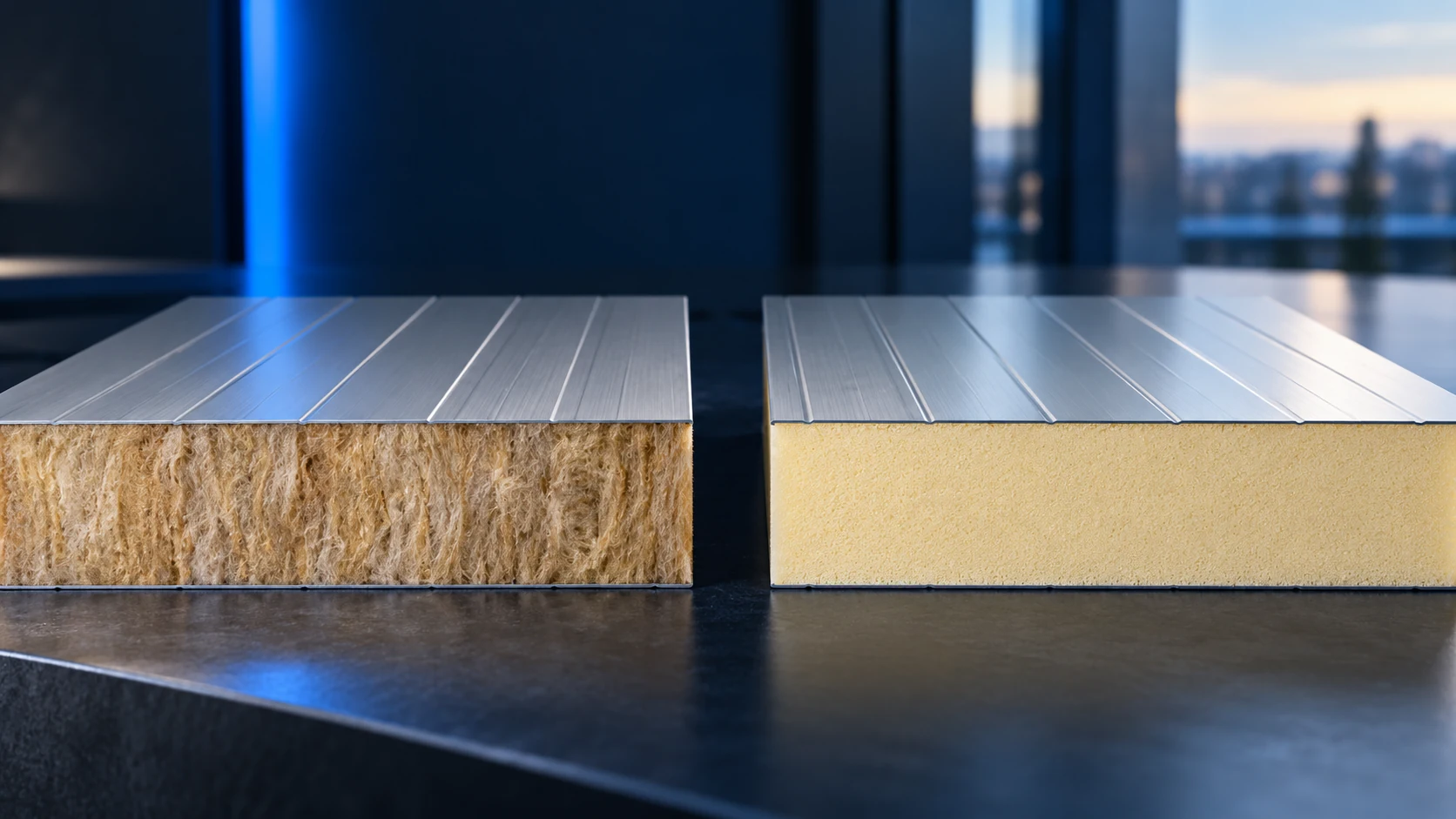
Mineral-wool sandwich panels have useful strengths, but they are not the best option for every application. Selection should start with the building's requirements and compare specific products, often against PIR panels. Core thickness alone does not make two options equivalent. This guide uses example fire, acoustic, thermal and weight figures to show what a meaningful comparison involves. The figures describe particular variants rather than every panel on the market. Assess the complete wall, including supports, fixings, coatings, installation and operating conditions. Comparing two compliant cladding solutions is more useful than ranking materials by the price of one arbitrarily chosen thickness.

By |2026-11-11T08:01:33+01:0011 November 2026|Sandwich panels|Comments Off on Mineral-wool sandwich panels: advantages, limitations and comparison with PIR
Back to top