Panels · Sheet metal · Insulation · Accessories

Buying sandwich panels and roofing sheets in Wrocław: avoiding an unsuitable order

When buying sandwich panels or roofing sheets in Wrocław and the surrounding area, compare a defined material schedule and complete delivery cost. Warehouse size alone does not establish the best offer. Confirm actual lengths, batch documentation, colours and unloading arrangements before committing to an order. This guide explains what to bring to a supplier, how to distinguish available stock from a producible size, and what to record at delivery. It does not rank sellers or promise current stock. A useful local supplier helps assemble verifiable information about a product that fits the project, rather than relying on a lowest-price slogan.
By |2026-11-11T09:28:54+01:0011 November 2026|Sandwich panels|Comments Off on Buying sandwich panels and roofing sheets in Wrocław: avoiding an unsuitable order

Mineral wool or PIR sandwich panels: choosing the core for your building

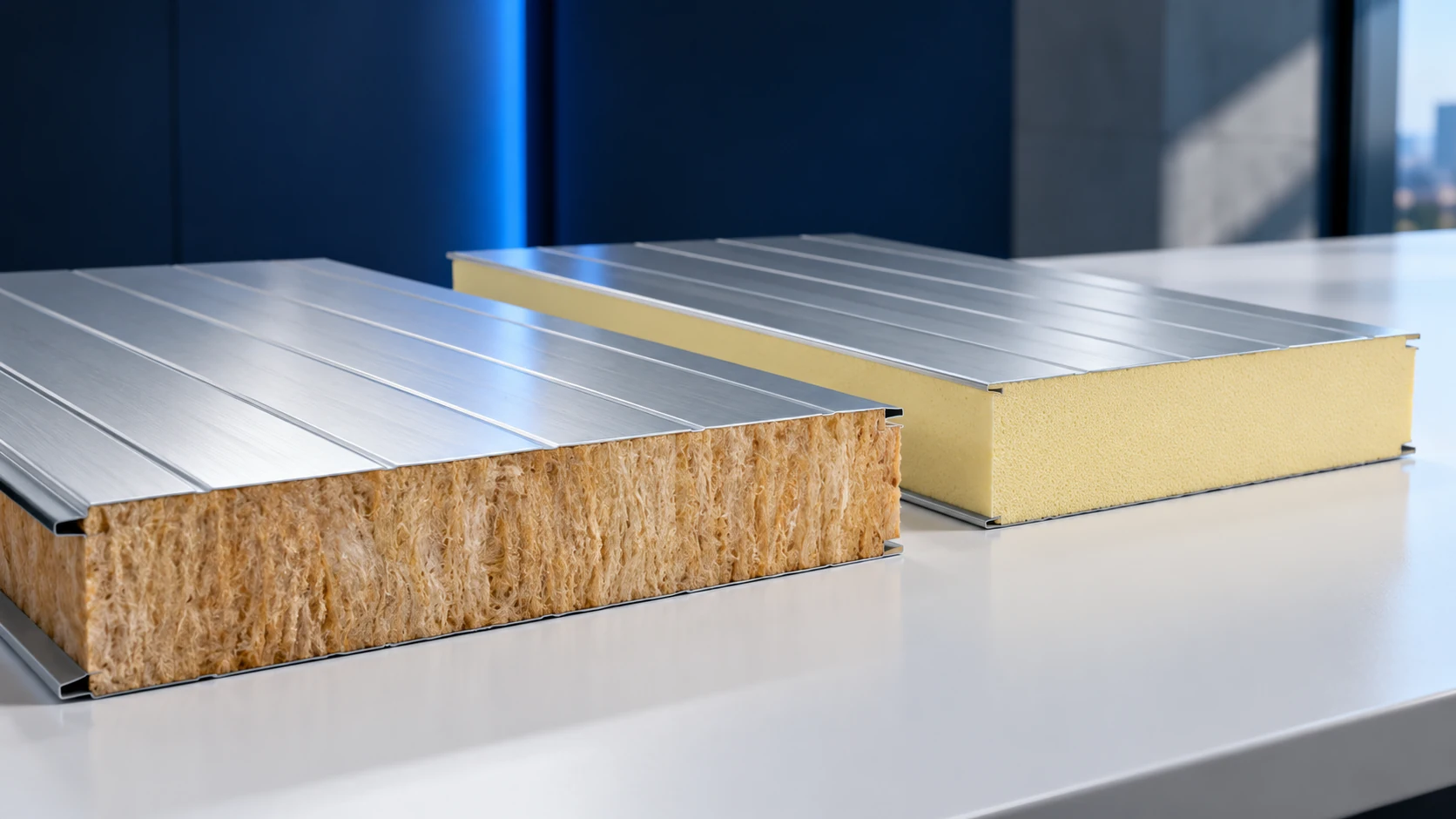
PIR generally achieves a low U-value with less thickness, while mineral-wool sandwich panels may suit particular fire requirements better. Neither is the universal choice for every hall. Compare finished products and complete assemblies rather than core names alone. This guide uses specific examples to distinguish thermal performance, weight, reaction to fire, fire resistance and acoustic performance. The figures belong to the stated configurations and must not be transferred to every panel in a material family. Coatings, joints, supports and installation also influence the outcome. A meaningful price comparison begins with two solutions that meet the same project requirements.

By |2026-11-11T09:28:15+01:0011 November 2026|Sandwich panels|Comments Off on Mineral wool or PIR sandwich panels: choosing the core for your building

Selecting panel thickness for cold stores and freezer rooms

Cold-store panel thickness cannot be chosen from the controller's temperature setting alone. Conditions outside the room, its dimensions, door operation and joint tightness all influence the enclosure's performance. A thicker panel reduces heat transmission but cannot repair a leaking threshold or a discontinuous vapour-control layer. This guide separates panel U-values from the complete refrigeration load and explains why walls, ceilings, floors and junctions need individual assessment. Worked examples illustrate transmission through selected panels; they do not size a refrigeration unit. Suitable facings, cleaning methods, structural supports and an agreed inspection plan are also part of a reliable specification.

By |2026-11-11T09:28:12+01:0011 November 2026|Sandwich panels|Comments Off on Selecting panel thickness for cold stores and freezer rooms

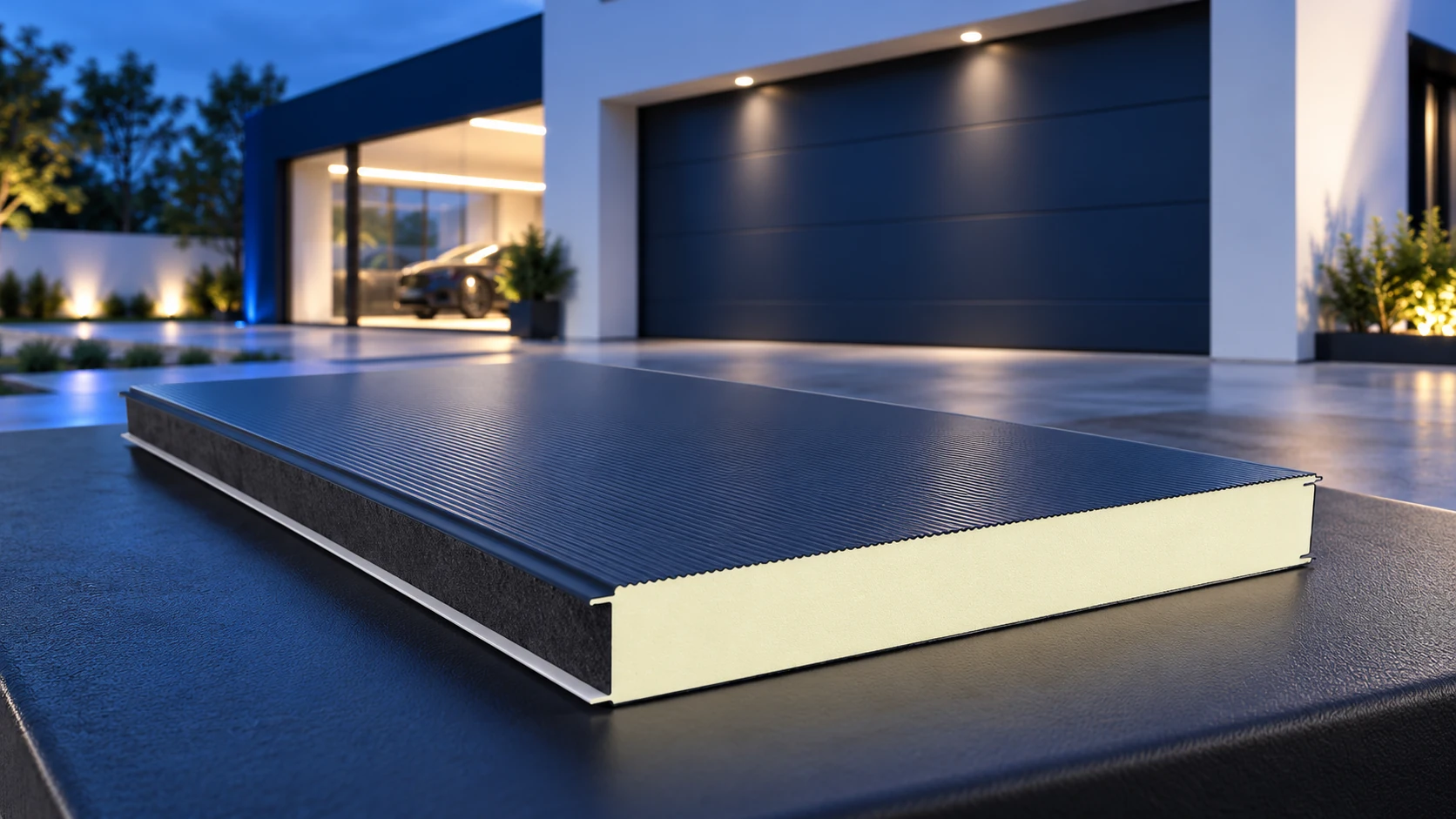
Planning a sandwich-panel garage: quantities, construction and total cost

A garage clad with sandwich panels can be assembled quickly, but its cost depends on the complete building. Budget separately for foundations, the frame, wall and roof panels, doors and installation. Decide whether the garage will be heated before choosing the enclosure. That choice affects insulation, junctions and ventilation. This guide explains how to measure a simple garage, distinguish wall panels from roof panels and compare complete quotations. Its dimensions and prices are worked examples rather than a construction design or current offer. Accurate panel lengths, suitable supports and a clear delivery scope matter more than a low advertised price per square metre.

By |2026-11-14T14:43:31+01:0011 November 2026|Sandwich panels|Comments Off on Planning a sandwich-panel garage: quantities, construction and total cost

Cutting sandwich panels without damaging the facings or core

Sandwich panels need a cutting method that avoids overheating their steel facings. Select equipment for the complete panel section, such as a suitable fine-toothed saw, and follow the product and tool instructions. An angle grinder can damage protective coatings and scatter hot particles onto neighbouring surfaces. This guide covers planning cuts and openings, supporting both sides, removing swarf promptly and finishing the exposed edge. Correct dimensions alone are not enough: the cut must preserve the intended support, weather seals and any specified fire-resistance detail. Check those requirements before cutting rather than trying to reconstruct them after an oversized opening has been made.

By |2026-11-11T09:07:25+01:0011 November 2026|Sandwich panels|Comments Off on Cutting sandwich panels without damaging the facings or core

Do mineral-wool panels reduce noise? Reading acoustic performance data

A mineral-wool sandwich panel can reduce sound transmission, but the performance belongs to the specific product, not the core material alone. Distinguish sound insulation through a wall from sound absorption within a room. This guide explains Rw, RA1, RA2 and absorption data, using figures for particular panel examples rather than universal values for mineral wool. Doors, vehicle entrances, service penetrations and junctions may determine the building's actual result. Before replacing the wall panels, identify the noise source and its transmission paths. The right specification addresses that particular problem instead of assuming that a thicker wool core will always make a room quieter.

By |2026-11-11T09:07:23+01:0011 November 2026|Sandwich panels|Comments Off on Do mineral-wool panels reduce noise? Reading acoustic performance data

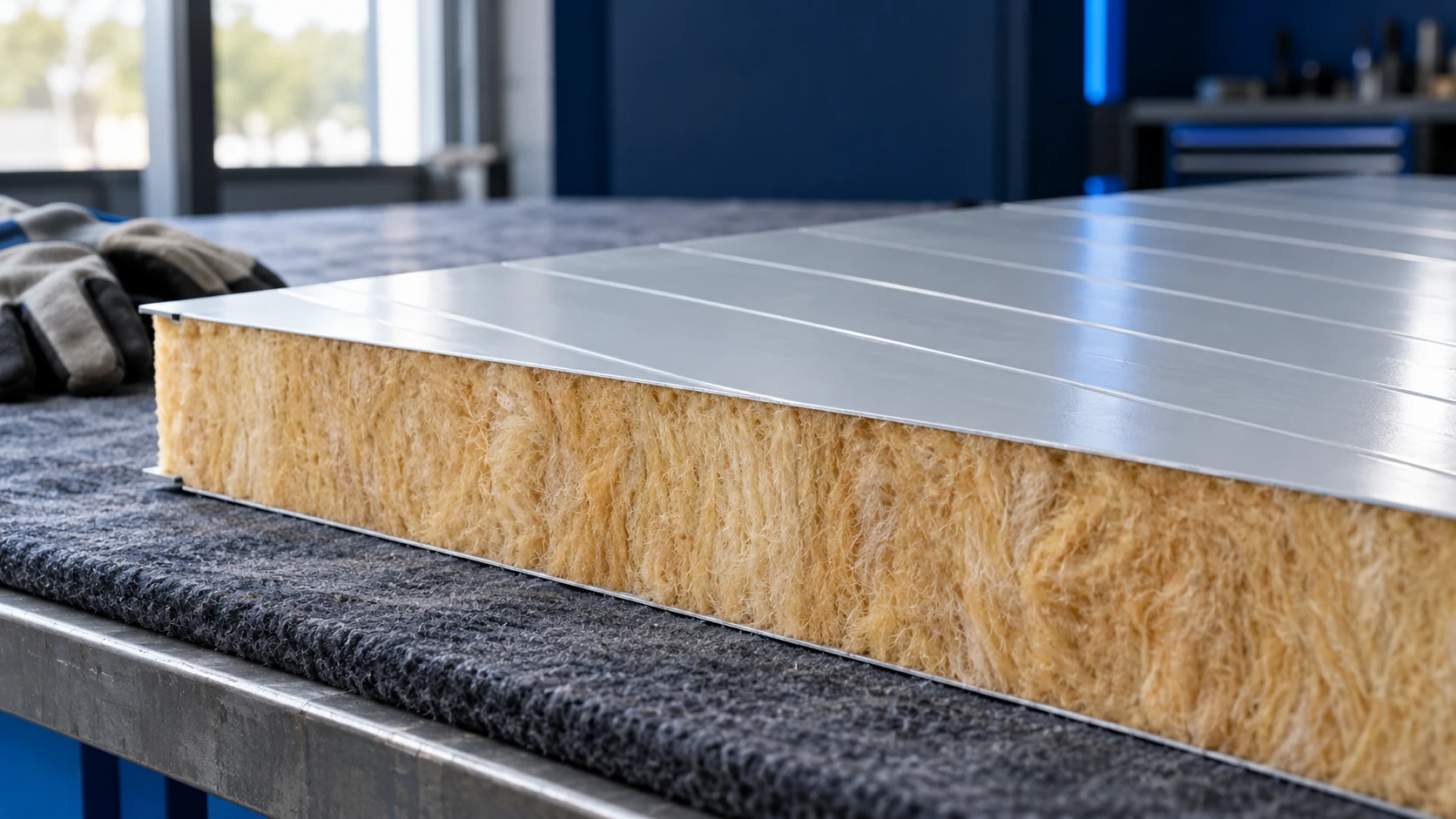
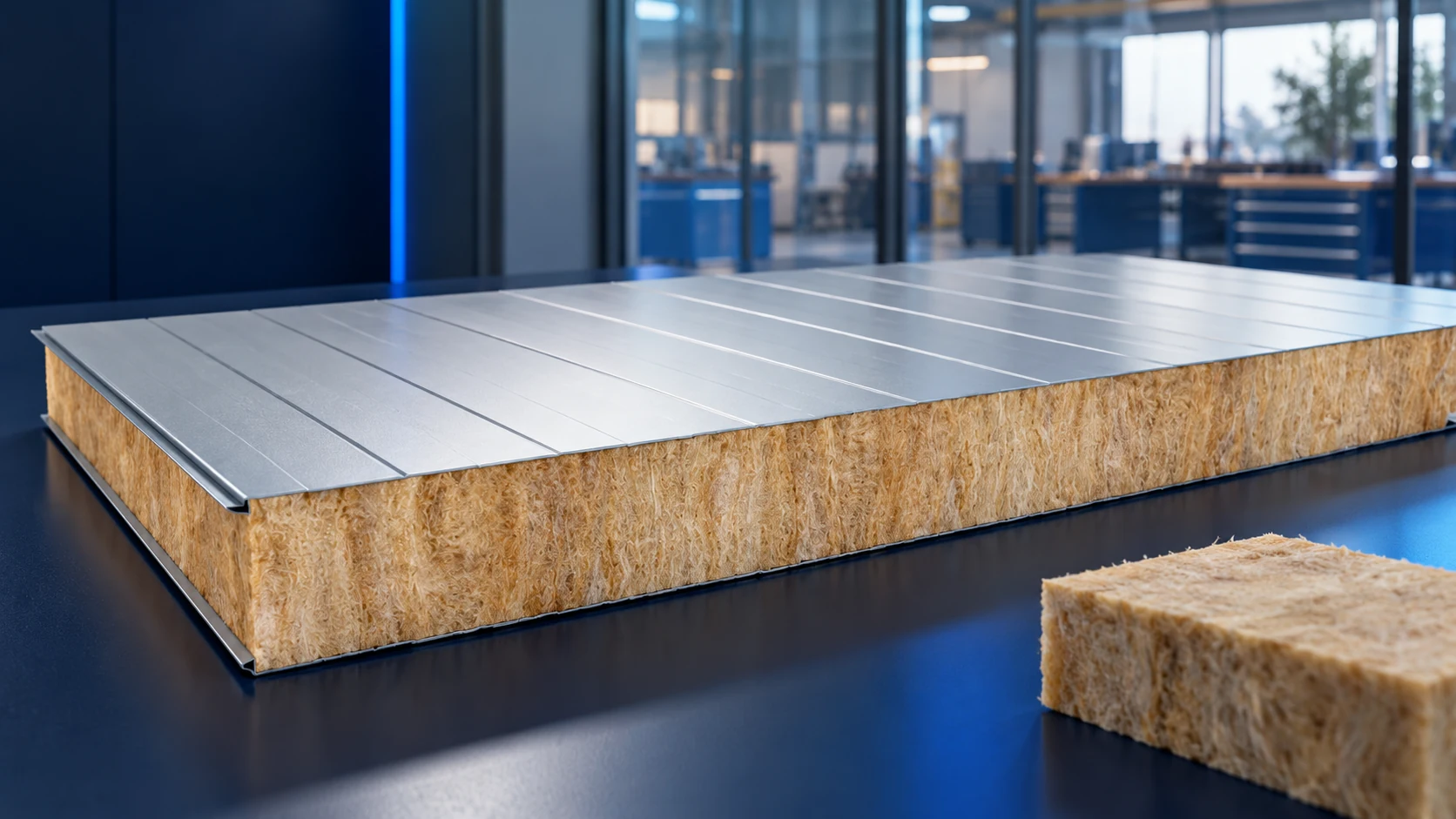
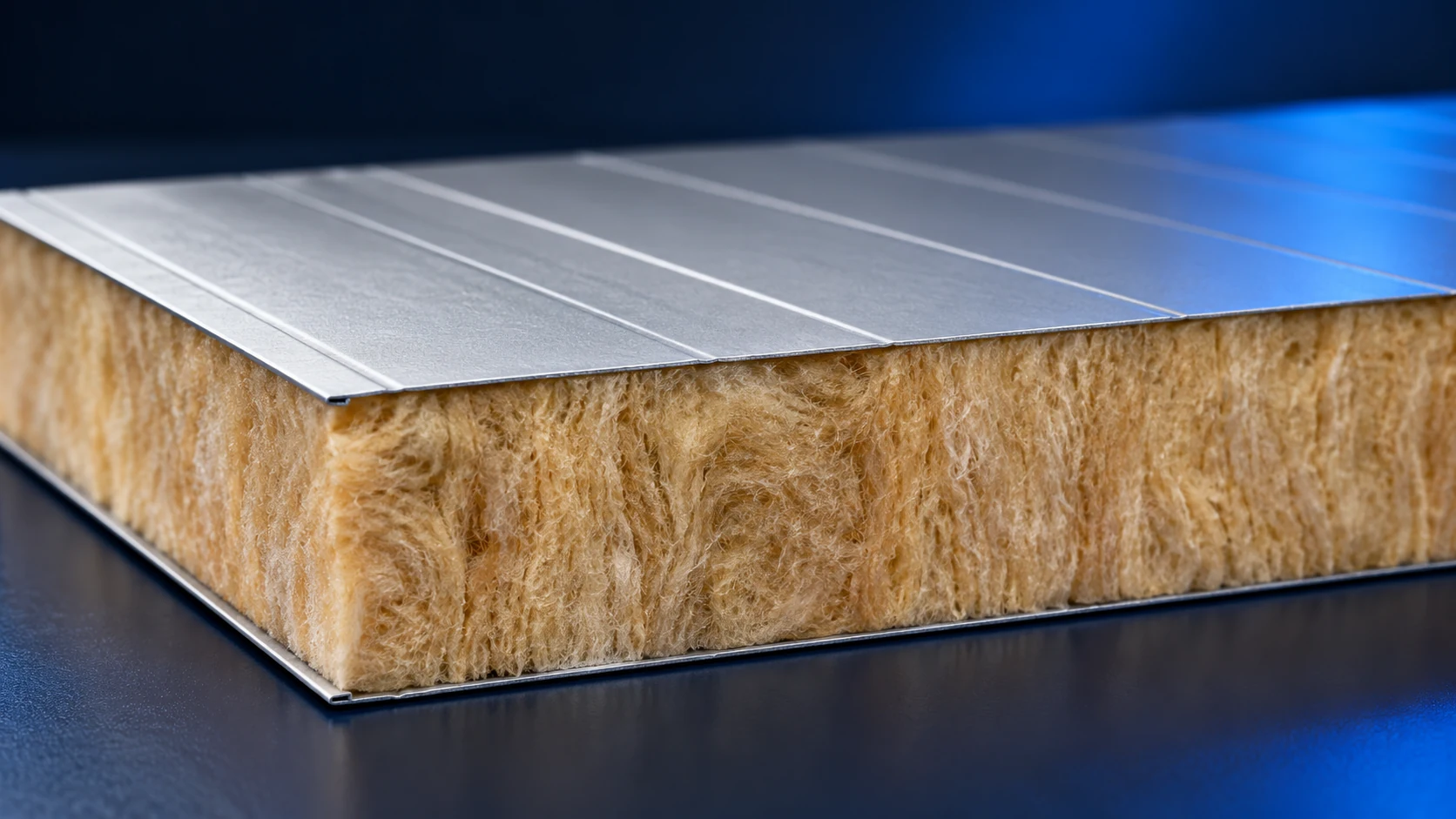
What is a mineral-wool sandwich wall panel, and how do you choose one?

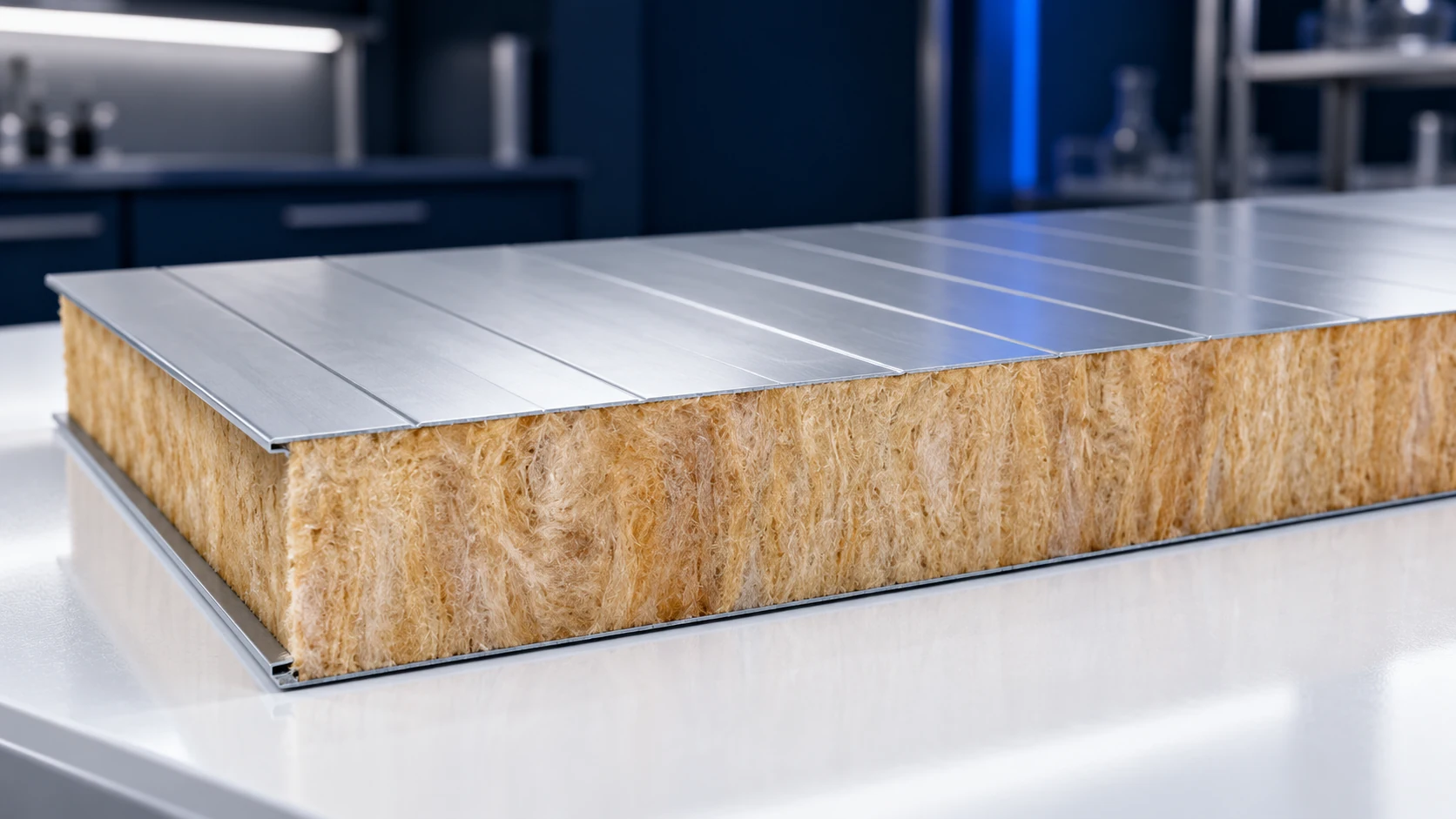
A sandwich wall panel combines an insulating core with two facings. The products discussed here use mineral wool between steel facings and form cladding attached to a supporting structure. Choosing a panel means checking the whole product, its joints and the proposed wall assembly. Thickness alone does not establish thermal performance, fire resistance or sound insulation. Dimensions, fixings, supports and finishing details also affect the result. This guide follows the choice from the panel's construction through performance and ordering to installation and maintenance, distinguishing documented properties of particular variants from claims that would apply to every mineral-wool panel.

By |2026-11-11T08:43:17+01:0011 November 2026|Sandwich panels|Comments Off on What is a mineral-wool sandwich wall panel, and how do you choose one?

Comparing mineral-wool wall-panel variants: weight, core and performance

Mineral-wool wall panels of equal thickness can differ in weight, load-bearing performance and thermal insulation. These differences arise from the complete product, not simply the name of a variant. A lighter panel need not perform worse thermally, while a heavier one is not automatically suitable for a longer span. Start with the construction and the full set of properties required by the building. Compare the two facings, core, joints, dimensions and documented conditions of use before comparing prices. The examples below show why core density or a commercial label alone cannot decide which panel is appropriate for a particular wall.

By |2026-11-11T08:43:16+01:0011 November 2026|Sandwich panels|Comments Off on Comparing mineral-wool wall-panel variants: weight, core and performance

Are mineral-wool wall panels non-combustible? Understanding A1, A2 and EI

A mineral-wool core does not automatically give a finished wall panel an A1 classification. The complete panel is assessed as a separate product, including its facings and the bond between its layers. One possible reaction-to-fire classification is A2-s1,d0, but it must be confirmed for the exact variant. The fire resistance of the assembled wall, expressed using designations such as EI, is a different assessment. Check the specified supports, orientation, joints and penetrations as well as the panel itself. This guide explains what these labels mean and which documents are needed to specify a complete wall rather than just its insulation.

By |2026-11-11T08:43:15+01:0011 November 2026|Sandwich panels|Comments Off on Are mineral-wool wall panels non-combustible? Understanding A1, A2 and EI

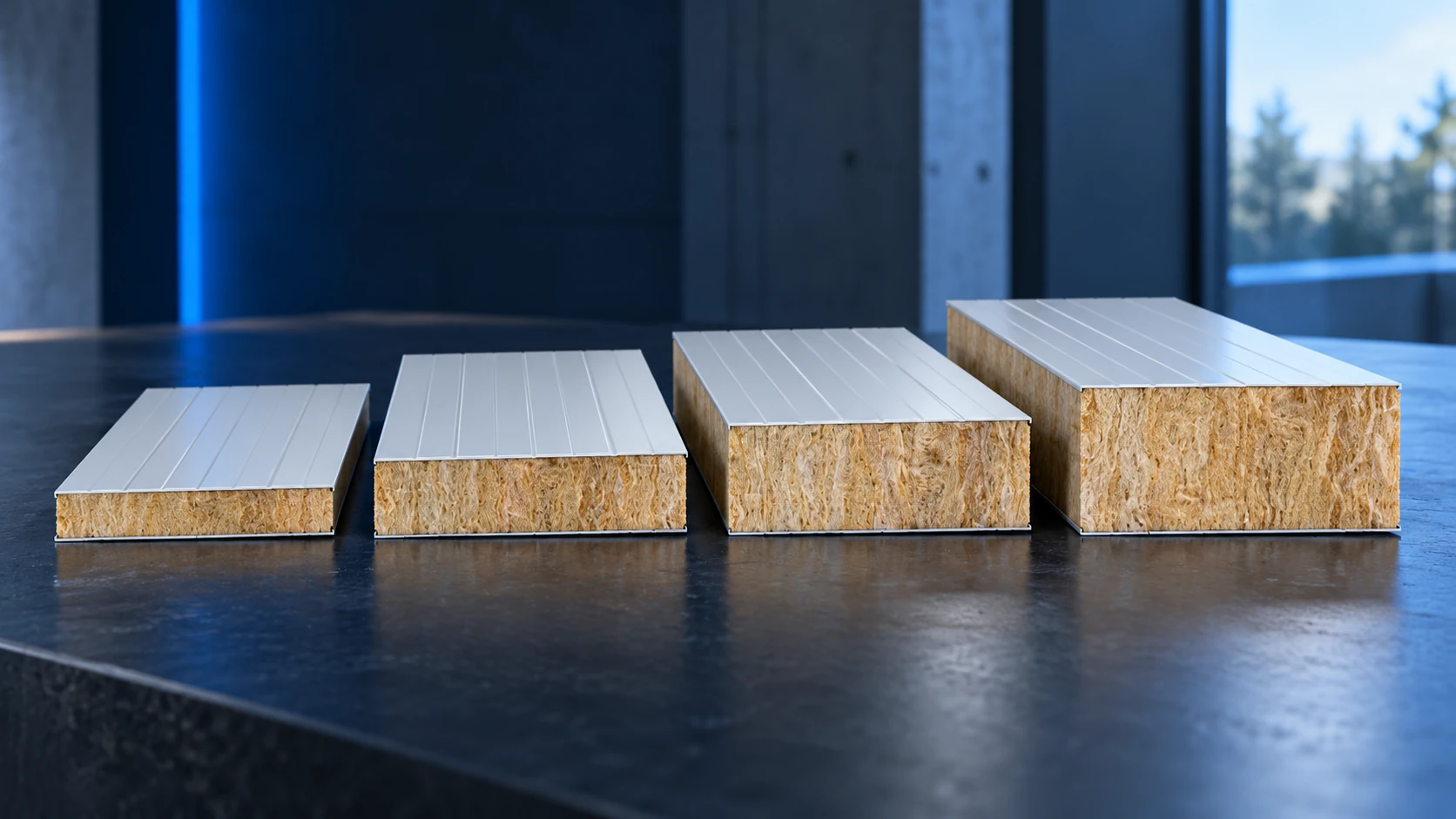
Choosing mineral-wool wall-panel thickness from 60 to 200 mm

Wall-panel thickness must satisfy several requirements together: thermal insulation, fire performance, span and weight. Do not start by assuming that 100 mm suits most buildings or that 200 mm always gives the best result. Define what the wall must do, then check a specific product variant against the design. This guide sets out a sequence from building use and U-values to classification documents, structural tables and installation details. It also considers future use and the cost of accessories. The 60–200 mm examples are not the limits of the entire market; available thicknesses and properties must be confirmed for the chosen panel family.

By |2026-11-11T08:22:20+01:0011 November 2026|Sandwich panels|Comments Off on Choosing mineral-wool wall-panel thickness from 60 to 200 mm
Back to top