Panels · Sheet metal · Insulation · Accessories

PIR on a flat roof: what to agree before ordering

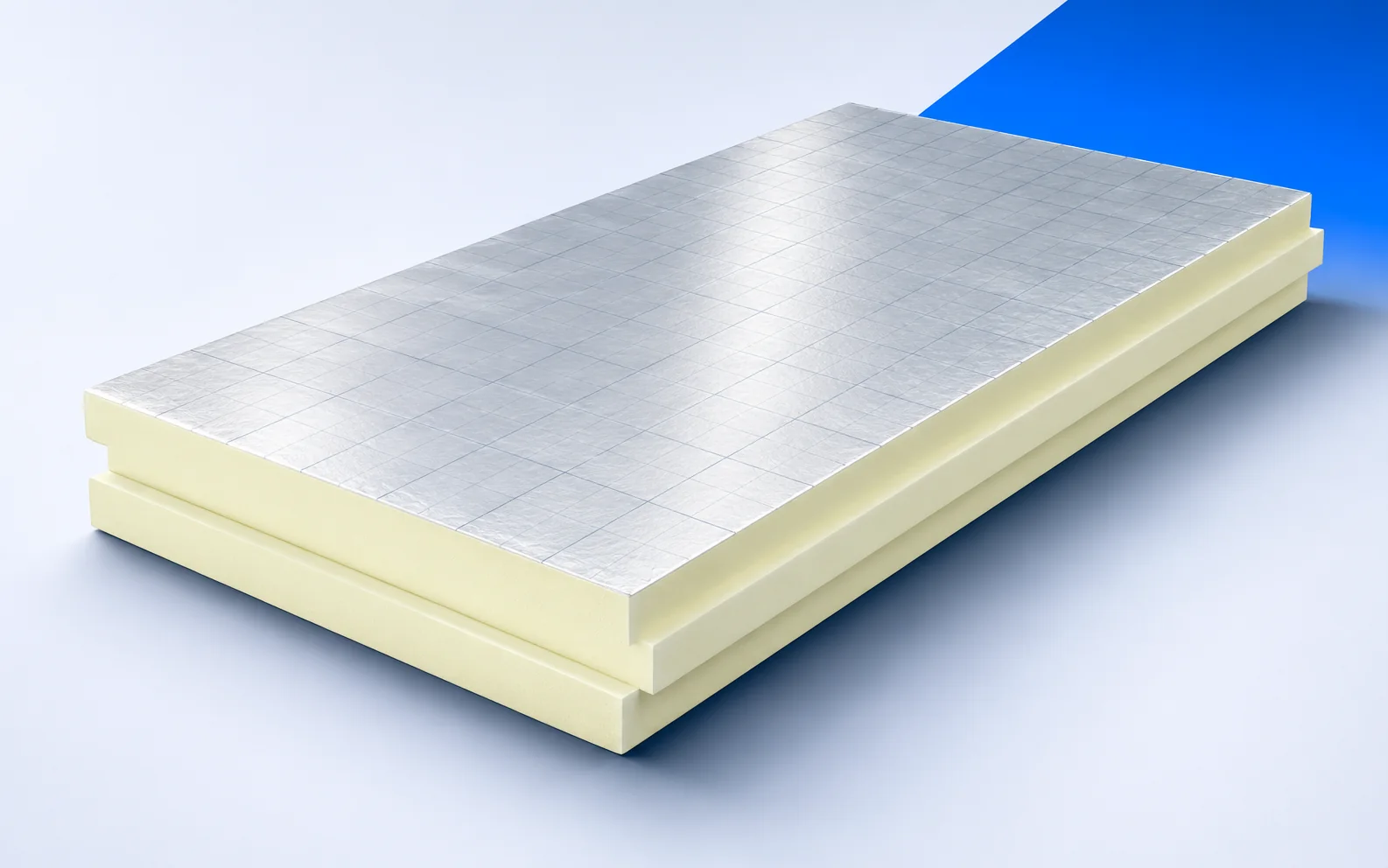
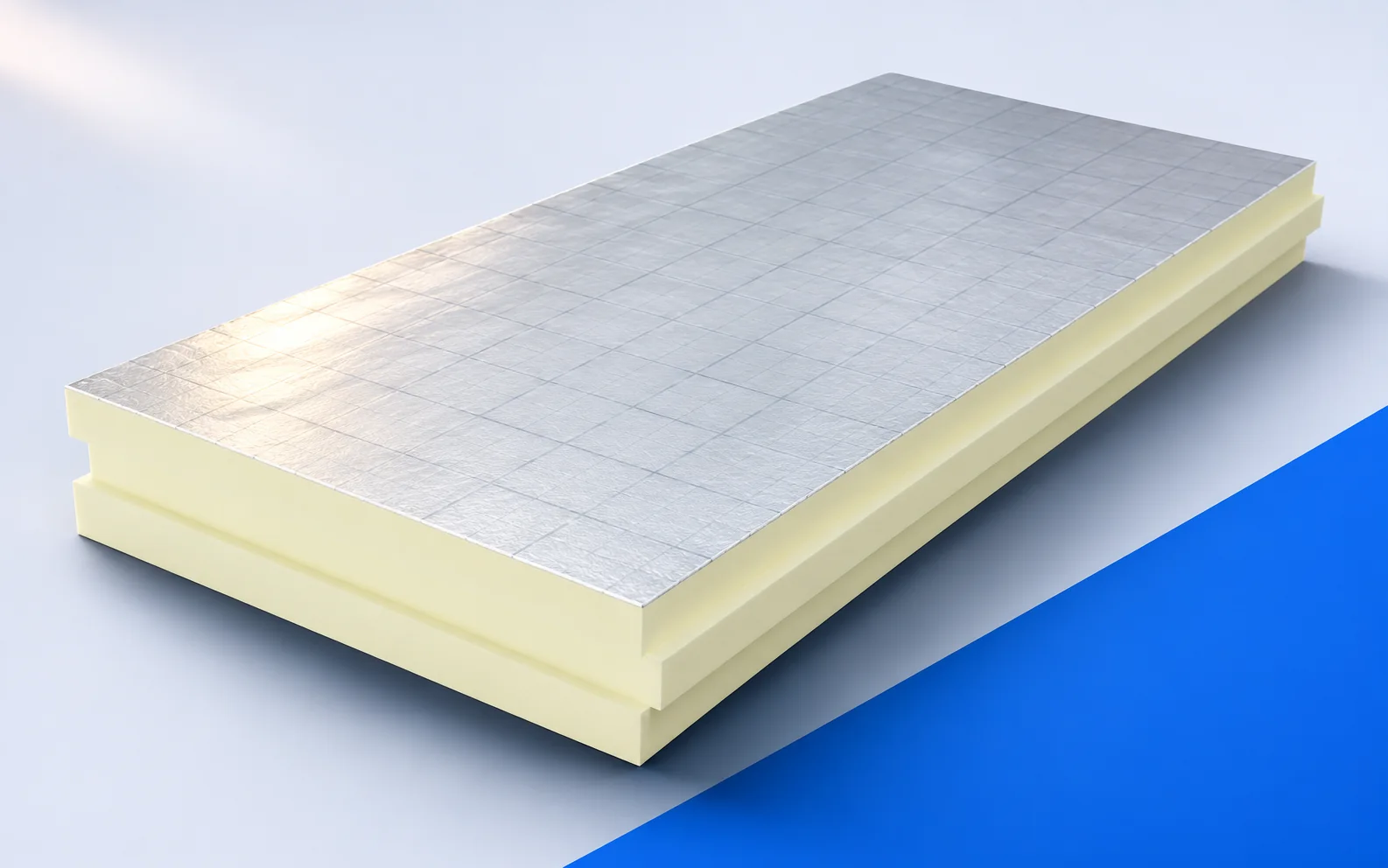
A flat roof needs a continuous thermal layer, a watertight covering and a route to the outlets. Specify the waterproofing before buying PIR: aluminium laminate, glass fleece and bituminous facings are not interchangeable substrates. Have the roofer confirm in writing that the board, facing and fixing method are compatible with the selected covering. Mark the levels at outlets, parapets and equipment bases on the same section. A price per square metre of board will not tell you whether the finished roof drains or whether the waterproofing can be terminated at the planned height.
By |2026-11-12T15:23:59+01:0012 November 2026|PIR boards and insulation|Comments Off on PIR on a flat roof: what to agree before ordering

Insulating a pitched roof with PIR boards: decisions for the homeowner

PIR boards above the rafters insulate a pitched roof without using up more loft space. Before work begins, agree on the finished roof level, drainage and details at roof windows and eaves. An over-rafter layer covers the timbers and reduces their contribution to heat flow. A board fitted between rafters follows a different path, even if both quotes say “PIR”. Ask the roofer to mark the insulation on a section of the house. This shows which timbers it covers, where it meets wall insulation and how the change will affect the roof edges.

By |2026-11-12T15:02:00+01:0012 November 2026|PIR boards and insulation|Comments Off on Insulating a pitched roof with PIR boards: decisions for the homeowner

PIR, cellulose or wood fibre for a loft?

Before comparing PIR, cellulose and wood fibre, decide which space will be heated. Rooms under the roof need a different insulation line from an unheated loft above an insulated ceiling. PIR comes in rigid boards of a fixed thickness and facing; cellulose can be blown into prepared cavities. With exposed rafters there are several ways to insulate. If the internal finish must stay, access from outside becomes more important. Decide what you want the renovation to achieve: winter warmth, less overheating in summer, a quiet bedroom or a finish that preserves the available space.

By |2026-11-12T15:01:59+01:0012 November 2026|PIR boards and insulation|Comments Off on PIR, cellulose or wood fibre for a loft?

Replacing mineral wool with PIR in a loft: what about fire and noise?

PIR can save headroom in a loft, but a thickness comparison only answers the thermal question. For example, at conductivities of 0.022 and 0.037 W/(mK), 10 cm of the first material gives approximately the same layer resistance as 16.8 cm of the second. These are illustrative values for layers, not ratings for finished roofs. Compare the thicknesses that meet the same thermal target, then check the complete roof separately for fire performance, noise and moisture. Whether replacing wool makes sense depends on the available space and what the existing wool does in that particular roof.

By |2026-11-12T15:01:57+01:0012 November 2026|PIR boards and insulation|Comments Off on Replacing mineral wool with PIR in a loft: what about fire and noise?

PIR or XPS insulation: where does the difference matter in a house?

“PIR saves space” and “XPS resists water” are starting points, not specifications. Describe where the insulation will sit, what supports it and how moisture and loads reach it. At a low threshold a board with lower thermal conductivity may leave more room for the screed and finish. Compare the thicknesses needed for the same thermal resistance, then check whether each exact product suits the load, support and water exposure. A board approved beneath a screed is not necessarily suitable beside a foundation. Look at the details of both installations before ordering one material for both.

By |2026-11-12T15:01:56+01:0012 November 2026|PIR boards and insulation|Comments Off on PIR or XPS insulation: where does the difference matter in a house?

100 or 150 mm of PIR? How to read an insulation thickness calculation

Conductivity (lambda), thermal resistance (R) and thermal transmittance (U) answer different questions. The declared conductivity, usually marked λD, describes a particular product. Design calculations may require values adjusted for the intended service conditions using the applicable method. Do not add an arbitrary summer percentage or subtract one for winter. Check whether the quoted value applies to the exact board and thickness: adverts often feature the best figure in a range. To choose between 100 and 150 mm you also need the resistance of that thickness and the construction for which the U-value was calculated.

By |2026-11-12T15:01:55+01:0012 November 2026|PIR boards and insulation|Comments Off on 100 or 150 mm of PIR? How to read an insulation thickness calculation

Buying PIR insulation for your home: how to tell boards apart

Start with the place you intend to insulate. Two boards with the same core colour may need different adhesives, suit different substrates or have different thermal and fire properties. PIR refers to the chemistry of the rigid core. Shops may list these products under polyurethane insulation, but you need the exact board designation to choose the thickness, facing and joint. If a quote says only “polyurethane foam”, establish what is being supplied. A factory-made board, sprayed insulation and foam for filling gaps are different products with different installation requirements.

By |2026-11-12T15:01:53+01:0012 November 2026|PIR boards and insulation|Comments Off on Buying PIR insulation for your home: how to tell boards apart

How city-wide energy retrofits start with individual buildings

A neighbourhood retrofit plan should show which building comes first, what work it needs and how the result will be measured. For each school, apartment block and commercial unit, collect energy use, opening hours and heating and ventilation records. Compare these with a roof and façade survey and with the cold or damp spots reported by occupants. This separates urgent repairs from energy-saving opportunities. At a low terrace threshold, a designer may consider PIR insulation while allowing room for drainage and waterproofing. Use a common approach to measurement and handover across the programme, and set the work sequence for each building.

By |2026-11-12T13:53:19+01:0012 November 2026|PIR boards and insulation|Comments Off on How city-wide energy retrofits start with individual buildings

Insulating farm buildings from the first survey to handover

Start a farm insulation survey by marking the spaces that need different conditions on a floor plan. In a vegetable store, air must circulate around the produce. A livestock shed needs to remove moisture, while a heated workshop can lose heat through its partition with a cold machinery store. For each room, record the target temperature, ventilation arrangements, washing routine and months of use. This helps you decide whether to tackle the roof, an insulated ceiling or a partition. Compare PIR boards and sandwich panels for their intended function, weight and facings. Allow time to inspect fixings before they are concealed and to take readings once the building is back in use.

By |2026-11-12T13:53:18+01:0012 November 2026|Sandwich panels|Comments Off on Insulating farm buildings from the first survey to handover

How to insulate a loft from eaves to ridge

Decide how to insulate the loft on a section through the house. Mark the heated rooms and draw the insulation line around them. Under a cold loft the line can follow the ceiling. Above a bedroom with sloping ceilings it usually follows the roof. Pay particular attention where it changes direction or meets a window or pipe. These junctions need continuous insulation and an airtight connection. Before ordering mineral wool or PIR boards, check the roof timbers, available depth and intended roof ventilation. These checks determine which layers can safely be closed behind the lining.

By |2026-11-12T12:11:50+01:0012 November 2026|PIR boards and insulation|Comments Off on How to insulate a loft from eaves to ridge
Back to top