






Do mineral-wool panels reduce noise? Reading acoustic performance data
Sandwich panels
A mineral-wool sandwich panel can reduce sound transmission, but the performance belongs to the specific product, not the core material alone. Distinguish sound insulation through a wall from sound absorption within a room. This guide explains Rw, RA1, RA2 and absorption data, using figures for particular panel examples rather than universal values for mineral wool. Doors, vehicle entrances, service penetrations and junctions may determine the building’s actual result. Before replacing the wall panels, identify the noise source and its transmission paths. The right specification addresses that particular problem instead of assuming that a thicker wool core will always make a room quieter.
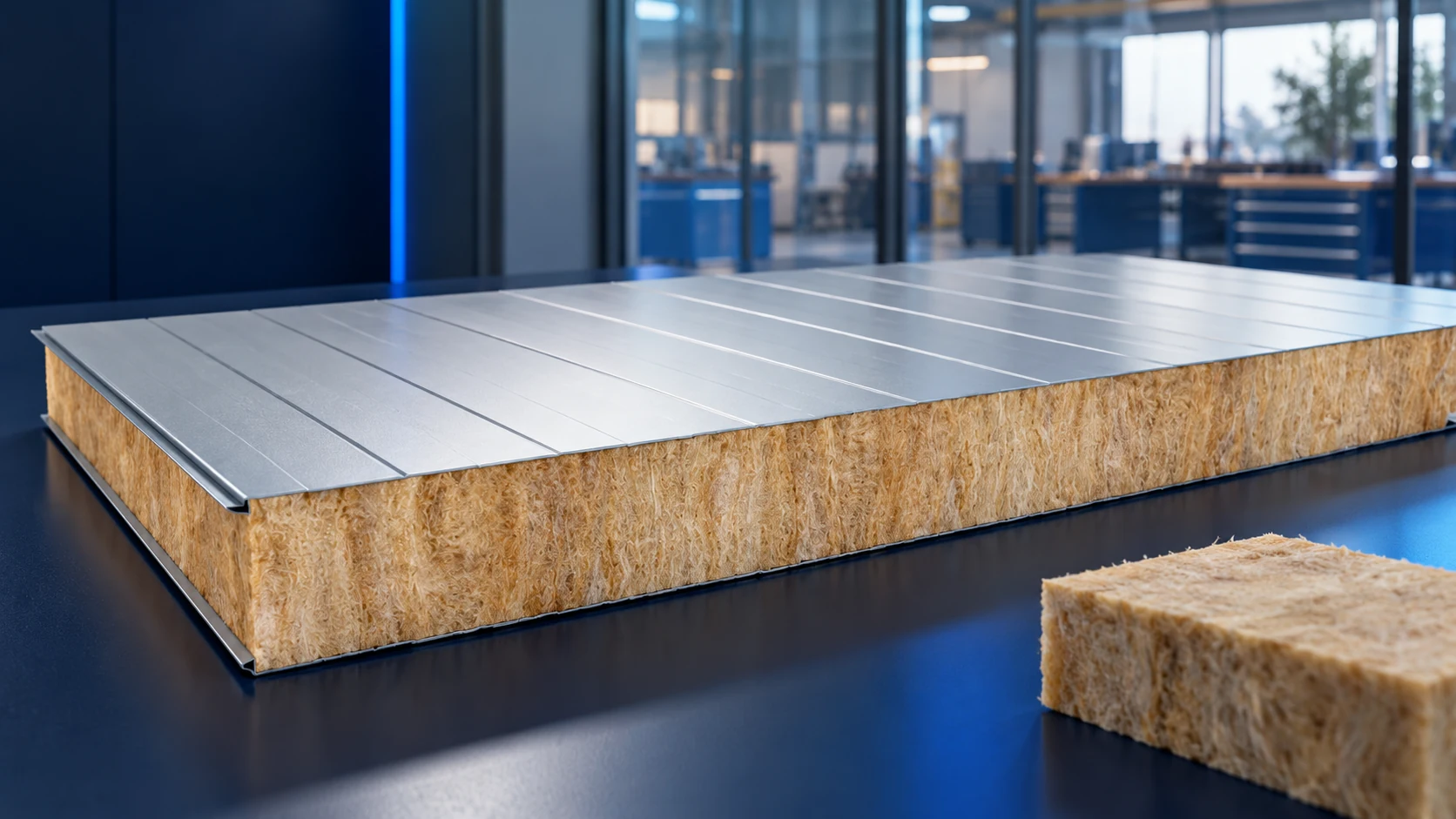
Rw concerns sound passing through an element
Rw is an index used to assess airborne sound insulation. A higher value is favourable when the data are comparable. It is not a guaranteed noise-level difference between arbitrary rooms: a real building has more transmission paths than a laboratory specimen.
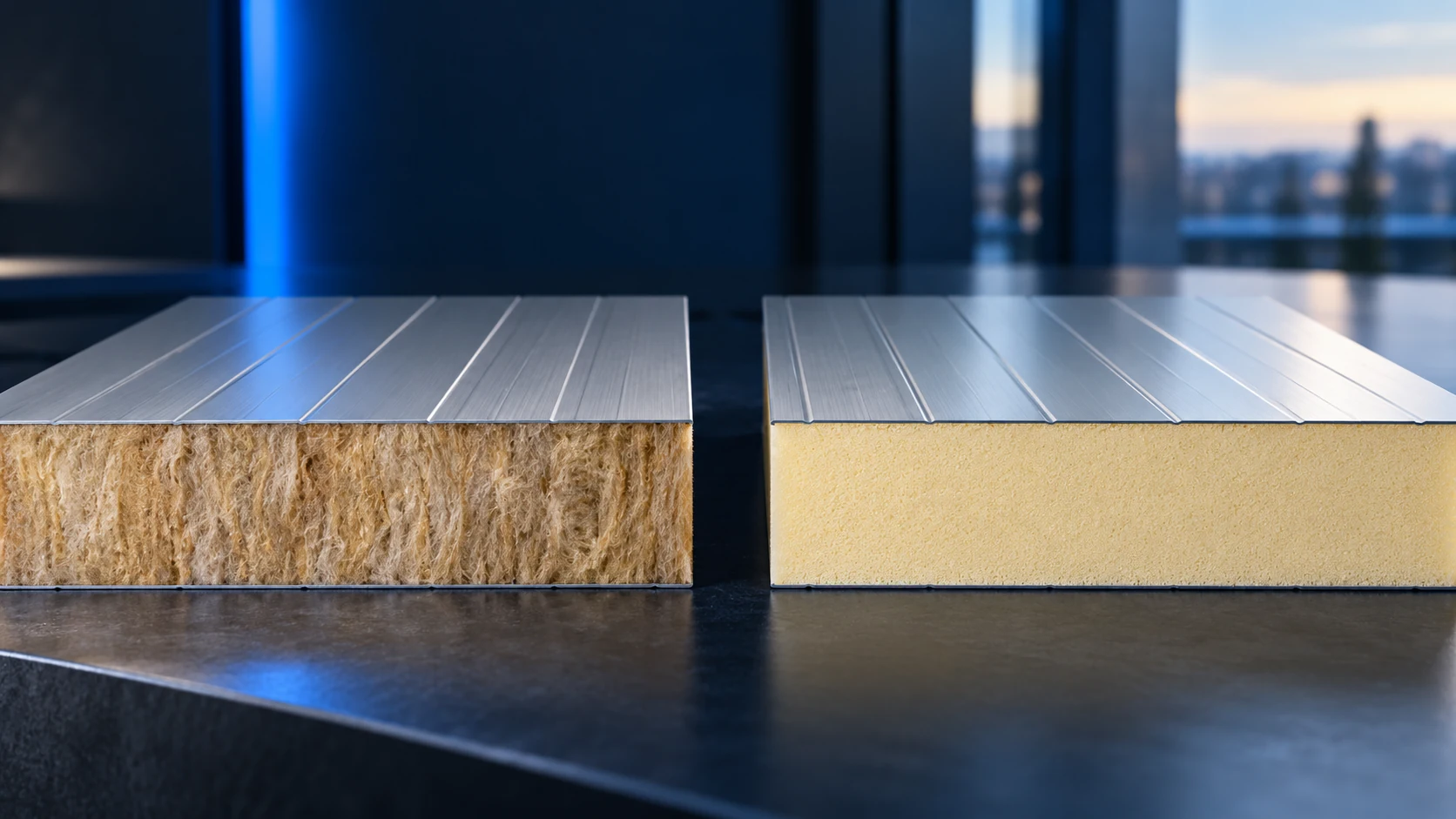
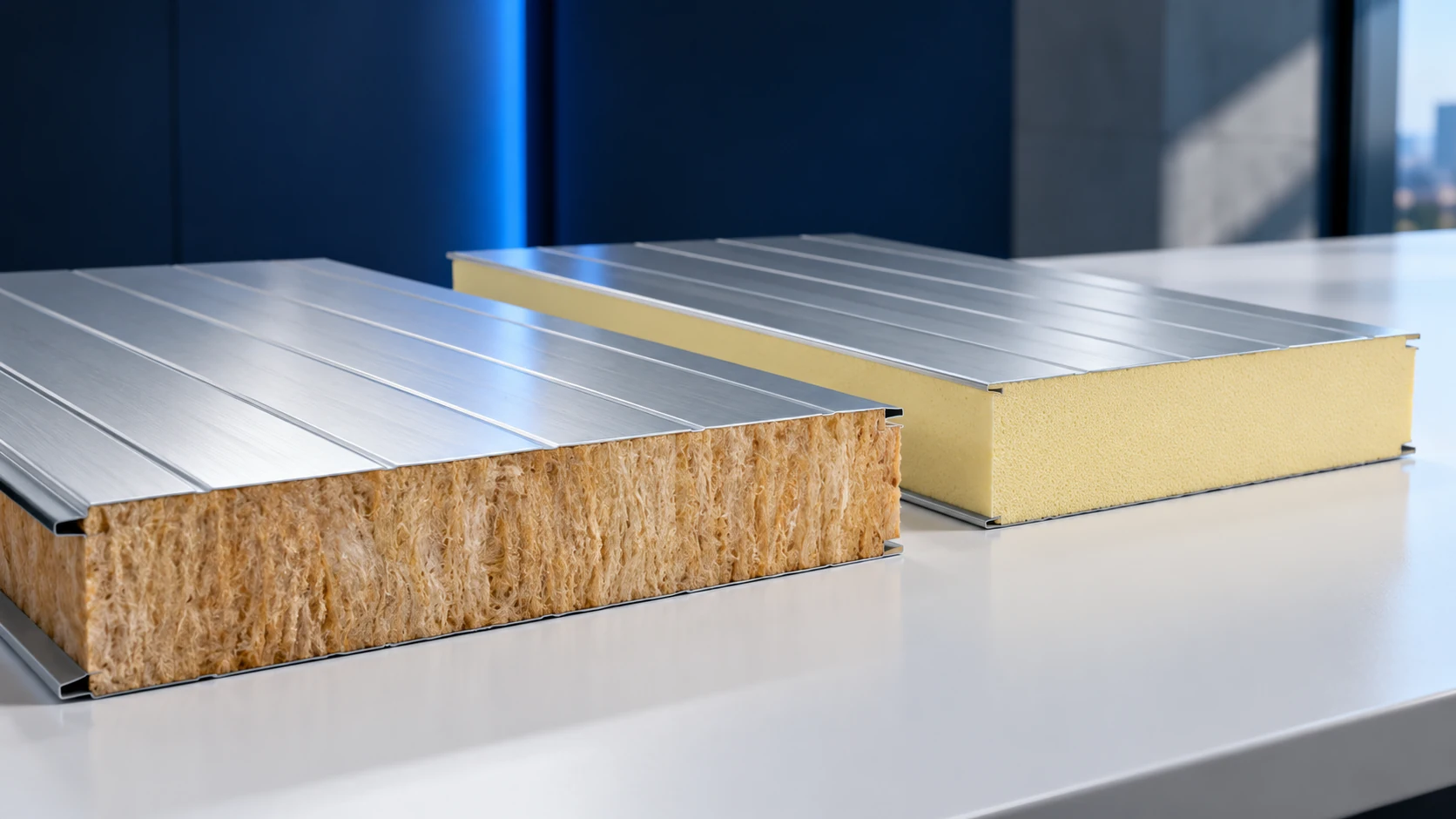
Consider two example products: a mineral-wool panel with Rw 33 dB and a PIR panel with Rw 26 dB. This shows the difference between that particular pair, not between all products with those cores. Compare data for the correct version, thickness and assembly, and specify exactly which construction is being assessed.
Mineral-wool panels do not all perform alike
Another example mineral-wool panel has Rw 27 dB, RA1 26 dB and RA2 24 dB. These are product-specific figures, not a common specification for all wool-core panels. Thickness and material name alone cannot establish sound insulation. Different versions and results for older products may not be interchangeable.
The whole panel construction affects the result: facings, core and joints all matter. Wool density alone cannot give a reliable Rw, nor should a fixed improvement be assumed for every increase in thickness. Use test or declaration data applicable to the intended product.
RA1 and RA2 help relate the data to the noise
Rw alone does not describe behaviour across the whole frequency spectrum. Spectrum-adapted indices help account for the type of sound. For machinery or traffic noise, examine RA1, RA2 and the relevant frequency range as well. Match the assessment to the source; the largest Rw does not answer every acoustic question.
Do not choose an index merely because its number is highest. Identify the noise first. A steady low-frequency machine sound may require a different assessment from speech. Difficult cases need acoustic expertise; selecting only by core name can disappoint even with correct installation.
Reverberation inside a hall is a different issue
When sound keeps reflecting within a room, the problem is reverberation. Absorption by surfaces and furnishings matters here. A panel with a solid steel facing is not an exposed layer of mineral wool and cannot simply be assigned the fibre material’s properties.
Absorption is assessed using other data, including αw. If no value is provided for the panel, do not invent one from general knowledge of wool. The solid facing changes its behaviour. To reduce reverberation, select an acoustic treatment or other assembly with verified absorption performance.
Gaps and openings can limit the improvement
A well-insulated wall area may sit beside a lightweight vehicle door, giving sound an easier route. Leaks, service penetrations and junctions with other elements matter too. Assess the entire area and building arrangement.
Manufacturers’ instructions emphasise correct panel fit and sealing for the envelope to function. That does not justify promising a particular decibel improvement from replacing a seal alone. Assess the actual transmission path, identify the weakest element and then choose the repair.
Do not add the panel’s and door’s Rw values when comparing quotations. Whole-wall insulation is not their simple sum, and even a small weak section can substantially change the result. A dimensioned drawing of openings is as important as the panel data; without it, the benefit of replacing the wall area can be overestimated.
Prepare an enquiry for a quieter wall
Describe the noise source, operating hours and rooms to protect. Include a wall drawing with doors, vehicle entrances and penetrations. Ask for acoustic data for the exact model and the test conditions. Distinguish the required performance of the complete wall from the panel’s own Rw.
When measurements should come first
For an existing building, measurements or a specialist inspection can reveal whether another transmission path dominates. Replacing panels might otherwise achieve little. Investigation avoids unnecessary expense: the objective is to reduce a particular noise, not merely buy a material associated with soundproofing.
Frequently asked questions
Does thicker mineral wool always mean a higher Rw?
No general rule can be applied to finished panels. Check data for the specific model and thickness.
Does Rw 33 dB mean every noise falls by 33 dB?
No. It characterises the tested element. The sound spectrum and other transmission paths also affect the building’s result.
Does solid steel facing absorb sound like exposed wool?
Do not assume that. Assessing reverberation requires absorption data for the complete installed solution.

Free quote
What to include in your enquiry
Tell us how you plan to use the material, the dimensions and the quantity you need. Include the thickness, grade or variant name, along with the delivery town or your preferred collection branch. For a specific product, add its name or a link to the product page. We will reply to the email address you provide to discuss availability and the terms of your order.
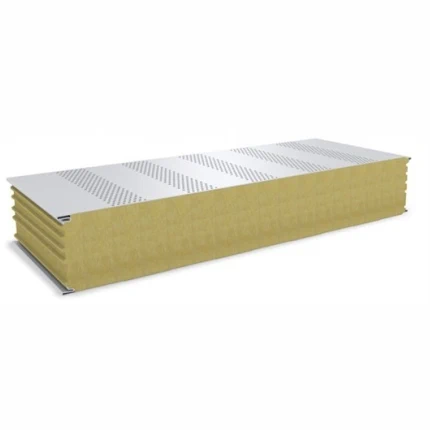
More from the building guide
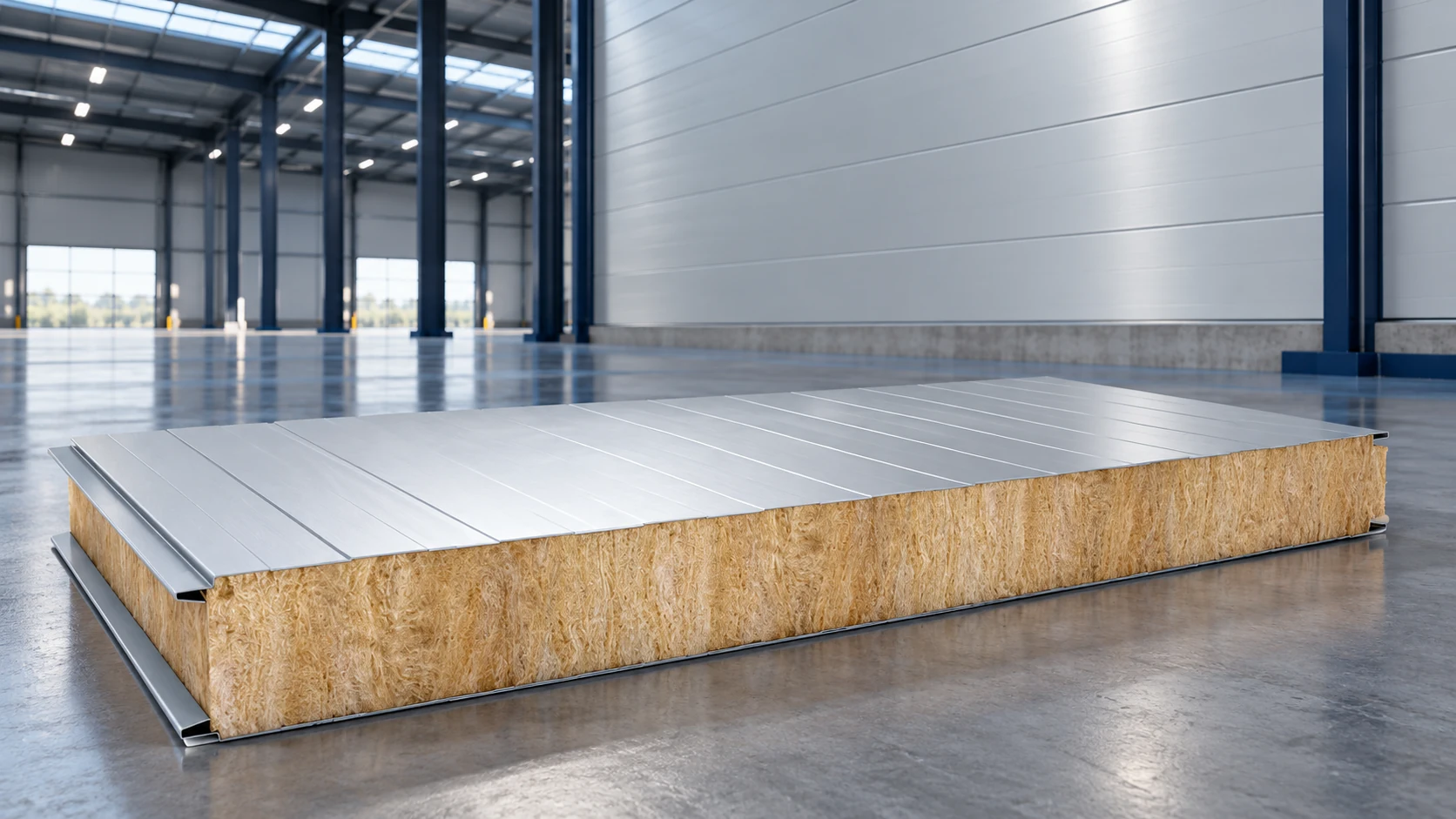
Mineral-wool wall panels need a properly designed supporting structure; they do not replace the complete building frame. Supports and their connections must…
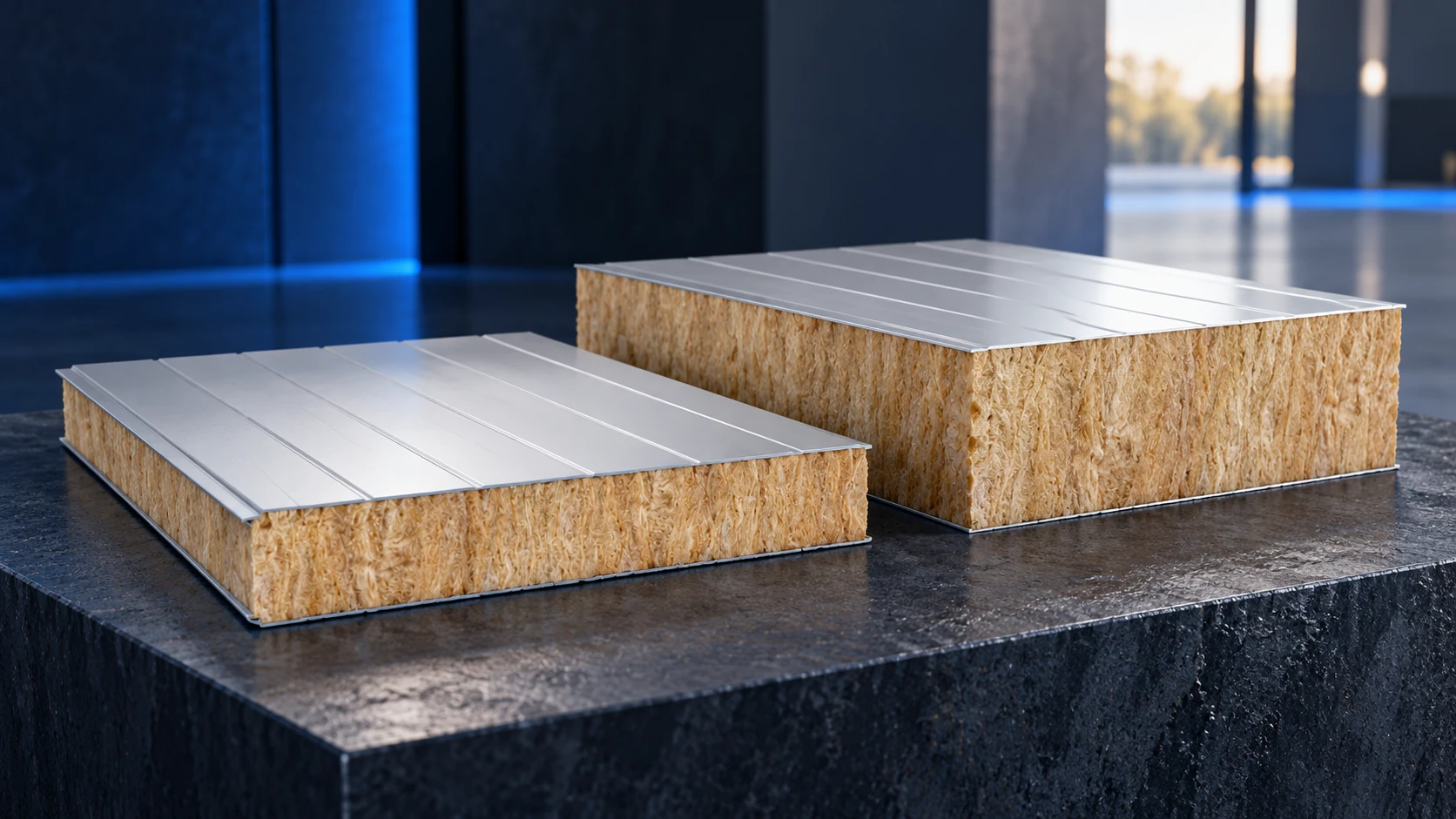
A 200 mm mineral-wool wall panel reduces heat flow more than a thinner version of the same model, but also weighs more.…
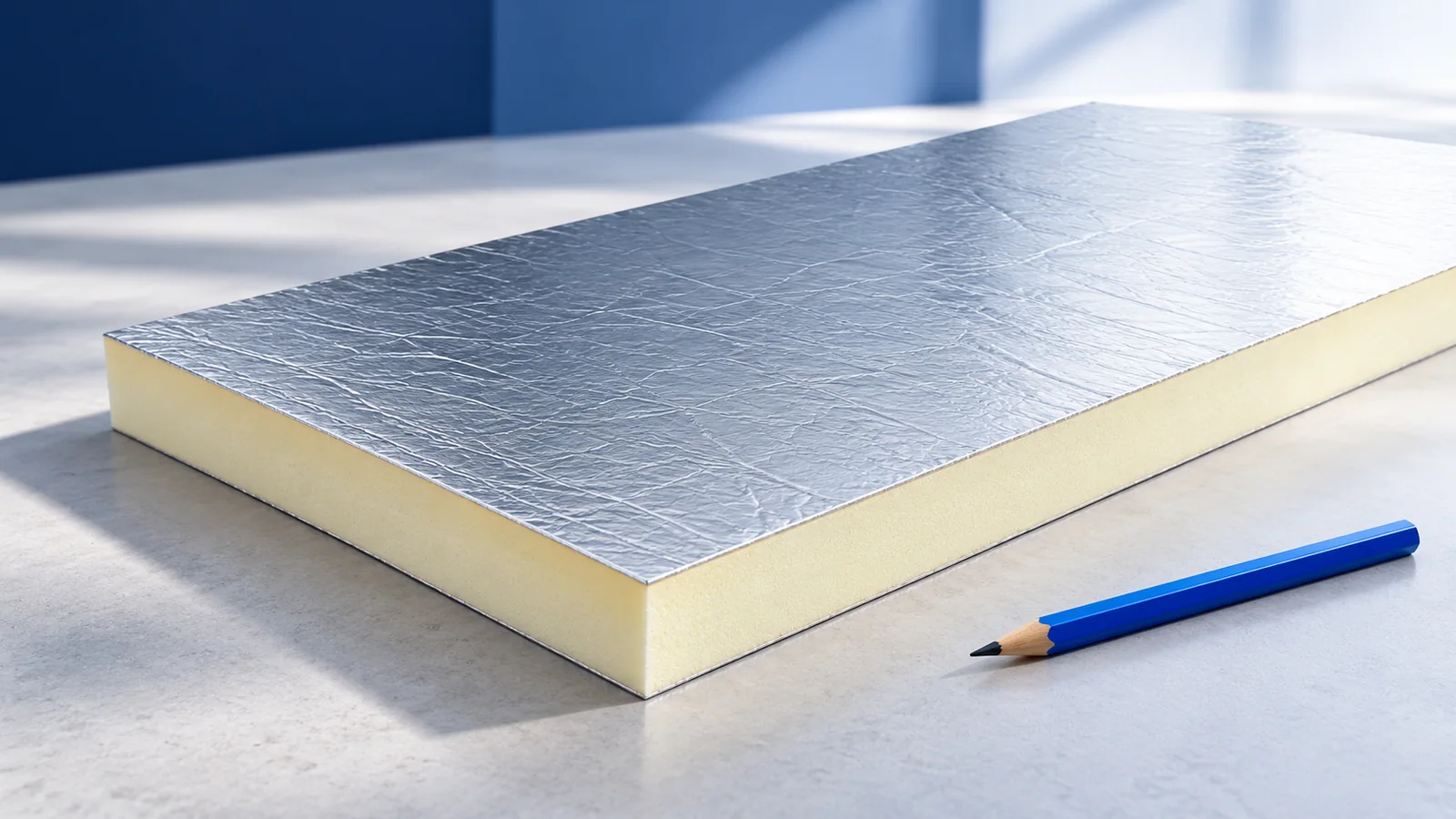
Attic insulation works when it forms a continuous layer and the entire roof manages moisture and air leakage. A thicker board cannot…
A sandwich wall panel combines an insulating core with two facings. The products discussed here use mineral wool between steel facings and…
An offer for a 40 mm mineral-wool wall panel needs careful identification: thickness alone does not confirm the core. Some mineral-wool panel…
Mineral-wool sandwich panels have useful strengths, but they are not the best option for every application. Selection should start with the building's…
PIR generally achieves a low U-value with less thickness, while mineral-wool sandwich panels may suit particular fire requirements better. Neither is the…
No single screw suits every mineral-wool sandwich panel. The fastener must match panel thickness, support material and the loads on the connection;…